

Looking for a truck? Confused by supercab, king cab, LTZ or Capstone? Our new full-size truck shopping guide can help sort through all the confusion.
Before we begin, when I talk about full-size, I’m specifically talking about 1500 or light-duty trucks. They are all the same category. Heavy-duty, 2500 or 3500 trucks are not part of this article nor are mid-size trucks like the Toyota Tacoma or Ford Ranger.
Full-size truck shopping guides: the trucks
First, the trucks you will be shopping for include:
- Chevrolet Silverado 1500
- Ford F-150
- GMC Sierra 1500
- Nissan Titan (discontinued for 2025 model year)
- Ram 1500
- Toyota Tundra
Also, if you are looking for the most American made model, check out our post with the trucks ranked by which one is built with more domestic parts and plants here in the U.S.
Cabin sizes
Did you know that a full-size truck can come in a variety of different cabins and bed lengths? And even more confusing are the names the various brands use to describe their offerings.
It doesn’t have to be that confusing and here’s how it works.

Standard/regular cabin
This is a single row of seats often with a bench. Think of this as what all trucks used to look like. Most automakers will either call this a standard or regular cab.

Extended cabin
Think of this as a regular cabin truck with a small second-row of seats. These can be called double cabs, king cab, or supercab depending on the automaker.
For example, these are all the same cabin size:
- Chevrolet or GMC = double cab
- Ford = super cab
- Ram = quad cab
- Toyota = double cab
- Nissan = king cab
Crew cab – then there is the most popular configuration these days and that’s the crew cab. This is a true 4-seater truck with all brands offering the most amount of room for passengers.
Once again, the names can be confusing:
- Chevrolet or GMC = crew cab
- Ford = super crew
- Ram = crew cab
- Toyota = crew max
- Nissan = crew cab
One thing to keep in mind is often when you go with a larger cabin, you get a shorter bed. The idea is the overall length of the truck is the same, they just take the extra foot of bed length and provide that length inside the cabin.
For example, an extended cabin truck will often come with a 6’5” standard bed length while a crew cab truck will come with a 5’5” standard bed length.
Some automakers do offer longer lengths on some cabins, but those trucks can be harder to find.
Trim levels
Next you are met with a dizzying array of trim level names like Tungsten, LTZ, 1794, XLT, etc…
The key is to put these trims into comparable groups to help narrow things down.
Essentially, the truck market is split into a few different groups of buyers – commercial fleet, entry-level and entry-level off-road, luxury and high-end sport trucks.
Commercial fleet buyers or basic trucks
- Chevrolet – WT or Custom
- Ford – XL
- GMC – PRO
- Nissan – S
- Ram – Tradesman
- Toyota – SR

Entry-level to mid-level trims:
- Chevrolet – LT, RST, LTZ
- Ford – XLT, Lariat, Limited
- GMC – SLE, Elevation, SLT
- Ram – Big Horn, Warlock, Laramie
- Nissan – SV
- Toyota – SR5, Limited, Platinum
Each of these trims can be mostly be compared to each other from various brands in the order they are listed above. I say mostly because there’s nothing really apples to apples in the truck world.
For example, a Chevrolet LT is comparable to a Ford XLT. A Toyota Limited is comparable to a Chevrolet LST.

Entry-level sport trims:
- Chevrolet – TrailBoss
- Ford – STX, Tremor
- GMC – AT4
- Ram – Rebel, Rebel X
Toyota has off-road, entry-level trucks when you add options to them like the Tundra TRD Off-Road package and the TRD Sport package.
Up from these trims, you have the luxury trims.
- Chevrolet – High CountryFord – King Ranch, Platinum
- GMC – Denali, Denali Ultimate
- Ram – Limited, Limited Longhorn, Tungsten
- Nissan – Platinum Reserve
- Toyota – 1794, Capstone
Finally, you have the premium sport trucks.
- Chevrolet – ZR2
- GMC – AT4X
- Ford – Raptor, Raptor R
- Ram – RHO, TRX
- Toyota – TRD PRO
- Nissan – PRO 4X
Now all of these different trims will come with options and packages you can add on as well to enhance them in various ways.
Engines
Another confusing thing to consider for new truck shoppers is about engines. While I could talk about transmissions, transfer cases, drive ratios, I find most people just want to talk engines. This makes sense. The engine is the heart of the truck.
These days engines comes in four different flavors:
- Hybrid
- Turbocharged four or six cylinder
- V-8
- Diesel
One thing to note is Ram does offer an engine smaller than the V-8 in the way of a 3.6-liter V-6 engine. It isn’t turbocharged.
Hybrid engine
A hybrid engine, in the truck world, doesn’t provide better fuel economy. Instead it offers a smoother driving experience and more features like Ford’s powerful plug options in the bed (Pro Power On-Board).
In order to figure out which ones are hybrids look for these names:
- Ford – Powerboost
- Ram – eTorque
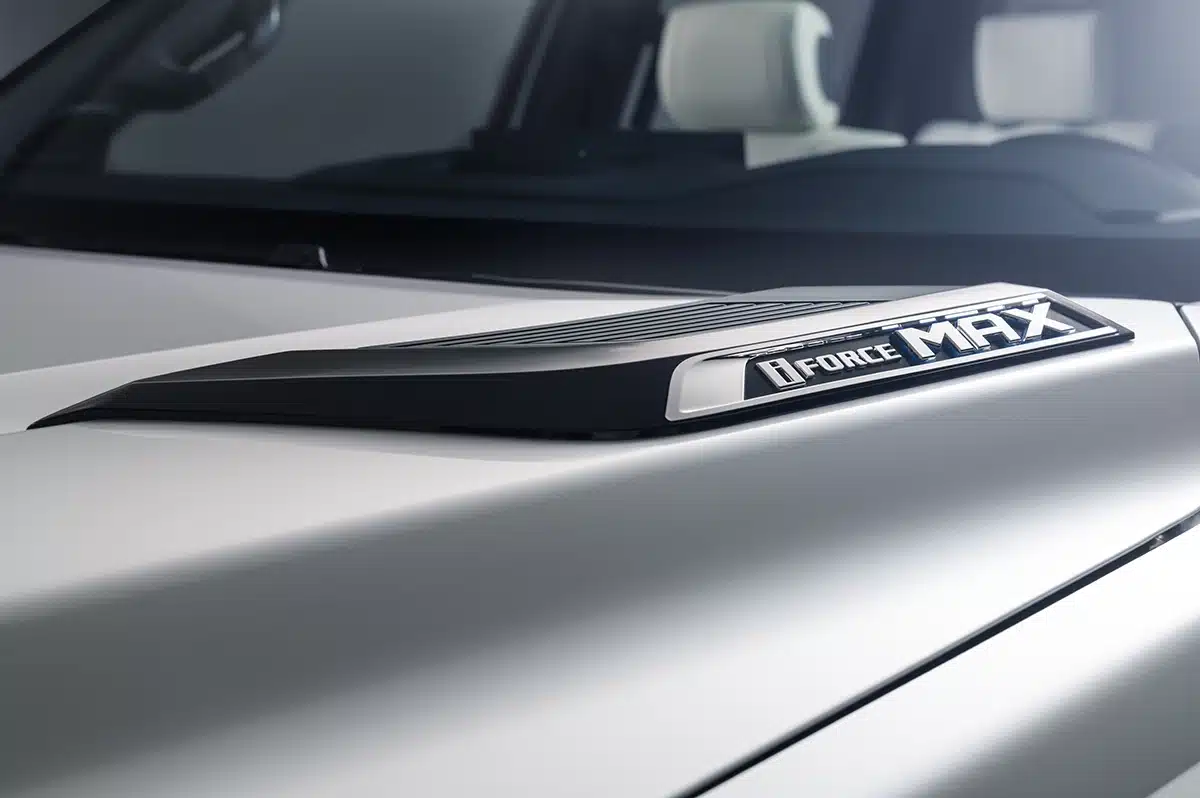
- Toyota – iForce Max
GM and Nissan don’t offer one at the time of this post.
Turbocharged engine
Next, you have the family of turbocharged engines. These engines are designed to be more efficient (better fuel economy, more power off the line) than the V-8 engines. They can act like a V-8 in power output for towing.
Here are the names to look for:
- Chevrolet or GMC – Turbomax
- Ford – EcoBoost
- Toyota – iForce
V-8 engines
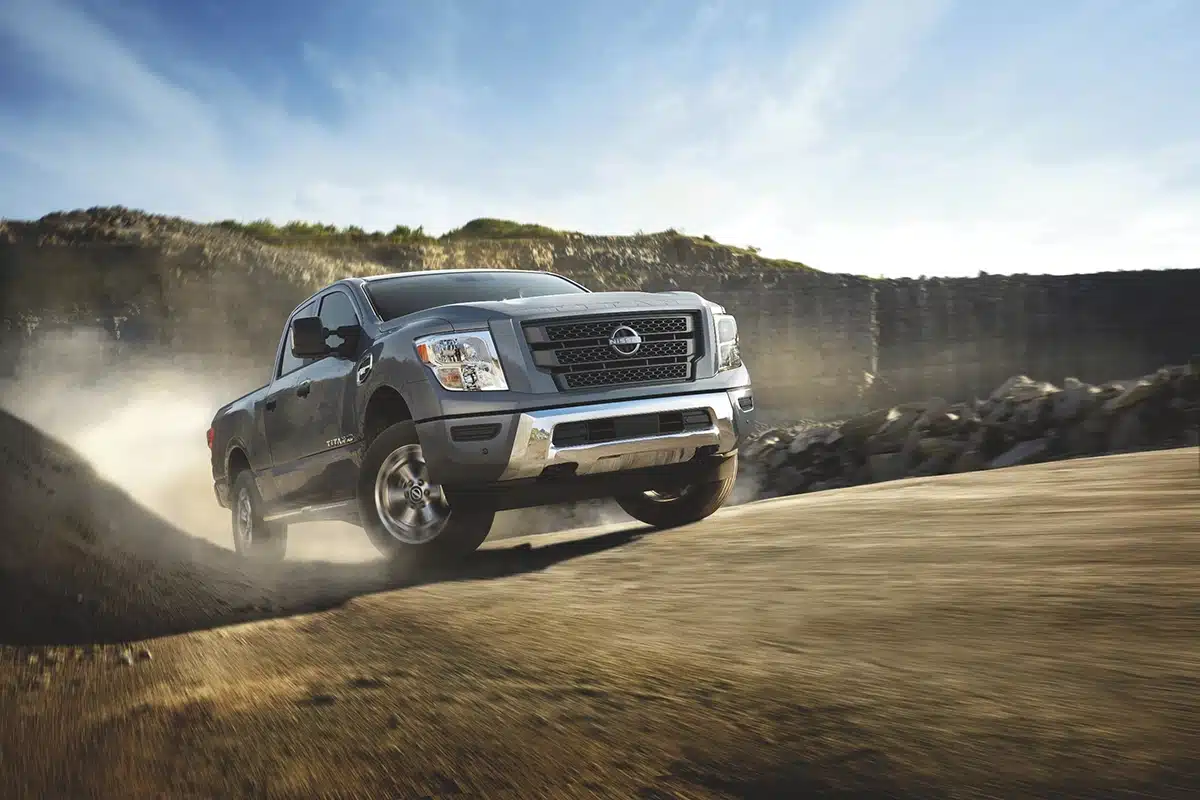
Finally, you have V-8 engines that have been the most common truck engine for years. These engines have systems now to improve their efficiency and make them act like a smaller engine when you don’t need all the power and an 8-cylinder when you need it.
They also don’t have the fancy marketing names you find elsewhere and are often expressed as the engine displacement.
- Chevrolet or GMC – 5.3-liter or 6.2-liter EcoTec3
- Ford – 5.0-liter
- Ram – 5.7-liter, 6.2-liter Hemi
- Nissan – 5.7-liter Endurance
- Toyota – 5.7-liter i-Force
Diesel
Finally, a new option in the past few years has come out in the way of diesel-powered engines. Right now, GM is the only company currently producing one, but if you are shopping for used trucks you can still find options from Ford and Ram.
- Chevrolet or GMC – 3.0-liter inline 6 Duramax diesel
- Ford – 3.0-liter V-6 Powerstroke
- Ram – 3.0-liter V-6 EcoDiesel
There are pro/cons to each engine and personal preferences play a role.
Towing/payload
All the trucks can tow around the same amount of weight at over 12,000 lbs when equipped with maximum towing packages.
They will vary in trucks without a maximum towing package (larger rear axle, transmission cooler, trailer brake controller) and this package isn’t needed if you plan to say tow a small camper. It is only when you get to heavy loads (think 7,000 lbs and up) and long-distance towing over high mountain passes or hot deserts.
Finding the maximum towing rating is pretty easy with Google.
What’s not easy to find is payload numbers. This is how much you can haul in the truck (cabin and bed) and it is everything. From each person to their water bottles and cell phones, this is the maximum weight each truck can handle before it is overloaded and you could face a variety of issues up to and including a snapped frame.
The easy way to think about determining which truck has the most payload is to think about how many options and how nice the truck interior is for materials. Basically, the more stuff you add to the truck when you buy it (moonroof, leather seats, seat heaters, massage, etc…) the less payload you will have compared to a more stripped-down model. It is a trade off.
Our take
Truck shopping is fun and maddening at the same time. The key is to break down your needs by looking at the lists above and then shop for trucks as apples to apples as you can get. This will make truck shopping a lot easier.








1 reply
Loading new replies...
Administrator
Moderator
Join the full discussion at the Forum Pickuptrucktalk →