
Turbocharged, Four-Cylinder New Truck Sales Are On Fire! Is the Internet Wrong On These Trucks?

|
January 26, 2026
|
13 comments
New Truck Sales 1

For decades, pickup truck buyers were told there was no replacement for displacement. Bigger engines meant more powerful trucks, period. Yet 2025 sales data tells a very different story. Turbocharged, four-cylinder new truck sales are on fire, much to the dismay of online commenters who say they will NEVER buy such a truck.

From midsize pickups to full-size bestsellers, consumers are voting with their wallets, opting for the small displacement engines with more torque, better performance off-the-line and, at times, better fuel economy than the non-turbocharged engines. A closer look at the Toyota Tacoma, Chevrolet Colorado, Ford Ranger and Chevrolet Silverado explains why.

Toyota Tacoma: Four Cylinders, Massive Growth
New Truck Sales 2
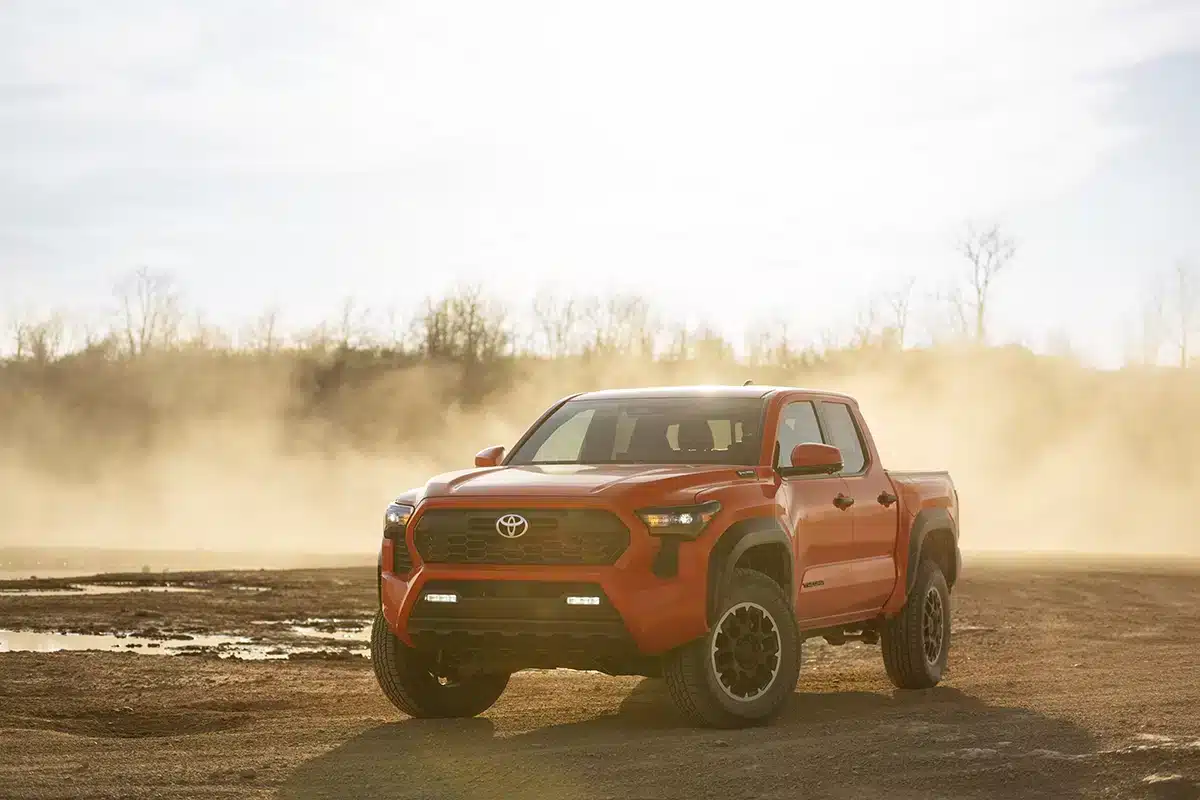
The best-selling midsize truck in the U.S. only comes with a four-cylinder engine either in a turbocharged or a hybrid setup. (Photo courtesy Toyota)

The Toyota Tacoma delivered one of the most eye-opening sales performances of the year. Despite abandoning the long-running V6 in favor of turbocharged four-cylinder and hybrid powertrains, Tacoma sales surged to more than 274,000 units, up 42.4 percent year over year.

Under the hood, every Tacoma now relies on four-cylinder power, including the turbocharged i-FORCE and hybrid i-FORCE MAX setups. While some enthusiasts continue to question long-term reliability compared to the old V6, Toyota customers have not hesitated. Tacoma remains the dominant midsize pickup in the U.S., outselling competitors by a wide margin and proving that efficiency, torque delivery and modern powertrains matter more to buyers than cylinder count.

Plus, in an even more wild twist in today’s world, the Tacoma is exclusively built in Mexico, not in the U.S. anymore.

Ford Ranger: Turbo Four Goes Mainstream
New Truck Sales 3
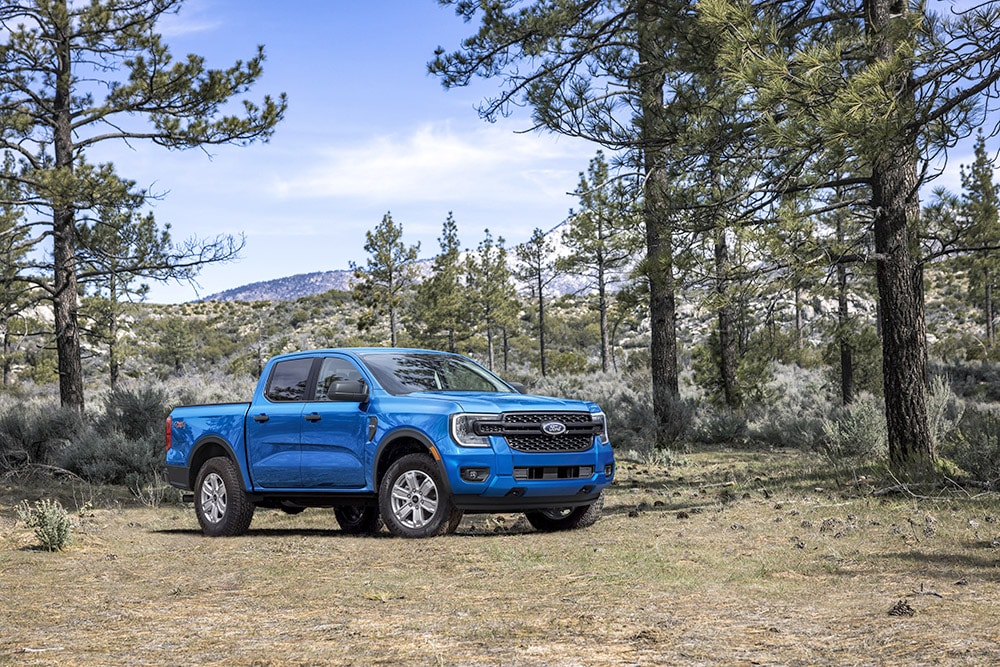
While the Ford Ranger is offered with technically three engine options, the base 2.3-liter four-cylinder EcoBoost is the top seller. (Photo courtesy Ford Motor Company)

The Ford Ranger, like the one we bought for our long-term review vehicle, tells a similar story. Powered primarily by the base 2.3-liter EcoBoost four-cylinder engine, Ranger sales jumped 53 percent in the U.S., reaching approximately 70,000 units last year.

While Ranger still trails Tacoma significantly in overall volume, its growth rate highlights strong consumer acceptance of Ford’s turbocharged four-cylinder that it sells in many other SUVs as well. Despite online debate about reliability and long-term durability, customers continue to buy Rangers in increasing numbers. Some could argue they are buying the optionally 2.7-liter V6 EcoBoost, but the reality is the base engine always sells the most in any brand.

Chevy Colorado: One Engine, Strong Results
New Truck Sales 4
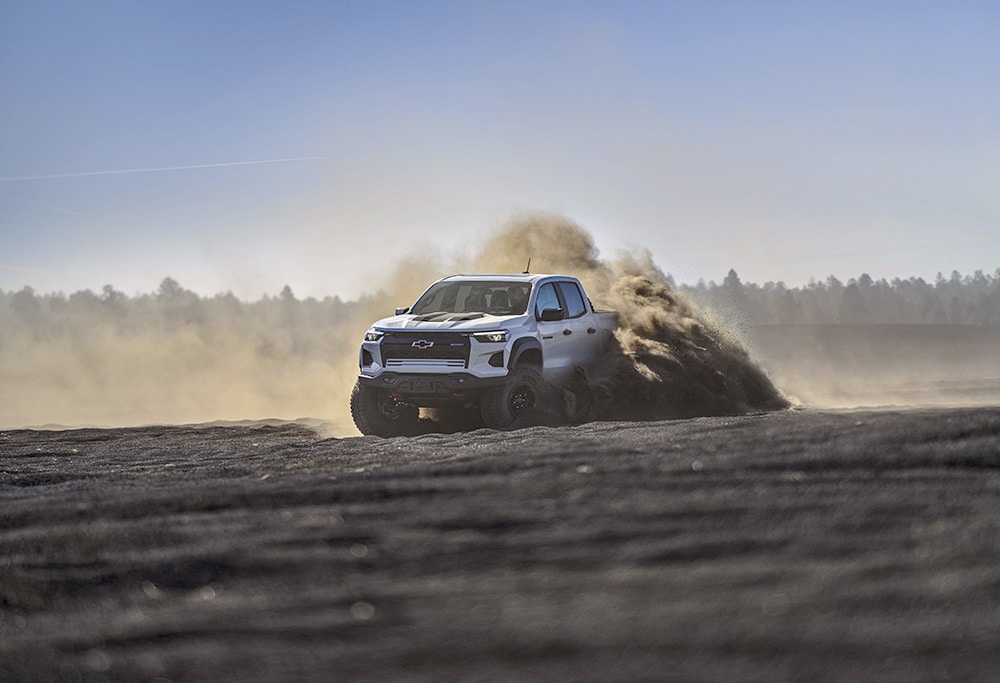
Only one engine for the Chevy Colorado and you guessed it, it’s a four cylinder. (Photo courtesy Chevrolet)

Chevrolet took a bold approach with the new 2023 Colorado by offering a single powertrain: a turbocharged four-cylinder. That strategy paid off in 2025, as Colorado sales climbed 26 percent to roughly 52,000 units.

The Colorado’s turbo-four delivers strong torque and competitive towing numbers, helping it appeal to both lifestyle buyers and light-duty work users. With no V6 option available, every Colorado sold reinforces the same conclusion: buyers are comfortable with four-cylinder power when performance meets expectations. The Colorado’s growth underscores how normalized turbocharged fours have become in the midsize truck segment.

Chevrolet Silverado: Four Cylinders in a Full-Size World
New Truck Sales 5
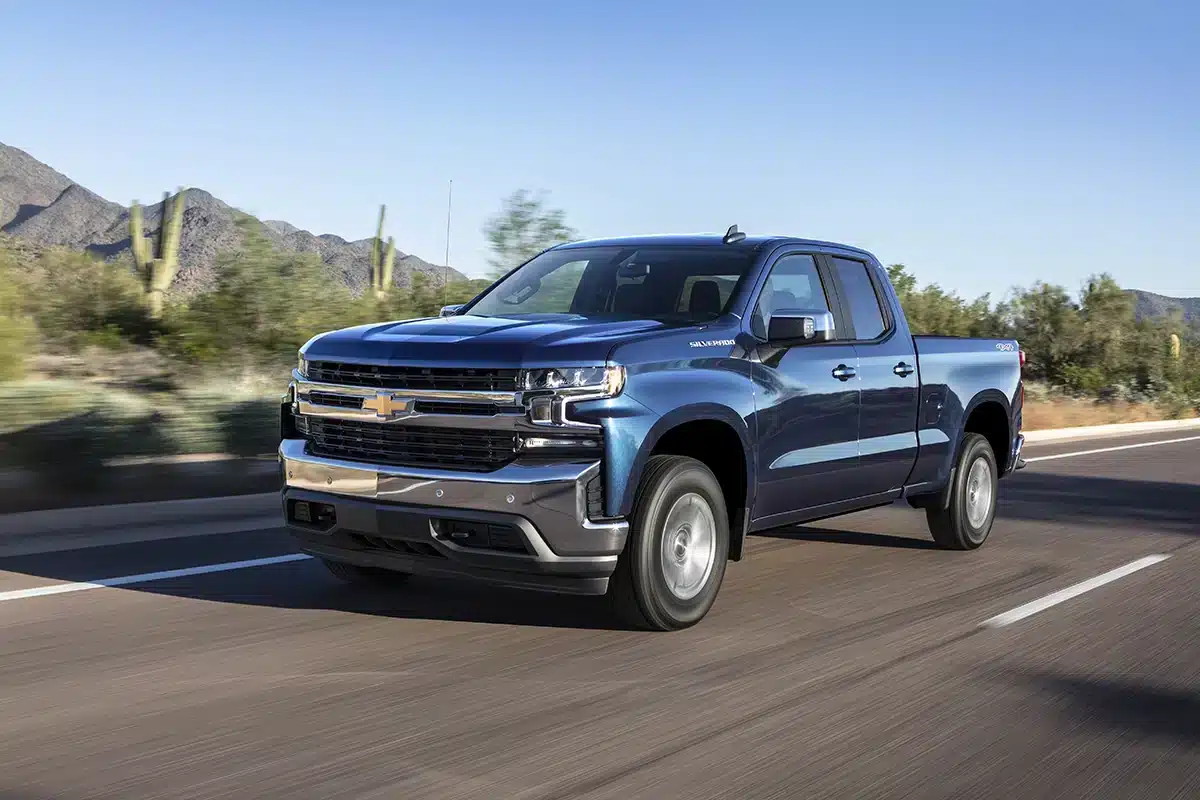
A four-cylinder engine in a full-size truck?! Yup and owners like it. (Photo courtesy Chevrolet)

Perhaps the most surprising example of this trend comes from the full-size truck segment. The Chevrolet Silverado’s base engine is a 2.7-liter turbocharged four-cylinder aka Turbomax, and Silverado sales rose modestly year over year. When combined with GMC Sierra sales, GM outsold Ford’s F-Series in the U.S. by more than 40,000 trucks.

The TurboMax four-cylinder has become a volume engine for GM for both fleets and the volume selling lower trim models. While V8s and the 3.0L Duramax diesel still play an important role in sales, the Work Truck, Custom, Custom Trail Boss, LT and RST all come with the base Turbomax engine. This covers a price range from $45,795 to $62,795 for an LT Trail Boss 2WD truck. Opting for the 5.3L V8 adds a little less than $2,000 to the price.

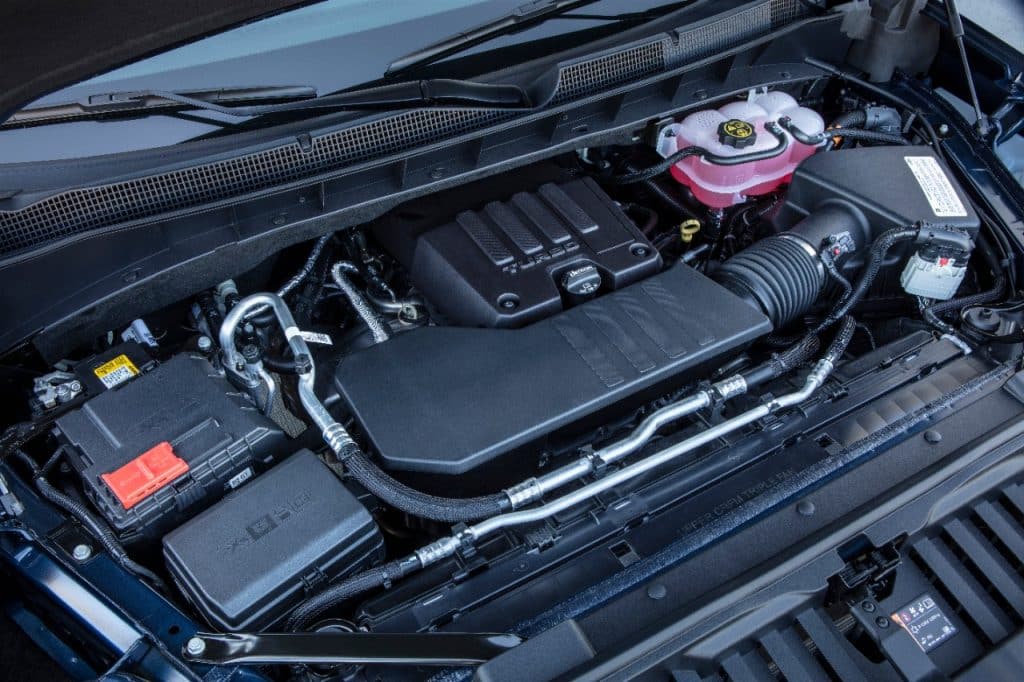
This small four-cylinder engine produces an astonishing 310 horsepower and 430 lb-ft of torque. The 5.3L V8? It produces 355 horsepower and 383 lb-ft of torque. You get more torque from the four-cylinder engine than you do with the V8 and better fuel economy if you can avoid driving the truck like a race car!

The Bottom Line on Four-Cylinder New Truck Sales
New Truck Sales 6
These smaller engines produce more torque than the V8s making them more fun to drive and more fuel efficient at times leading to consumers choosing them over the larger engines. (Photo courtesy Chevrolet)

From Tacoma to Silverado, the sales results are clear. Four-cylinder trucks are not a niche experiment — they are a core part of today’s pickup market. While V8s still have passionate fans, the numbers show that most buyers are choosing turbocharged four- and six-cylinder engines without hesitation.

While critics will point to fleet sales as a major driver for these sales, especially the Silverado 1500 numbers, a sale is still a sale. Fleet sales make up around half of all trucks sold each year.

In simple terms, this is Economics 101. Manufacturers build what people buy, and right now, four-cylinder trucks are selling in record numbers.


Leave the first comment

Loading new replies...

Avatar of testerdahl
testerdahl

Administrator

2,716 messages 4,601 likes

For decades, pickup truck buyers were told there was no replacement for displacement. Bigger engines meant more powerful trucks, period. Yet 2025 sales data tells a very different story. Turbocharged four-cylinder new truck sales are on fire much to the dismay of online commenters who say they will NEVER such a truck. From midsize pickups to full-size bestsellers, consumers are voting with their wallets, opting for the small displacement engines with more torque, better performance off-the-line and, at times, better fuel economy than the non-turbocharged engines. A closer look at the Toyota Tacoma, Chevrolet Colorado, Ford Ranger and Chevrolet Silverado […] (read full article...)

Reply 2 likes

R
Rotten.dalton

Active member

96 messages 208 likes
Avatar of testerdahl
testerdahl

Administrator

2,716 messages 4,601 likes

Yes.

Yes what?

Reply 1 like

Avatar of TheDo114
TheDo114

Well-known member

762 messages 1,203 likes

Yes what?

We’ll never know 😉

Reply 1 like

S
Saddle Tramp

Moderator

1,061 messages 1,198 likes

I'm still digging deep into this. There are so many variables to consider from brand loyalty to can configuration availability.

Reply 1 like

R
Ryno

New member

4 messages 6 likes

For decades, pickup truck buyers were told there was no replacement for displacement. Bigger engines meant more powerful trucks, period. Yet 2025 sales data tells a very different story. Turbocharged four-cylinder new truck sales are on fire much to the dismay of online commenters who say they will NEVER such a truck. From midsize pickups to full-size bestsellers, consumers are voting with their wallets, opting for the small displacement engines with more torque, better performance off-the-line and, at times, better fuel economy than the non-turbocharged engines. A closer look at the Toyota Tacoma, Chevrolet Colorado, Ford Ranger and Chevrolet Silverado […] (read full article...)

Reply Like

click to expand...
R
Ryno

New member

4 messages 6 likes

For those wanting other engine options, availability is the biggest problem. At the end of the day, if you NEED a truck, you have to buy what is available. For those new to trucks that don't care, the smaller engines, good/bad/indifferent probably don't matter as much. Those that keep their trucks for a long time, use them, tow, etc., are the ones probably still buying what they want, when available. In 2024 I searched for a mid-tier (LT) Silverado, extended cab with V8, and simply couldn't find one or find one at a reasonable price. Essentially to replace what I had. Almost got one out of state, then another, but when both fell through, I gave up and bought a car, from Toyota. Wanted another truck, but didn't need a truck. Never were there more than 2 in state with the configuration I wanted. 2 in the entire state. Out of state wasn't much better. I won't buy a full-sized truck with a 4 cylinder turbocharged gas engine. If these are still going strong after 10 or more years of use, maybe I'll be convinced otherwise.

Reply 2 likes

click to expand...
S
Saddle Tramp

Moderator

1,061 messages 1,198 likes

Here are the angles I'm looking at:

The average buyer doesn't care about the details. We're enthusiasts here but most buyers treat trucks like buying a cat. (Does it look good? Does it have the features I want?)

Most don't know or want to wait for a custom order. They don't even ask the salesman to check for a truck with the specs they want that could be shipped over. (Dealers will trade with other dealers for inventory.)

Brand loyalty beats the engine availability. What time as the percentage of brand loyalty that Tim talked about? That definitely affects sales numbers.

The fleet influence. Most fleet buyers don't care about engine choices (I'm talking about plumbers and pest control). They just want the cheapest one possible.

There's probably more that goes into the sales numbers. I just need to think about it some more.

Reply Like

click to expand...
Avatar of testerdahl
testerdahl

Administrator

2,716 messages 4,601 likes

I won't buy a full-sized truck with a 4 cylinder turbocharged gas engine. If these are still going strong after 10 or more years of use, maybe I'll be convinced otherwise.

Would a turbocharged 6 cylinder be better in your opinion than a 4 cylinder?

Reply 1 like

Avatar of testerdahl
testerdahl

Administrator

2,716 messages 4,601 likes

Here are the angles I'm looking at:

The average buyer doesn't care about the details. We're enthusiasts here but most buyers treat trucks like buying a cat. (Does it look good? Does it have the features I want?)

Most don't know or want to wait for a custom order. They don't even ask the salesman to check for a truck with the specs they want that could be shipped over. (Dealers will trade with other dealers for inventory.)

Brand loyalty beats the engine availability. What time as the percentage of brand loyalty that Tim talked about? That definitely affects sales numbers.

The fleet influence. Most fleet buyers don't care about engine choices (I'm talking about plumbers and pest control). They just want the cheapest one possible.

There's probably more that goes into the sales numbers. I just need to think about it some more.

Fleet makes up around half of all truck sales. However, that shouldn't be so easily tossed out. I think we should really look at fleets in terms of reliability.

I mean, I'm eagerly waiting for my local dealer to get another Ford fleet truck (for example) in on trade. I want to see a 300k or 400k F-150 EcoBoost after a fleet has beat it to pieces. Yup, I want to see all the "you should nevers." You should never do 10k mile oil changes. You should never use light-weight oils. You should never just turn it off without letting the turbos cool down. You will never see a turbocharged engine last that long. That's what I'm looking for. Will it change anybody's minds? Nope. I'm just really curious. I know they are out there. I've spoken to so many mechanics, friends and dealers who tell me about how they have driven them all the time. But, you NEVER see them on YouTube.

Reply 2 likes

click to expand...
Avatar of TheDo114
TheDo114

Well-known member

762 messages 1,203 likes

Fleet makes up around half of all truck sales. However, that shouldn't be so easily tossed out. I think we should really look at fleets in terms of reliability.

I mean, I'm eagerly waiting for my local dealer to get another Ford fleet truck (for example) in on trade. I want to see a 300k or 400k F-150 EcoBoost after a fleet has beat it to pieces. Yup, I want to see all the "you should nevers." You should never do 10k mile oil changes. You should never use light-weight oils. You should never just turn it off without letting the turbos cool down. You will never see a turbocharged engine last that long. That's what I'm looking for. Will it change anybody's minds? Nope. I'm just really curious. I know they are out there. I've spoken to so many mechanics, friends and dealers who tell me about how they have driven them all the time. But, you NEVER see them on YouTube.

They also can’t be that bad or else fleet would switch to something else. Downtime for us is an inconvenience, downtime for fleets is a lot of money left on the table.

Reply 2 likes

click to expand...

Signup for our weekly newsletter

Sign Up for Our Weekly Newsletter

Subscribe to our newsletters to get the latest in car news and have editor curated stories sent directly to your inbox.