
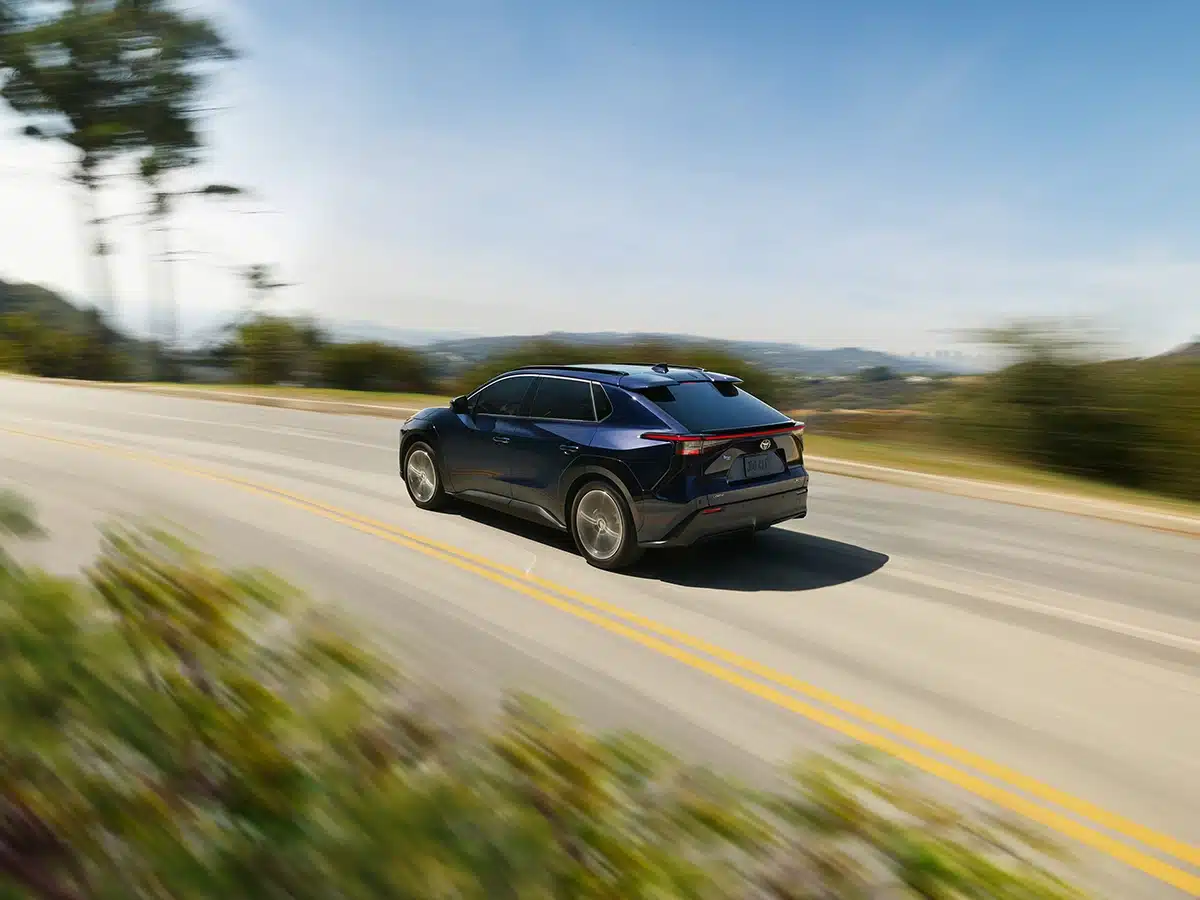
I hate the EV tax credit. It is unfairly propping up an entire industry and I’d love nothing more than to see the credit go away. If it goes away, it would also cost taxpayers trillions of dollars and cause a national security crisis.
The proverbial double-edged sword.
What is the EV tax credit?
Before I get into the finer details, let’s first lay out the facts. The EV tax credit is an incentive-based program to encourage consumers to purchase electric vehicles. It also currently applies to used electric vehicles as well.
The idea is to drive demand for electric vehicles and spur on their adoption. Right now, consumers can receive a $7,500 credit on certain EV vehicles and a $4,000 credit on used EV vehicles.
It was initially approved by Republican President George W. Bush in 2008 and has been available in one form or another since then.
The good part of the EV tax credit
Initially, the aim of the tax credit was something, well, we could all agree on. When President Bush signed the bill into law, the plan was to offer a $3,400 tax credit to consumers to purchase new energy-efficient hybrid, clean-diesel and fuel-cell vehicles.
The plan was to get Americans to purchase more fuel efficient vehicles, reduce our dependence on foreign oil and lower emissions. In that order. Emissions was last on the list.
It also included many provisions for homes and pushed the Federal Government to reduce its own energy usage in an effort to reduce the deficit by purchasing more efficient equipment like energy-star rated appliances, furnaces and air conditioning units. Former President Bush also pushed for more Nuclear plants to improve energy efficiency and shore up the power grid.
This credit, along with raising the standards for fuel efficiency through higher Corporate Average Fuel Economy (CAFE) standards meant consumers should spend less per mile to drive a vehicle than in the decades prior. Plus, especially considering the recent Gulf War conflicts at the time, our dependence on foreign oil will be lessened and our own National Security will be better.
The bad part of the EV tax credit
Everything was roses for a while. Our country was getting more energy efficient, cars were going further on a gallon of gas, our National Security was improved and things were good! And then, things went off the rails.
As usual, politicians and government took things too far. They, and we Americans, started pushing for more and more.
The focus shifted from fuel economy benefits and National Security to cleaning the air and climate change. That turned into all combustion engines are bad. Coal is bad. The only way to go is fully battery electric. Plug-in hybrid vehicles are just a placeholder technology. Diesels must have emissions equipment or else.
Seemingly overnight any alternative ideas such as hybrid systems that could meet clean air targets, improve fuel efficiency and reduce oil dependency were seen as band aids. New diesel fuels made with renewable resources that burned near-zero carbon and didn’t require emissions equipment were considered ludicrous.
We are now on a one-way train ride with only one destination.
The conversation needs to change
The fact is the conversation needs to change. Listening to David Christ, Toyota Group Vice President, while attending the debut of the new 2026 Toyota RAV4, I had to cringe. It exactly the marketing speech that people don’t want to hear anymore.
My issue, to be clear, is not about the vehicle. The country’s best-selling SUV will be a big hit yet again, just not for the reasons he stated.
Christ went on and on about reducing carbon emissions and cleaning the air as quickly as possible. The new hybrid and electric only RAV4 will accomplish those aims quickly he proclaimed! That messaging is just doesn’t work anymore.
As my Dad likes to say, “that dog don’t hunt.”
Let me state this clearly. Consumers aren’t buying the RAV4 to clean the air. They are buying the RAV4 to skip the gas station.
Not once in the entire presentation did Christ bring up fuel economy. Not once!
While official MPG numbers aren’t out yet, he could have talked about how efficient the SUV has become.
For example, the 2025 Toyota RAV4 hybrid achieves 41 city and 38 highway. Back when Bush was president, the 2008 Toyota RAV4 achieved 21 city and 27 highway.
That’s a huge difference!
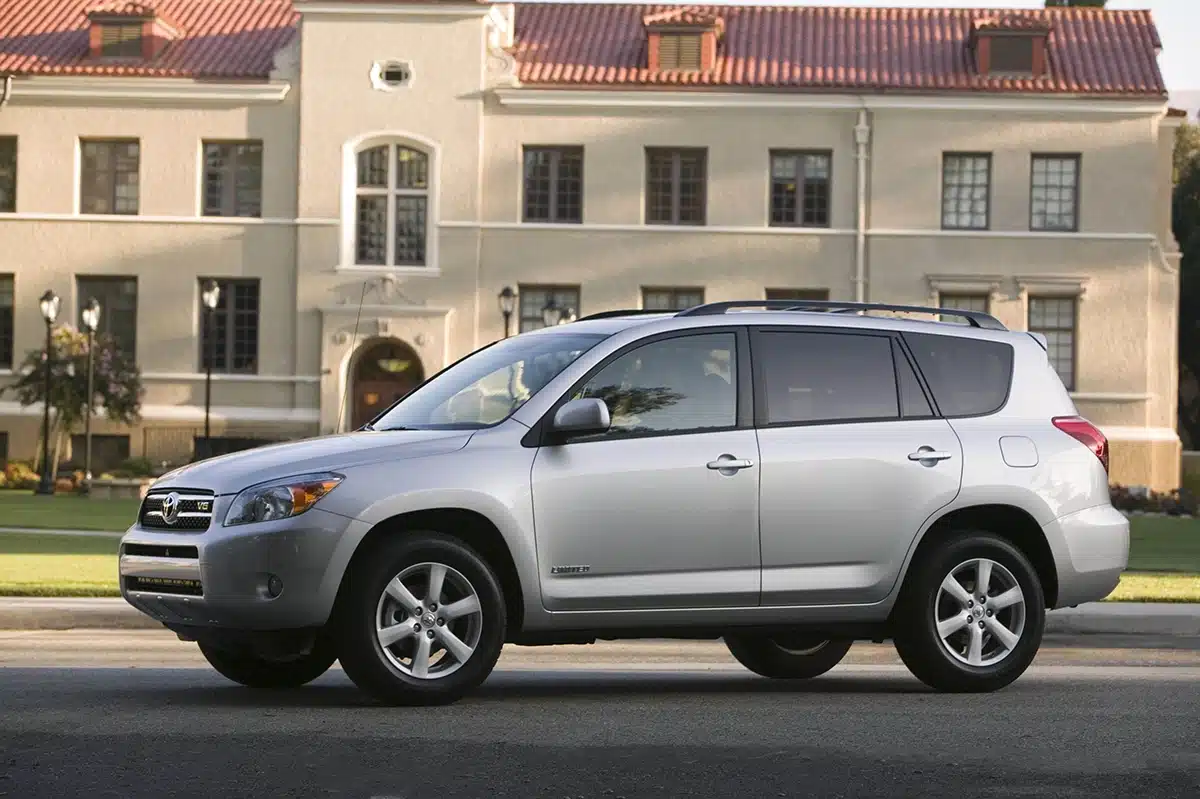
What about the price difference? The 2008 RAV4 MSRP, according to Google, ranged from $21,000 to $27,000. The 2025 RAV4 price range is $30,645 to $38,950. You factor in inflation and the improvements in safety, technology, ride and handling and I’d argue you are getting twice the vehicle you did back then with twice the fuel economy for less money.
Ultimately for consumers, that’s an amazing win all around. A better vehicle, safer, more comfortable, much more fuel efficient and cheaper. Yet, the key benefit of the electrification of the RAV4 was about about cleaning the air and climate change. SMH.
We need the tax credit
Back to the tax credit. The RAV4 is a good example of why we still need it to spur on, not just electric vehicles, but the production of them.
Remember when the Trump tariff’s were announced? It was about bringing jobs back to the U.S. and one of the statements in the WhiteHouse.gov document was about having the manufacturing for National Security concerns?
Maybe not, but I read that document several times.
When, not really an “if” anymore in my book, the next World War comes, what kind of eqiupment are we going to use to fight it? Sherman tanks and B-17 bombers? Hardly. It will be advanced equipment using alternative engines with hybrid technologies like diesel electric powertrains, fully autonomous troop carriers, drones and hydrogen-fuel cell support vehicles.
Yeah, really. How do I know that? You don’t think the U.S. Military is watching what is going on in the automotive segment? They are keeping close watch on what is going on and they have partners like GM that have developed hydrogen-fuel cell Chevy Colorado sized rapid deployment vehicles.
What does that equipment need? Electric batteries, like say, the ones in the RAV4. If you look at the latest news on new plant production in the U.S. from GM, Ford, Toyota, Hyundai, etc…, it revolves around new battery plants. They are all investing billions into new battery plants here in the U.S.
So, if you kill the EV tax credit, you reduce electric vehicle demand and then those plants may or may not get built at the same speed. Investments in new EV technology, production plants and supply chains is less and we have less overall resources in new technology spending. We have seen this play out time and time again in places like China as shown in the chart below by Fastmarkets. The sales dip is just a cut in the subsidy, not a full removal.

When the battery plants don’t get built, the tax payers lose out on billions in tax revenue, jobs are lost, the military loses out on key resources it needs for future wars, our National Security is threatened and China and Russia become even more powerful than we’ve already let them become.
All because of a silly $7,500 tax credit.








3 replies
Loading new replies...
Administrator
Moderator
Administrator
Moderator
Join the full discussion at the Forum Pickuptrucktalk →