
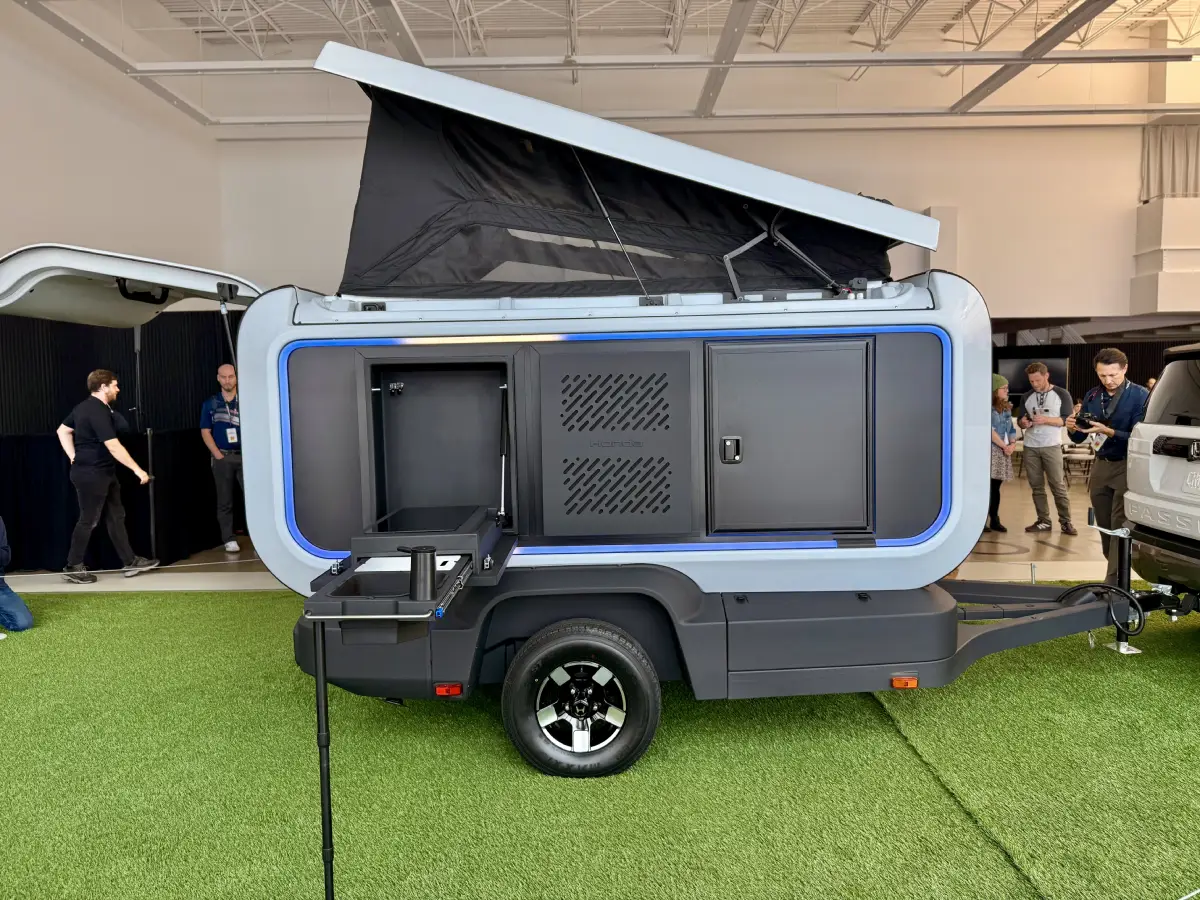
Honda doesn’t just dip a toe into new segments; they tend to rethink them entirely. After seeing the Honda Base Station Prototype up close at Honda’s R&D Center, it’s clear this isn’t just another lightweight camper. It’s a fundamental rethink of what a towable trailer can be, who it’s for, and how simple camping can be.
Here are 10 reasons why Honda’s sub-1,400-pound Base Station could completely disrupt the towable camper market.
Lighter than 1,400 Pounds
Let’s start with the headline number.
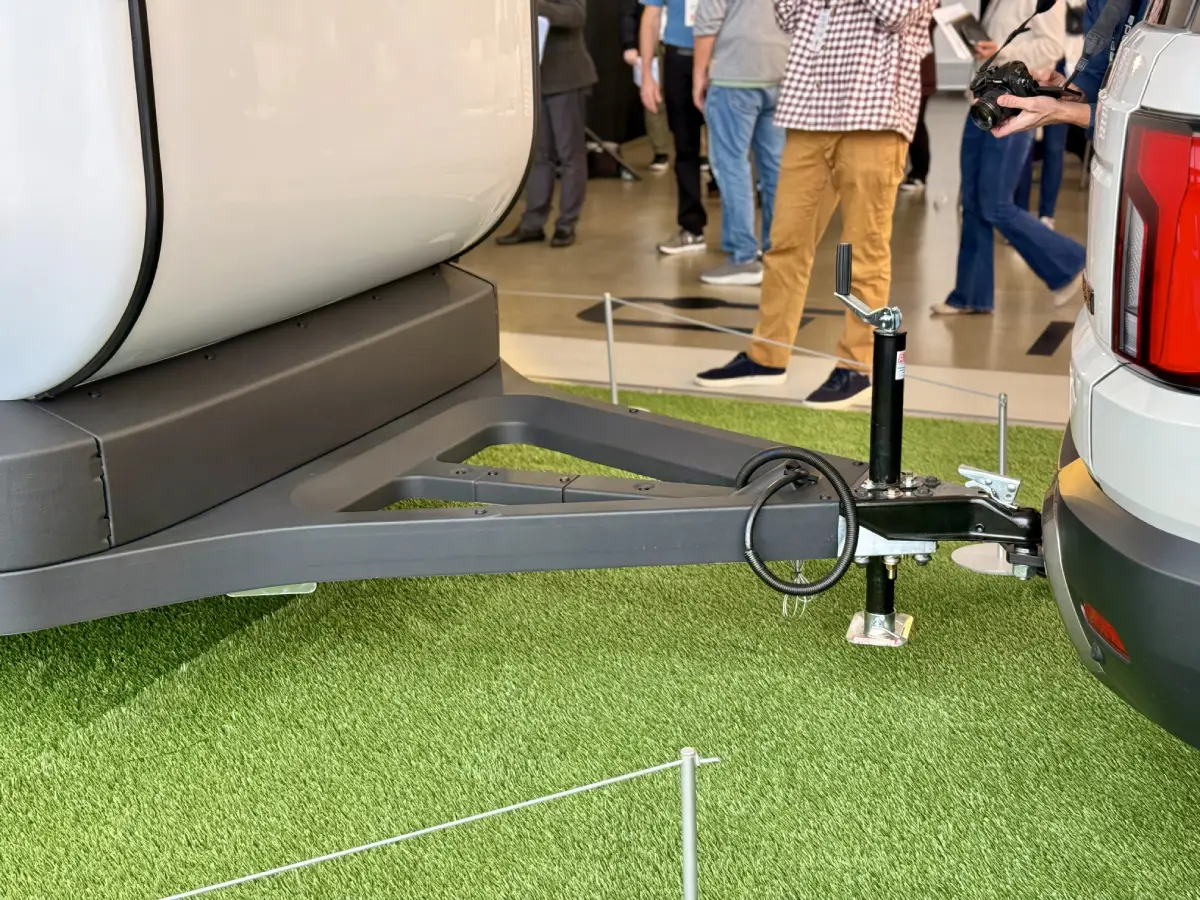
At under 1,400 pounds, the Base Station can be towed by vehicles like the Honda CR-V, Toyota RAV4, and even some EVs, vehicles that are normally locked out of the camper lifestyle.
In towable campers, weight is the enemy. For Honda engineers, the mission was clear: only add the essentials. Motors to raise and lower canopies are not needed. Auto leveling supports were left on the drawing board.
Example of Honda’s target competitors:
- Scamp Lite 13’: 1,250 – 1,500 lbs.
- Happier Camper HC1: 1,100 – 1,500 lbs.
- Airstream Basecamp 16X: 2,700 lbs.
Honda hits the sweet spot without sacrificing interior usability, and that’s the difference.
Build Quality
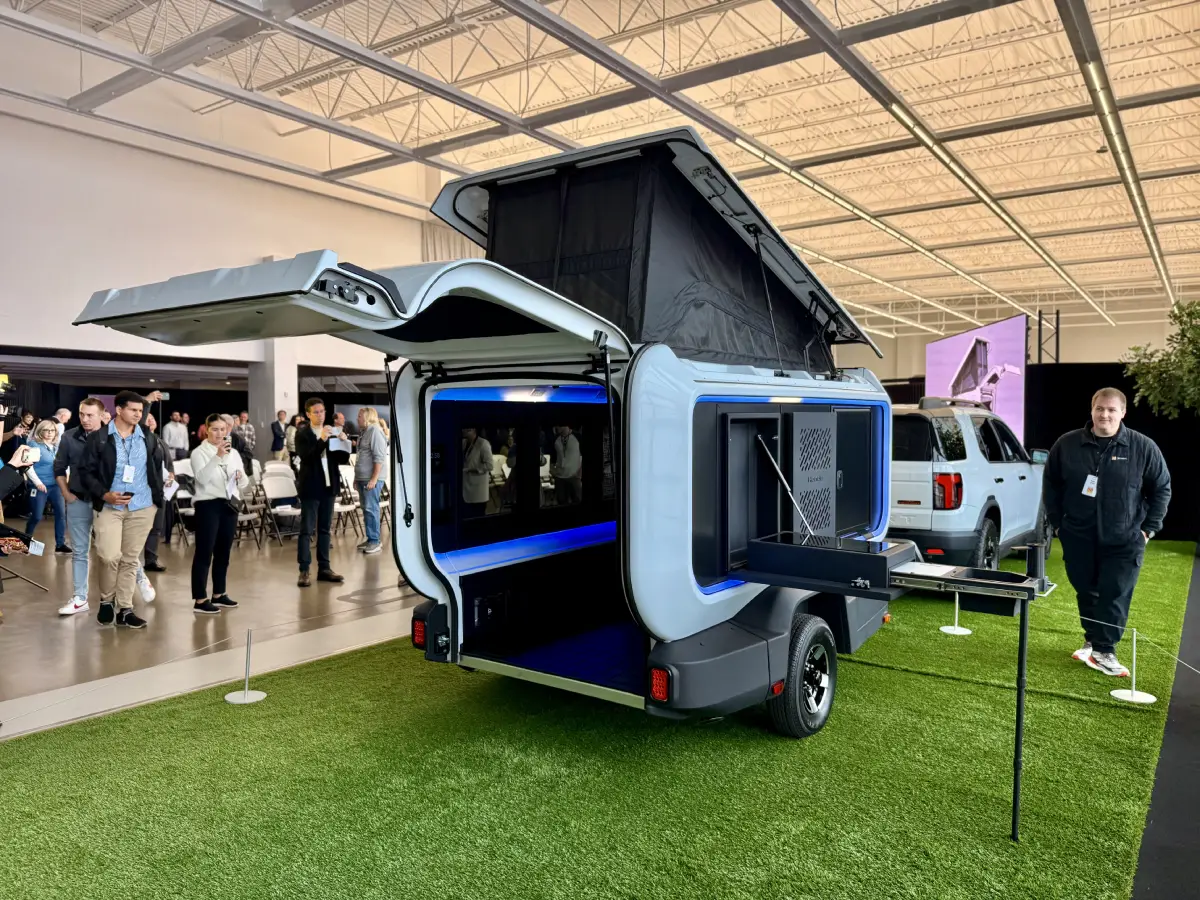
Let’s be honest, build quality and long-term rigidity are not what towable campers are known for. I have heard it said that towing a camper means subjecting a living space to hundreds of earthquakes for hours on end, not exactly conducive to a trailer lasting forever.
Honda brings:
- Aluminum frame
- Composite fiberglass exterior
- Automotive-level engineering discipline
This is the same company that builds vehicles people keep for 200,000+ miles. That mindset shows everywhere in this trailer.
True Modular Design
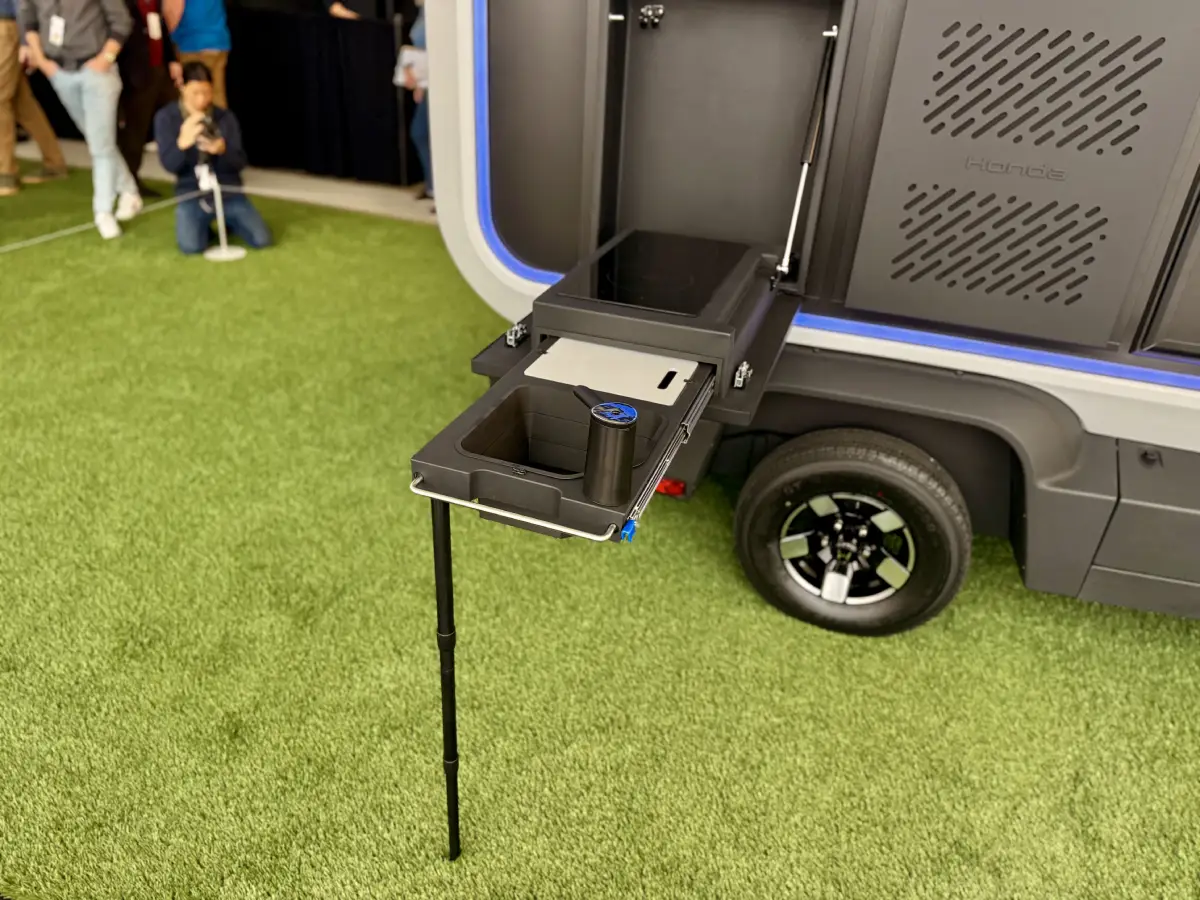
Lots of campers claim modularity; Honda actually delivers it. The modularity of the Base Station platform is what makes it so versatile for so many future consumers. Along each side of the Base Station are large windows that are removable and can be replaced with modular packs, giving owners hundreds of different options to make a Base Station fit their needs.
Each of the 5 large side window panels can be:
- Removed tool-free
- Replaced with a kitchen, air conditioner, shower, or kitchen
- Replaced by future aftermarket options
These modular pieces are also lightweight and easily stored, meaning you’re not locked into one layout forever. You configure the Base Station for the trip you’re taking, not the one the factory decided for you. Pick the modular panels you need before you leave, and leave the rest at home.
Honda expects the aftermarket to take this platform and expand further.
Five-Minute Campsite Setup
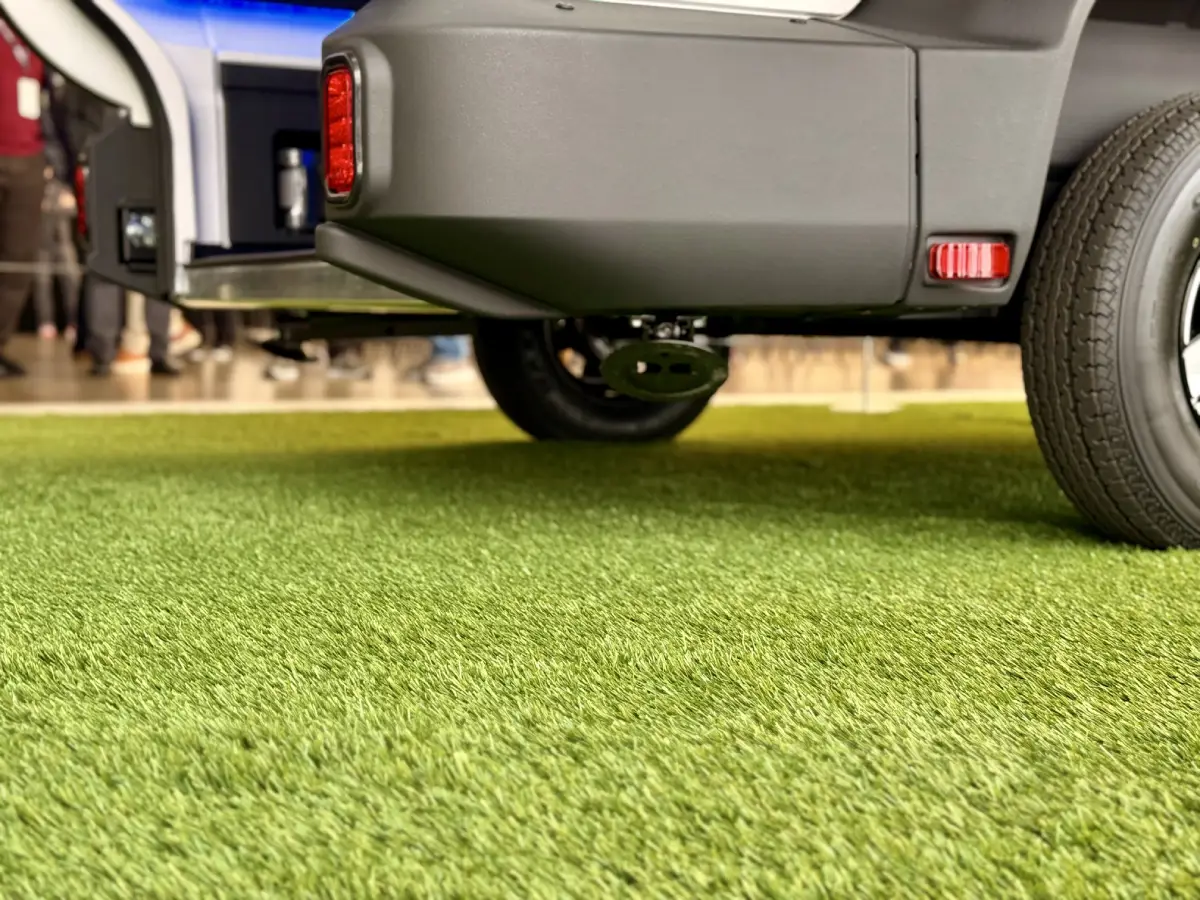
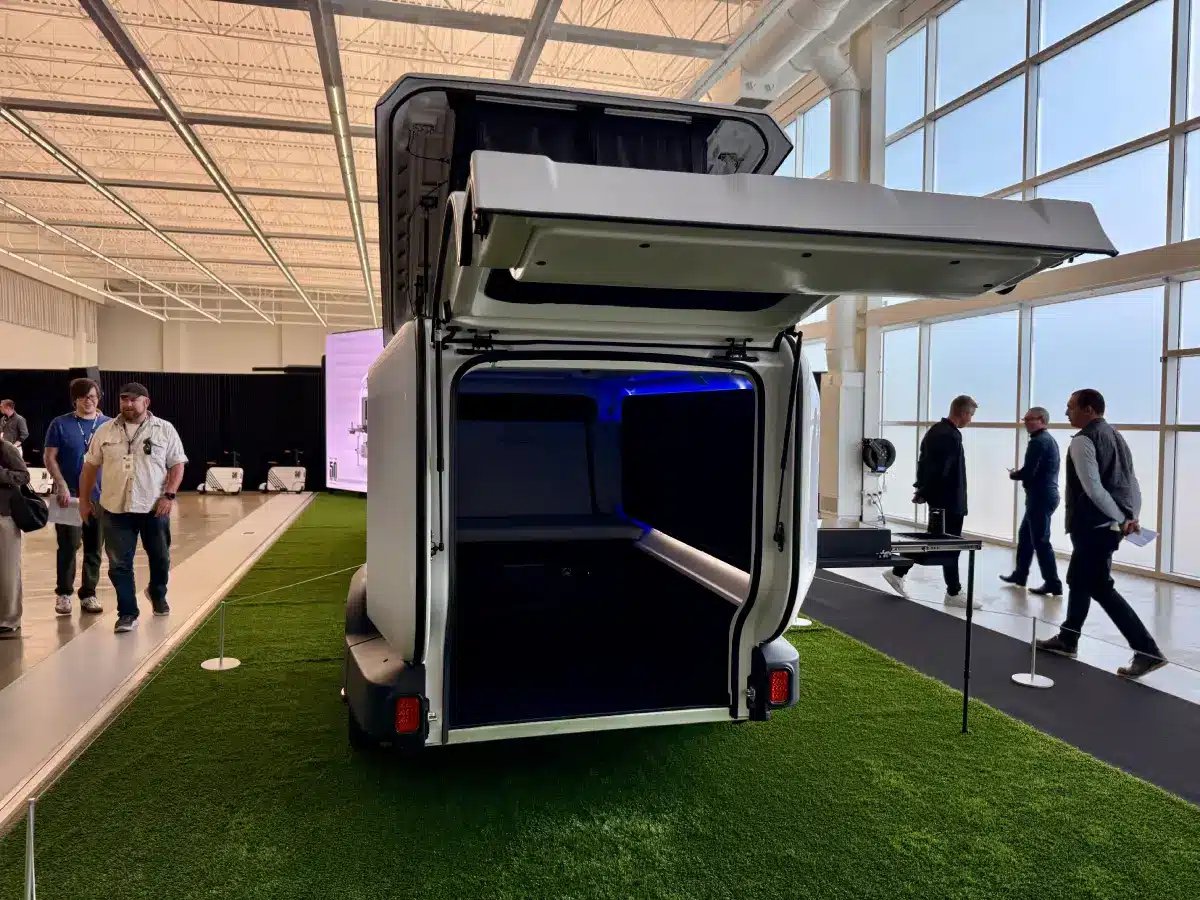
No motors. No auto-leveling. No complicated electronics. Just simple and lightweight. From the upper canopy to the three manual supports underneath, pulling into a campsite will not take hours.
Honda intentionally kept everything:
- Manual
- Mechanical
- Lightweight
From pulling in to being fully set up? About five minutes.
That matters when you roll into camp late, tired, or in bad weather.
Seven Feet of Stand-Up Space In a Tiny Footprint
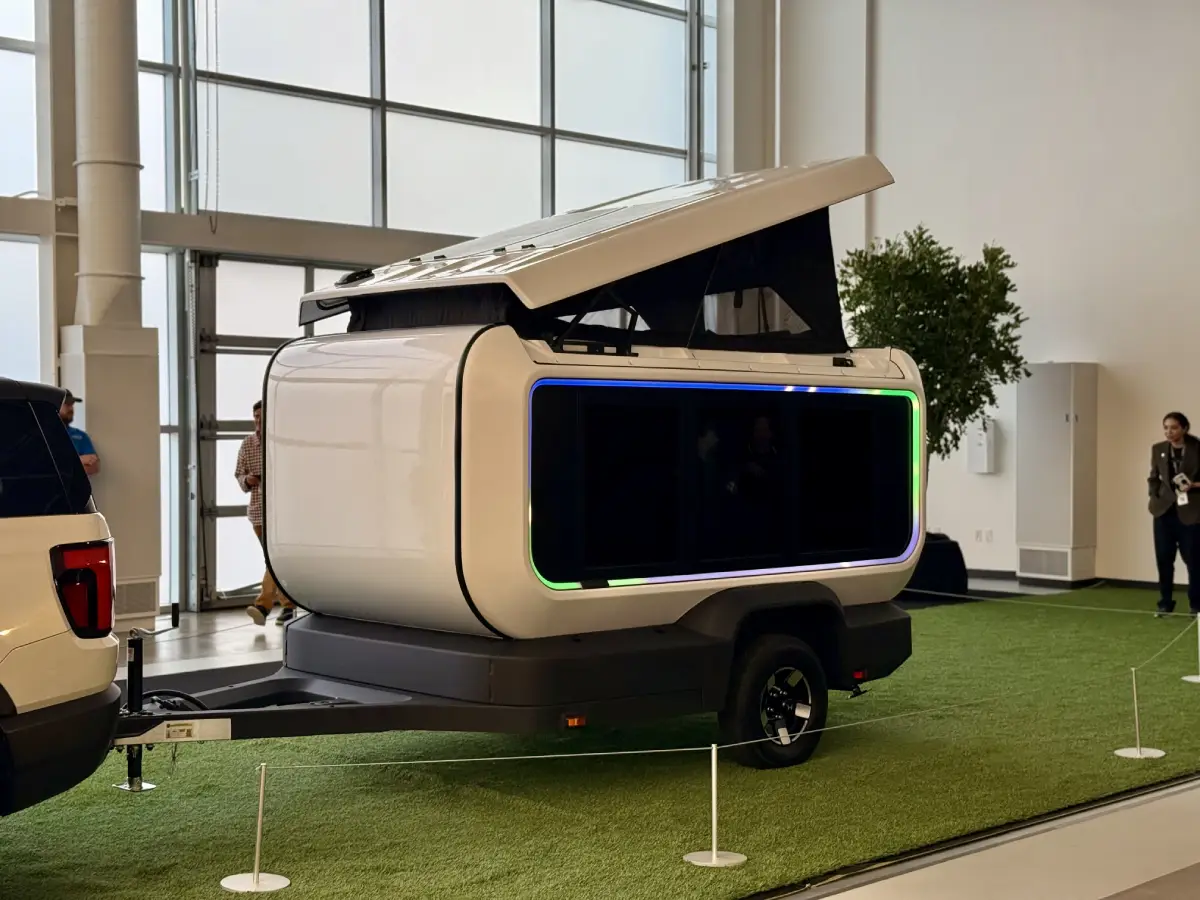
This is classic Honda “Man Maximum, Machine Minimum” thinking. Taking the brand’s core automotive design philosophy and applying it to an entirely new segment meant rethinking how this camper would be built and operate. Thanks to a hinged roof, even those over 6 feet should find a comfortable spot in the Base Station.
The pop-up roof provides:
- 7 feet of interior height
- A bright, airy cabin
- No permanent tall roof while towing
You get standing room at camp without paying the aerodynamic or weight penalty on the road.
It Can Actually Sleep a Family of Four
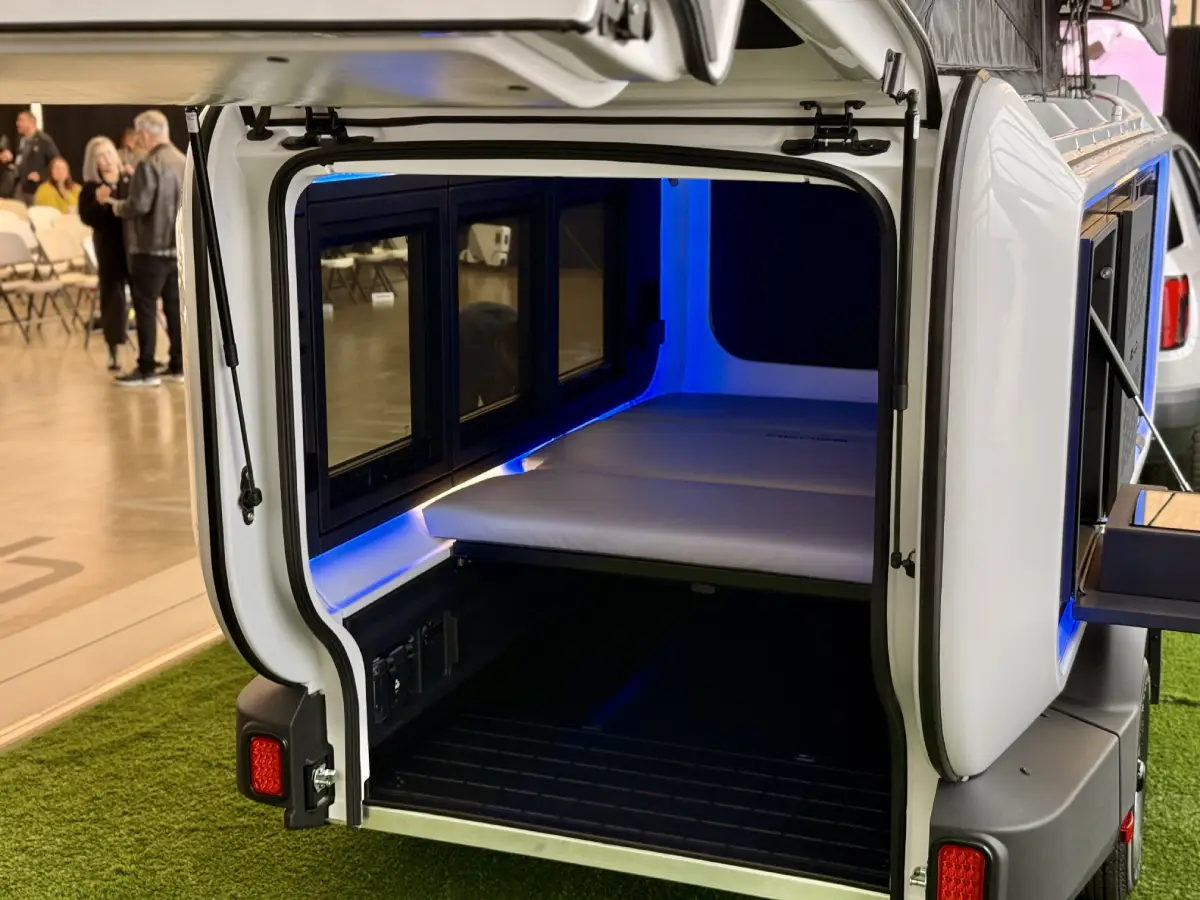
This isn’t a cramped teardrop; it is a roomy space thanks to its unique packaging.
Inside you’ll find:
- A futon that converts into a queen-size bed
- Optional bunk for kids
- Smart under-bed storage
- Flat, easy-clean surfaces
Honda claims family-of-four capability, and unlike many trailers, the layout actually supports that claim. An optional bed in the pop-up camper section could sleep two more.
Legit Off-Grid Capability; Standard
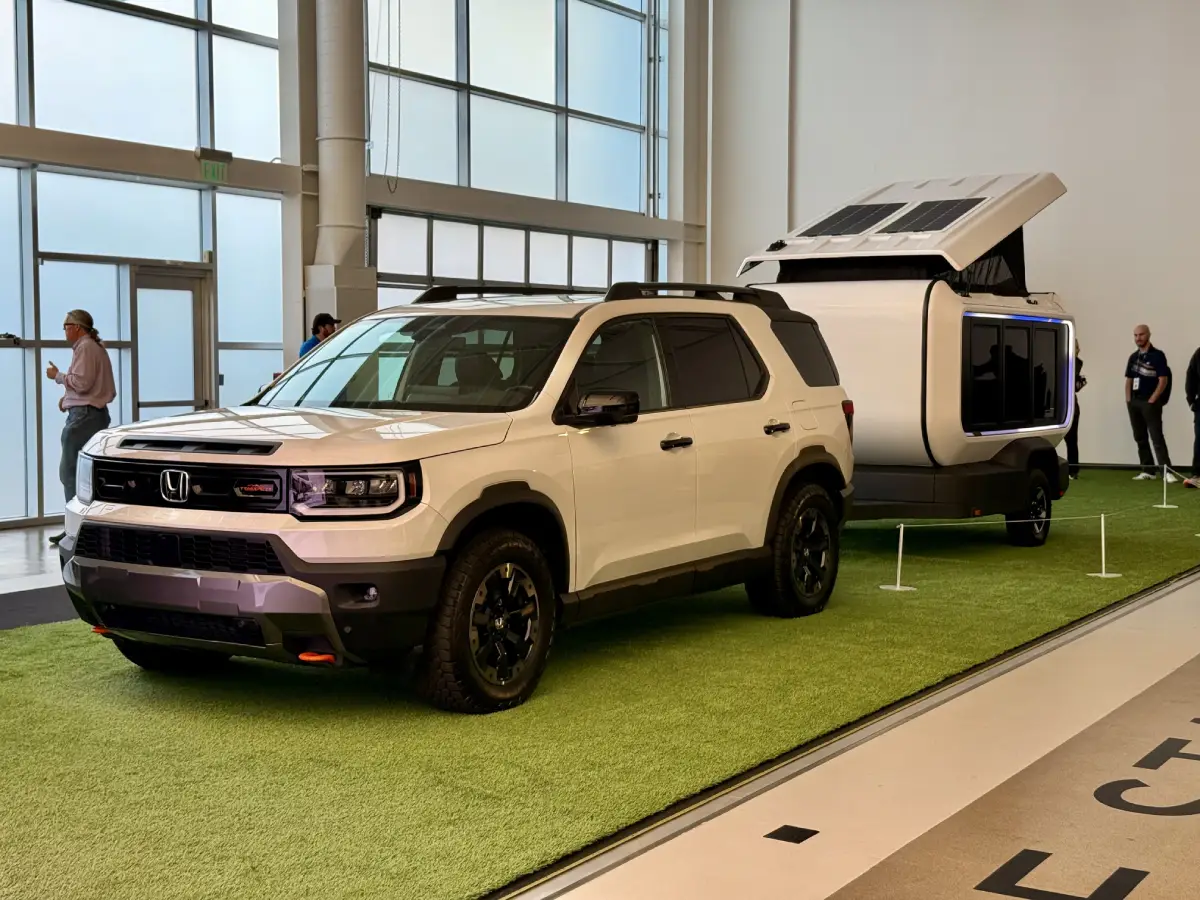
Unlike competitors that charge extra or rely on dealer-installed solutions, Honda builds this in from the start.
Standard features include:
- Lithium-ion battery
- Integrated inverter
- Roof-mounted solar
- Shore power and generator compatibility
This plugs directly into the existing RV ecosystem, but with Honda refinement. Full details on battery size and expandability of the solar system have not yet been released.
A Garage-Friendly Camper
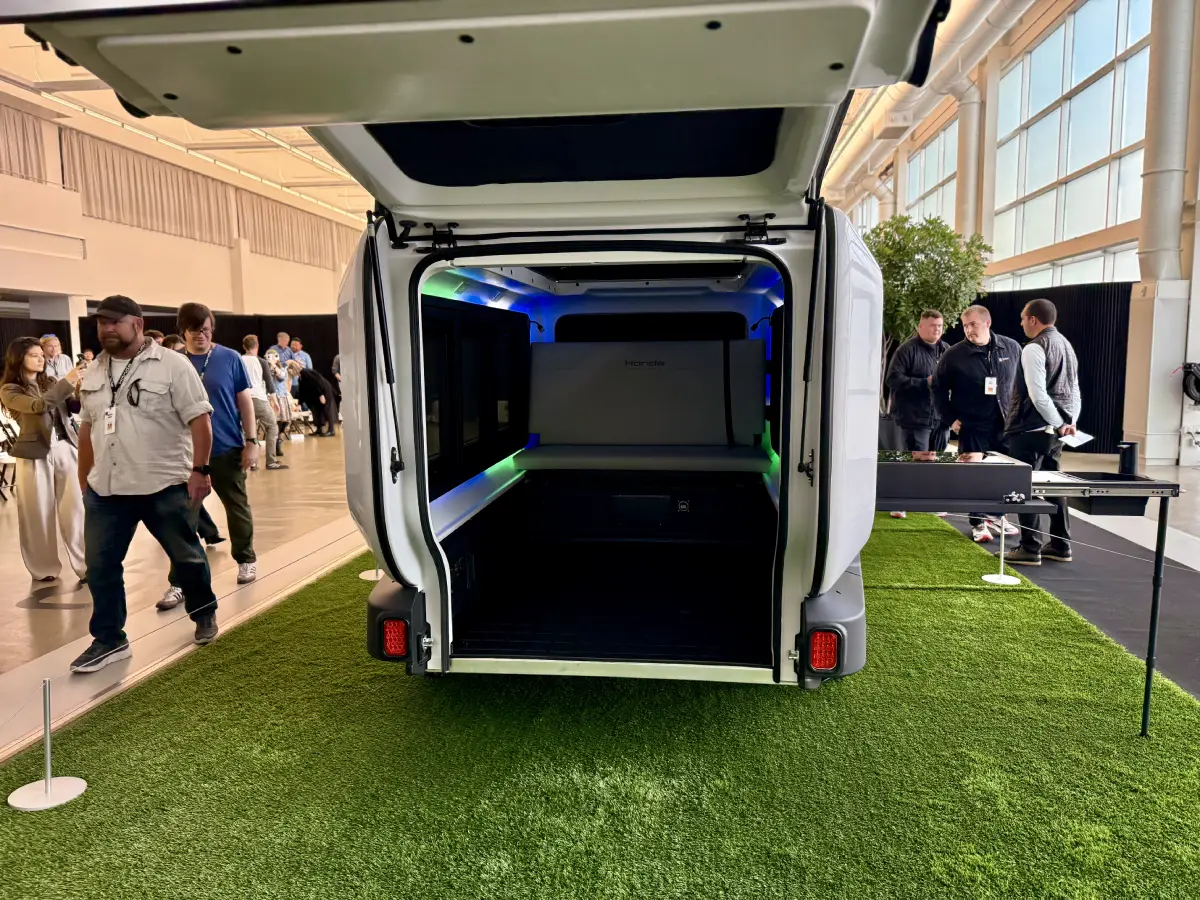
Here’s something most people overlook: where does this thing go when you aren’t camping?
The Base Station:
- Fits in a standard residential garage
- Fits in a normal parking space
- Is easy to maneuver by hand
That eliminates storage fees and makes ownership far more realistic for younger buyers and urban adventurers.
Designed for Aftermarket Growth (On Purpose)
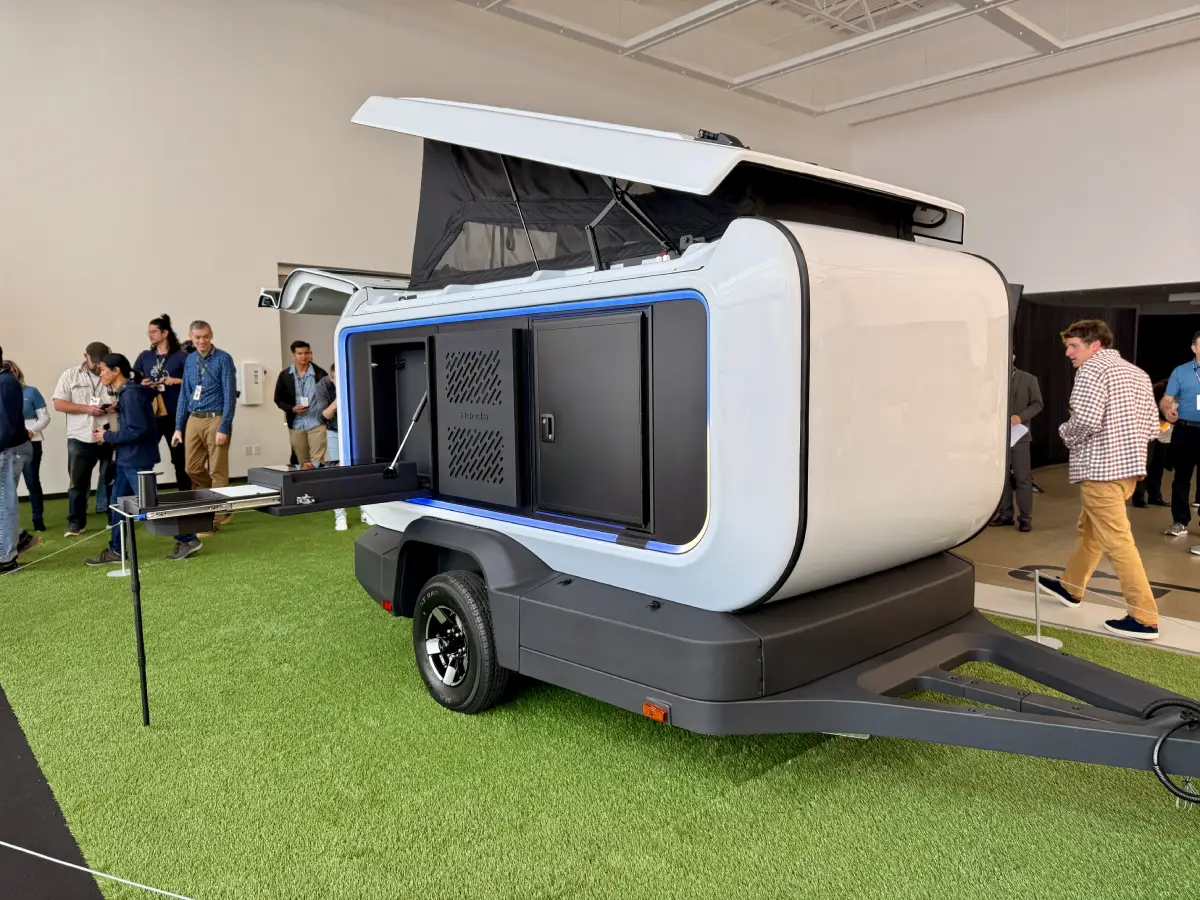
Honda openly expects third-party companies to build accessories for this camper.
That’s huge.
Instead of locking everything down, Honda:
- Encourages aftermarket modules
- Designs standardized panel interfaces
- Treats the camper like a platform, not a product
Think Jeep Wrangler-level aftermarket—but for campers.
Honda Is Targeting New Campers, Not Just Existing Ones
This may be the most important point. Honda isn’t trying to steal customers from Airstream or pop-up buyers. They’re going after:
- First-time campers
- Younger buyers (average age ~30)
- Outdoor-focused SUV owners
- EV drivers who want lightweight towing
That’s how segments grow—and how they get disrupted.
Final Thoughts: This Is Honda Being Honda
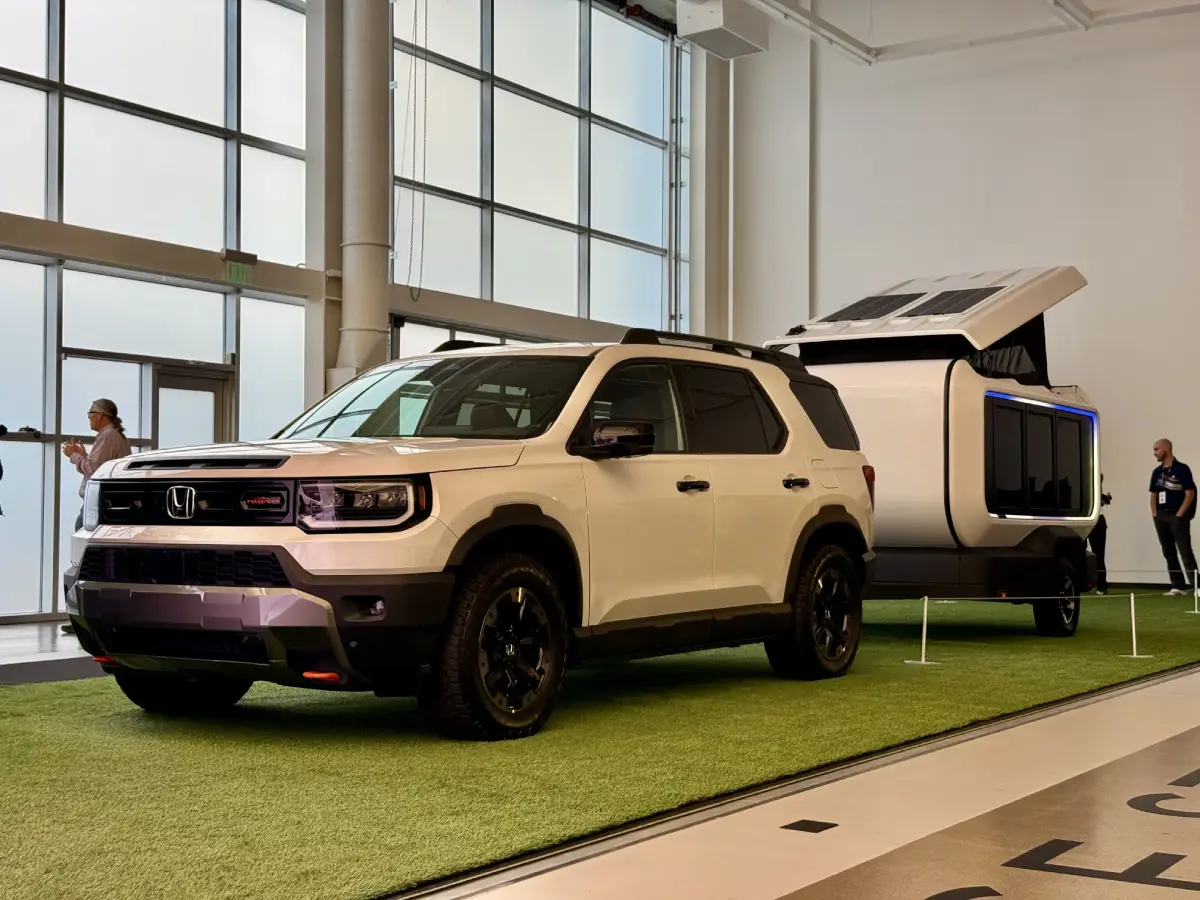
We don’t know pricing yet. We don’t have final battery specs. This is still a prototype.
But what we do know is this:
- Sub-1,500 pounds
- Extreme modularity
- Honda reliability
- Real off-grid capability
- Simple, fast setup
That combination simply doesn’t exist today.
If Honda brings this to market anywhere near its stated goals, the Base Station won’t just compete—it will force the entire lightweight camper segment to rethink itself.
Stay tuned to PickupTruckTalk.com, because as Honda releases more details, we’ll be right here breaking it down.








1 reply
Loading new replies...
Administrator
Member
Join the full discussion at the Forum Pickuptrucktalk →