
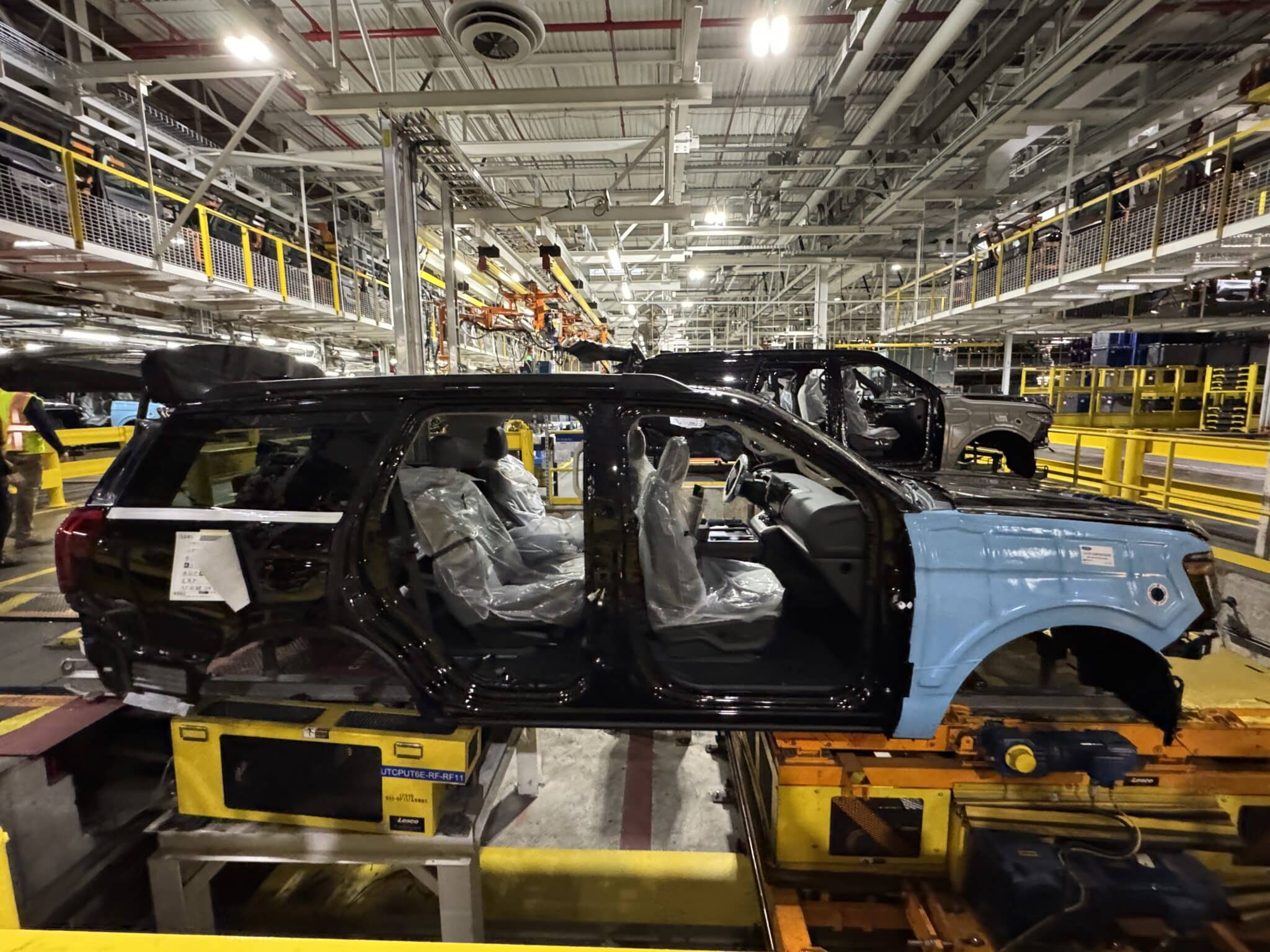
A recent visit to the Ford Kentucky Truck Plant showed Ford quality is improving, yet there is still work to be done when you look at the big picture.
Also, a conversation with Ford engineer Brian Naspinsky the following day revealed even more changes at the automaker focused on improving quality.
Plant inspects paint with cell phone
The Ford Kentucky Truck Plant, sitting on 500 acres with a massive building of more than 4.6 million square feet, close to 9,000 people build the Ford Super Duty truck lineup, the Lincoln Navigator and the Ford Expedition.
Our specific focus was on the Expedition and while touring the facility to see how the Chevy Tahoe’s chief competitor was built, we were able to see a unique process where smartphones work in collaboration with artificial intelligence to detect quality issues on the line.

The idea is to detect issues prior to the full-size SUV making its way to the finish line requiring an extensive repair effort for items. For example, a paint defect or a wiring harness that had accidentally become unplugged.
This innovative idea was created by Walter LaPlante, a Ford supervisor at a stamping plant, created the Mobile AI Vision System and was awarded the Henry Ford Technology Award for it. Incredibly, his father won the same award seventeen years earlier for another innovation.
The project was initially piloted at the Chicago Assembly plant and now is in use at around 20 plants according to a June 3, 2024 story in Popular Science magazine.
Using this system allows Ford to not only be more efficient when building new vehicles but also make sure the plant produces vehicles to a higher quality standard.
Test track for rattles
Another part of the quality improvement is a test track outside the plant aptly called the “Squeak and Rattle Track.”
This track, which every Ford Expedition goes down before shipping to dealers, was designed to try to make the SUVs squeak and rattle. The idea is to identify where those noises are coming from and eliminate them before they ship.

While not every plant has a track like this, it is a step in the right direction for Ford. Personally, I’ve owned two Ford trucks now and each of them has developed a rattle in the A pillar. And I’ve driven a prior-generation Ford Expeditions with rattles as well.
This may seem like a small issue, however, it can very annoying and it does raises questions on overall quality with the rattles often developing at very low miles.
Breaking down silos
A day after the plant visit, I was able to spend a long period of time talking with Ford engineer Brian Metingzer about how his role has changed in the past few years.
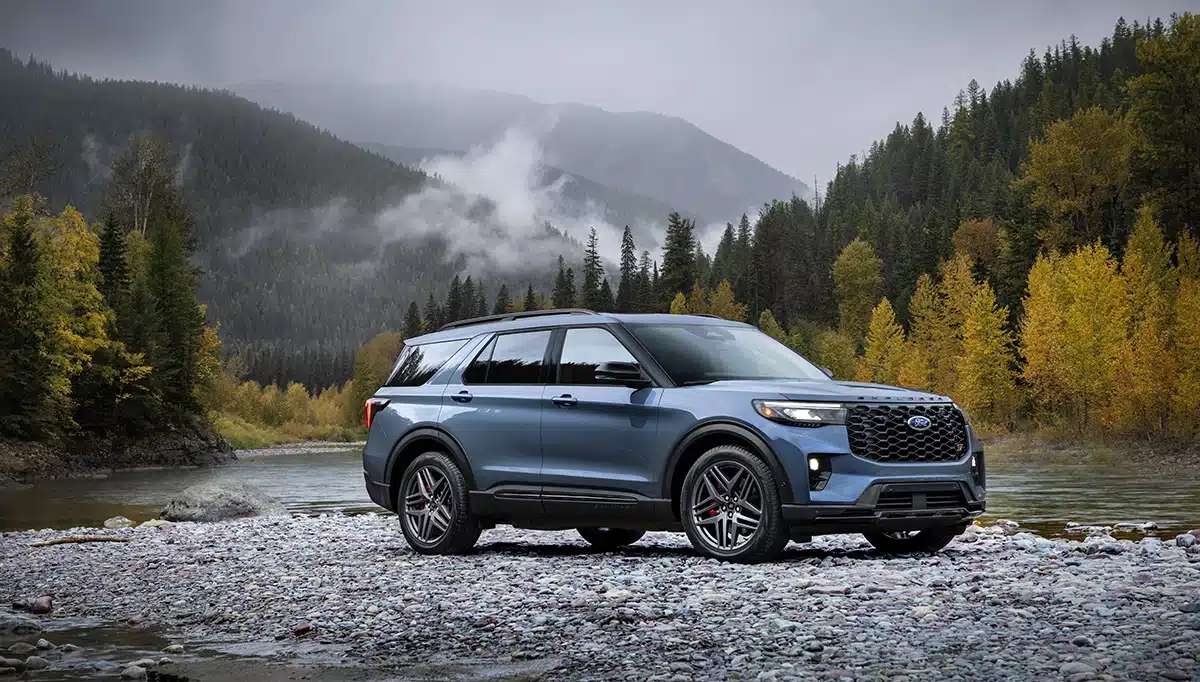
Metingzer is now in charge of the Ford Explorer and was on hand to help with the Ford Expedition media event. We talked about the launch of the Explorer.
The new 2025 Ford Explorer, Metingzer pointed out, launch was really aimed at improving quality through reducing the number of complexities the plant had to deal with. Compared with the 2024 model, it went from 8 trim levels down to just 4 trim levels.
In prior years, engineering, manufacturing, designers and marketing were all working in separate departments and not working together as much as they probably should have Metingzer stated. Now, he is more of the CEO of the vehicle and works with all the departments to build the vehicle.
For the Explorer this meant reducing trims, options and simplifying the build process. He was able to work closer with the plants to understand their concerns on building certain versions of the vehicles and then go back to engineering or design to smooth out those issues.
He said he had a phone call just prior to our conversation from the plant over some concerns. This is a phone call that wouldn’t have happened years ago.
The goal is to have better quality when they launch new vehicles and have better quality leaving the factory overall.
This is a dramatic departure from the past when product launches were mired in issues and mirrors what Ford CEO Jim Farley said in the fall of 2024 about his regret to not tackle launch quality sooner in his role as the company’s leader.
Recalls still plague the automaker
For Ford enthusiasts and customers, these changes are welcome news for the brand. They have been building some iconic vehicles for years that customers want, but don’t want the headaches.
The challenge will be if these changes can pay off with less recalls. For the last several years, Ford has been at the top of the list for the most recalled vehicles. Many of these recalls have been for quality issues that could have been addressed at the factory.
Most of these recalls are for minor things, however, they mean customers are without their vehicles while dealerships perform the work. Ford has to also pay the dealers to do the work. In 2023, Ford spent $1.3 billion on warranty work alone according to an Axios.com story.
Then, there are the lingering issues for people like the harsh shifts on the 10-speed transmission, the cam phaser failure issue plaguing mostly older EcoBoost engines and other well known issues affecting other vehicles. These issues are in various stages of being ironed out or addressed completely.
Our take
For me, while I Ford vehicles, they can be hard to get when they first launch and you just know you are going to have an issue. I mean who doesn’t like a Bronco, F-150 Raptor, Super Duty, etc…? They are great.
I saw a lot during the plant tour that led me to believe Ford CEO Farley and his team have the ship pointed in the right direction. Can he keep it going in the right direction? For a company the size of Ford, that’s a tall task. As a truck fan, I hope they do.








