
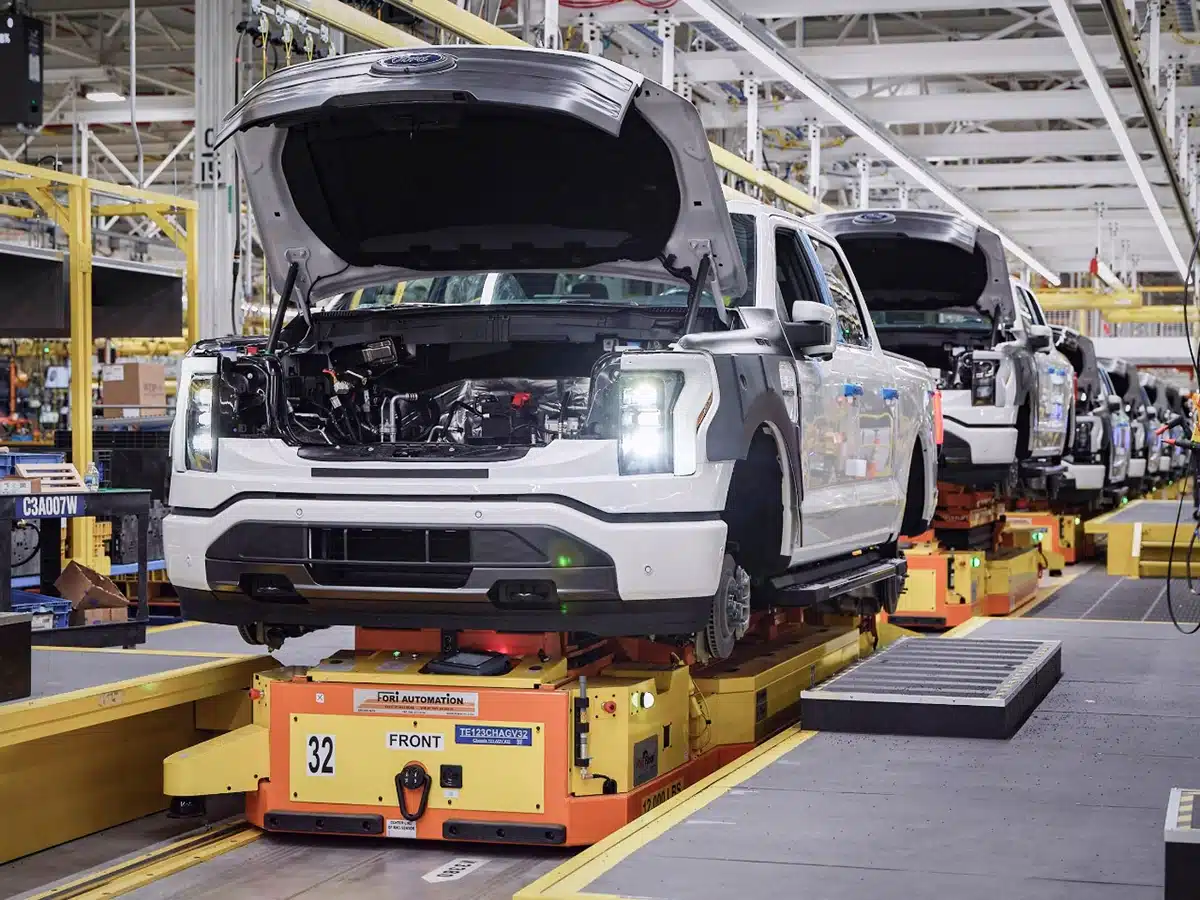
The ongoing global trade war took another turn as China halts rare earth exports and magnets to the U.S., causing damaging effects to automakers.
This export ban expanded yesterday with Beijing now restricting the export of rare earth minerals and magnets almost entirely refined by China. These minerals and magnets are vital to the U.S. and used in many things like advanced fighter jets, missiles, cell phones and every electric and hybrid vehicle.
President Trump has announced a new national security investigation after this export ban was announced.
Why are rare earth minerals and magnets important?
According to the White House, 70% of the U.S. imports of rare earth minerals come from China as cited in a PBS News Hour story. The U.S. is wholly dependent on China for these minerals as is much of the world since China holds the largest supply as well as the processing facilities to turn them into products we use.
“Consider that we don’t have any heavy rare earth processing facilities here at home,” Gracelin Baskaran, a mining economist and director of the Critical Minerals Security Program at the Center for Strategic and International Studies, a think tank in Washington, told PBS News Hour. “So, ultimately, while we have reserves of rare earths, even when we extract them, they actually go back to China for the midstream processing and potentially the manufacturing of magnets.”
The U.S. has 1.5% of the world’s rare earth supply. It isn’t because we haven’t developed the resources, “geology is where geology is” Baskaran said. We simply don’t have the minerals.
“We’re probably not going to decouple any time soon,” Baskaran said. “ We have been mining rare earths for some years in the United States, but we have never built separation facilities that are — and so, even though the U.S. government has spent over $400 million through the Defense Production Act over the last five years, these facilities are not ready to go.
“And when they are online, they’re only going to be able to produce a small fraction of what China produces.”
This is why Greenland and South Africa have been in the news lately. They have vast resources of critical rare earth minerals.
China has also announced it is going to develop a licensing system to better control where the minerals are going and better set pricing for the minerals.
Baskaran said China has already told 15 defense contractors for the U.S. they won’t be getting access to the minerals. And this isn’t the first time they have done licensing.
Back in 2023, China developed a licensing system for graphite, a key component used in lithium-ion batteries used in EVs and hybrids.
What about Tesla, GM, Ford and others?
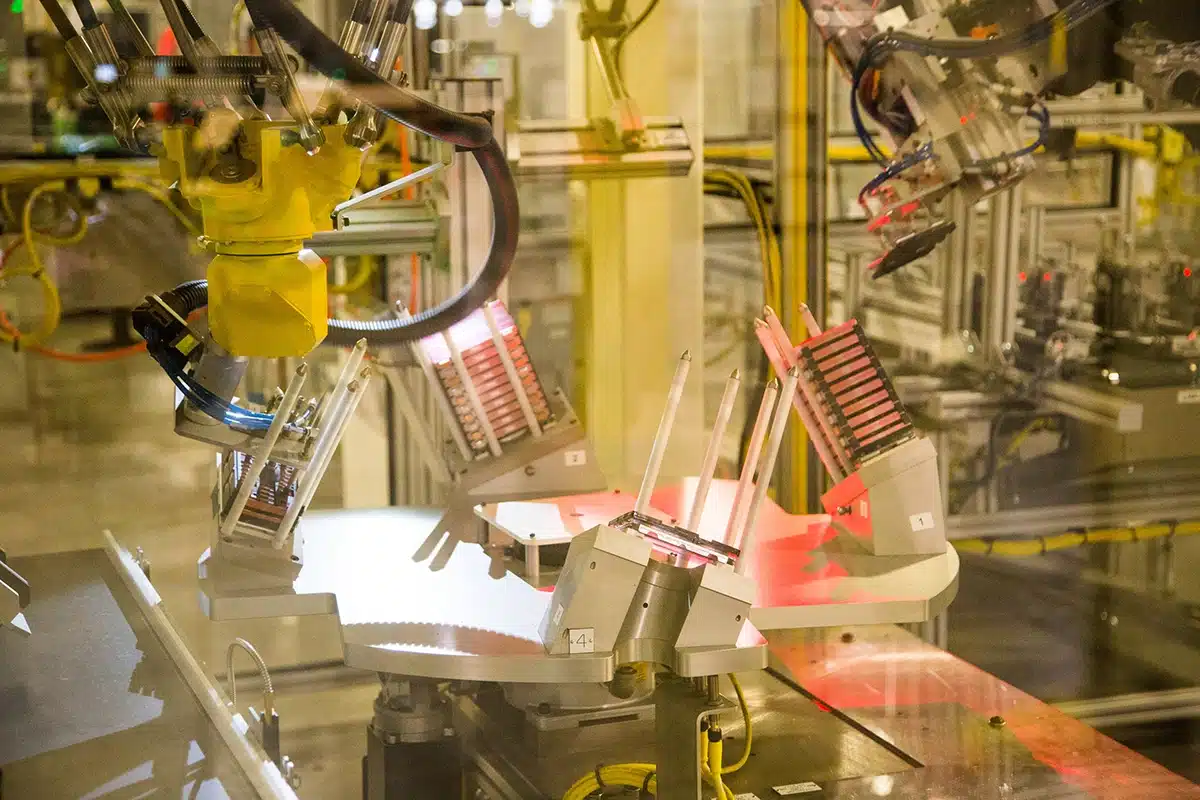
The news from China affects automakers due to the magnets as well as the concerns over graphite and lithium-ion for batteries.
First, magnets are a critical part used in electric motors. These motors are found in all electric vehicles whether they be fully electric or a hybrid setup.
This means Teslas vehicles are all impacted. It also affects GM vehicles such as the Chevy Silverado EV and Equinox EV and GMC Hummer EV as well as the future plans to build a plug-in hybrid Silverado and Sierra. The Ford F-150 Lightning, Powerboost and Mustang Mach E are also directly impacted. Not to be left out, Stellantis’ new Dodge Charger Daytona EV and upcoming Ramcharger will both impacted as well. And Toyota’s entire Camry lineup, the Sienna minivan, all Tacomas and the Tundra i-Force hybrid models will soon be in short supply on dealer lots. Oh, and every other automaker that has EVs or hybrids will be affected.
Then, you have the concerns over graphite and lithium-ion for batteries.
One executive said off the record, China’s export ban is a “gigantic issue for all automakers.”
He said “more than 92% of processed raw rare earth and minerals used in battery production comes from China.”
In order for us to acquire the amount of graphite we would need to replace what comes from China, we would need to open 387 mines in North America. Lest you think that can be done in short order, know It takes an average of 18 years to get a new mine in operation.
According to the U.S. Geological Survey, in 2024 five companies were exploring or developing graphite-mining projects in the United States—two in Alabama, one in Alaska, one in Montana, and one in New York. In July, the project in Alaska was awarded a grant of $37.5 million.
Graphite is also used in brake linings, lubricants, powdered metals, refractory applications and steelmaking.
GM and Ford have spent billions of dollars investing in new EV battery plants in the U.S. and electric vehicle manufacturing. Toyota has just invested $14 billion on a new battery plant in North Carolina and Hyundai just announced it will spend $4-5 billion on a new EV battery plant in Georgia. All those investments and jobs are now in jeopardy.
CARB ZEV mandates raise even more questions
Then, there’s the other issue automakers are dealing with and that’s the ongoing problems with the California Air Resource Board Zero-Emission Vehicle (ZEV) mandate.
This program requires automakers to sell a certain percentage of ZEVs in California each year and by 2035 for all new car and light-duty truck sales in California to be ZEVs including plug-in hybrid vehicles.
Congress is working on overturning the California waiver granting this ZEV mandate through the Congressional Review Act. The CRA has to pass both houses of Congress and has to be signed by the president. It rarely succeeds since it needs both houses and the president’s approval.
There is a snag though. The CRA historically concerns agency rules, not waivers. Overturning a waiver will surely turn into a court case.
Why does this matter? No batteries means it is impossible for automakers to meet the ZEV mandate. Missing the ZEV mandate means a fine of $22,000/vehicle sold in California according to our anonymous source.
Our take on the fact China halts rare earth exports
Not only does this affect new vehicles, it will affect used vehicles that will see higher prices as people struggle to replace vehicles lost in accidents or damaged in other ways. Plus, replacement prices for batteries and insurance rates are sure to skyrocket as well.
Hopefully there is a resolution to this trade-war soon.






29 replies
Loading new replies...
Administrator
Moderator
Well-known member
Well-known member
Administrator
Moderator
Moderator
Administrator
Moderator
Administrator
Moderator
Join the full discussion at the Forum Pickuptrucktalk →