
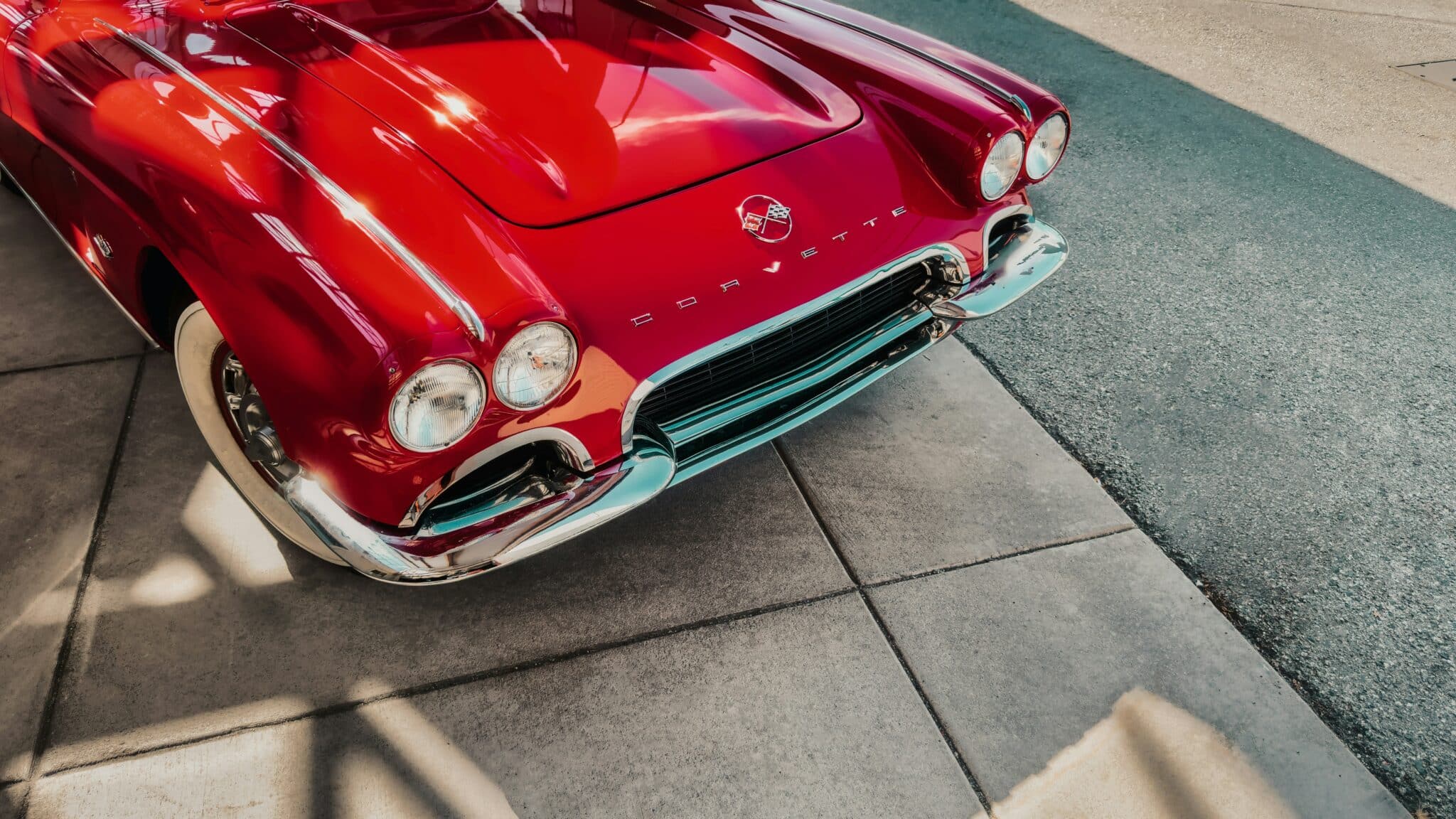
Since its release from the assembly line in 1953, the Corvette has been more than a rolling manifesto of freedom, power, and audacious design. The growl of an American V8 coupled with iconic lines cutting through the wind, paired with a logo that cannot be mistaken for anything else help define this Detroit classic.
From humble beginnings to supercar status, the Corvette has managed to push the limits of possibility with all four wheels. But how did this phenomenon evolve from a plucky upstart into the king of American sports cars? Buckle up for the burn, because we are about to scorch through seven decades of automotive history.
Birth of an American Icon (1953-1962)
General Motors earmarked the 1950s with an eagerness to produce something exciting. Enter the Corvette. An American sports car that could rival the best of Europe, and one made to be a fiberglass beauty unlike anything else on America’s roads. With its toothy grille, swooping fenders, and rakish windshield, love at first sight was quite real for many car enthusiasts.
However, any Corvette enthusiast worth their salt will attest that pristine parts can be more challenging to find for these earliest models than convincing a cat to swim. That is where specialists like WestCoastCorvette prove helpful. It’s a treasure trove of parts for restorers and collectors, from rebuilding a ’57 to simply admiring the craftsmanship of that bygone era. These early Vettes set the stage for years of automotive greatness to come.
The Stingray revolution (1963-1967)
If the first Corvette turned heads, the Stingray nearly gave people whiplash in the 1960s. This bad boy looked like it came out of a science-fiction flick. Its hidden headlamps, sharp beltline, and iconic split rear window made the Stingray sexier than a Hollywood starlet.
But this beauty wasn’t just about looks. The Stingray introduced a level of performance that would make owners of muscle cars shiver with envy. It came with an independent rear suspension and a powerful big-block V8. During this period, the Corvette started to earn its stripes as the ultimate American sports car. Built for the racecourse but equally at home on a weekend drive through town, the Stingray didn’t merely evolve the Corvette’s design. It revolutionized it.
The Mako Shark-inspired era (1968-1982)
Think back to the groovy days of bell bottoms and disco, but the Corvette had its far-out moment. Inspired by the sleek, predatory look of the Mako Shark concept car, the third-generation Corvette (C3) sported curves that could make a rollercoaster jealous.
With a long hood, bubble-top roof, and pinched waist, the C3 looked fast, standing still. It was around that time, however, that the Corvette really sunk its teeth into that cultural icon status. Whether tearing up the streets in “Corvette Summer” or decorating countless bedroom posters, the C3 Corvette was the stuff of dreams for an entire generation.
Digital age Corvettes (1984-1996)
As MTV and hair metal rolled in during the ’80s, so too did a Corvette that seemed like the product of using a ruler to draw its shape. A year’s absence, though, couldn’t keep it from coming back in force: the C4 Corvette of 1984 was silkier than shoulder pads on a power suit, itself an avoidance of curves for a wedge-shaped body that seemed to slice through the air with your eyeballs.
But it wasn’t all about looks. The C4 brought the Corvette into the digital age with an LCD panel for a dashboard that would have made Knight Rider jealous. This was a new Corvette with a new millennium mentality, where megahertz counted along with horsepower. Not everyone loved it, but you couldn’t forget it.
C5 and C6 (1997-2013)
The next model bridged generations with sleek lines, an iconic front fascia, and big, round taillights reminiscent of the ’63 Sting Ray. Formidably powerful, speedy, and good-looking, this Corvette survived the turn of the century and rode into a comfortable old age.
When the millennium rolled around, Chevrolet decided that the Corvette needed to reconnect with its heritage. C5 and C6 were the greatest hits in package-package – the art from former years was remixed for a modern age. The result was a Corvette that could keep up with the best European sports cars while looking unmistakably American.
These Vettes reigned in the curvy fenders and long hood reminiscent of classic models but had a twist. They are streamlined, aerodynamic, and with enough technology to make the average Silicon Valley startup envious. Most importantly, though, these models rekindled that love affair between America and its favorite sports car. Whether one was a die-hard member of the Corvette cult or a newcomer, these models had something for everybody.
The modern Corvette (2014-present)
We thought we knew the Corvette until Chevy came along and flipped the script. The C7 generation 2014 brought an angry design with sharp edges and gaping vents. Years later, the 2020 C8 Corvette dropped jaws worldwide by putting the engine behind the driver.
Conclusion
With every Corvette version change, it was something more than an evolution. The mid-engine format would remake the Corvette, making it resemble an exotic supercar with which even Italians might do a double take. Now, it’s a Corvette ready to tackle the backroads of America and the switchbacks of Europe. Love it or hate it, one can’t help but be impressed by how far the modern Corvette is taking its boundaries.
From its origins as a puny answer to European sports cars through its later status as a mid-engine marvel, it is safe to say the Corvette has been on one wild ride. Each generation marked something new, changing tastes in automotive design to the spirit of American innovation. But one thing’s for sure: whatever Corvette will come next, it will indeed create a stir, beat hearts, and keep the legend of America’s sports car burning rubber for generations to come.