
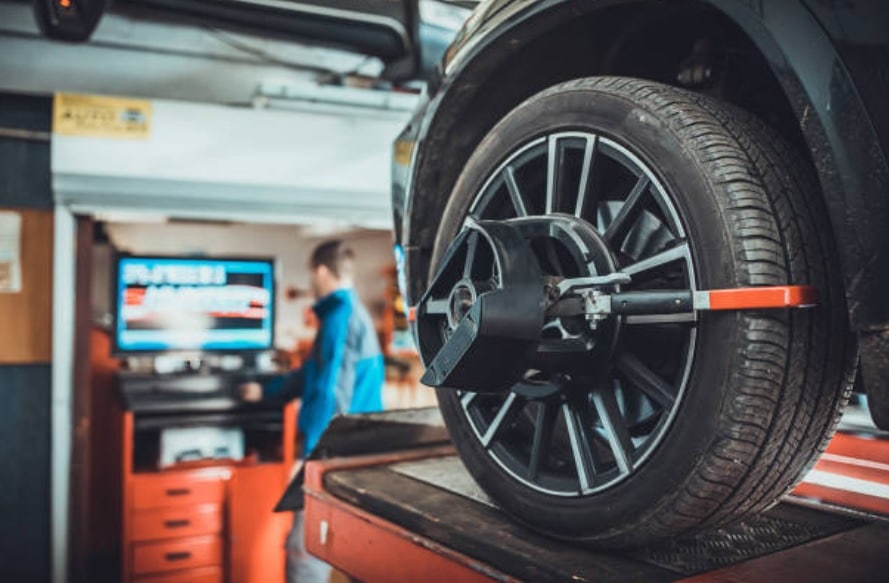
When it comes to maintaining your vehicle, one of the critical but often overlooked aspects is wheel alignment. Proper wheel alignment ensures that your SUV or truck’s driving and handling performance is functioning correctly, drives smoothly, and maintains optimal tire wear.
In this article, we will delve into what wheel alignment is, why it’s important, signs that indicate your vehicle needs alignment, how often it should be done, and what happens during a wheel alignment procedure.
What is wheel alignment?
Wheel alignment refers to the adjustment of the angles of the wheels so that they are perpendicular to the ground and parallel to each other. These angles include camber, caster, and toe. Camber is the angle of the wheel when viewed from the front of the vehicle, caster is the angle of the steering axis when viewed from the side, and toe is the angle of the wheels when viewed from above. Proper alignment ensures that the wheels roll in the optimal direction, minimizing tire wear and ensuring that the vehicle drives straight and handles properly.
Importance of wheel alignment
Maintaining proper wheel alignment is crucial for several reasons:
- Safety: Properly aligned wheels contribute to safer driving by ensuring that the vehicle responds predictably to steering inputs and maintains stability.
- Tire Wear: Misaligned wheels can cause uneven tire wear. This not only reduces the lifespan of the tires but also compromises their performance and safety.
- Fuel Efficiency: Correct alignment reduces rolling resistance, which can improve fuel efficiency by ensuring that the vehicle moves more efficiently.
- Handling: A vehicle with proper alignment handles better, providing a smoother and more comfortable ride for passengers.
Signs your vehicle needs alignment
Several signs indicate that your vehicle may need a wheel alignment:
Uneven Tire Wear: Check your tires for signs of uneven wear, such as excessive wear on the inside or outside edges.
Vehicle Pulls to One Side: If your vehicle pulls to one side when you are driving on a straight, flat road, it may indicate alignment issues.
Steering Wheel Off-Center: A crooked steering wheel when driving straight is a common sign of misalignment.
Vibration in Steering Wheel: If you feel vibrations in the steering wheel, it could be due to misaligned wheels.
What happens during a wheel alignment procedure?
A professional wheel alignment involves several steps:
Inspection: The technician will inspect the tires, suspension, and steering components for any signs of wear or damage.
Alignment Measurement: Using specialized equipment, the technician will measure the current alignment angles of the wheels.
Adjustment: Based on the measurements, the technician will adjust the camber, caster, and toe angles to manufacturer specifications.
Test Drive and Final Adjustment: After adjustments are made, the technician will test drive the vehicle to ensure that it drives straight and handles correctly. Further adjustments may be made if necessary.
Wheel Balancing: Sometimes, wheel alignment is performed in conjunction with wheel balancing to ensure that the weight distribution on each wheel is even.
Conclusion
Maintaining proper wheel alignment is essential for the overall performance, safety, and longevity of your vehicle. By understanding what wheel alignment is, why it’s important, and the signs that indicate your vehicle needs alignment, you can ensure that your rig rides smoothly and efficiently. Regular inspections and timely adjustments by qualified technicians will help you avoid unnecessary tire wear, improve fuel efficiency, and enjoy a safer driving experience.