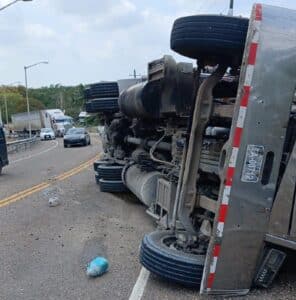
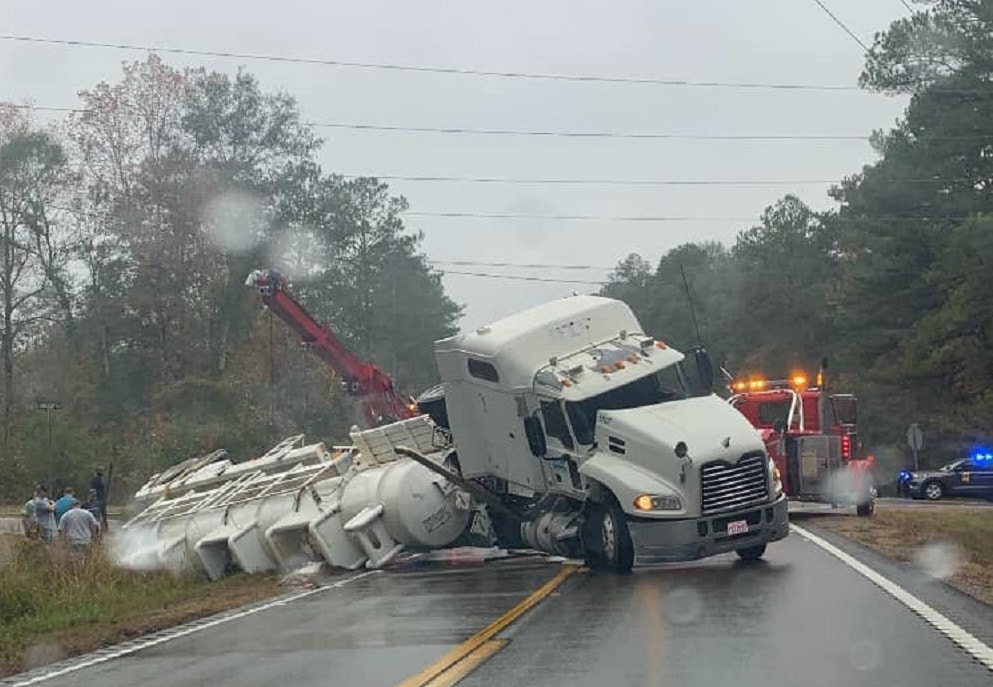
Commercial trucks keep the American economy moving, as they stock our stores with the products we rely upon. That said, it’s not uncommon to pass dozens (if not hundreds) of large trucks while on the highway, even if you’re just doing a quick commute to work.
However, large trucks can pose a threat to other vehicles on the road if they experience mechanical issues. Brake failure can be particularly deadly, as it can result in a trucker losing control of their rig entirely. In this article, we explore the mechanics of truck brakes, explain some of the possible causes of brake failure, and discuss how to keep our roads safe for everyone.
How does a truck’s braking system work?
Commercial trucks rely on a fascinating balance of air and metal to slow down their massive loads. Unlike the hydraulic systems found in regular passenger cars, trucks are equipped with air brakes. A complex system of air compressors, valves, and brake chambers work as one to allow truckers to control the speed of their rig.
At the heart of the air brake system is the air compressor, which pumps pressurized air into the system. The compressed air passes through a network of tubes to the brake chambers. These chambers transform the air’s force into friction via housing pistons that clamp on brake pads, thus slowing the vehicle’s wheels.
Other crucial components of a truck’s braking system include:
- Relay valves: A truck’s relay valves direct air pressure to the appropriate brake chambers based on the driver’s pedal input. This gives the trucker more control over how quickly their vehicle comes to a stop.
- Spring brakes: These serve as a backup measure that automatically engages to hold the truck stationary if air pressure drops.
- Anti-lock braking systems (ABS): Most modern vehicles on the road have ABS systems, and commercial trucks are no exception. An ABS system rapidly pulses the brakes to prevent wheel lockup, so a trucker doesn’t lose control of their vehicle when braking heavily.
Understanding each component and its role is vital for appreciating the delicate balance of forces that keeps trucks driving properly and under control. It’s a testament to modern technology that a system was devised to efficiently bring vehicles weighing up to 80,000 pounds to a complete stop.
Regular wear & tear can cause a number of problems
Similarly to any other type of motor vehicle, a truck’s brakes endure a constant battle against friction. The heat generated during braking slowly chips away at the brake pads and drums. When a truck is aggressively braking to slow downhill speed or the vehicle is fully loaded, the wear on the brakes is significantly increased. This gradual erosion reduces stopping power, increasing the time and distance required for the truck to stop moving.
Brake failure due to wear and tear, while not impossible, is generally avoidable with proper awareness and vehicle upkeep. Warning signs that a truck’s brakes are dangerously worn down include loud squealing when braking, increased stopping distances, and warning lights on the dashboard. If any of these issues are noticed, the truck’s brakes should be serviced immediately. Regular inspections and maintenance can also keep the truck safe and roadworthy. If a collision occurs because of improperly maintained brakes, the victims may be able to file a San Antonio truck accident lawsuit.
Excessive heat can compromise a truck’s braking ability
Ever heard of brake fade? Continuous braking on long descents, while hauling massive loads, or even due to aggressive driving can cause the brakes to run incredibly hot. In some cases, they may exceed their thermal limits. When this occurs, the brake pads may begin to glaze over, which reduces their ability to grab the drums effectively. This is problematic in and of itself, but excessive heat can also cause brake fluid to boil. When brake fluid starts building, it creates air bubbles in the system that can make it impossible for a driver to control their truck.
Fortunately, it’s usually possible to avoid damaging your truck’s brakes through excessive heat. Techniques like engine braking, using lower gears to slow down, and avoiding unnecessary braking can preserve the integrity of your vehicle’s braking system.
Fluid contamination can cause massive brake failure
Brake fluid is an essential component of a truck’s braking system. It transmits pressure from the pedal to the brake chambers, which in turn allows for a smooth and controlled stopping process. However, contaminants can get into the brake fluid and significantly reduce the efficiency of the entire system.
Moisture is one of the most problematic contaminants. It can enter through undetected leaks or even simply from the atmosphere. When moisture is added to the truck’s brake fluid, it removes the fluid’s ability to withstand pressure. Another potential issue is air bubbles. These can inadvertently be caused by improper vehicle repairs or worn components. Undetected air bubbles can cause sporadic and unreliable braking, limiting a trucker’s ability to adequately keep their vehicle under control.
As with most mechanical failures, regular inspections and timely repairs can keep minor issues from escalating into a life-threatening situation. A skilled mechanic can identify leaks and replace worn components before they compromise the fluid’s integrity. By preserving a truck’s braking system, we make the road a safer place for everyone that uses it.
How proper maintenance can prevent problems
Neglecting proper vehicle maintenance can have catastrophic consequences. Corroded components, worn-out brake pads, and malfunctioning valves, can leave a trucker entirely unable to control their vehicle in an emergency. Regular inspections can catch many of these issues before they escalate to a serious incident. Timely repair work can keep a truck performing at peak efficiency, making a trucker’s life easier and safer.
Keep yourself safe on the road by maintaining your truck’s brakes
From everyday wear and tear to excessive heating, truck brakes can suffer from a number of adverse conditions. To reduce the chances of experiencing a scary situation on the road, make sure to have your truck regularly inspected. If you notice any warning signs of brake failure, such as increased stopping time or loud squealing, be sure to have your vehicle services as soon as possible. We hope this article helps you enjoy many successful journeys in the future.