I’ve said it before, and I’ll say it again, electric vehicles aren’t the problem. People want to rail against the range and tell automakers that 220 miles or 250 miles isn’t good enough. And I’d like to say it is enough – until it isn’t. And the isn’t has everything to do with the EV charging infrastructure.
Last year, I wrote an open letter to anyone installing an EV charging station, with a focus on convenience and safety – all of that still applies. This year, I want to talk to companies like ChargePoint and Electrify America that already have charging in place, and I want to say this: You suck. I also want to call out every non-Tesla automaker that is pushing out EVs: You aren’t much better.
I regularly drive 200 miles to visit an ailing parent, and when I get an EV to test, I always have to ask if it will make the trip. I opted not to take a Nissan Leaf over the summer due to lack of charging infrastructure, and there have been a couple EVs hovering around 200 miles of range that I’ve left in the garage as well.
I wouldn’t have to do that if the infrastructure wasn’t broken and if non-Tesla automakers didn’t have a “Field of Dreams” mentality. I hate to break it to you all: If you build it, and it’s broken, they won’t come. At least not for long.
Fix what’s broken
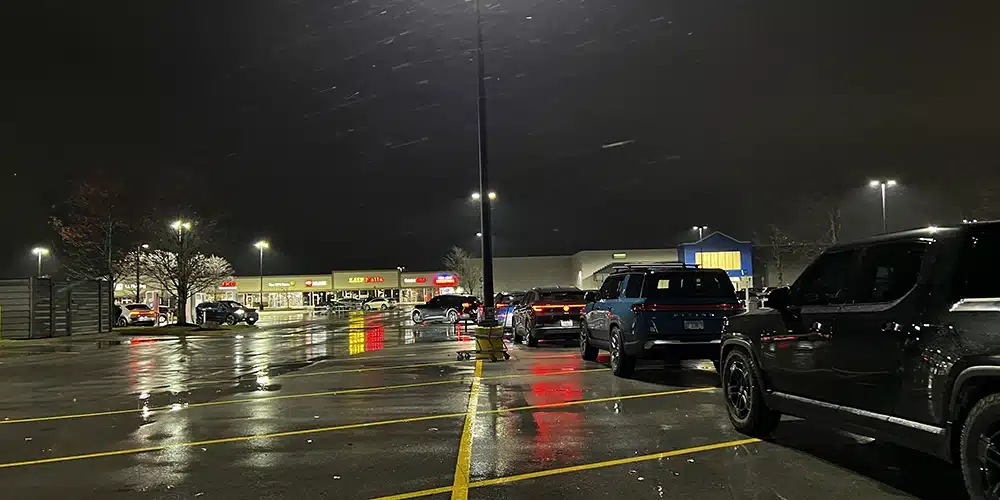
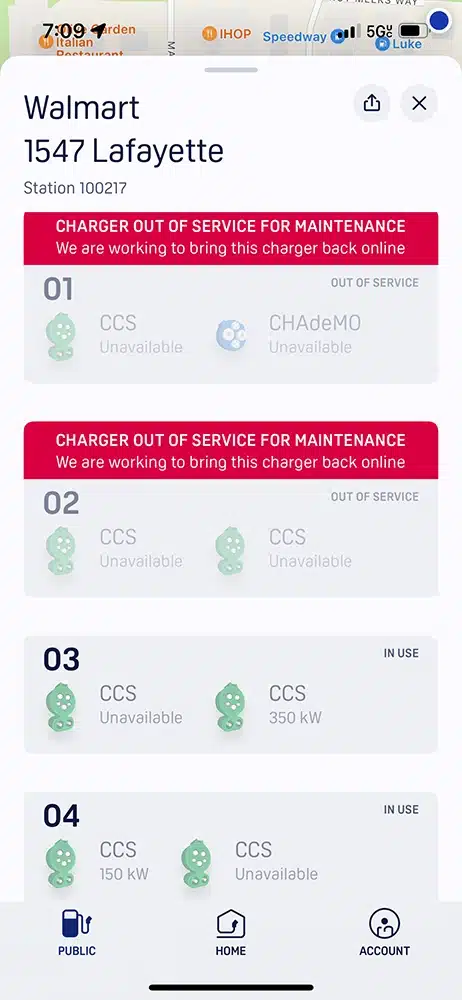
On my last 200-mile trip, I stopped at an Electrify America DC fast charging station, which has four chargers, and they were all full and there was a line. Plus, one clearly wasn’t working. I had about 90 miles of range left and 70 miles to drive, so I figured I’d slow down to 65 MPH (speed limit was 70 MPH), draft behind a semi and turn off my HVAC. That didn’t work, so I had to detour to a ChargePoint Level 2 housed in a hospital parking lot. It got me 16 miles of range in 1 hour 6 minutes. That was enough to get me the rest of the way. Barely. Still driving slower than the speed limit and with the HVAC off.
On my way back, I knew I had to hit the fast charger because I needed to be at 90 to 100% to finish the final 131 miles of my drive – with nary a charger on the route. That Electrify America station now had two chargers out of service and the line to charge was 2 hours long. Yep. Two f*cking hours. We were all trying to get to Chicago, and we all needed to be at 90 to 100% to make it. So, a 3-hour drive became a 6-hour drive.
Don’t get me started on the fact that the vehicle I was driving had 350 kw charging capability, was at a 350 kw charger and was only taking in 60 kw.
If those other two chargers had been operable, and if the chargers that were working were pushing out the optimal power, the wait time would have been cut in half.
Fix. What’s. Broken.
Build more EV charging infrastructure faster
I know that’s easy for me to say because I don’t know all the nuances of what it takes to build a station. But I’m saying it anyway. There should be a working charging station every 30 to 60 miles along every major interstate in the US. Full stop. Until there is, EV adoption among non-Tesla owners is going to be tough.
So, government, automakers, privateer EV charging stations – if you want EVs to be the norm, put your money where your mouth is. Otherwise, stop shoving the EV agenda down people’s throats. I say this as someone who actually likes EVs and wants EVs to succeed. You’re only going to piss people off and push EV adoption even further down the road because broken and lacking infrastructure has left a bad taste. People have very long memories, and even after the infrastructure is built and fixed, you’re going to have those people who remember when it wasn’t and shy away.
You can tell me until you’re blue in the face that the average driver only drives 37 miles per day, and therefore a home charger is adequate for their needs. I’m calling bullshit. People buy cars based on perceived usage, not actual usage. Look at truck owners. Most of them will never tow or haul, but they want the capability just in case – or for that one time in 10 years that they will. And Jeep or Land Rover owners? How many of them actually go off road?
People who buy an EV, especially if it’s their only vehicle, want to know they can take a road trip or will have a place to top off “just in case” of weather or other unforeseen circumstances. Even if they only drive 37 miles a day.
People who live in California or other EV friendly states don’t understand the Midwest charging angst. We do not have plentiful charging infrastructure, and what is there is broken or slow. Every Electrify America station I’ve gone to over the last four days had at least one charger out of commission.
Stop testing range in a vacuum
While I’m on a tear, I may as well call out the EPA as well. Unless something has changed that I’m unaware of, most of the testing that goes into range is done at 55 MPH or less. While that’s great for city driving, most interstates have speed limits of 70 MPH. So, if a vehicle has a range of 220 or 250 miles – that’s at 55 MPH or less. Therefore, if you’re taking a road trip and driving the speed limit, you’re going to get something significantly less than what’s on the sticker sheet.
Case in point, the vehicle I was driving this past week had 236 miles of range. Actual range was about 195 miles – and that was with some stretches of hypermiling techniques thrown in (no HVAC, driving 55 to 65 MPH, drafting behind a semi).
The EPA needs to stop testing at 55 MPH and get on actual roads with real speed limits to give accurate range for electric vehicles. Oh, and cold-weather range would also be lovely.
The only fast charging station between Indianapolis and Chicago is an @ElectrifyAm in Lafayette Indiana. There are only two working chargers at the station, and I am currently fifth in line. With 131 miles to drive & 122 miles of range. I have no choice but to wait. FML pic.twitter.com/5xg2C4KhWp
— Jill Ciminillo (@jillciminillo) November 27, 2023
Buy Tesla if you drive 200+ miles
While Genesis, Hyundai, Kia, Volvo, Mercedes, BMW, Polestar, etc., are building amazing electric vehicles right now, I’m having a hard time recommending them as a primary driver – and it’s all because of infrastructure.
I set off a viral conversation on Twitter with the photo of the line waiting to charge at Electrify America. And the Teslarati came out en force stating that there were a line of Superchargers down the road. They talked about never having range anxiety because of the plentiful infrastructure built by Tesla during the past 12 years. They asked why anyone would buy a non-Telsa if they have to drive any distance. They went on and on and on and ON.
But here’s the thing: They’re not wrong.
Until the infrastructure stops failing, if you need to drive more than 200 miles on a regular basis, Tesla is your best option. The good news there: Tesla prices are down 25% from last year.
The better news, within a couple years, most major automakers will be adopting the North American Charging Standard (aka Tesla charging). Which is great if you can wait a couple years to buy an EV. But if you want an EV now and drive 200+ miles now, you might want to take another look at Tesla.
The bottom line
I’m writing this from a place of frustration because of not only my most recent experience driving an EV 200+ miles but also every experience I’ve had to date. EVs currently aren’t for everyone. And those who want to buy an EV need to take off their rose-colored glasses and do research – not only on actual vehicle range (ignore the EPA) but also on charging infrastructure built along your well-traveled routes.
I know more infrastructure is coming. But it’s not coming soon enough for most Americans. So, slow your roll EV pushers. We’ll get there eventually, but today is not that day.