
In part one of this series, basic winching pro tips, we talked about stretching a winch rope and several best practices. In part two of using a winch, we’ll expand on the use of a vehicle-mounted electric winch.
Once you’ve stretched your vehicle winch’s line and thoroughly understand winching basics, it’s important to learn where proper recovery points are on vehicles and how to maintain your winch between uses.
Proper recovery points
Knowing which points on your adventure rig are legitimate recovery points versus tie-down points is critical. If you’re unsure, check your vehicle’s owner’s manual or with your aftermarket winch bumper’s manufacturer. Tie-down points are not rated recovery points. Rather, they’re simply used during vehicle transport. Always use rated recovery points.
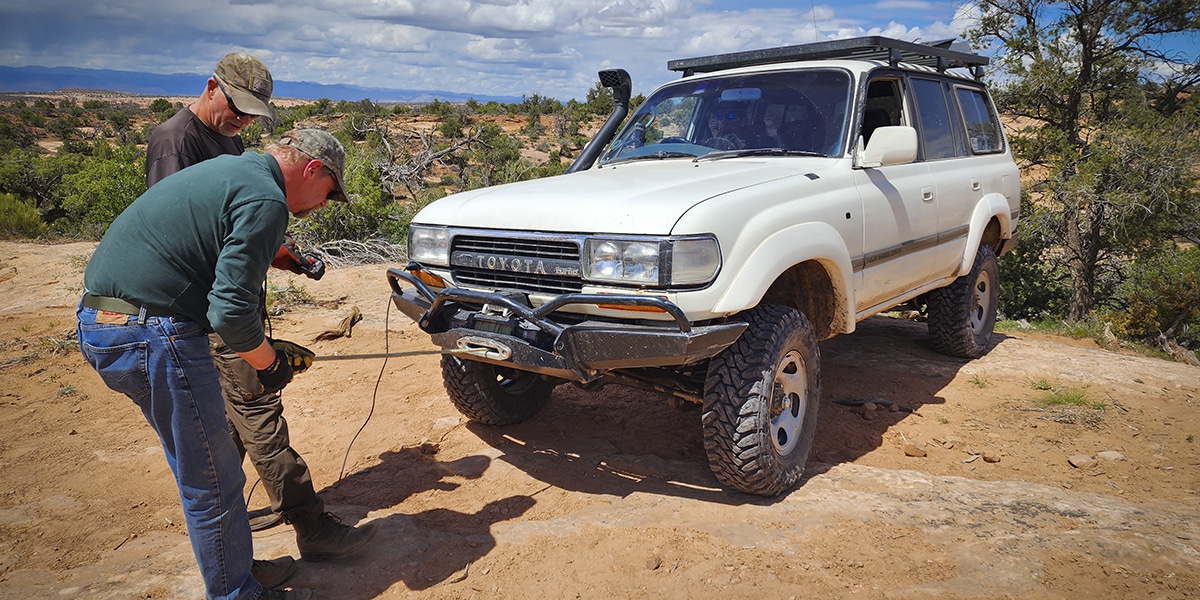
Many high-quality winch bumpers are designed with integrated heavy-duty recovery points, to which a variety of metal or soft shackles can easily connect. If a recovery point has a rounded smooth-radiused opening, soft shackles can be used. If it has sharp, 90-degree edges, a metal shackle should be used as soft shackles could abrade under tension.
Pro tip: Never use a tie-down point or trailer ball hitch for vehicle recovery! Doing so could cause serious harm to a vehicle or even worse, the people standing next to it.
Also, regularly check your vehicle’s recovery points to ensure they’re not rusted through and are in good working order. This is particularly important when living in areas that use road salt.
Do winches need maintenance?
Regularly inspect your vehicle’s electric winch, along with associated power cables and connections. If you don’t use your winch often, freespool the line out a few times a year and power it in under a slight load: essentially re-stretching the rope. This relubricates and recoats a winch’s gears, bearings and bushings and helps to keep everything running smoothly. It can also dissipate moisture that may have built up with inactivity.
Maintaining a winch rope can lengthen its overall life span. Wire rope can develop burrs. It can also rust if it’s not cared for properly. Synthetic rope can degrade from the inside out if not regularly cleaned.
Pro tip: After a dirt- or mud-filled day on the trails, unwind your winch line and clean the entire rope with a bucket filled with non-abrasive dish soap and water. Dunk small sections of the rope into the bucket at a time and squish it together like a Chinese finger trap toy. Soap will penetrate to the winch line’s core and clean through each of its strands. Note: Be sure to rinse the rope with clean water after cleaning so the remaining dirt and grime exits the multifilament strand rope.
It doesn’t matter what type of winch line type you have, if a winch rope has kinks, slices, fuzzy strands or looks otherwise compromised, replace it. You don’t want to learn the hard way if your equipment fails during a precarious vehicle recovery.
Knowledge is power when using a winch
There’s a wide world of winches out there. The most important thing is to understand your winch and practice with it before you go. No matter if it’s your vehicle’s electric winch or its recovery gear, understand your equipment’s capabilities and limitations. Practice, practice and practice. Arming yourself with proper winch and recovery know-how will ensure safer, sufficient and smoother trips off the well-worn path.
Editor’s note: All photos on this page are by Mercedes Lilienthal.