
The big news this week was the Tesla Cybertruck delivery event where 10 new owners got the opportunity to meet Elon Musk and drive off from the event.
[Related content: Tesla Cybertruck rust in the rain? Rail dust spots maybe?]
Much has been made of this “truck 2.0” as one reviewer put it, and the automotive world seems split with many journalists rolling their eyes while others are completely shocked that myself and others like me aren’t over the moon about the truck. My reasons for being underwhelmed are pretty simple: I don’t really see what’s so amazing about it from a practical, truck-guy point of view.
Tesla Cybertruck style and material choice
Let’s first start with the design of the Tesla Cybertruck and its futuristic looks.
I’ve watched my fair share of videos on it and heard from the pro-Cybertruck audience. They point out they like how the truck doesn’t look like any of the other current “boring” truck designs and styling doesn’t matter. It is an EV after all, and it’s all about efficiency and specs.
My question is this: If styling doesn’t matter, then why aren’t we all driving vehicles that look the same? I mean, if styling isn’t a thing, and it’s all about efficiency, then every car on the road should look like an aerodynamic science project.
The fact is, styling does matter — especially for truck guys. We are proud of how our trucks look, and we take a lot of time and effort to take care of them.
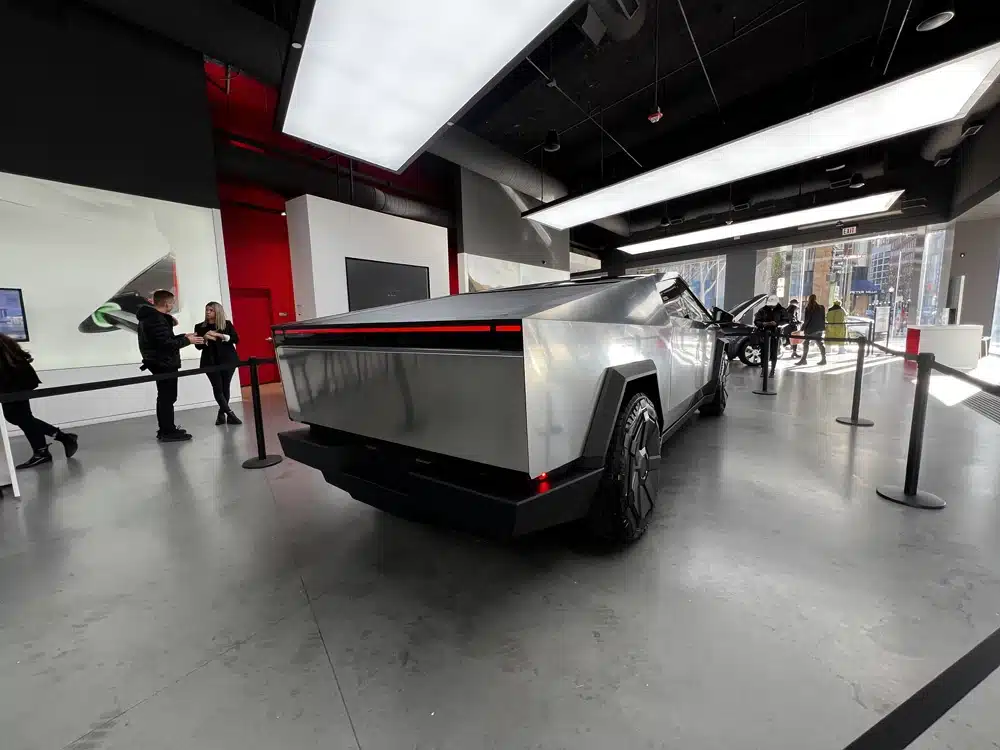
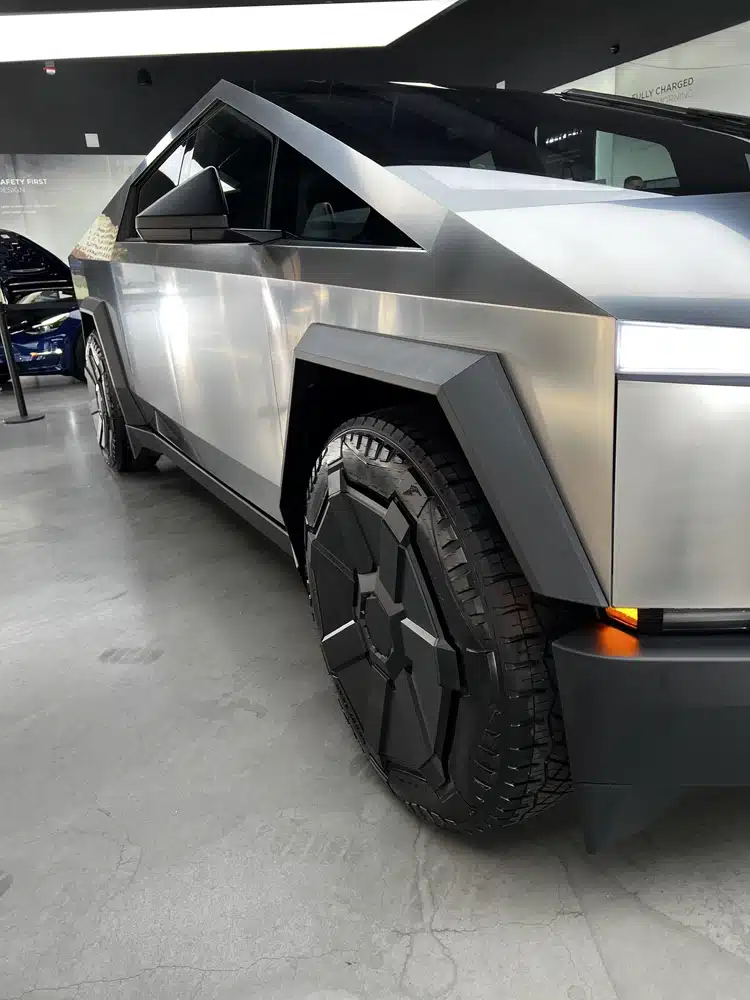
Tell me, then, why would we want a stainless steel truck? Stainless steel is rust proof and shouldn’t corrode, but it will scratch just like stainless steel refrigerators. Finger print marks? Yup, all over it. Scuff marks? Yup.
The Ludicrous speed is a gimmick
If styling doesn’t matter, then let’s focus on the actual performance of the Cybertruck.
First, it is faster than a Porsche 911 while towing a Porsche 911. Sigh. It’s electric. It should be faster than a gas vehicle. And going supercar fast in a completely silent truck has never been a truck-guy thing. That’s a video-game thing. Truck guys want to hear the engine, and after they show off to their buddies how fast it is in the first week they own it, they tend to drive normally for the rest of its ownership.
I’ve driven the GMC Hummer EV, the Ford F-150 Lightning and the Rivian R1T. After I did 0-to-60-MPH a handful of times with whatever “boost” or Watts-to-Freedom mode these electric trucks offered, I just stopped doing it. It is like going on a roller coaster 50 times. Your enthusiasm wanes after a while.
Out pulling an F-350? So what
Next, it can tow 11,000 pounds and out pull an F-350 with a diesel. OK. That’s great and all, but how far can it tow? What trailer is 11,000 pounds? How do you charge the Tesla Cybertruck when it’s on E while towing? We’re not talking about the charging infrastructure with that last question.
As we’ve seen, electric trucks don’t tow that far with that much weight. We followed a Rivian R1T on a road trip while towing, and it was painful. The truck had to stop every 100 miles, or nearly every hour and a half, to charge all the way from California to Michigan.
Bumper pull trailers, like campers, which are a common thing to pull, don’t get even close to 11,000 pounds. Instead they are around 5,000 to 7,000 pounds. The only thing that comes close to 11,000 pounds is construction equipment. Outside of that, most full-size trucks tow more than 11,000 pounds. So, I just don’t see what’s so impressive with that towing figure — especially since the original figure Tesla tossed around was 14,000 pounds.
Finally, how in the heck do you charge it while towing? Tesla put the charging port on the rear driver’s side behind the wheel. This really sucks. Why? Well, if you are towing, you’ll have to unhook the trailer, back into the charging spot to plug in, then hook up the trailer after you charge up. If it was on the front, you could pull in and then reverse out. Sounds like Tesla engineers didn’t hear the internet at all since this has been a common complaint for a few years now with EV trucks.
2,500 is nice, but what’s the real payload?
Another important spec with trucks is payload or how much you carry inside the truck and in the truck bed. Apologies to one of the biggest tech Youtubers out there, but payload isn’t just weight you carry in the bed.
During the presentation Elon Musk said the payload was 2,500 pounds, and that’s pretty good for the 6,843-pound truck.
I’ll be interested to hear what the real payload is for this truck. Real you ask? Yup. Every truck manufacturer touts a high payload number, but once you get the truck, it’s much less. Why? Features and different powertrain weights.
The Tesla Cybertruck will come in three different versions with a varying range of 250 to 340 miles. This means more motors and more battery cells — in other words, more weight. And if you get the range extender option, you are adding even more weight while losing cargo volume in the bed. All of this will affect the actually payload, which means it will be something less (perhaps a lot less) than 2,500.
Crash-testing vs. bullets
The Cybertruck’s outer panels will absorb a variety of bullets from different caliber guns. That’s a fact.
My only issue with this fact is I’ve just never thought about, well, firing my rifle at my truck. I mean it is a fun demonstration, but is it meaningful?
As a father of three, my bigger question is: What happens in a car crash. I’ve seen a video on a crash test and listened to a behind the scenes podcast on crash safety. They detail how safe occupants are in a crash thanks to the exoskeleton frame and how it won’t roll over in an accident. I agree. It looks really safe and should have high marks for crash safety. If I were Tesla, I’d be touting crash safety and not firing a bullet at it.
I do, however, have some questions on how expensive a post-crash or gun-toting-fanatic-encounter repairs are going to be. Stainless steel is notoriously hard to work with. Musk himself admitted that fact during the presentation.
Is 128 miles in 15 minutes fast enough?
Another big Cybertruck topic is the efficient 48-volt system and 800-volt charging capability. With the former, though others have been working on it, no one has implemented it. So, I’ll grant that point. With the latter, however, other automakers like Hyundai and Kia already have this tech in place.
What’s really curious about all this: The Tesla Superchargers currently top out at 500 volts. You see the problem, right?
Tesla claims you can add up to “128 miles in 15 minutes” on the Cyberbeast and up to “136 miles in 15 minutes” on the All-Wheel Drive. That’s still too slow in my book, and frankly, will it even be possible on the current Tesla charging network?
Lockable storage is already in trucks
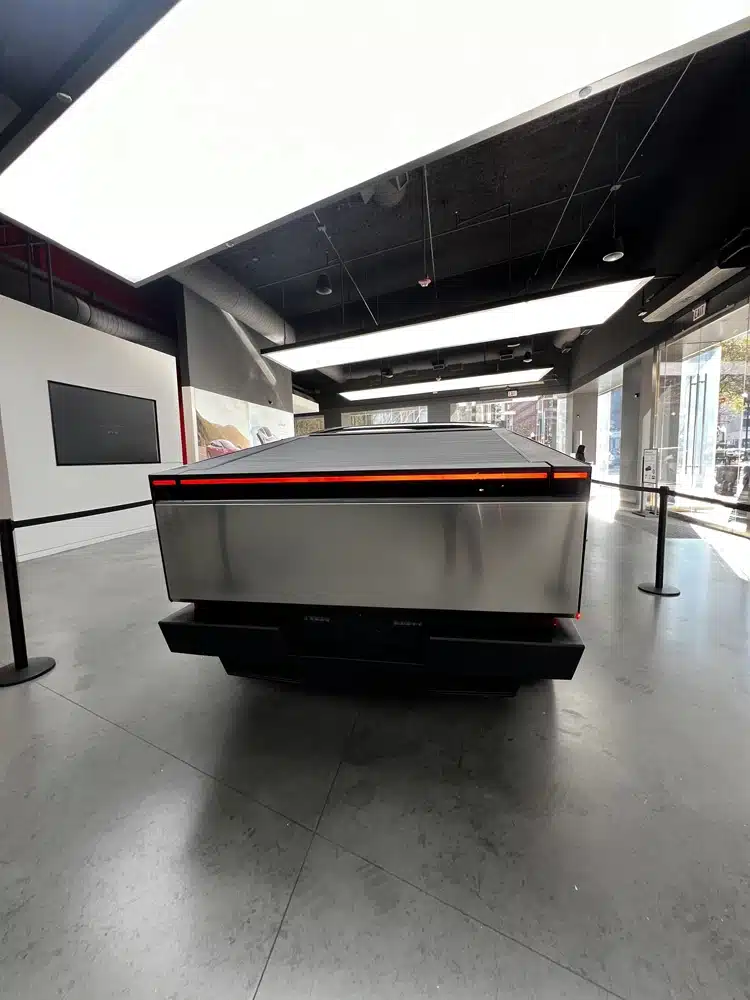
With the way the Teslarati talks about the lockable tonneau cover on the Cybertruck, you’d think it had never been done before. Sure, it’s powered. And yes, a full-grown man can stand on the cover without breaking it. But we’ve had lockable bed storage for years already. Ever heard of the Rambox? Or maybe you’ve seen the factory-installed lockable tonneau cover on the Hyundai Santa Cruz. Outside of that, you can buy a hard liner with a lock, a topper or hard panel tonneau cover.
The Cybertruck powered tonneau cover isn’t anything new. What is new is that you can’t see out the rear window whent he cover is closed, so the truck doesn’t have a rear-view mirror. Instead, you look at the 18.5-inch center touchscreen to see what’s behind you via a rear facing camera. Now that’s new and different.
Promises not delivered
Finally, what happened to the sub-$40k price and massive range? So, we don’t get shatterproof glass (shatter-resistant isn’t the same), we can’t tow 14,000 pounds and we can’t go more than 500 miles on a single charge. More promises not delivered, which seems to be par for the course with Tesla.
What do we have in terms of pricing and range? A lot of disappointment. The breakdown is this:
- Rear-Wheel Drive ($60,990): 250 miles of range, 6.5-second 0-to-60-MPH time, won’t be available until 2025.
- All-Wheel Drive ($79,990): 340 miles of range, 4.1-second 0-to-60 MPH time, 112 MPH top speed, 600 horsepower, 7,435 pound-feet of torque, 11,000-pound towing capacity, will be available sometime in 2024.
- Cyberbeast ($99,900): 320 miles of range, 2.6-second 0-to-60 MPH time, 130 MPH top speed, 845 horsepower, 10,296 pound-feet of torque, 11,000-pound towing capacity, will be available sometime in 2024.
That’s a lot of money for a truck that doesn’t come with paint, has a spartan interior and is longer than a standard 18-foot garage.
This means even with the fancy steer-by-wire (no driveshaft) and its tight turning radius, it may not fit where you want it to (like your garage) since it is just too big. No way around that.
The bottom line
Many of my colleagues have been frustrated, bewildered and all in all beside themselves I’m not having a love affair with Cybertruck. It is, for them, moving the industry forward in every way.
I see this as moving backward or staying the same. Stainless steel isn’t a new material (see: Delorean), and if it was superior, automakers would have been using it for years. Add that to a range that’s the same as or less than other EVs, high price and impractical charge port location, and meh.
Then there are the features that other trucks already have, such as lockable storage, power outlets in the bed, air suspension for higher ride height and four-wheel steering. Amazing features to be sure, but there is nothing new there.
Oh and styling, yeah, apparently that doesn’t matter. I just can’t wrap my head around that argument.
What do you think? Truck 2.0 or are you as underwhelmed as I am?








2 comments
Richard Williamson
Majority of Tesla drivers moved up from a Prius so I’m not surprised by the disconnect from the engineering standpoint with a truck. They just don’t know
breathing borla
your spot on Tim, its a total impracticable POS status symbol. It would be a PITA to tow with and in winter towing I bet the range would be really bad.
no thanks, Ill keep my current truck