
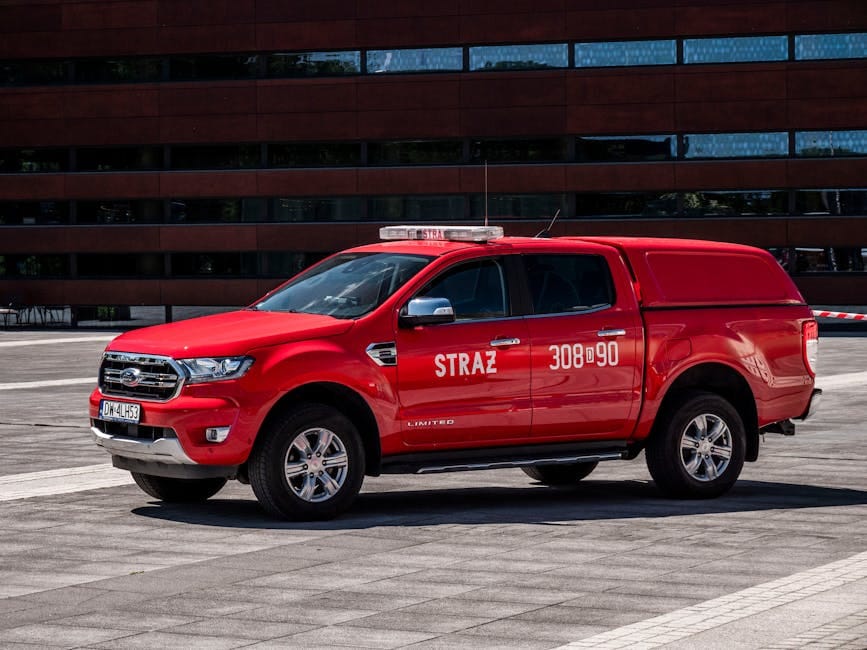
The pickup owner with 60 acres in central Nebraska or western Texas has a question that does not come up at the dealership. The truck is built. The suspension is upgraded, the wheels are right, the bed has the rack and the tonneau and the underbody storage. The next bolt-on conversation is whether the next slide-in piece is another tool box or a fire-skid unit that turns the truck into a first-response asset for the property. The decision usually starts with the payload math, runs through the electrical capacity, and ends at the install-and-uninstall workflow that determines whether the build is usable for the rest of the year.
Pickup fire-skid builds are one of the more practical utility decisions a rural pickup owner makes. Operators like BLZ Fire Skids and the broader slide-in skid market produce units sized for half-ton, three-quarter-ton, and one-ton bed configurations, with electric or gas-driven pumps, water tanks rated 40 to 300 gallons, and modular plumbing that turns a working truck into a fire-protection asset without committing the bed full-time. The owner who matches the skid to the truck’s actual capacity (not the badge spec) usually lands at the build that pays back rather than the build that overloads the suspension on day one.
Why Should Pickup Builders Treat Fire-Skid Units as a Real Spec Decision?
The first thing to understand is that a fire-skid is a load-bearing modification, not a casual bed accessory. A 100-gallon water tank weighs 833 pounds full. The skid frame, pump, plumbing, and ancillary hardware add another 150 to 350 pounds. The full-load weight (1,000 to 1,500 pounds for a typical 100-gallon build) sits in the bed against the published payload capacity, and the truck’s behaviour changes meaningfully under that load.
The factors that shape the decision:
- Payload math. A half-ton with a 1,500-pound payload cannot carry a full 100-gallon skid plus passenger and tools without exceeding GVWR. The math runs on the door-jamb sticker, not the brochure.
- Electrical capacity. Electric pumps draw 40 to 100 amps. Stock alternators rated 150 to 220 amps handle that with idle margin only if the rest of the load is light.
- Centre of gravity. A loaded skid raises the bed-side centre of gravity, especially with a tall tank. Stock suspension sometimes surprises owners with sag and roll feel on rough terrain.
- Public-safety alignment. The U.S. Fire Administration publishes the consensus guidance municipal departments follow on fire-protection equipment use and training, and the build should reflect that framework.
A slide-in fire-skid is a self-contained pump-and-tank unit for a standard pickup bed, with pump output rated in gallons per minute, a water tank, hose reels, nozzles, and the plumbing to deliver water for hand-line and perimeter-defence work. The wider rural-property defence framework runs through programmes like Firewise USA, which publishes the community-level practices a pickup-mounted skid complements on the active-response side.
What Should Pickup Owners Look For in a Skid Manufacturer’s Specifications?
A short checklist for owners evaluating manufacturers before the order:
- Bed-fitment specifications matched to the truck. The manufacturer should publish exact bed-fitment specifications for the major makes and bed sizes (5.5-foot, 6.5-foot, 8-foot beds; full-size and compact). Vague references to “fits any pickup” are a warning sign.
- Pump output and pressure data. A 5-gpm pump suits hand-line work; a 20-gpm pump suits longer hose reaches at higher pressure. Owners should match output to the use case (hand-line versus perimeter defence).
- Tank capacity matched to the response window. A 50-gallon tank handles short hand-line work; a 100-to-200-gallon tank handles perimeter defence and meaningful mop-up duty.
- Modular construction and uninstall time. A skid that uninstalls in 30 minutes is usable for the rest of the year. A welded-in build commits the truck to fire duty year-round, which most owners do not want.
- Materials and corrosion resistance. Stainless or polypropylene tanks last meaningfully longer than carbon-steel options. Pump bodies in bronze or stainless handle the salt-air or hard-water conditions some properties present.
- Warranty and parts availability. A 2-to-5-year warranty on the pump and structural elements is the standard floor. Parts availability through the manufacturer’s network matters when a pump impeller fails on a Saturday afternoon.
What Common Mistakes Surface in Pickup-Skid Installations?
A short list of recurring mistakes that surface in post-install reviews:
- Overloading the half-ton truck. Owners running 150-to-200-gallon skids on a half-ton bed routinely exceed payload, which produces accelerated wear on suspension, brakes, and drivetrain.
- Skipping the alternator audit. Electric-pump skids paired with stock alternators in cold-start conditions sometimes drain the battery during a serious mop-up shift. The audit is a five-minute spec read.
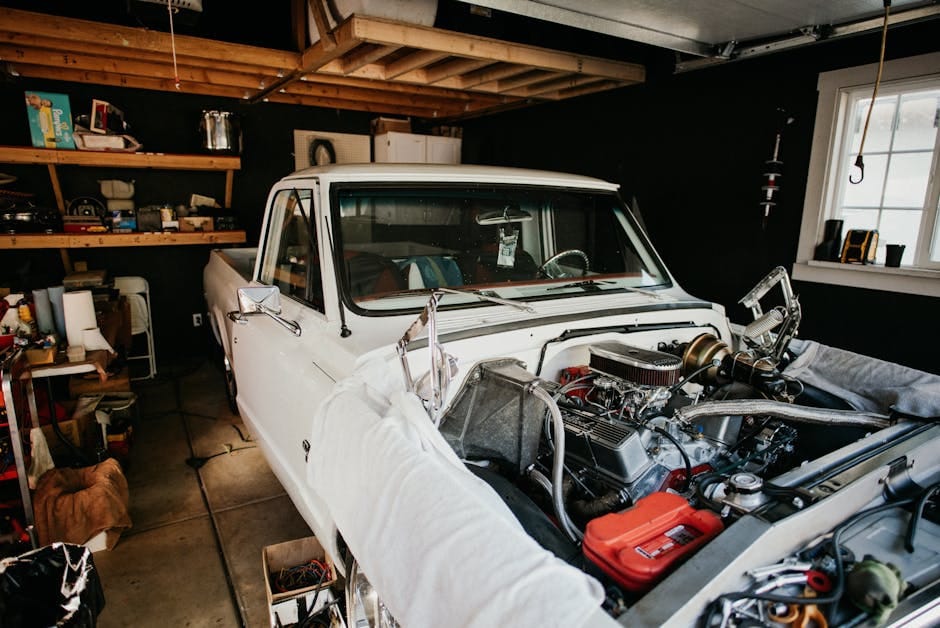
- Ignoring the suspension upgrade. A loaded skid in the bed shifts the truck’s behaviour. Owners running serious skids usually pair the build with the airbags, helper springs, or coilover upgrades that the aftermarket pickup truck accessories done-right post treats as table-stakes for serious bed loads.
- Forgetting the water-source plan. A 100-gallon tank empties in 5 to 20 minutes depending on flow rate. The build only works if there is a refill source on or near the property. Owners without a refill plan run dry mid-event.
- Choosing on price alone. Cheap pumps, cheap plumbing, and cheap fasteners all show up at exactly the wrong moment. The same protection-quality discipline from the built-and-protected post applies on the skid side: pick on engineering quality, not price.
- Not training the household. A skid the owner cannot operate efficiently in a stress moment is less useful than a skid that everyone in the household has run through a dry-run drill.
How Should Pickup Owners Coordinate the Skid Build With the Rest of the Truck?
A standard fire-skid build for a working pickup runs on a 30-to-60-day planning and install cycle.
The build sequence:
- Day 30 to 60: spec and payload audit. Document the truck’s payload capacity (door-jamb sticker), the existing electrical load, the suspension state, and the water-source availability on the property. Run the loaded-skid math against the truck’s actual capacity rather than the brochure number.
- Day 14 to 30: manufacturer evaluation. Three skid-manufacturer proposals with bed-fitment specs, pump output, tank capacity, modular versus welded construction, materials, and warranty terms. Compare against equivalent units in the same payload class.
- Day 7 to 14: support-modification install. Suspension upgrades, alternator upgrades, auxiliary battery, bed-mount tie-downs, and any plumbing work for a property water source.
- Day 0 to 7: skid install and dry-run training. The skid installs into the bed, the household runs through a dry-run drill, pump output and hose reach are verified at the property water sources, and the equipment becomes operational.
The discipline that runs across all four stages is the truck-honest spec audit. The owner who matches the skid to the truck’s actual capacity (not the brochure number) lands at a build that runs cleanly across the year rather than a build that overloads the suspension or drains the battery in the moment it matters.
Frequently Asked Questions From Pickup Owners About Fire-Skid Builds
How much does a pickup fire-skid unit typically cost?
Entry-tier slide-in skid units start around 2,500 to 4,000 dollars for compact 50-to-75-gallon electric-pump configurations. Mid-tier 100-to-150-gallon units run 4,500 to 9,000 dollars. Larger 200-to-300-gallon units with high-output pumps and dual-reel plumbing run 9,000 to 18,000 dollars depending on configuration and material spec.
Does a fire-skid void the pickup’s manufacturer warranty?
Most manufacturer warranties are unaffected by a slide-in modular skid because the equipment does not modify the drivetrain, the frame, or the electrical systems beyond an auxiliary battery or trailer-style power tap. Owners should notify the auto insurer about the equipment, and many household policies cover rural fire-protection equipment under the property line rather than the auto line.
Can a fire-skid be installed and removed by the owner?
Yes for modular slide-in units. Most modular skids install with four to eight bed-mount tie-downs, a single power connection, and a hose connection. The full install-and-uninstall workflow runs 30 to 60 minutes once the owner has run through it once. Welded-in or permanently-mounted skids require professional install.
What pump output rate matches what use case?
A 5-to-10-gpm pump suits hand-line work on small ignitions and short perimeter runs. A 15-to-25-gpm pump suits longer hose reaches at higher pressure for property-perimeter defence and serious mop-up. Owners on properties with long fence lines or significant mop-up needs usually go higher; owners with smaller ignition-management goals stay in the 5-to-10 range.
A Final Note for Pickup Owners Specifying a Fire-Skid Build
The pickup fire-skid build is one of the more under-appreciated utility decisions a rural truck owner makes, and the project rewards the owner who runs the payload math against the truck’s actual capacity, who pairs the skid with the alternator and suspension upgrades the load demands, and who treats the dry-run training as part of the build rather than an afterthought. The owners who pick the cheapest skid, ignore the payload sticker, or skip the household drill usually find out at the wrong moment that the pump cannot deliver the gallons-per-minute the situation needs or the rear suspension cannot handle the load on rough terrain. The marginal effort of careful spec is small. The marginal benefit shows up at the moment a small ignition starts on the back forty and the truck has the water, the pressure, and the operator-readiness to keep the situation small.








