
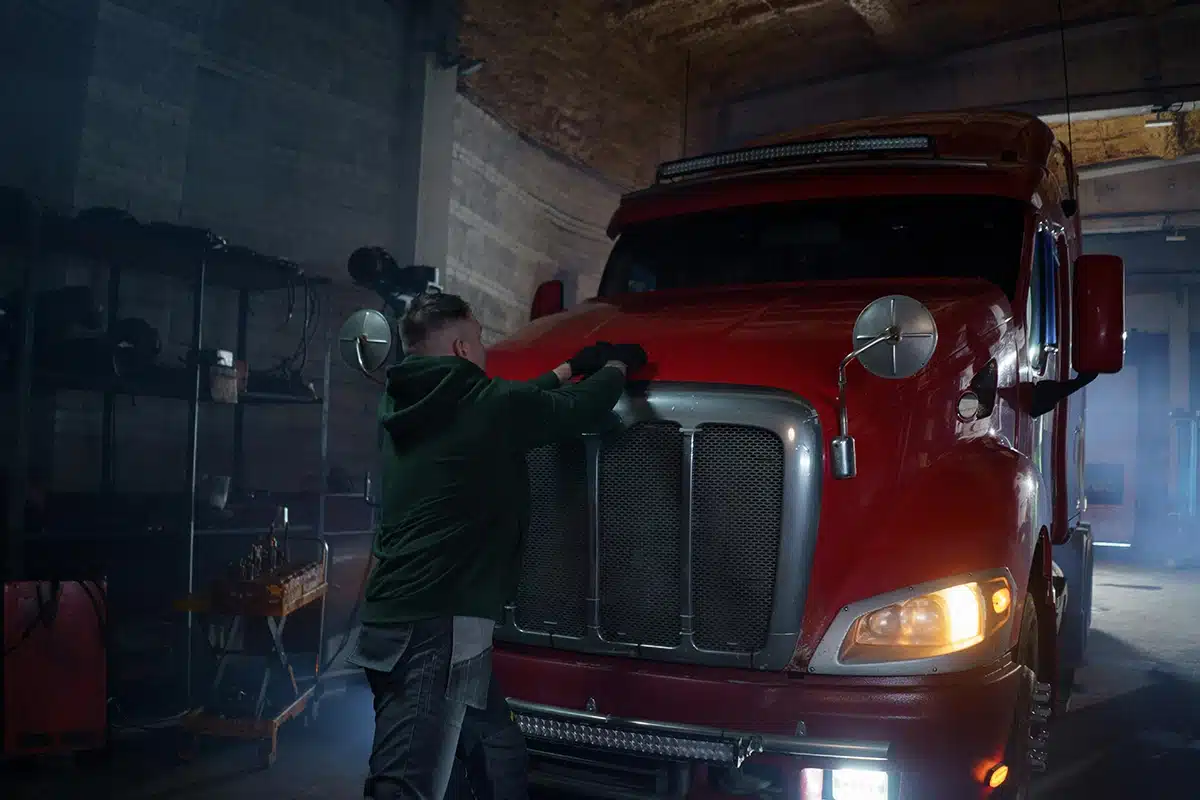
A new legislative effort led by Sen. Dan Sullivan, R-Alaska, is drawing attention to a growing concern among truckers, fleet operators and rural communities: diesel exhaust fluid (DEF) freezes in extreme cold, potentially leaving drivers stranded in dangerous conditions. Removing DEF could finally give truckers a diesel reliability fix they have been waiting for.
During an interview, Sullivan outlined his proposed “Diesel Reliability Act,” arguing current emissions regulations do not adequately account for real-world winter operating environments, particularly in northern states.
Cold Weather Failures Drive Legislative Action for Diesel Reliability Fix

Sullivan said the issue stems from how DEF systems behave in low temperatures. DEF begins to freeze at approximately 12°F, a threshold frequently exceeded in states like Alaska, North Dakota, Wyoming, Minnesota and other cold-weather states. When that happens, trucks can enter “limp mode” or even shut down entirely.
According to Sullivan, that creates a serious safety risk.
“If you’re on remote roads with no cell service and temperatures drop to 50 below zero, a shutdown isn’t just inconvenient, it’s dangerous,” he explained, citing Alaska’s remote haul roads used to transport goods and energy resources.”
The proposed legislation would push regulators to revisit these limitations and consider exemptions or revised standards for cold-weather states.
One-Size-Fits-All Regulations Under Scrutiny
Sullivan framed the issue as a broader failure of federal policy design, pointing specifically to rules developed under the Environmental Protection Agency.
He argued current regulations were created without fully considering regional differences.
“This is a classic case of one-size-fits-all policy not working,” Sullivan said, noting that what qualifies as ‘cold’ in Washington, D.C., differs dramatically from conditions in Alaska.”
The senator emphasized that the intent of emissions rules, reducing pollution and improving public health is valid, but implementation must reflect operational realities.
Industry and Public Sector Impact

Testimony referenced during a recent hearing highlighted the widespread impact of DEF-related issues. Sullivan cited reports from Alaska’s Department of Transportation, emergency responders, and fleet operators experiencing vehicle downtime due to DEF system failures such as the DEF heaters installed in the tanks. These tank heaters have a history of failing compounding the issue.
In some cases, fire trucks and other emergency vehicles were reportedly affected, raising concerns beyond commercial trucking such as Alaska Department of Transportation equipment.
Ryan Anderson, Alaska DOT commissioner, testified in a congressional hearing that 70-80 percent in the past two years of diesel engine maintenance issues were related to DEF system failures.
The issue is not limited to Alaska. A colder-than-average winter across much of the U.S. has exposed similar problems nationwide, with truckers and farmers reporting DEF-related warnings, reduced performance and shutdowns.
Regulatory Movement Already Underway
Sullivan indicated that discussions with EPA leadership have already led to early regulatory consideration. He credited EPA Administrator Lee Zeldin for initiating steps toward revising how DEF-related failures are handled.
One key change is to eliminate the use of a DEF fluid sensor and switch back to a NOx sensor, while another is to ask engine makers to extend the amount of time/miles diesel engines can operate without DEF allowing drivers more time or distance to finish a job or reach a safe location.
Still, Sullivan stressed that regulatory adjustments alone are not enough.
“We need a law to make sure future administrations don’t reverse course,” he said.
Balancing Emissions Goals and Reliability
The debate ultimately centers on balancing emissions compliance with operational reliability. DEF systems, introduced widely around 2010 alongside selective catalytic reduction (SCR) technology, play a key role in reducing nitrogen oxide emissions.
However, as discussed in the interview, the system’s complexity, and sensitivity to temperature, has led to ongoing reliability concerns.
Sullivan acknowledged the importance of clean air standards but argued current policies may have tipped too far.
“Everyone wants clean air and water,” he said. “But there’s a right way to do it without putting people’s lives at risk.”
The bill, co-sponsored by Sen. Cynthia Lummis, R-Wyo., is expected to continue gaining attention as lawmakers weigh safety concerns against environmental mandates. For truck-dependent industries and rural communities, the outcome could have significant real-world implications.







1 reply
Loading new replies...
Administrator
Well-known member
Join the full discussion at the Forum Pickuptrucktalk →