To guarantee that your vehicle performs at its best, it is essential to keep the tire pressure at the proper level. It not only increases the longevity of things like SUV tires but also handling, fuel efficiency, and safety. Inadequate tire pressure when driving can lead to increased wear, blowout danger, and poor handling. This post will walk you through the process of checking tire pressure step-by-step and provide helpful advice on how to maintain the best possible condition for your tires.
Why proper tire pressure is essential
- Fuel Efficiency: Correct tire pressure reduces rolling resistance, which helps your car use less fuel. Underinflated tires, on the other hand, make your engine work harder, reducing fuel economy.
- Tire Longevity: Tires wear more evenly when properly inflated. Overinflated tires cause wear on the center of the tread, while underinflated ones wear down the outer edges, leading to the need for premature replacement.
- Handling and Safety: Properly inflated tires maintain the car’s handling characteristics as designed by the manufacturer. Overinflation makes tires stiff and less grippy, while underinflation causes poor cornering and braking.
- Comfort: Tires with the right pressure offer a smoother ride, while incorrect pressure can make the ride feel bumpy or sluggish.
When to check your tire pressure
It’s important to check your tire pressure regularly. Here are the best times to do so:
- At least once a month: Tire pressure can drop naturally over time, so monthly checks help catch any changes early.
- Before long trips: Especially if you plan on driving for several hours or across different terrains.
- During significant temperature changes: Cold air causes tire pressure to drop, while hot weather can cause it to increase. For every 10-degree Fahrenheit drop, tire pressure can decrease by about 1 PSI (pounds per square inch).
- When carrying heavy loads: Extra weight puts more strain on your tires, so make sure they’re properly inflated before hauling cargo or passengers.
How to check your tire pressure
Now, let’s walk through the steps to check your tire pressure for optimal performance:
Know Your Recommended Tire Pressure
Every vehicle has a recommended tire pressure range, which you can typically find in the following places:
- On a sticker inside the driver’s side door frame.
- In your vehicle’s owner’s manual.
Typically, the recommended pressure is stated in PSI. Verify both tires as the recommended levels for the front and rear may differ.
Use a Quality Tire Pressure Gauge
Tire pressure gauges come in three primary varieties:
- Digital gauges: Generally more accurate and easy to see.
- Dial gauges: a little bulkier but still accurate.
- Pencil-style gauges: small in size, more difficult to read, and perhaps less accurate with time.
Keep a trustworthy tire pressure gauge in your vehicle. Although many air pumps at gas stations come with built-in gauges, having your own guarantees accuracy every time.
Check the pressure when tires are cold
Tire pressure rises while driving because friction produces heat. When your tires are cold, preferably before you start driving or after your car has been parked for a few hours, it is advisable to check your tire pressure.
Remove the Valve Cap
A tiny tube called a valve stem protrudes from the rim of every tire. Take off the valve cap and store it in a secure location.
Press the Gauge onto the Valve
Tightly push the tire pressure gauge on the valve stem until you hear a brief hissing sound as air escapes, and then the reading stays steady. Make sure you keep the gauge in place long enough to get a precise measurement.
Read the Gauge
To find out the PSI reading on your tire, look at the dial or display. Check this value against the recommended pressure for your car.
Adjust Tire Pressure as Needed
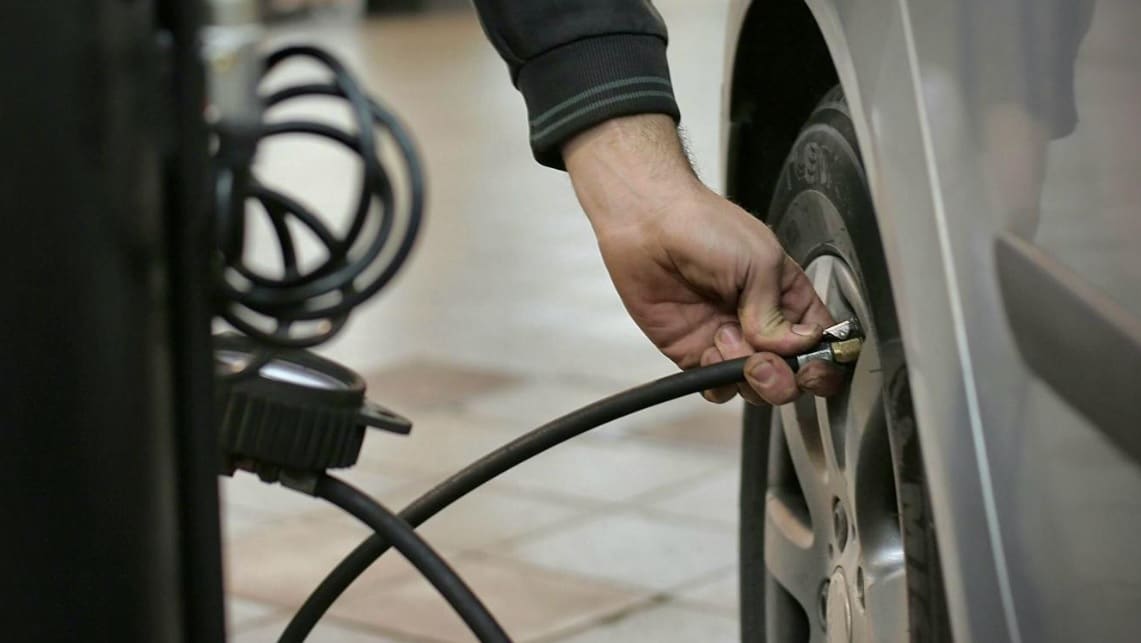
In the event that your tire pressure is lower than advised: To inflate the tires, use an air compressor you have on hand or go to a nearby gas station. To prevent overinflation, fasten the pump hose to the valve stem and gradually add air while monitoring the pressure often.
In the event that your tire pressure is higher than advised: Using a tiny tool (usually the pin on the rear of the pressure gauge), release air by applying pressure to the valve stem. Once the pressure reaches the proper amount, check it again.
Replace the Valve Cap
Once the pressure is adjusted, don’t forget to screw the valve cap back onto the valve stem. This keeps dirt and debris from entering the valve and causing slow leaks.
Extra tips for maintaining optimal tire pressure
Rotate Your Tires Frequently: This will guarantee that the four tires have equal wear. Typically, this should be done every 5,000 to 8,000 miles (for exact mileage recommendations, consult your owner’s manual).
Examine Your Tires for Damage: While checking the air pressure in your tires, keep an eye out for any obvious wear indicators, including cracks, cuts, or bulges. It could be time to get new tires if you see any.
Remember the Spare Tire: Although many people forget about the spare tire, you should make sure it is prepared in case you need it by checking its pressure.
Use TPMS (Tire Pressure Monitoring System) as a Supplement: If your car is equipped with a Tire Pressure Monitoring System (TPMS), it will alert you if your tires are significantly underinflated. However, these systems don’t replace manual checks since they usually trigger only when the tire pressure is 25% below the recommended level.
Consider Seasonal Changes: As seasons change, so do the air temperatures, which impact the pressure of your off-road tires. In colder months, it’s particularly important to monitor your tire pressure more frequently.
Maintain Regular Maintenance: To avoid uneven wear, maintain regular tire maintenance tasks including balancing and alignment in addition to checking tire pressure.
Conclusion
Maintaining the correct tire pressure is one of the simplest and most cost-effective ways to keep your car running smoothly and safely. By checking your tire pressure regularly and following the steps outlined in this guide, you can ensure that your vehicle performs at its best, reduces fuel costs, and extends the life of your tires.
Making tire pressure checks a regular part of your vehicle maintenance routine will save you time, money, and potential safety hazards on the road.