
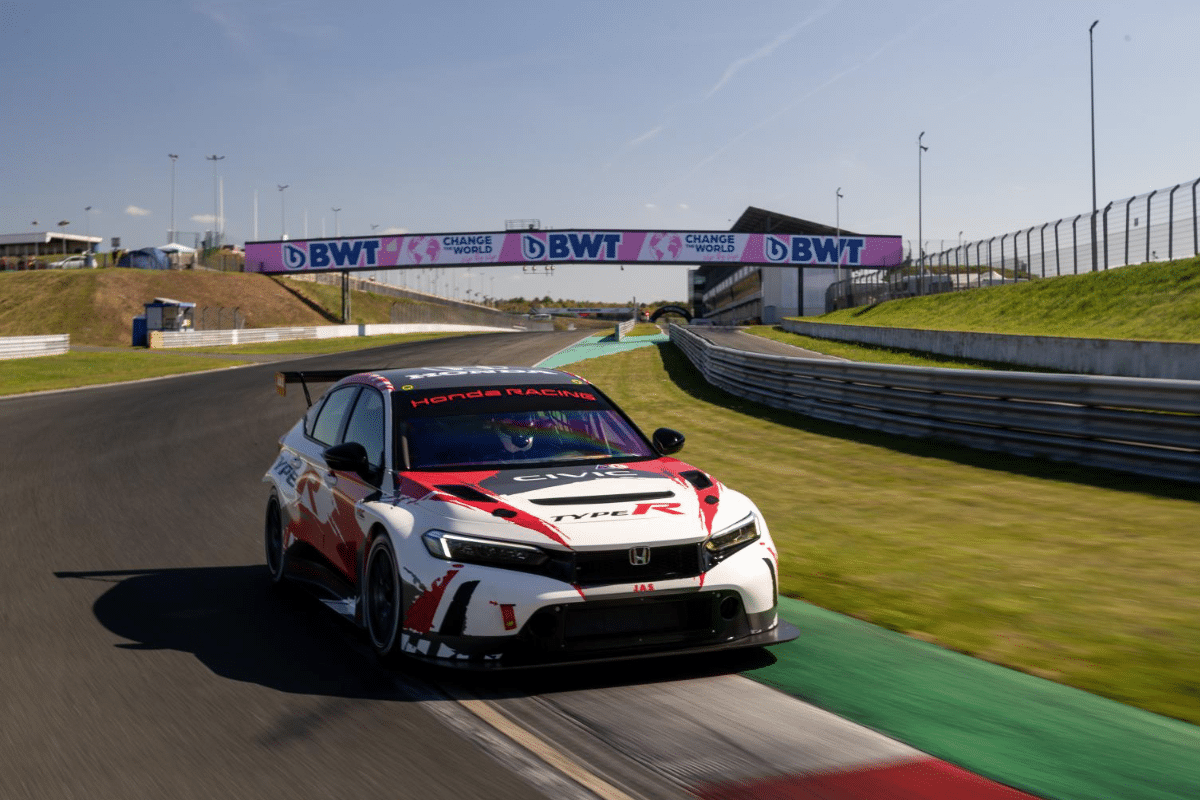
The street and the race track are two very different places. One tries to balance comfort, safety and reliability, while the other goes for pure speed and control, often in cars stripped down to the bare basics. In this vein, even the same model can be a wildly different car and modified for different purposes. A track-spec Civic Type-R might resemble its road twin, but it’s the subtle changes inside and out that make all the difference.
Tuning production vehicles specifically for the track generally errs on boosting overall power, shedding excess weight and sacrificing safety and comfort inclusions that make them road legal. The ultimate goal is faster lap times, with specialised performance car parts rarely found or even considered in everyday vehicles.
Tuning Production Cars for the Track
If you’ve clocked more track hours in a tuned production car – replete with racing slicks, forged wheels and a decent set of coilovers – there’s hundredths to be found in changes to braking systems, customising pedal feel for individual drivers, advanced fuel management and installing cooling components to adequately handle the extra heat. These mods reassure drivers with improved braking consistency, safety and engine reliability. And they provide the control and adjustability for faster lap times.
Aftermarket Braking Systems
Tuning houses with race affiliations are where to look for significantly improved braking performance this side of race pads and multi-piston callipers. They supply innovative technologies and solutions to manage the extreme heat in hard braking, ensure shorter stopping distances and provide drivers with customisable settings for improved brake pedal feel. This means vehicles and brake components can sustain longer high-speed track sessions with no reduction in braking performance.
OBP Motorsport is a household name in the UK tuning scene, partnering with the BTCC and Mini Challenge, among other racing competitions. The company equips competition-spec cars with proprietary pedal boxes, master cylinders and brake bias systems. Unlike standard road cars relying on a servo vacuum for boosted brake force, OBP pedal boxes get closer to race car feel with direct and unassisted braking systems. These aim for more control over brake pressure between front and rear setups to maximise stopping power, stability and handling. The difference in performance is evident in assemblies fitted with dedicated balance bar systems and dual master cylinders – one for each axle, that independently distribute brake fluid to where it’s needed.
Adjustability and customisation are other drawcards. Teams and drivers can choose between floor-mounted pedal boxes (ideal for low-slung cars with flat floors), top-mounted or hanging setups that mimic OE brake ergonomics, and bulkhead options for customised comfort and optimised heel-toe functionality. Moreover, pedals can be fine-tuned for position, ratio and front-to-rear bias to suit personal preferences and driving styles.
Drifters and rally drivers also laud OBP Motorsport for another proprietary braking option. The company’s hydraulic handbrakes have proven their worth when locking the rear wheels for controlled drifting and mid-corner angle adjustments and something traditional cable just can’t replicate.
Racing-Spec Fuel Systems
Engine power upgrades also imply changes to the stock fuelling. The aim is to ensure optimal air-fuel ratios, consistent fuel supply and enhanced reliability with components designed to withstand higher temperatures and pressure. Besides high-flow pumps and upgraded injectors, engines benefit from:
- Fuel swirl pots – to prevent fuel starvation or engine failure with a consistent fuel supply;
- PTFE or CPE fuel lines with braided steel reinforcement for exceptional strength;
- Leak-free JIC, AN or BSP fittings and connections (adaptors, clamps, couplings, hose ends, etc) in widths and designs that ensure customisation.
Choose leak-tested fuel swirl pots in 1-litre capacities for smaller engines or 1.5-2-litre varieties for high-output machines. Both come as base mount types when fitted to horizontal surfaces (floors, boots), or as bulkhead mount swivel pots attached to bulkheads, firewalls and in cars with limited space. For fittings and connections, you’ll be looking into CNC-machined and corrosion-resistant designs in billet aluminium or stainless steel, optioned in configurations that ensure tight seals and plumbing flexibility.
Oil System Components
To sustain optimal track manners longer, cars include aftermarket oil catch cans, oil coolers and dry sump tanks. Oil catch cans keep oil vapour out of the crankcase, reduce the likelihood of carbon buildup and steer contaminants clear of turbines. This reduces the risk of pre-ignition or engine knock, ensures limited buildup on intake valves, and maintains optimal crankcase pressures.
Choose baffled catch cans with internal plates for higher vapour separation efficiency or open breather systems to vent excess fumes into the atmosphere. Since tracks also involve high-speed cornering, hard braking and the risk of oil starvation, consider using a dry oil sump. This mitigates oil loss in high G-forces, supplying oil from multiple points in an external reservoir. The performance and reliability benefits are manifold. Without a traditional “wet” sump just under the engine, cranks don’t have to slosh through excess fluid, resulting in reduced drag and increased power. Engines can also sit lower, considerably improving the vehicle’s centre of gravity. Moreover, increased capacity provides more efficient cooling – a necessity in high-revving powerplants.
To keep oil temperatures sane (80° to 110°C) and ensure oil maintains proper engine lubrication, also consider aftermarket oil coolers. Choose air-to-oil heat exchangers, basically radiators that pass heated engine oil through metal fins. The oil cools when contacting ambient air, then returns to the oil filter and the engine. Racing versions are built from high-grade aluminium and are capable of high pressures (up to 145psi/10 bar) and temperatures of 150°C.
Combined Benefits
While not directly impacting engine power, the listed performance car parts do have a say in overall driving control, handling and engine reliability. Pedal boxes and brake upgrades can shave off seconds from lap times with improved ergonomics tailored to specific drivers and faster response times. Similarly, upgraded fuel lines and plumbing ensure correct pressure under higher engine loads typical of race conditions, and leak-free connections for a consistent fuel supply. And oil cooling components prevent overheating while allowing cranks to spin faster.
Machined parts additionally shed weight while improving component durability. Together, these upgrades refine already well-tuned cars and prepare them for serious track use.