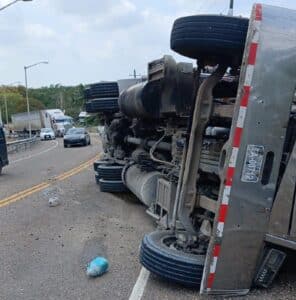

Being hit by an 18-wheeler is nothing like a regular car crash. The physics are different. The injuries are different. The legal process is different too.
A fully loaded commercial truck can weigh up to 80,000 pounds. That is 20 to 30 times the weight of the average pickup truck. When something that large hits a passenger vehicle, the damage is almost always severe. According to NHTSA data, 82 percent of people killed in large truck crashes were occupants of the other vehicle, not the truck.
Texas makes this problem worse than anywhere else in the country. In 2025, Texas recorded at least 30,000 commercial truck accidents, and 1 in 4 of those crashes resulted in injury. Harris County alone saw 4,003 truck crashes, including 29 fatal collisions. These numbers confirm what an El Paso truck accident lawyer sees every week. “El Paso sits on one of the busiest freight corridors in the country — I-10 and the border crossings move billions in commercial cargo every year, and with that volume comes serious risk.”
If you are involved in one of those crashes, what you do in the first minutes, hours, and days will directly affect your ability to recover compensation. This guide covers the exact steps to take, why each one matters, and what mistakes can cost you your case.
Why Truck Accidents Are Different From Car Accidents
Before getting into the steps, you need to understand something important.
Truck accident cases are not handled the same way as car accident cases. A trucking company is a business with a legal team, insurance adjusters, and sometimes a rapid response unit that arrives at crash scenes before victims even leave the hospital.
Their goal is simple. They want to limit liability. They gather evidence, interview witnesses, and start building a defense immediately. If you do not take steps to protect yourself just as quickly, you risk losing the evidence that proves what really happened.
That is the core reason every step below exists.
Step 1: Call 911 and Stay at the Scene
Call 911 immediately. Do not move your vehicle unless it creates a serious safety hazard. Texas law requires drivers to remain at the scene of any crash involving injury, death, or significant property damage.
Give the dispatcher your location, describe the vehicles involved, and report any injuries. Ask for both law enforcement and emergency medical services.
When officers arrive, a Texas Peace Officer’s Crash Report (CR-3) will be filed. That report becomes one of the foundational documents in your case. It records the officer’s observations, the positions of the vehicles, and any contributing factors they note at the scene.
Step 2: Seek Medical Attention Right Away
Get checked out by paramedics at the scene. If they advise going to the hospital, go.
Many serious injuries from truck crashes do not produce immediate pain. Spinal injuries, internal bleeding, and traumatic brain injuries can develop symptoms hours or even days later. A medical evaluation creates a documented record that connects your injuries to the crash.
If you delay treatment, insurance adjusters will use that gap against you. They will argue that your injuries were not caused by the accident or that they were not as serious as you claim. Early medical documentation closes that argument before it starts.
Step 3: Document the Scene
If you are physically able to do so safely, document everything before moving vehicles.
Take photos of:
- All vehicles, including the truck’s cab, trailer number, and license plates
- The company name and USDOT number are displayed on the truck’s door
- Skid marks, debris, and road conditions
- Your injuries
- Traffic signals, signage, and any nearby surveillance cameras
Write down the names and contact information of witnesses. Ask them briefly what they saw. A witness who observed the crash from another vehicle is independent evidence that no party can dispute.
These details fade fast. Skid marks wash away. Surveillance footage gets overwritten. The information you gather in the first hour at the scene can be irreplaceable later.
Step 4: Preserve the Black Box Data
This is the step most people do not know about, and it may be the most important one.
Commercial trucks are equipped with electronic data recorders, commonly called black boxes. These devices record speed, braking, acceleration, gear position, and whether the driver responded before impact. That data is objective. Unlike witness accounts, it cannot be changed by memory or self-interest.
The problem is that black box data does not last. Depending on the system, it can be overwritten within days after the truck returns to service. Trucking companies are not required to preserve it indefinitely. If the truck is repaired and put back on the road, that evidence may be gone.
An attorney can send a spoliation letter, which is a formal legal notice demanding that the trucking company preserve all electronic data, driver logs, maintenance records, and communications related to the crash. Once that letter is delivered, destroying or allowing evidence to be overwritten becomes a legal violation with serious consequences.
The faster you retain legal counsel, the faster that letter goes out.
Step 5: Do Not Speak to the Trucking Company’s Insurance Adjuster
After a truck crash, you will likely receive a call from the trucking company’s insurer. They may seem helpful. They will probably express concern for your well-being. Do not be deceived by that approach.
Insurance adjusters are trained to gather information that limits the company’s payout. Recorded statements can be taken out of context. An offhand comment about feeling fine, made before symptoms fully develop, can be used to argue that your injuries are not serious.
You are not required to give a recorded statement to the other party’s insurer. Politely decline and tell them your attorney will be in contact.
Step 6: Consult a Truck Accident Attorney Immediately
Truck accident cases involve multiple layers of complexity that car accident cases do not.
Federal Motor Carrier Safety Administration (FMCSA) regulations govern commercial trucking. Driver hours-of-service rules, vehicle inspection requirements, weight limits, cargo securement standards, and electronic logging device mandates all create potential violations that can establish negligence. Understanding and accessing those records requires legal experience and speed.
Graham E. Sutliff says working with an experienced Truck Accident Attorney Houston is the most reliable way to ensure that all electronic records, driver logs, inspection histories, and black box data are secured before trucking companies and their defense teams have an opportunity to control the evidence. Graham E. Sutliff is a Board Certified Personal Injury Trial Law attorney and co-founder of Sutliff and Stout in Houston.
The firm has recovered more than $1 billion in accident-related verdicts and settlements for Texas clients, including cases where trucking company insurers initially offered the victim’s family zero dollars before trial.
Step 7: Track Every Cost and Document Everything
From the day of the crash forward, keep a written record of everything connected to the accident.
This includes medical appointments and costs, prescriptions, mileage to and from treatment, days missed from work, tasks you can no longer perform, and any physical or emotional effects that affect your daily life. Photographs of injuries during recovery are also useful because they show progression in a way that medical records alone do not.
Texas follows a modified comparative fault rule, which means your compensation can be reduced if you are found partially at fault for the crash. The more thoroughly you document your losses and your version of events, the harder it is for the defense to shift blame onto you.
Frequently Asked Questions
What should I do immediately after a truck accident?
Call 911 first. Stay at the scene and do not move your vehicle unless it is creating an immediate safety hazard. Get medical attention even if you feel fine. Document the scene with photos and gather witness information while you are still there.
How is a truck accident different from a car accident?
Federal FMCSA regulations govern commercial trucks, require far more insurance, and involve larger companies with dedicated legal teams. The injuries tend to be more severe, the evidence is more complex, and the insurance companies move faster. Cases require faster action and more specialized legal experience.
How long does black box data last after a truck crash?
It depends on the system, but data can be overwritten in as little as a few days once the truck goes back into service. An attorney can send a spoliation letter immediately to legally require the trucking company to preserve all electronic evidence.
Can the trucking company be held responsible for the driver’s actions?
In many cases, yes. If the crash resulted from driver fatigue, hours-of-service violations, inadequate training, improper maintenance, or overloading. Even if it’s a semi trailer rental, the liability can extend to the company. Trucking companies may also be responsible under theories of negligent hiring or negligent supervision.
Should I accept the insurance company’s first settlement offer?
Almost never. First offers from trucking company insurers are typically far below the actual value of serious injury claims. Long-term medical costs, lost earning capacity, and non-economic damages are rarely reflected in early settlements. Consult an attorney before agreeing to anything.
How long do I have to file a truck accident claim in Texas?
Texas gives most personal injury victims two years from the date of the accident to file a claim. However, critical evidence disappears much faster than that. Waiting reduces your ability to build a strong case, even if you still have time to file.
The Bottom Line
A truck accident is not an event you recover from on your own timetable. Trucking companies and their insurers begin protecting themselves immediately. The evidence that determines who is responsible starts disappearing within days.
The steps above are not suggestions. Each one directly affects your ability to recover compensation for what happened to you. Documenting the scene, preserving black box data, declining recorded statements and getting legal representation quickly are the practical actions that separate a well-supported claim from one that gets minimized or denied.
Texas leads the country in fatal truck crashes. That is not a coincidence. The volume of commercial truck traffic here, combined with the resources that carriers bring to defend their cases, means that injured drivers face a real disadvantage if they do not act with the same urgency as the other side does. Sources: NHTSA Large Truck and Bus Crash Facts; FMCSA Safety Data 2025; TxDOT CRIS Database 2025; TRIP National Traffic Safety Report, July 2025.