
The Electric Vehicle revolution is marching on apace. In the US, EVs accounted for around 10 percent of new vehicle sales in 2025, with peaks of more than 12 percent during the year as buyers rushed to take advantage of incentives.
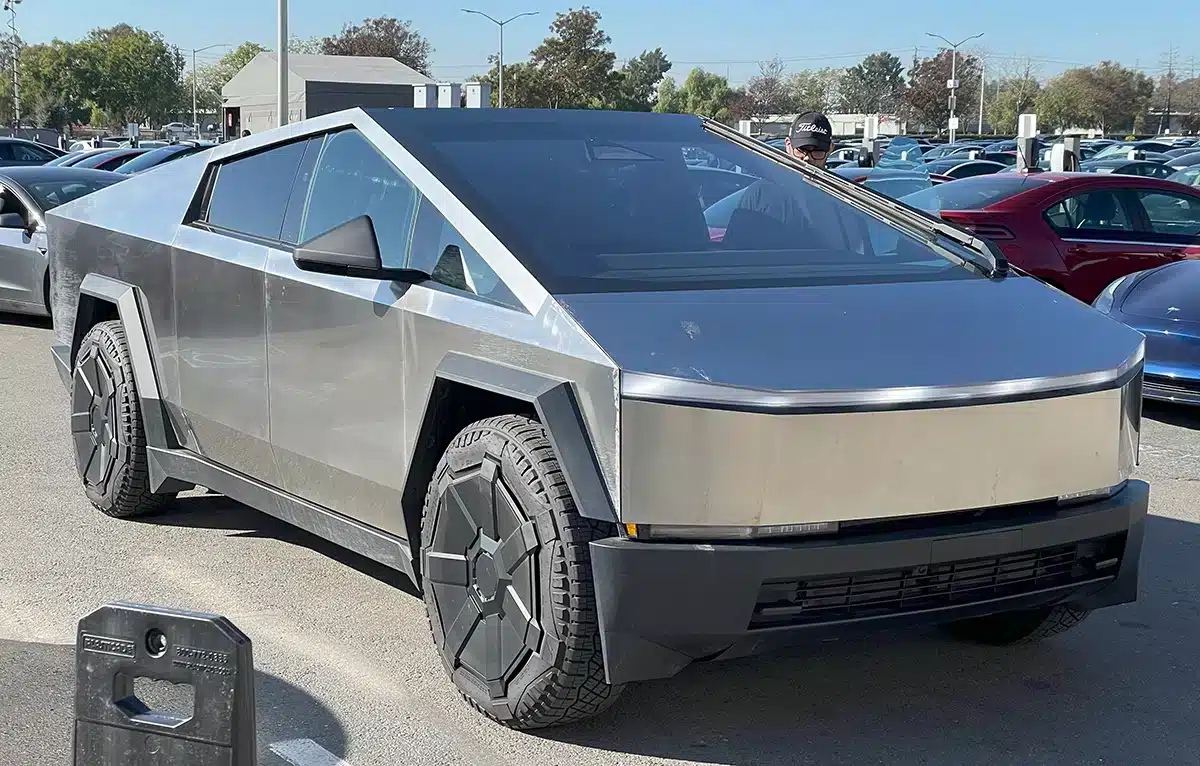
It’s not just compact cars driving that growth. Electric pickups are arguably the toughest proving ground for EV technology, but they are now firmly in the mix. Ford sold more than 27,000 F-150 Lightnings and Tesla saw sales of around 29,000 for their Cybertruck during the calendar year.
So while demand is still relatively small as a percentage of the 2.3 million new trucks sold in the US every year, the direction of travel is clear. EVs are projected to reach around 11–12% of total US vehicle sales in 2026, with steady growth expected beyond that.
The reality on the road
Electric pickup trucks are already a reality and in some cases, they are seriously impressive. At least, they appear so on paper. But for those of us who rely on our truck to make a living, impressive on paper needs to translate to dependable in the real world.
Let’s start with the obvious win. Electric motors deliver torque instantly, without building up revs or waiting for a turbo to kick in. The effect from the driver’s seat is that EV pickups feel incredibly strong off the line, especially when pulling away with a load. That’s particularly advantageous for stop-start driving, such as urban deliveries, site work or short hauls. You get smooth, predictable power exactly when you need it.
However, towing a trailer for three hours down an interstate is a different proposition to pulling away from a junction. That’s where things get more complicated, and right now, range is still the elephant in the room. At first glance, figures can look impressive. For example, Ford quotes a maximum range of up to 320 miles on a full charge for the F-150 Lightning in its extended-range form. That sounds more than sufficient on paper, but the key words here are “up to.” That figure of 320 miles is achieved under ideal conditions, with an unladen truck and carefully controlled driving. Start adding weight, hitch up a trailer, spend extended time at motorway speeds or with the heater on, and that headline number can drop by 30 percent or more.
The charging routine
With a gas or diesel truck, a range of 200 miles would be a minor irritation, simply meaning more refueling stops. With an EV, you need to think ahead about where to stop, how long to charge, whether the charger is going to be available and how much more range that is going to give you.
For some users, that’s just a new routine to which you need to adapt. But for those covering long distances or working in remote areas, it can be a genuine limitation. When it comes down to it, the charging routine is likely to be the biggest factor in assessing feasibility. Home charging, depot charging and public EV charging infrastructure can all come into play and will dictate how usable your new electric truck really is.
Payload and practicality
Another area worth looking into carefully is payload. Electric trucks are heavy, and the weight of the batteries is typically greater than that of an internal combustion engine. This can eat into payload capacity depending on how the vehicle is designed and classified. Manufacturers are building in workarounds, but it is a work in progress, so this is certainly something to think about if you regularly carry tools, materials or equipment.
On the flip side, storage can be a plus. Many EV pickups offer additional front storage (“frunks”), which can be genuinely useful for keeping gear secure and separate.
Reliability and routine maintenance
This is where EVs start to prove their worth. With fewer moving parts and no need for oil changes, exhaust systems or complex emissions hardware, there is less to go wrong and reduced routine maintenance. That can only be good news for fleet operators or anyone who runs their truck hard.
That said, EVs are still in their relative infancy, especially in the truck space, so long-term durability under heavy working conditions is still to be proven, while diesel trucks are a known quantity.
Is it time to switch?
We began by asking whether EVs are ready to take over from diesel for good and all. If your work involves predictable routes, good access to charging and moderate towing distances, an electric pickup can make a lot of sense, and might well be a quieter, smoother, cheaper and more reliable option.
But if your truck is covering long distances, towing heavy loads for extended periods, or operating in areas with limited infrastructure, diesel still holds a clear advantage – at least for now. What is clear is that electric pickups are a serious alternative, and while they are not yet the universal replacement for diesel, it is only a matter of time.