There was a moment when the high priests of the global auto industry gazed into their environmental, regulatory, and socially compliant crystal balls and saw a future that hummed. It didn’t idle, it didn’t rumble, it didn’t smell like hydrocarbons. It was clean, silent, and, most importantly, approved. The spreadsheets glowed. The regulators nodded. The customers, naturally, would fall in line.
What Went Wrong
But it turns out, customers are not particularly interested in being cast as extras in someone else’s policy ideal. They have budgets, habits, commutes, and a stubborn attachment to convenience. And while politicians remain convinced that demand can be summoned by decree, the market responded with a shrug and made a beeline towards the nearest hybrid.
And here we are.
Stellantis, along with GM, Ford, and Honda, has rediscovered gravity. The Amsterdam-based automaker now says the transition to electrification must be governed “by demand rather than command,” which is the sort of statement that should be embroidered on a throw pillow and handed out at every product-planning meeting. Translation: the EV revolution showed up early, overdressed, and without enough friends.
Time To Reset

CEO Antonio Filosa steps to the mic as the designated adult in the room, conceding that Stellantis “over-estimated the pace of the energy transition.” In other words, they built a future nobody RSVPed to. He also cites “poor operational execution,” a phrase so elastic it can cover everything from misjudged product cadence to software that behaves like it’s being debugged in real time by a Ouija board.
Still, there’s a whiff of honesty here. It’s not a full confession. It’s more the quiet acknowledgment over a second espresso. So no, this isn’t a retreat. Nobody retreats anymore. This is a “reset,” which implies a brisk walk back from the edge, ideally with fewer consultants billing by the hour and more engineers who know which end of the wrench to hold.
What’s Next

The new religion is “freedom of choice.” How refreshingly American. It means Stellantis will sell you whatever you’ll actually buy: hybrids, internal combustion, and even some EVs, but now with less evangelical fervor. After all, a contractor in Texas towing a Bobcat doesn’t share the same transportation as a Brussels bureaucrat with a charging station and a rule book. And pretending otherwise is how you end up writing off billions while insisting everything is “on track.”
To underline this rediscovered common sense, Stellantis is pouring $13 billion into the U.S. for factories, jobs, and products customers have been loudly and repeatedly asking for. The Hemi V8 returns to the Ram 1500, because it never left the group chat. Jeep is bringing back the Cherokee and freshening the Compass. Dodge rolls out a Charger with a powertrain called the Sixpack, which sounds like a lifestyle choice involving poor decisions and excellent stories. Meanwhile, in Europe, Fiat and Citroën continue building tidy little cars for tidy little streets, where fuel prices are high enough to resemble ransom.
Follow The Market
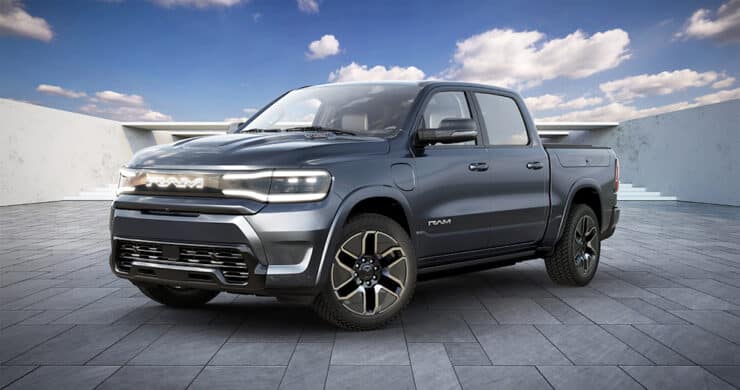
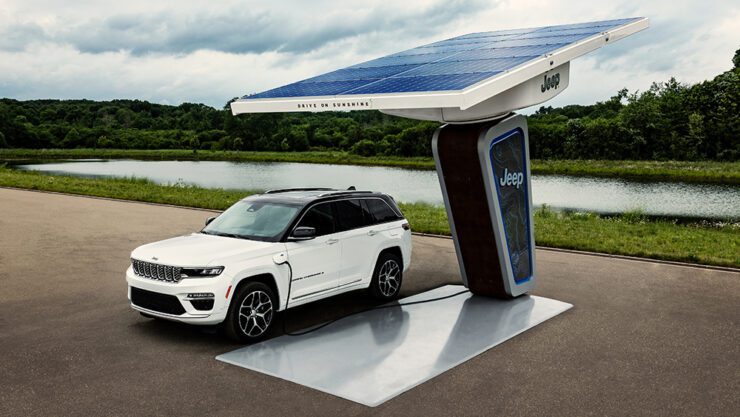
Not everything makes the cull. The Ram 1500 Revolution BEV, once a shining beacon of the all-electric tomorrow, has been quietly escorted out the back door. Its offense: existing in a reality where customers hesitated and the regulatory winds shifted just enough to expose the math. Stellantis has also taken a machete to its North American plug-in hybrids for 2026, axing the Jeep Wrangler 4xe, Grand Cherokee 4xe, and Chrysler Pacifica PHEV. Apparently, the middle ground turned out to be, well, mushy.
The new strategy is disarmingly simple: build what sells. Not what politicians want. Not what headlines nicely. What. Sells.
Inside the company, there’s the usual corporate reorganization calisthenics, along with all the usual buzzwords and phrases. More interesting is the hiring of 2,000 engineers to ensure that when you close a door it sounds like money well spent, and when you tap the screen it responds like it’s not actively resenting you.
The Upshot
So this is Stellantis 2.0, committed to electrification but no longer treating it like scripture handed down on stone tablets. Instead, it’s hedging across a portfolio of technologies, acknowledging that the future will be uneven, occasionally contradictory, and thoroughly uninterested in tidy narratives. In other words, the car business.
The question isn’t whether Stellantis can execute this pivot. It’s whether, the next time a shiny idea sweeps through boardrooms and legislative chambers, the company and the industry can resist the urge to declare, once again, that it has seen the future.