Electric bikes have exploded in popularity over the past few years, and for good reason. They make commuting easier, trail riding more accessible, and weekend adventures a whole lot more fun. But if you’ve started shopping for one, you’ve probably noticed there are two main categories: fat tire e-bikes and regular (standard tire) e-bikes.
So which one is right for you? Let’s break it down.
What’s the Difference?
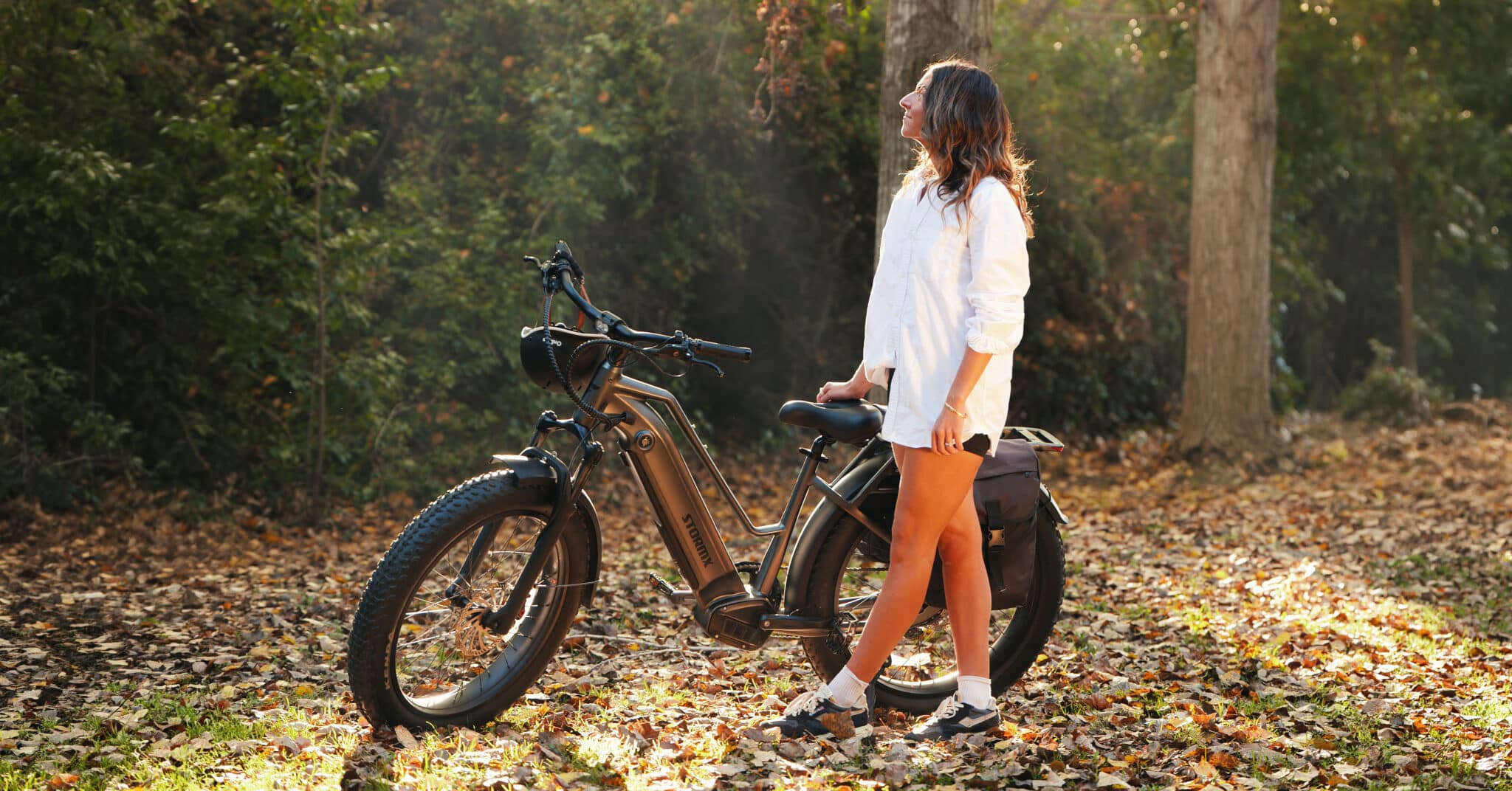
The most obvious difference is the tires. Fat tire e-bikes roll on tires that are typically 4 inches wide or more, while regular e-bikes use standard tires between 1.5 and 2.5 inches wide.
But the differences go way beyond tire size. Each type is built for a different riding experience.
Fat Tire E-Bike: 4″+ tires, 60-75 lbs, handles sand/snow/gravel/trails, more cushioned ride, best for adventure and all-season riding.
Regular E-Bike: 1.5-2.5″ tires, 40-55 lbs, best on paved roads and light gravel, faster on smooth surfaces, ideal for commuting and fitness.
When to Choose a Fat Tire E-Bike
If you’re the type who loads up the truck and heads out to trails on weekends, a fat tire e-bike is your best bet. Those wide tires provide incredible traction and stability on surfaces where regular bikes would struggle.
Fat tires excel in:
• Snow and ice — The wide contact patch grips where narrow tires slip
• Sand and beach riding — Float on top instead of digging in
• Gravel and dirt trails — Absorb bumps and maintain control
• Rough urban roads — Potholes and cracked pavement? No problem
They’re also more forgiving for beginners. The added stability means you spend less time worrying about balance and more time enjoying the ride.
Brands like FavoriteBikes have been making waves in this space, offering fat tire models that combine power with practical features like integrated lighting, hydraulic brakes, and long-range batteries — all at price points that won’t empty your wallet.
When to Choose a Regular E-Bike
If your primary goal is commuting or fitness riding on paved roads, a regular e-bike makes more sense. They’re lighter, faster on smooth surfaces, and typically more efficient with battery range.
Regular e-bikes shine for:
• Daily commuting — Lighter weight and faster acceleration
• Fitness riding — Less rolling resistance means more workout
• City riding — Easier to maneuver in tight spaces
• Storage — Lighter and easier to carry upstairs
The Hybrid Approach
Here’s something many riders don’t consider: some e-bikes split the difference. Models with 3-inch tires offer more versatility than standard bikes without the full bulk of a fat tire setup. These mid-fat options handle light trails and city streets equally well.
What About Cost?
Fat tire e-bikes used to carry a significant price premium, but that gap has narrowed considerably. Today, you can find a quality best fat tire electric bike in the $1,500–$2,500 range — roughly the same as a well-equipped regular e-bike.
The real cost difference comes down to maintenance. Fat tires cost more to replace, and the heavier frame means brake pads wear slightly faster. But we’re talking about an extra $50–100 per year at most.
The Verdict
Choose a fat tire e-bike if:
• You ride in varied weather conditions (especially winter)
• You want to hit trails and off-road terrain
• Comfort and stability are priorities
• You haul your bike in a truck to ride different locations
Choose a regular e-bike if:
• You primarily ride on paved roads
• Weight and speed matter most
• You need to carry your bike up stairs or onto transit
• Maximum battery range is important
For most riders who want one bike that can handle everything — from a Monday morning commute to a Saturday trail adventure — the fat tire e-bike offers the most versatility. It’s the pickup truck of the e-bike world: capable, rugged, and ready for whatever you throw at it.