You’re maintaining a safe distance in your F-150 when the sedan in front of you suddenly slams on its brakes for no apparent reason. The sickening crunch of metal is followed by an immediate, sinking thought: “This is going to be my fault.” It’s one of the oldest assumptions on the road, a piece of common knowledge that feels as solid as asphalt. However, for those behind the wheel of a truck or SUV, this reflexive assumption of guilt is frequently inaccurate—and accepting it without question can lead to a significant financial burden.
While law enforcement and insurance adjusters often presume the rear driver is at fault in any collision where one vehicle hits another from behind, this is not an ironclad rule. The law is filled with critical exceptions that recognize the lead driver can also be negligent. Grasping these legal distinctions—particularly the mechanics of comparative negligence—is often what stands between an unjust hike in insurance rates and a resolution that accurately reflects each driver’s actions.
Debunking the Myth: Why the Rear Driver Isn’t Automatically to Blame
The widespread belief that the rear driver is always at fault stems from a fundamental traffic principle, but it’s the starting point for an investigation, not the final word. This presumption exists for good reason, as it encourages all drivers to be attentive and maintain control of their vehicles. However, it fails to account for the countless scenarios where the driver in front creates a hazard that no reasonable person could avoid, regardless of how carefully they are following.
The “Assured Clear Distance Ahead” Rule Explained
The basis for the “presumption of fault” is a legal doctrine known as the “Assured Clear Distance Ahead” rule. This principle, codified in traffic laws nationwide, requires every driver to operate their vehicle at a speed and maintain a following distance that allows them to stop safely if traffic suddenly halts. It is the legal foundation that places the initial burden of proof on the trailing driver to show they were not following too closely or driving too fast for the conditions.
For example, some states are so specific that they outline a “2-3-4 second” following distance rule based on speed. While not every state is this precise, the underlying expectation of maintaining a safe buffer is universal and forms the bedrock of how these accidents are first evaluated.
How This Presumption Plays Out with Insurance Companies
Insurance adjusters use this presumption as a starting point to streamline the claims process. It’s an efficient shortcut that, in many cases, accurately reflects the situation. However, this reliance on presumption can lead them to overlook crucial evidence that points to the lead driver’s negligence. In California, for instance, the law also presumes the rear driver is liable, but this can be challenged with strong evidence showing the lead driver acted negligently.
According to the OHSO Fatal and Injury Crash Dashboard, Tulsa County recorded 2,093 crashes resulting in injuries or fatalities in 2021—with 1,495 of those occurring within the City of Tulsa alone. These incidents are part of a broader statewide crisis; that same year, OHSO reported a total of 9,360 injury and fatal crashes across Oklahoma. With so many incidents, adjusters are incentivized to close cases quickly, often at the expense of a fair investigation, which is a key reason why pickup trucks cost more to insure.
Exceptions to the Rule: Scenarios Where the Front Driver Shares Blame
The ‘presumption of fault’ serves as a starting point for investigation rather than a final verdict. As a rebuttable presumption, this initial assumption is not set in stone and can be successfully challenged through the presentation of compelling evidence. The key to shifting blame lies in proving that the lead driver acted in a negligent, reckless, or illegal manner that directly caused the collision. Several common scenarios create clear exceptions where the front driver can be held partially or even fully responsible for the crash.
Aggressive and Reckless Driving: The Brake-Check
A definitive instance of front-driver negligence is ‘brake-checking,’ a high-risk maneuver often rooted in road rage. It involves a driver deliberately slamming on their brakes without a legitimate traffic necessity, purely to intimidate or provoke the vehicle behind them. The purpose is to intimidate, surprise, or retaliate against the following vehicle.
Proving a brake-check, which is often best accomplished with dashcam footage or corroborating witness testimony, can shift a significant portion—or even all—of the fault to the lead driver, as their action created a hazard that was impossible to avoid under normal driving conditions.
Equipment Failures and Poor Maintenance
All drivers on the road have a fundamental duty to ensure their vehicle is in a safe, road-worthy condition. When a failure of basic safety equipment on the lead vehicle contributes to a crash, that driver can be held liable for their negligence. This is not about unforeseen mechanical issues, but rather a failure to perform reasonable maintenance on critical systems.
- Broken or Malfunctioning Brake Lights: If the lead car’s brake lights are out, the following driver receives no visual warning that the vehicle is slowing or stopping. In this situation, the lead driver’s failure to maintain their equipment directly contributes to the collision, and they can be held at least partially at fault.
- Sudden Mechanical Failure: If a car’s engine seizes or a tire blows out, causing an abrupt stop in a travel lane without any warning (like activating hazard lights), the driver may share fault. This is especially true if the mechanical failure was the result of negligent maintenance that the owner knew or should have known about.
- Illegal or Obscuring Modifications: Aftermarket modifications that cover or obscure tail lights, such as dark “smoked” plastic lenses or improperly mounted accessories that block the third brake light, can contribute to fault by making the vehicle less visible to other drivers.
Sudden and Unpredictable Actions That Cause a Collision
Beyond equipment issues, the lead driver can be at fault for any sudden, illegal, or unpredictable maneuver that violates traffic laws and causes a collision. This includes scenarios such as suddenly putting their car in reverse in a lane of traffic, pulling out from a parking spot or side street directly into the path of an oncoming vehicle without adequate space, or executing an unsafe and illegal lane change right in front of another vehicle, forcing the trailing driver to brake hard and unexpectedly.
Navigating these complex fault scenarios can be incredibly difficult, as insurance companies often fight hard to place 100% of the blame on the rear driver. Proving that a lead driver’s brake lights were out or that they executed a reckless lane change requires swift and thorough evidence gathering—something an individual may struggle with while recovering from an accident.
This is where having an experienced local legal team becomes critical. For drivers in Oklahoma, a firm like Richardson Richardson Boudreaux provides authoritative guidance on these exact issues. With decades of experience handling claims under Oklahoma’s specific traffic laws, they specialize in challenging unfair insurance assessments. Their team excels at securing key evidence, such as traffic camera footage, vehicle maintenance records, and expert testimony, to build a strong case.
Protecting your rights after a rear-end accident starts with a legal consultation; an experienced car accident lawyer in Tulsa can help uncover the evidence needed to prove the other driver’s negligence and achieve a fair resolution.
Unique Legal Considerations for Oklahoma Truck and SUV Drivers
Drivers of large SUVs and pickup trucks encounter a specific set of legal and safety considerations following a rear-impact accident. The size, weight, and equipment on these vehicles can change the dynamic of an accident, but the legal principles of fault remain the same. Understanding how these factors are viewed under Oklahoma law is essential for any truck owner involved in a crash.
How Heavy Bumpers and Drop Hitches Impact Fault
A common concern for truck owners is whether their heavy-duty steel bumper or a drop hitch left in the receiver can make them liable. While this equipment can cause more significant damage to a smaller car in a low-speed impact, its presence does not automatically make the truck driver at fault.
Fault is determined by negligence, not by the type of equipment on your vehicle. Liability would only arise if the equipment is illegal—for example, if it obstructs the license plate or tail lights, or extends beyond a legally specified limit—or was used negligently. A legally mounted bumper or hitch on a truck that is rear-ended is not a basis for assigning fault.
Understanding Oklahoma’s Modified Comparative Fault
This legal concept is crucial for every driver in Oklahoma to understand. The ‘modified comparative fault’ framework serves as a method for apportioning legal liability and financial recovery in cases where multiple parties share responsibility for a collision. In simple terms, Oklahoma law allows you to recover damages from another driver as long as you are not found to be more than 50% responsible for the crash. Any recovery you receive will be proportionally adjusted to reflect your specific degree of responsibility for the incident.
| Percentage of Fault Assigned to You | Other Driver’s Percentage of Fault | Can You Recover Damages? | Example (Damages = $10,000) |
|---|---|---|---|
| 10% | 90% | Yes | You can recover $9,000. |
| 50% | 50% | Yes | You can recover $5,000. |
| 51% | 49% | No | You can recover $0. |
| 0% | 100% | Yes | You can recover the full $10,000. |
Protecting Yourself Before and After a Rear-End Crash
While the moments following a collision are often disorienting, the actions you take immediately can define your legal and financial recovery. While road safety is a primary duty, securing your own interests after an accident is an equally essential part of the driving experience. It is important to remember that liability in a rear-end crash is rarely automatic; it is a nuanced determination centered on the specific negligence of everyone involved. While the trailing driver is frequently blamed, they are not always the party at fault.
To shield yourself—particularly when operating a heavy pickup or SUV—consider installing a dashcam. This technology serves as an unbiased witness, capturing the critical seconds before an impact. If an accident occurs, avoid admitting fault at the scene, as you likely lack the full technical picture of the event.
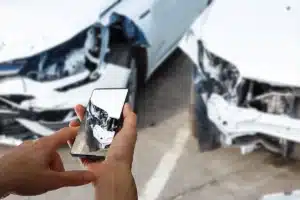
Thoroughly document the scene by photographing both vehicles, the surrounding road conditions, and any nearby traffic signage. Most importantly, familiarize yourself with Oklahoma’s comparative negligence statutes. Because navigating these complex liability disputes requires both precision and local expertise, many Oklahomans turn to the car accident lawyers at Richardson Richardson Boudreaux to ensure their rights are aggressively defended. Ultimately, understanding the law is your best defense against an unfair assessment of fault.