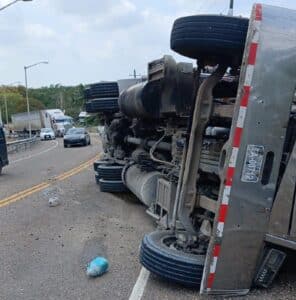
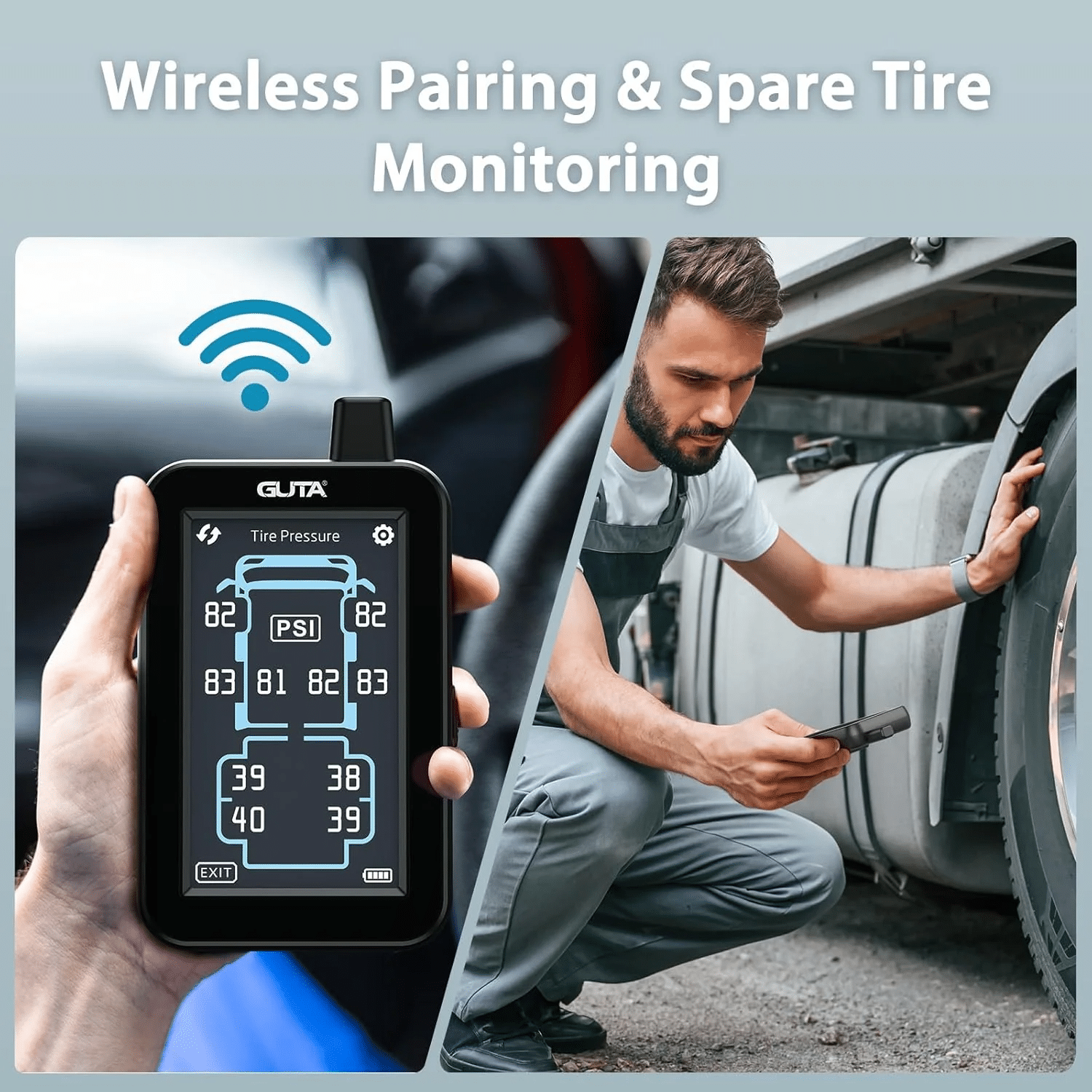
For any professional hauler or long-haul traveler, the road is a place of constant calculation. You calculate fuel stops, load distribution, and arrival times. But one variable often goes unmonitored until it becomes a catastrophe: the real-time condition of your trailer tires.
Modern trucks are marvels of engineering, equipped with sophisticated dashboards that monitor everything from exhaust fluid levels to the driver’s attention span. Most new models include a factory-installed Tire Pressure Monitoring System (TPMS). However, there is a dangerous misconception that these built-in systems offer a “set it and forget it” solution for the entire rig. The truth is that when you hitch a trailer, whether it’s a 53-foot dry van, a triple-axle toy hauler, or a flatbed, your truck’s factory brain often loses track of what is happening at the rear.
The Technical Blind Spot of Factory TPMS
The primary limitation of factory-installed TPMS isn’t the quality of the sensors, but their intended scope. Automobile manufacturers design these systems to cover the wheelbase of the tractor unit. The moment you introduce a trailer, you add significant distance and substantial amounts of metal shielding between the tires and the receiver.
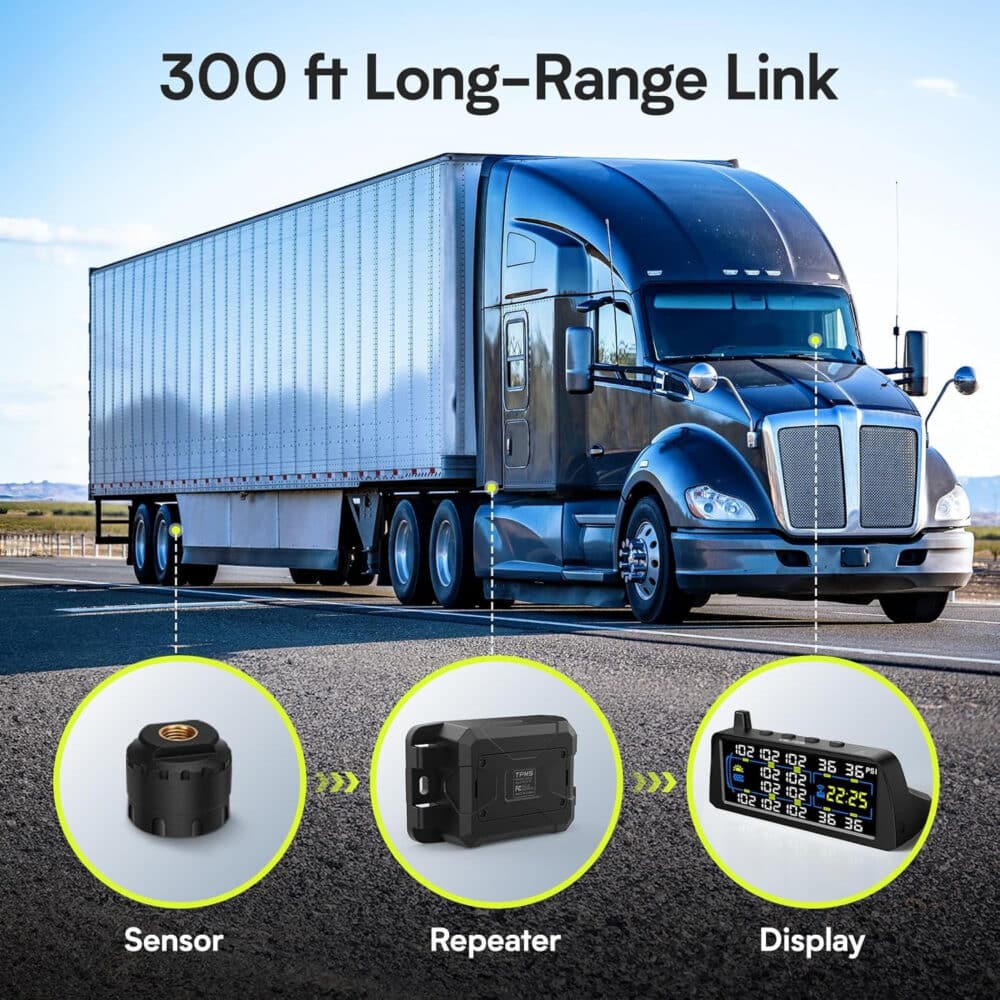
In many cases, even if a truck claims to be “trailer-ready,” the signal strength of standard sensors is insufficient to reliably penetrate the length of a heavy-duty trailer. This leads to dropped signals or, worse, delayed alerts. In the world of towing safety, a delay of sixty seconds can be the difference between a simple roadside stop and a multi-vehicle accident.
Furthermore, factory systems are often “closed.” They are calibrated for specific tire sets. If you rotate trailers frequently or use a different tire brand on your trailer than on your truck, the factory system may fail to calibrate correctly, leaving you to rely on manual checks, which are only accurate for the moment the truck is parked.
Why Distance Changes the Physics of Failure
A tire failure on a trailer is a completely different beast than a failure on your primary vehicle. If a front tire on your truck loses pressure, you feel it immediately through the steering wheel. If a drive tire goes, the vibration is unmistakable.
But a trailer tire is isolated. It is several tons of weight trailing behind you, often separated by a pivot point (the hitch). Because of this isolation, a tire can lose 50% of its air or begin to delaminate due to heat, and the driver will feel absolutely nothing in the cab. By the time you see the dreaded “alligator” (tire tread) flying off in your side mirror, the structural integrity of the wheel well is likely already compromised. This is why a dedicated Trailer TPMS isn’t just a luxury; it’s an essential piece of heavy-duty towing accessories.
How Guta Fills the Critical Data Gap
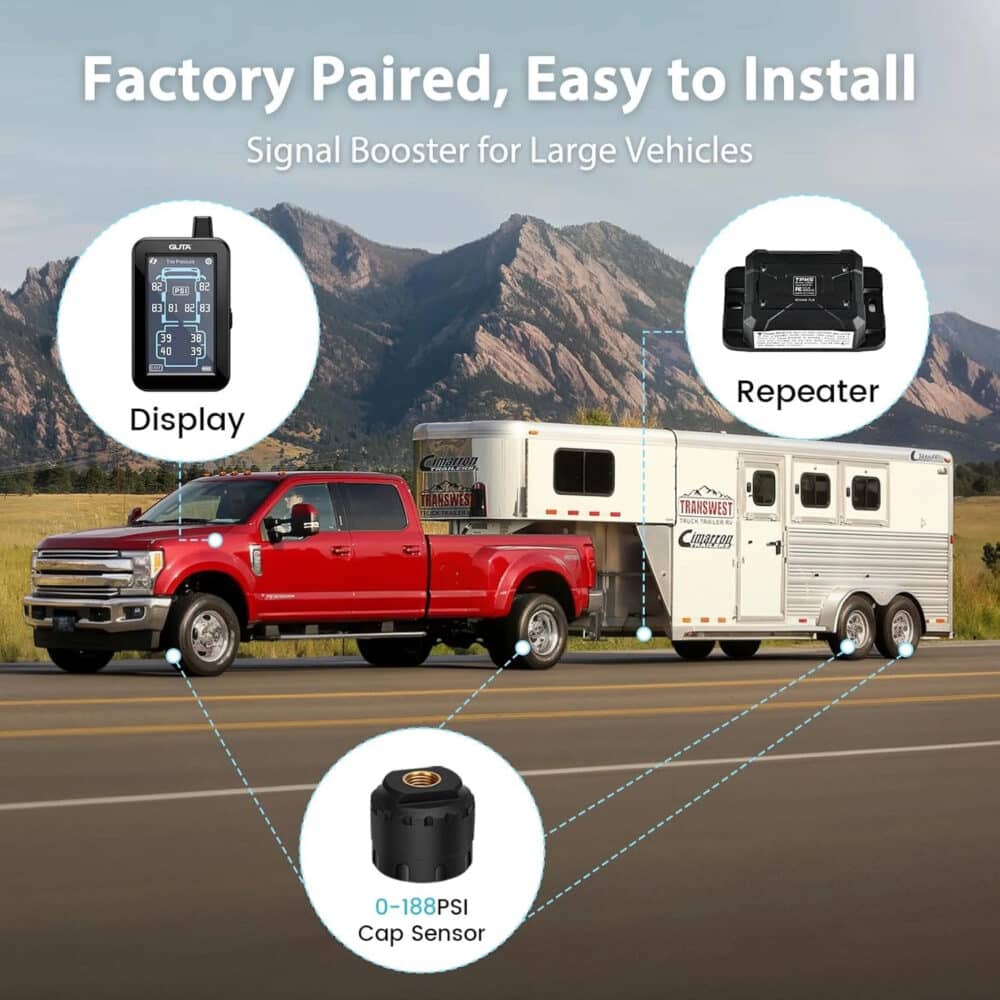
This is where Guta changes the narrative. Instead of trying to adapt a passenger-car mindset to a heavy-duty environment, Guta’s Tire Pressure Monitoring System for Trailers was engineered from the ground up for the long haul.
1. Overcoming the Signal Barrier Guta systems utilize high-frequency transmitters and, crucially, signal repeaters. These repeaters act as a bridge, capturing data from the furthest trailer axle and relaying it to the cab. This ensures that the driver receives a constant, flicker-free stream of data, regardless of how much steel and cargo are between the driver and the data.
2. The Importance of Thermal Monitoring. In any Guta TPMS review, you will find that the standout feature isn’t just pressure monitoring, it’s the temperature tracking. Most RV tire blowout prevention strategies focus on PSI, but heat is the true silent killer. Dragging brakes, failing bearings, or simple over-flexing of a low-pressure tire generates immense thermal energy. Guta sensors alert the driver to abnormal heat spikes long before the pressure reaches a critical failure point. This allows for proactive maintenance rather than reactive crisis management.
3. Adaptive Versatility for Different Loads. Unlike factory systems that are “married” to a single VIN, Guta systems are designed for the reality of hauling. If you switch from a boat trailer to a camper, or if your fleet swaps trailers daily, the Guta interface allows for quick re-coding and monitoring of up to dozens of tires simultaneously. It provides a level of granular detail tracking each tire’s specific health that a standard dashboard light simply cannot match.
The Economic Reality: Safety as an Investment
We often talk about towing safety in terms of life and limb, which is the most important factor. However, from a business or hobbyist perspective, there is also a massive financial incentive. A single blowout on the highway can cost thousands of dollars in road service fees, missed delivery windows, and bodywork repairs to the trailer. In an RV, a blowout often tears through the floorboards, damaging plumbing and electrical lines.
By investing in a specialized Tire Pressure Monitoring System for Trailers, you are effectively buying insurance against the most common cause of roadside breakdowns. It turns an “invisible danger” into a manageable data point.
Conclusion: Completing the Circle of Protection
The technology built into your truck is impressive, but it was never meant to do it all. To truly protect your cargo, your vehicle, and your passengers, you need a system that understands the unique physics of a trailer. Guta fills that gap by providing the range, the durability, and the thermal insights that factory sensors ignore.
Don’t wait for the vibration in the steering wheel that may never come. Take control of your “blind spot” and ensure that your trailer is as smart and as safe as the truck pulling it.