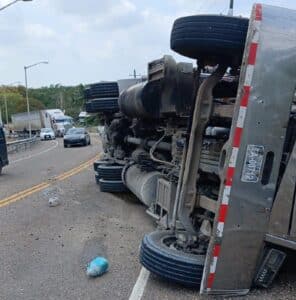
A recent increase in severe semi-truck accidents on Arkansas highways like I-40 reflects a growing national safety concern.
If you feel like you’re seeing more wrecked semi-trucks on the shoulder of Arkansas highways like I-40 and I-30, you aren’t imagining it. The data confirms a disturbing trend: collisions involving large commercial trucks are on the rise, turning daily commutes into a higher-stakes drive. According to a 2023 report, Arkansas now ranks fourth in the nation for big truck fatalities per capita.
For those of us behind the wheel of a pickup or an SUV, sharing the road with 40-ton rigs is a daily reality. This isn’t just a statistic; it’s a direct risk to your safety every time you merge onto the interstate. This article will break down the numbers, investigate the causes behind this surge, and give you the practical, no-nonsense advice you need to navigate roads increasingly crowded with commercial traffic.
Arkansas’s Highways: Ground Zero for a National Problem
The highways crisscrossing the Natural State are a critical artery for the nation’s freight industry. This high volume of commercial traffic, however, comes at a steep cost, positioning Arkansas as a case study for a worsening national highway safety crisis.
The Sobering Numbers on Arkansas Roads
The scale of the problem is written in hard data. From 2017 to 2021, an average of 91 people were killed annually in Arkansas in collisions involving a large truck. These aren’t just numbers on a page; they represent devastating local tragedies, like the recent fatal rollover crash in North Little Rock that killed a Texas-based truck driver.
Encounters with big rigs are unavoidable here. A report from TRIP, a national transportation research nonprofit, found that combination trucks make up 34% of the traffic on Arkansas’s rural highways—the third-highest percentage in the United States. This heavy traffic concentration creates a volatile environment, as seen in the multi-vehicle pile-up on I-40 in Altus, which involved three separate tractor-trailers and shut down eastbound traffic.
Why Is This Happening? Unpacking the Causes of the Surge
The spike in semi-truck crashes isn’t the result of a single issue. It’s a combination of intense economic pressure on the freight industry, overlooked mechanical failures, and the persistent problem of human error behind the wheel.
A Perfect Storm: Freight Demand and Industry Pressures
The modern economy demands rapid shipping, putting more trucks on the road than ever before. This relentless pressure to deliver goods faster means operators are often pushing the limits of their equipment and their own endurance. Tight deadlines and the constant push for efficiency create an environment where risky behaviors, like speeding and fudging logbooks, can become dangerously common.
Mechanical Failures: When 80,000 Pounds of Steel Fails
For any truck owner, the integrity of the equipment is paramount. When it comes to a fully loaded semi, a mechanical failure can be catastrophic. According to data from the National Highway Traffic Safety Administration (NHTSA), **brake problems** are a factor in an astounding 29% of all large truck accidents, making it the single most common mechanical cause.
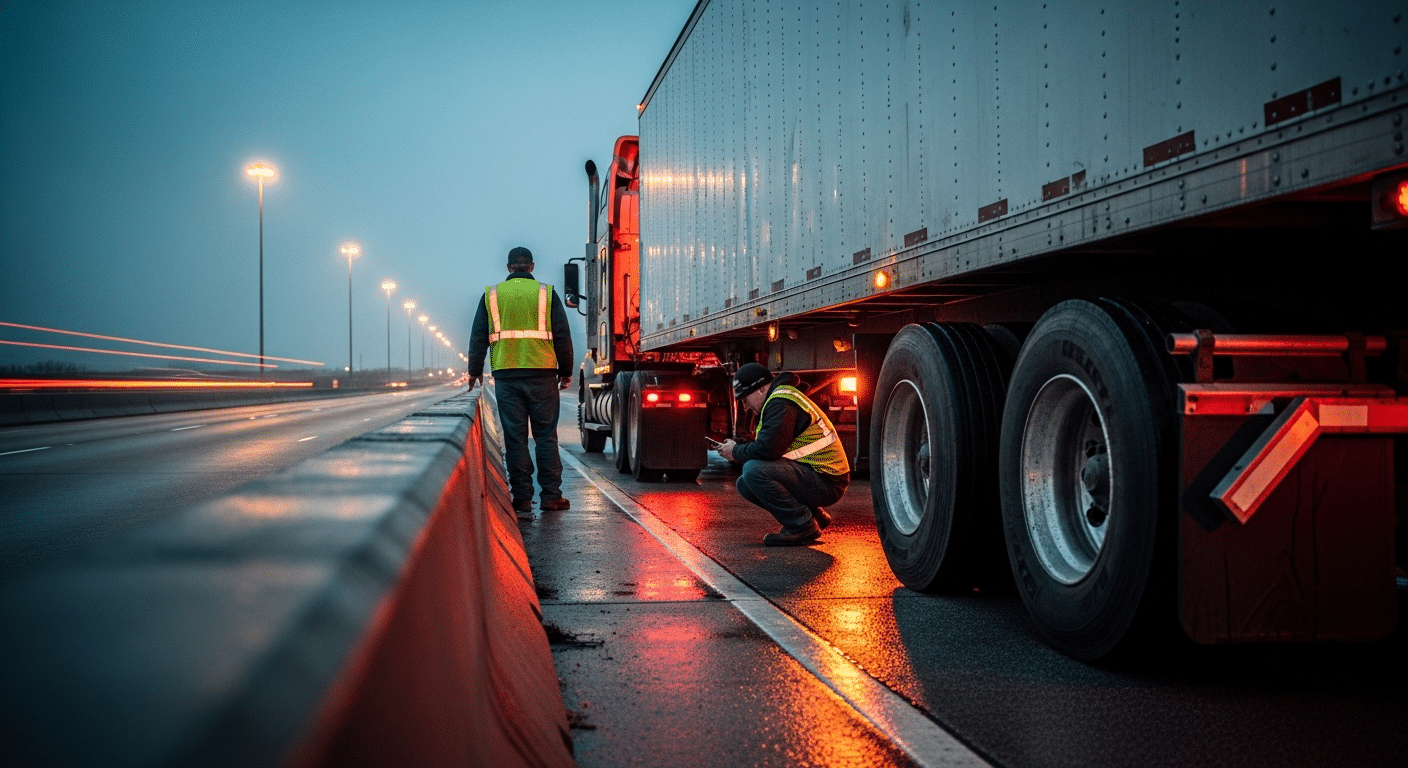
These failures often stem from poor maintenance and neglected pre-trip inspections. A stark reminder came when the Kansas Highway Patrol shared a video of a loose wheel flying off a semi on I-35, which investigators found was due to fasteners that had been loose for some time. Similarly, a trailer detached from its tractor on I-29, injuring another driver, highlighting a critical failure of safety equipment.
The Human Element: Fatigue, Speed, and Distraction
Ultimately, driver error remains the leading cause of nearly all vehicle accidents. Commercial truck drivers are not immune, especially when faced with industry pressures. The Federal Motor Carrier Safety Administration reports that **speeding** is a contributing factor in 23% of all large truck accidents. This often happens when a driver is trying to make up for lost time on a tight schedule.
Beyond speed, a host of other human factors contribute to these dangerous situations. These issues are well-documented and represent the most common reasons a routine drive turns into a disaster.
- Driver Fatigue: Exceeding federal Hours of Service (HOS) limits to meet deadlines.
- Speeding: Driving too fast for conditions to make up time.
- Distracted Driving: Using cell phones or in-cab devices.
- Inadequate Training: Lack of experience, especially with newer drivers filling industry shortages.
- Poor Maintenance: Failure to conduct pre-trip inspections or address known issues like worn brakes or tires.
- Improper Cargo Loading: Unbalanced or unsecured loads can cause rollovers or jackknife accidents.
Sharing the Road: What This Means for Pickup and SUV Drivers
Understanding the problem is one thing; knowing how to protect yourself is another. For drivers of personal trucks and SUVs, the risks are disproportionately high due to the simple laws of physics.
The Physics of a Collision: Why You Always Lose
Let’s be direct. Your half-ton pickup, weighing around 5,000 pounds, is no match for a semi-truck that can legally weigh up to 80,000 pounds. In a collision, the sheer difference in mass means your vehicle will absorb the overwhelming majority of the force. The physics are not on your side, and the difference in stopping distance, blind spots, and maneuverability is staggering.
| Feature | Standard Semi-Truck | Full-Size Pickup Truck (e.g., Ford F-150) |
|---|---|---|
| Max Legal Weight | Up to 80,000 lbs | ~5,000 – 7,000 lbs |
| Stopping Distance at 65 mph | ~525 feet (length of nearly 2 football fields) | ~300 feet |
| Major Blind Spots (No-Zones) | Front, back, and entire lanes on both sides | Small spots near rear pillars |
| Turn Radius | Wide turns requiring multiple lanes | Standard, fits within a single lane |
Defensive Driving Around Big Rigs
Your best defense is to be proactive and drive defensively. Staying safe means understanding a truck’s limitations and giving it the respect and space it requires on the road.
- Stay Out of the No-Zones: A semi-truck has four huge blind spots where the driver cannot see you: directly in front, directly behind, and along both sides of the trailer. A good rule of thumb is if you can’t see the truck’s side mirrors, the driver can’t see you.
- Pass Safely and Quickly: Don’t linger alongside a semi. Pass on the left where the driver’s blind spot is smaller, and make sure you can see the truck’s entire front end in your rearview mirror before you cut back in.
- Give Them Space: Maintain a following distance of at least 4-5 seconds behind a large truck. This keeps you out of their rear blind spot and gives you ample time to react if they brake suddenly.
- Anticipate Wide Turns: Big rigs need extra room to make turns, especially right turns. Watch for their turn signals and avoid squeezing into the space they open up on the left side, as they will swing wide to complete the turn.
The Aftermath: Navigating the Complex Legal Fallout
A collision with a commercial truck isn’t just more physically devastating; the legal aftermath is also far more complicated than a typical car accident. Determining who is at fault requires a deep dive into a complex regulatory world.
A Complicated Web of Liability
Fault isn’t always limited to the driver. Multiple parties can be held responsible, including the trucking company for negligent hiring or pushing drivers past legal limits, the maintenance shop for shoddy repairs, or even the cargo loaders for an unbalanced load. This web of potential fault makes truck accident cases some of the most complex automotive lawsuits. Investigators will pull data from the truck’s electronic logging device (ELD) and black box to verify the driver’s hours, speed, and braking activity leading up to the crash.
Untangling who is responsible involves a detailed investigation into compliance with strict state and federal trucking regulations. Because multiple parties can be at fault, victims and their families often seek credible guidance from an experienced Arkansas truck accident lawyer to protect their rights and navigate the complex claims process.
Our Take: A National Problem Demands Local Vigilance
The spike in semi-truck crashes on Arkansas highways is a clear and present danger. It serves as a local warning sign of a broader national highway safety crisis, fueled by relentless economic pressures, critical equipment failures, and predictable human error. These are systemic issues that regulators and the trucking industry must address with more stringent oversight and better safety protocols.
While that larger battle plays out, the immediate reality for you, the driver of a pickup or SUV, is that the roads are more dangerous. Your awareness is your best and most immediate defense. The only way to win a fight with an 80,000-pound truck is to avoid it altogether.
Stay vigilant, give them space, and always drive defensively. Knowing the risks and respecting the machine in the next lane is the smartest move you can make on the highway.