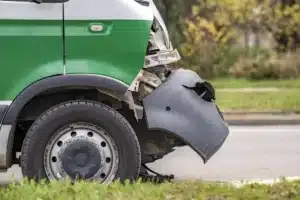

It’s a scene that plays out too often on Texas highways: the crunch of metal, a chaotic pile-up, and in the middle of it all, a massive 18-wheeler. For pickup and SUV drivers sharing the road, a collision with a commercial truck is one of their biggest fears. Recent incidents across San Antonio, from multi-vehicle crashes shutting down Highway 151 to 18-wheelers colliding on Loop 410, highlight this daily risk. When your truck or SUV is caught in a chain reaction involving a semi, the immediate assumption is that one of the drivers made a mistake. But the question of who is legally at fault is far more complex, often extending into a web of corporate responsibility. This guide breaks down the intricate layers of liability in a commercial truck accident, revealing who can be held accountable when things go wrong.
Beyond the Driver’s Seat: Unpacking Initial Fault in a Multi-Vehicle Pile-Up
A multi-vehicle crash scene is pure chaos, but for investigators, it’s a puzzle with specific pieces. Determining fault starts with understanding the physics of the collision and challenging common assumptions about how these accidents unfold.
The Chain Reaction Myth
In a pile-up, it’s easy to blame the last vehicle in line. However, legal liability isn’t that simple. Investigators work backward from the final point of rest to determine the first point of impact. For instance, if an 18-wheeler fails to stop and rear-ends your F-150, pushing it into the SUV ahead, the truck driver’s initial negligence is the cause—not yours. In crashes where a sudden stop leads to a series of rear-end collisions, the initial impact, not the final one, often dictates the flow of fault.
On-Scene Evidence: The First 48 Hours
The evidence collected immediately after a crash is critical. While a standard police report is filed, accidents involving commercial trucks trigger a more intense level of scrutiny, often shutting down major arteries like I-35 or I-10 for hours. Investigators will analyze:
- Skid marks and yaw marks: To determine vehicle speeds and evasive actions.
- Debris field: The location of vehicle parts, glass, and cargo can map out the collision sequence.
- Vehicle positions: Final resting positions help reconstruct the moments leading up to the crash.
Given the high rate of fatal truck crashes in Texas—which saw 730 fatalities in 2023 alone, a per capita rate 48% above the national average—this initial investigation is exhaustive.
The Role of Your Pickup or SUV
While the sheer mass of an 18-wheeler dominates any collision, the design of modern pickups and SUVs plays a role. Features like automatic emergency braking and stability control can provide crucial data points for investigators. However, the larger size and weight of your vehicle compared to a sedan can also influence the outcome of the crash. Understanding if pickup trucks are safer than cars is key to appreciating these dynamics.
Who Else is Responsible? The Corporate Chain of Command
In a commercial truck accident, the driver is often just one piece of a much larger liability puzzle. Federal Motor Carrier Safety Administration (FMCSA) regulations hold multiple parties accountable for a truck’s safe operation. If any of these entities cut corners, they can be held partially or fully at fault.
The Trucking Company’s Duty
A trucking company (motor carrier) is responsible for who they put behind the wheel. An investigation will dig into their practices, looking for red flags like:
- Negligent Hiring: Did they hire a driver with a history of DUIs or reckless driving? For instance, a San Antonio crash involving an intoxicated driver is a clear sign of negligence if the company knew of past issues.
- Inadequate Training: Was the driver properly trained on the specific truck they were operating or how to handle hazardous materials?
- Unrealistic Schedules: Forcing drivers to exceed legal Hours-of-Service (HOS) limits to meet deadlines can lead to fatigue, a major cause of accidents.
Bexar County saw 2,460 commercial vehicle crashes in 2022, and corporate negligence is a frequent contributing factor.
Maintenance, Mechanical Failures, and Inspections
A fully loaded semi-truck can weigh up to 80,000 pounds and needs to be in perfect working order. A third-party maintenance provider or an in-house mechanic can be held liable if a mechanical failure causes a crash. Investigators will pull maintenance logs to check for documented and repeated failures.
Key Mechanical Systems Under Scrutiny:
- Brakes: Worn-out or improperly adjusted air brakes can dramatically increase stopping distance.
- Tires: Bald tires or retreads on steering axles are illegal and can lead to catastrophic blowouts.
- Steering & Suspension: Worn components can cause a driver to lose control.
- Lights & Reflectors: Inoperable lights make a truck nearly invisible at night.
- Underride Guards: Damaged or missing guards can lead to fatal underride accidents, where a smaller vehicle slides underneath the trailer.
Cargo Loaders and Shippers
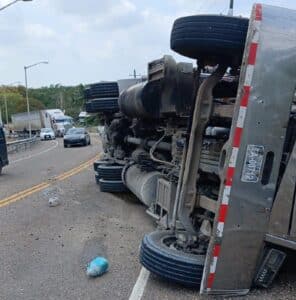
The way cargo is loaded and secured is just as important as the truck’s mechanical condition. If a load is unbalanced, unsecured, or exceeds weight limits, it can cause the truck to become unstable and lead to a rollover, like the one that recently shut down lanes on Loop 410. The shipper who loaded the cargo and the company that owns it can share liability for the accident.
| Factor | Standard Car/SUV Accident | Commercial Truck Accident |
|---|---|---|
| Parties Involved | Typically 2-3 drivers and their insurance companies. | Driver, trucking company, maintenance provider, cargo loader, shipper, and multiple insurance carriers. |
| Governing Rules | State traffic laws. | Complex federal (FMCSA) and state regulations. |
| Evidence Types | Police reports, photos, witness statements. | All of the above, plus driver qualification files, HOS logs, black box data, maintenance records, and weigh station receipts. |
| Investigation | Usually concluded quickly by police and insurance adjusters. | Can take months and involve accident reconstruction experts, mechanical inspectors, and legal teams. |
Navigating the Aftermath and Protecting Your Rights
After a crash with a commercial truck, the trucking company’s insurance carrier and legal team are often on the scene within hours. Their goal is to control the narrative and minimize their financial liability. For the driver of a pickup or SUV, knowing how to protect your rights is essential.
The Investigation Goes Deeper
While you’re dealing with injuries and vehicle damage, the trucking company is already building its case. The unique evidence in these accidents—like the truck’s electronic logging device (ELD) or black box—is crucial. This device records speed, braking, and hours of service. An experienced legal team knows how to secure this data before it can be lost or erased. Understanding how fast semi-trucks can go and how speed limiters are tracked is vital to interpreting this data.
Why These Cases Require Specialized Knowledge
The complexity of trucking regulations and the number of potentially liable parties means these cases are fundamentally different from a typical car wreck. Proving that a trucking company’s poor maintenance schedule or a shipper’s improperly loaded cargo contributed to the crash requires a deep understanding of federal law. This is why victims often seek out experienced San Antonio truck accident attorneys who specialize in commercial vehicle litigation. They have the resources to hire accident reconstructionists and navigate the intricate corporate structures to ensure all at-fault parties are held accountable.
The Texas Factor: A Hotbed for Truck Accidents
Texas roads are the epicenter of the nation’s trucking industry, and the statistics are sobering. A recent report highlighted that freight traffic in the San Antonio area is expected to boom, which will only increase road congestion and the risk of accidents. This underscores the importance of being prepared and understanding your rights when sharing the road with commercial traffic.
Staying Safe on Roads Dominated by Commercial Traffic
Determining fault in a multi-vehicle accident involving an 18-wheeler is never as simple as pointing a finger at a driver. The responsibility often lies with a chain of corporate entities whose decisions—made in boardrooms and loading docks miles away—directly impact safety on the road.
For pickup and SUV drivers, the key takeaway is this: the driver of the truck may not be the only one—or even the primary one—at fault. Liability can be shared among the trucking company, maintenance shops, and cargo loaders. Understanding this complex web is the first step toward protecting your rights after a devastating collision. As freight traffic continues to increase, choosing a vehicle with the latest safety features, like those found on the 2025 safest pickup trucks, and driving defensively are your best lines of defense.