
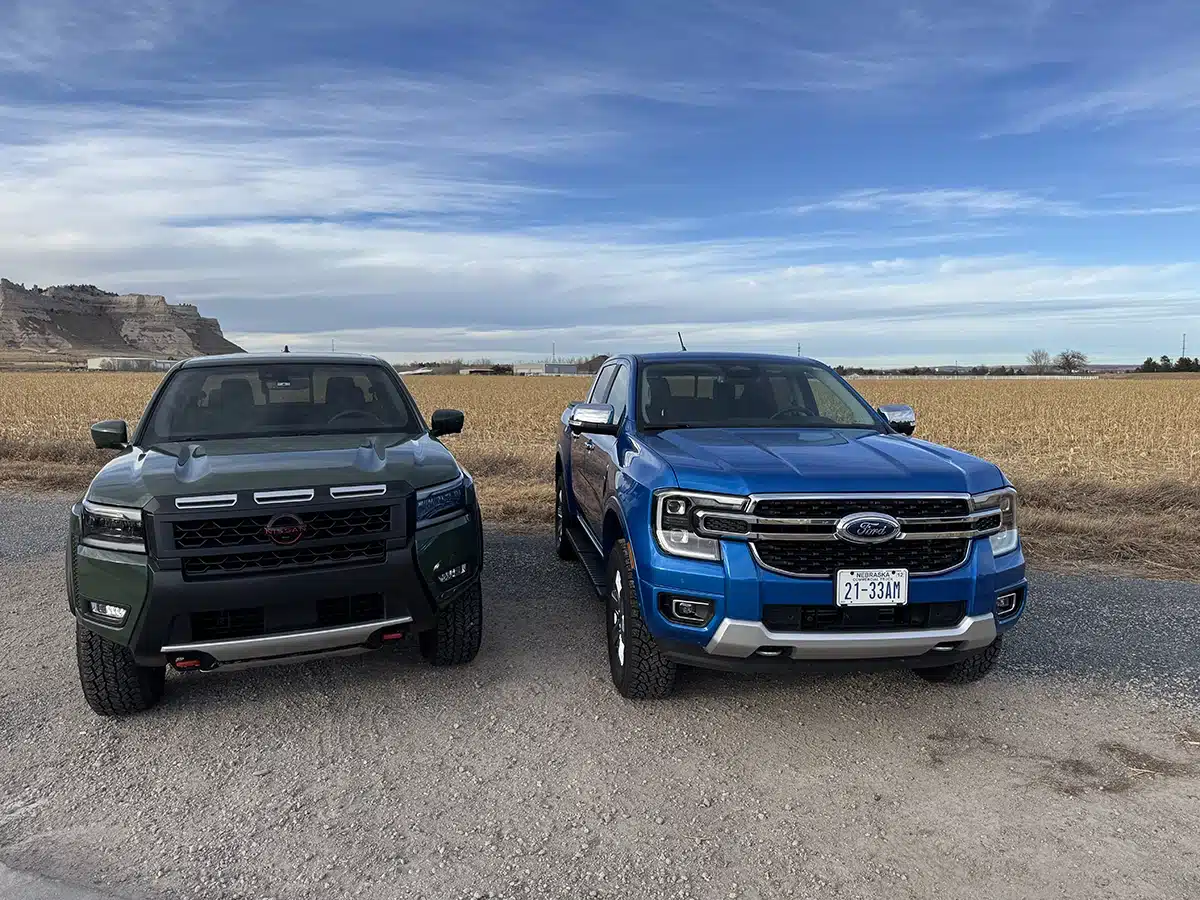
With midsize trucks priced closer than ever, the decision between the refreshed 2026 Nissan Frontier vs Ford Ranger comes down to what you value more – V6 engine, 6′ bed or turbocharged engine, more tech.
I recently got a chance to drive the newly refreshed 2026 Nissan Frontier PRO-4X for a week and I compared it to our long-term review truck, 2024 Ford Ranger Lariat. While one is an off-road trim and the other a more premium trim, I focused on the key differences between these trucks remarkably priced at only $3,000 difference. Here’s how they stack up.
2026 Nissan Frontier vs Ford Ranger – Exterior Design and Bed Utility
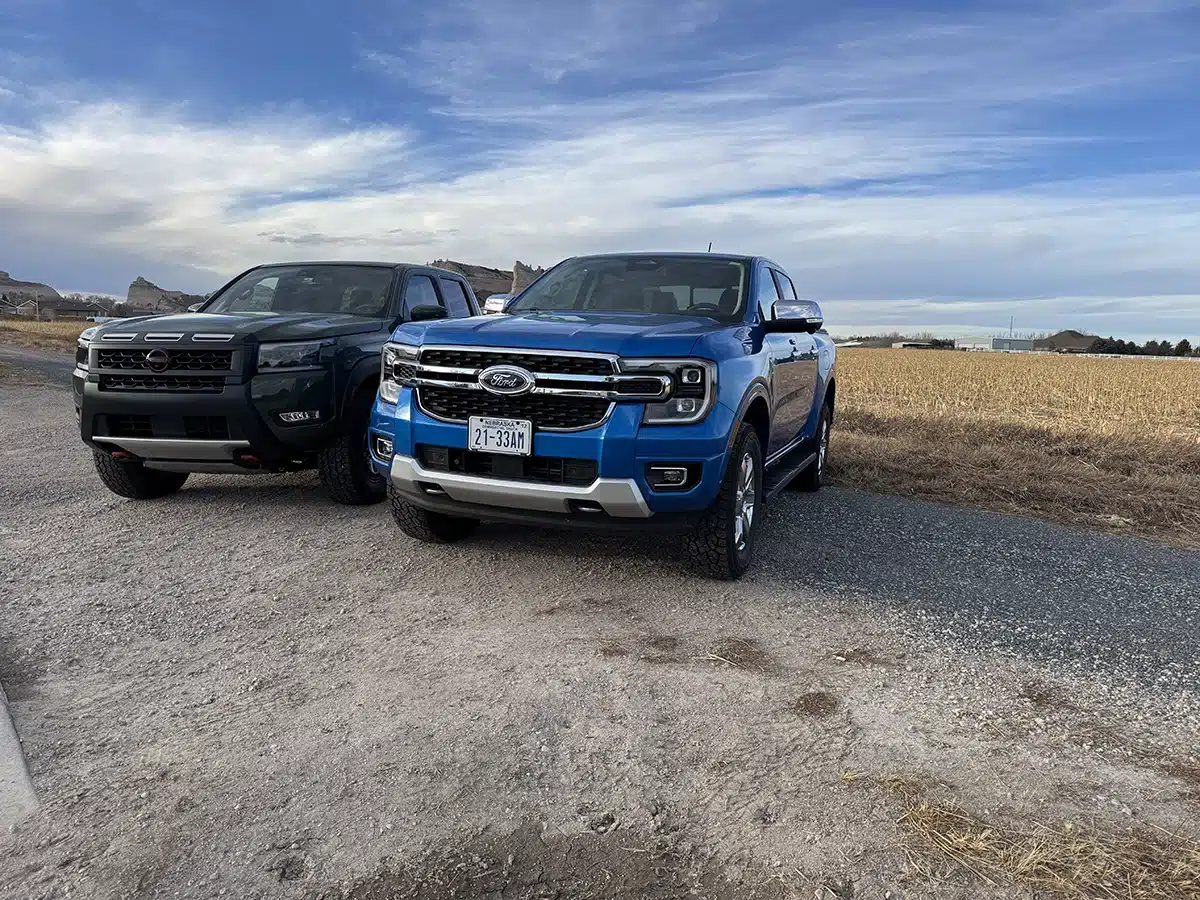
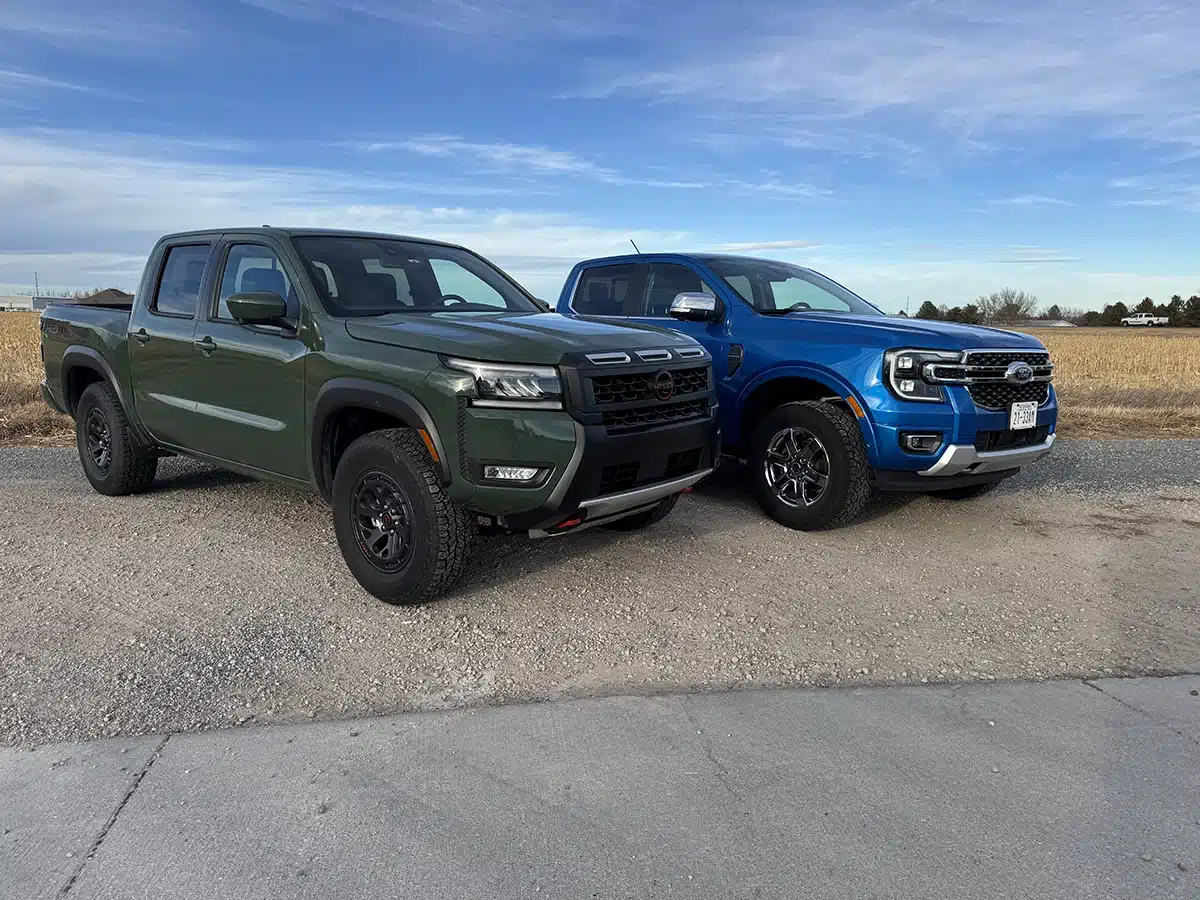
Starting with the 2024 Ford Ranger, it looks taller and more imposing in person, especially with its chrome accents and optional appearance package. Details like chrome tow hooks, LED lighting, an integrated bed step and embossed “RANGER” tailgate give it a premium feel. Practical touches such as a spray-in bedliner, damped tailgate, in-bed lighting, and available power outlet add everyday usability. In this case, additional accessories like a tonneau cover and Decked drawer system further enhance cargo management.
The Nissan Frontier Pro-4X takes a more rugged, purpose-built approach. Tactical Green Metallic paint, red tow hooks, skid plates, Bilstein shocks, and all-terrain tires reinforce its off-road intent. The bed is similarly well-equipped with a spray-in liner, utility rail system, damped tailgate, and in-bed power, but it lacks the clever step solutions found on the Ranger. Visually, the Frontier appears more compact and understated, even though dimensions are similar.
Interior Space, Comfort and Materials
Inside, the Ranger Lariat feels more upscale. Leather seats, memory settings, a fully digital gauge cluster, and a large vertical touchscreen create a modern, tech-forward cabin. Rear-seat space is typical for the segment—adequate for short trips, but not ideal for teenagers on long drives. It has plenty of storage found in the cabin and the seats have proven comfortable even on multi-hour road trips.
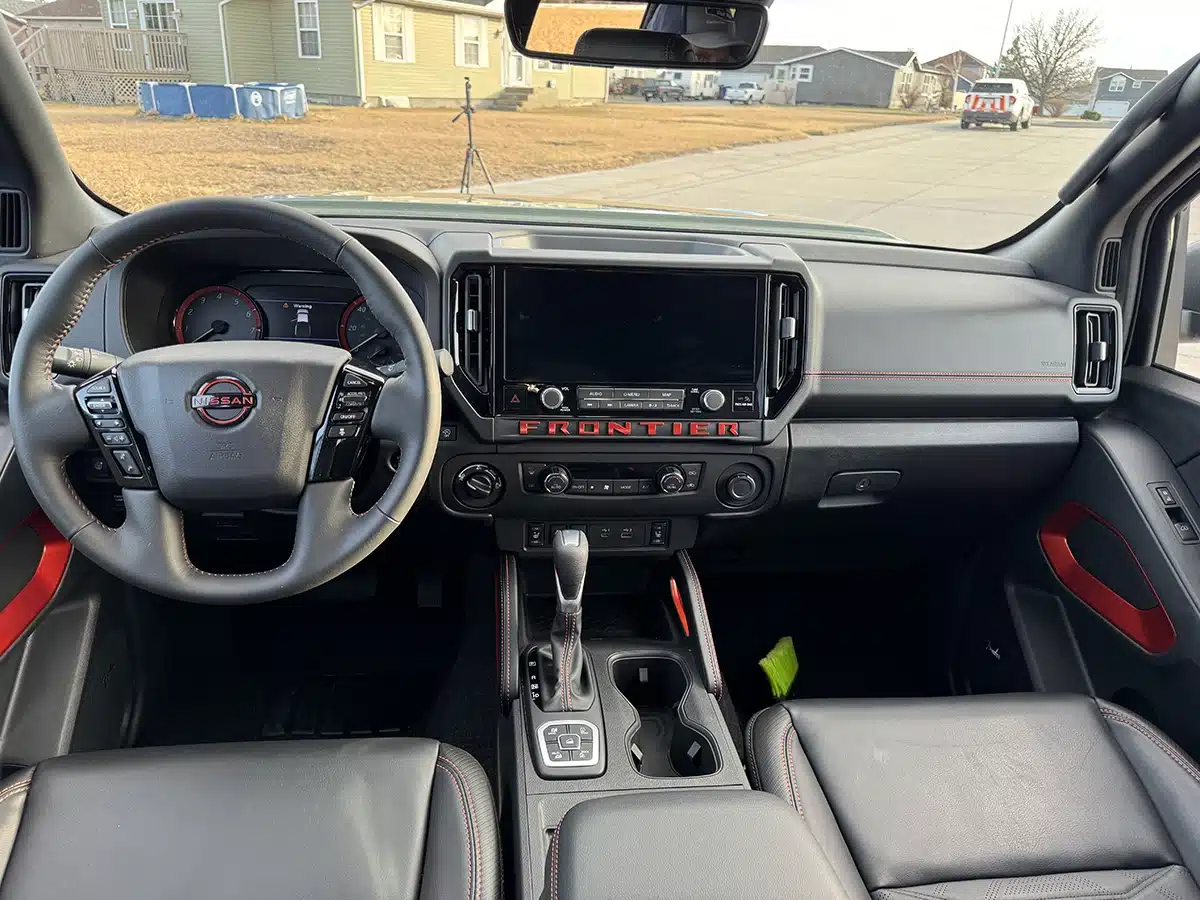
The Frontier’s interior is more utilitarian. Materials are more plasticky, though that can be a plus for durability and easy cleaning. Seating comfort is excellent, Nissan has long been known for supportive seats, and rear legroom is comparable to the Ranger. The mix of analog gauges with a central digital display feels dated next to Ford’s setup, but some buyers may prefer the simpler layout.
Technology and Infotainment
Technology is where the Ranger clearly separates itself. The large vertical touchscreen, crisp camera system, wireless Apple CarPlay/Android Auto, and Ford’s zone lighting feature (excellent for camping or nighttime work) make it feel a class above. Camera quality, in particular, is noticeably sharper than the Frontier’s.
The Frontier offers a horizontal touchscreen with wireless smartphone integration and a straightforward interface. It covers the basics well, but the backup camera quality is grainier, and the overall tech experience feels a generation behind the Ford.
Powertrains, Driving Impressions and Efficiency
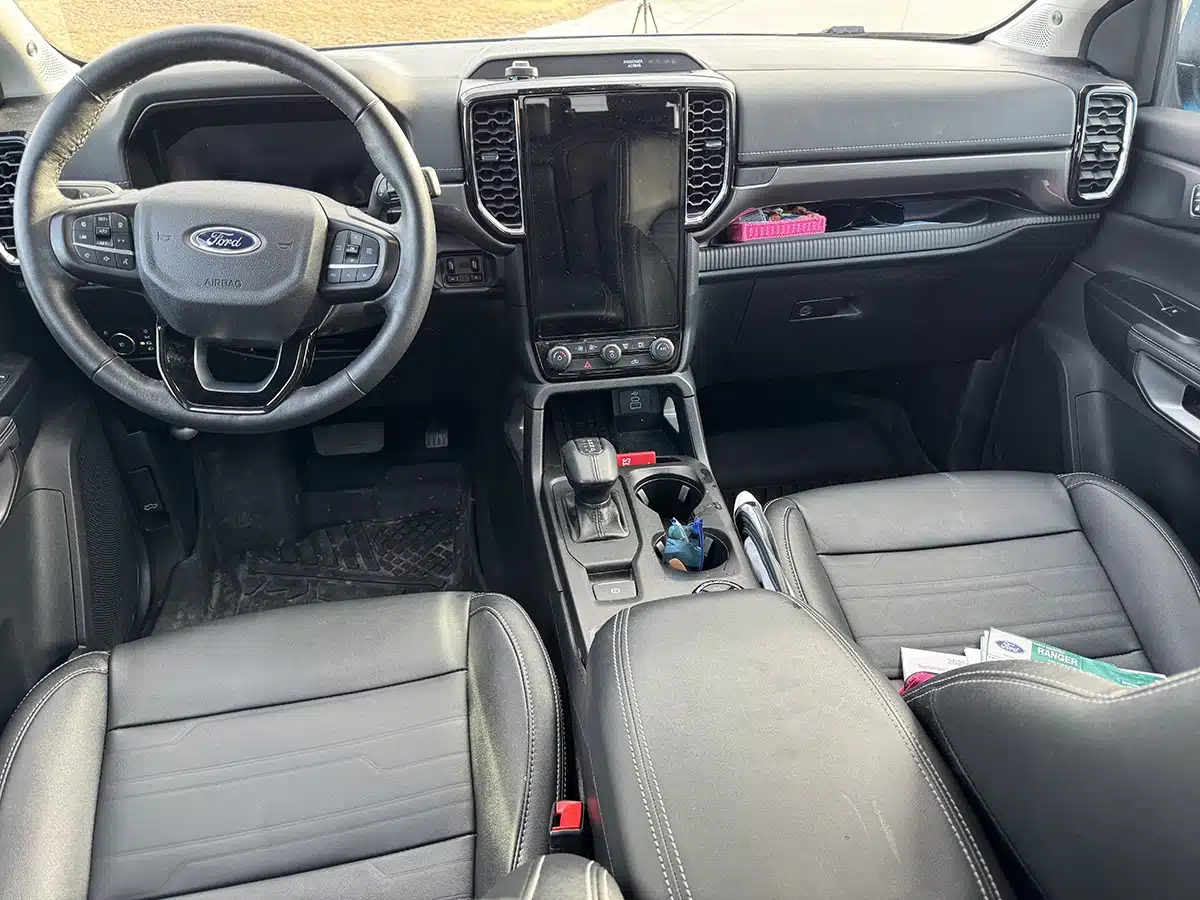
The Ford Ranger uses a turbocharged 2.3-liter EcoBoost four-cylinder producing 270 horsepower and 310 lb-ft of torque. Thanks to the turbo, torque comes on early, making the Ranger feel quick and responsive around town. Paired with a 10-speed automatic, it delivers strong acceleration and better fuel economy, averaging around 21 mpg combined in real-world driving.
The Nissan Frontier relies on a naturally aspirated 3.8-liter V6 with 310 horsepower and 281 lb-ft of torque. While it has more horsepower on paper, peak torque arrives later, making it feel slower off the line compared to the Ranger. Fuel economy trails at an estimated 18 mpg combined. The upside is simplicity—no turbocharger and fewer moving parts, which appeals to buyers focused on long-term ownership who have concerns about reliability of turbocharged engines.
Payload, Reliability and Value
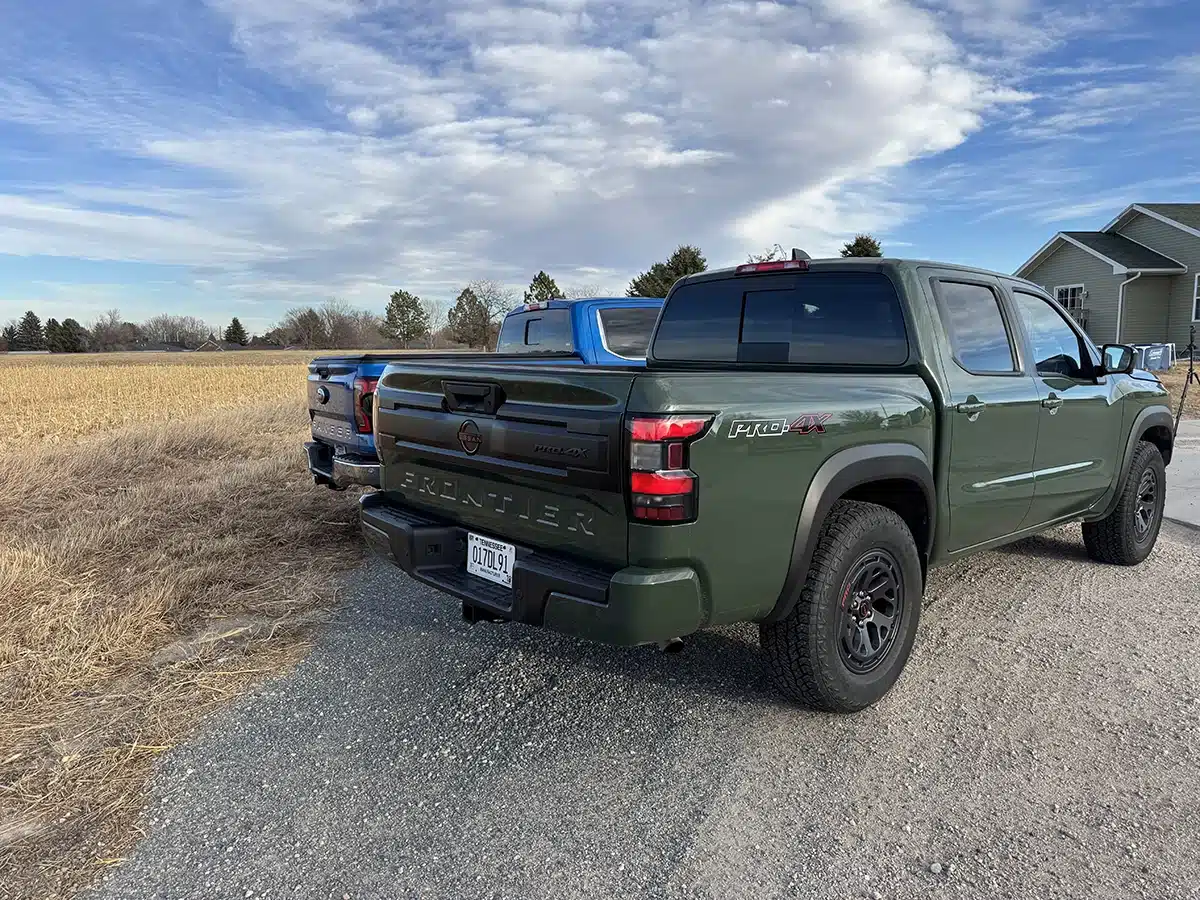
Payload capacity is a notable difference. The Ranger offers roughly 1,576 pounds of payload, while the Frontier maxes out around 1,040 pounds—a meaningful gap for hauling gear or passengers.
Reliability perceptions also differ: the Frontier enjoys a strong reputation, often mentioned alongside Tacoma for dependability, while the Ranger’s EcoBoost and 10-speed transmission have faced some criticism despite generally solid performance.
At roughly $51,000 as equipped, the Ranger Lariat justifies its price with technology, payload, 48″ between the wheel wells allowing for carrying sheetrock and better fuel economy. The Frontier Pro-4X counters with proven hardware, the aforementioned engine, 6′ bed length availability and a history of being reliable.