
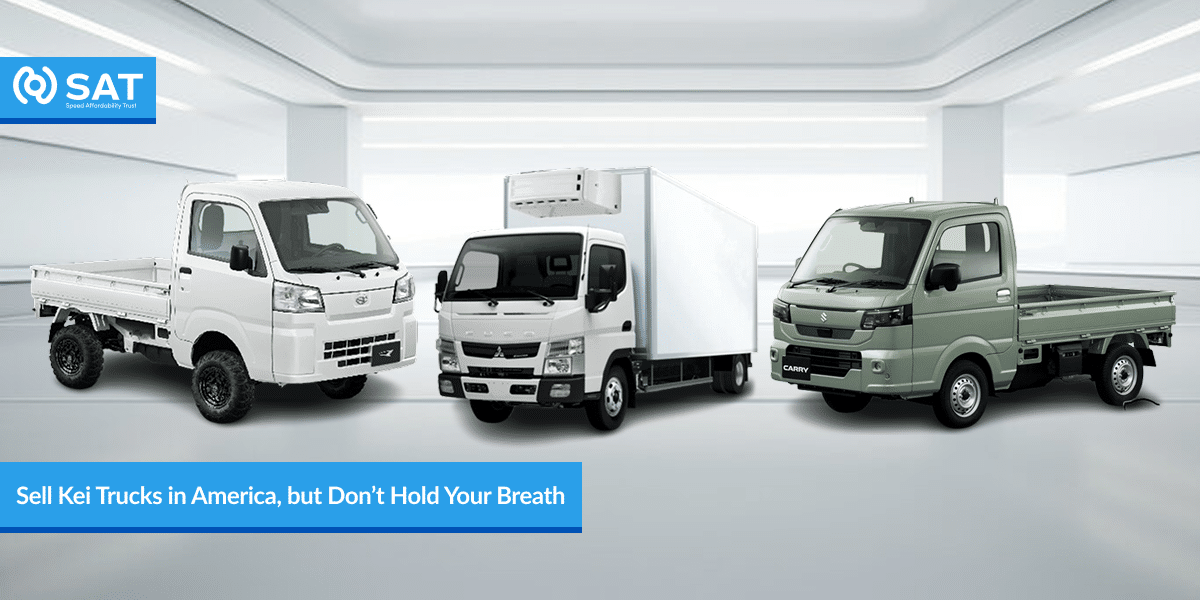
Did you ever get an impression of a small Japanese mini truck and experienced certain kind of excitement? They resemble an ideal farm truck, beach buggy and backyard hauler. The American people have fallen in love with these machines. But the point is, it is not that easy to sell as it appears to sell Kei trucks in America. When you believe that it will be your next money maker, remember that you don’t hold your breath.
We are going to take a deep look into why it is so complex to sell Kei trucks in the US, what you need to know and who is buying them. By the end of the article, you’ll be much more informed, perhaps more realistic.
What Is a Kei Truck?
Key trucks are small business trucks designed to serve the Japanese domestic market. They have:
- Small engines (typically less than 660cc).
- Small bodies with strict size restrictions.
- Simple, work-ready designs
These trucks were designed to be effective in crowded cities and on narrow roads. They can be parked and run cheaply, and that is one of the reasons they have attracted the attention of many Americans
The 25-Year Import Rule
The first major obstacle is that federal law allows the Kei truck import that will be at least 25 years old without any major modifications. That’s called the 25-year rule.
This is not due to the fact that the government dislikes Kei trucks. This is because the federal safety and emissions standards are extremely tough. These Japanese trucks were not designed to suit the US needs. Therefore you the truck cannot be brought in and registered for common road use unless it is 25 years and older.
The law was initially designed to apply to classic cars, but currently, it is the only legal loophole that numerous importers apply.
Importing Is Just the Start—Registration Is the Hard Part
Once you do all the paperwork and get the truck here on a legal basis, you are not done. The truck is brought into the country by federal law, but it is the state that determines whether the truck can be driven on public roads.
The following is the overview of how that would appear.
| State Rule Type | Example States | What It Means |
| Generally Legal | Washington, Idaho | Registered and can be driven after the age requirements |
| Restricted | Florida, North Carolina | May permit low speed road use or speed limits |
| Tough or Banned | Georgia, New York, Rhode Island | No complete registration is allowed |
Why Selling Kei Trucks Is So Hard
The following are the key factors that make it more difficult to sell a Japanese Kei truck in the US:
1. Federal Safety and Emissions Standards
Even when a truck is old enough to be imported, it does not necessarily pass the federal safety and emissions standards unless it is age exempt.
2. The State Rules Of Registration are Everywhere.
In certain states, they are freely permitted. Others restrict them to off-road use or even prohibit them. Any uncertainty is a deal killer.
3. Insurance Is Tough
Most insurers do not cover Japanese Kei trucks in the manner they insure full sized vehicles. This makes buyers nervous.
4. Paperwork Is a Nightmare
A truck may never be legal on the road (no matter its age) unless it is accompanied by full Japanese export papers or proper customs paperwork
5. Fear of Road Safety Issues
Kei truck top speed was not made to be on American highways. They are regarded as a threat to safety in many states, particularly during interstate travel.
Who Actually Buys Kei Trucks in the U.S.?
In spite of the challenges, there is an actual market. However, it is smaller than what most are expecting. Customers are more likely to be divided into several categories:
- Ranch owners and farmers seeking low priced truck.
- The landscapers and property managers requiring small haulers.
- Outdoor people and campers making them into adventure rigs.
- Japanese domestic market car lovers.
- Owners of small businesses who do deliveries and on-site jobs using them.
Nevertheless, such buyers tend to give more consideration to functional use in private land than legal use in the streets. The reason is that most trucks cannot be driven on roads or on private land unless the state laws permits it to be registered on roads.
Are Kei Trucks a Good Business?
Certainly, there are dealers who import and sell the Japanese Kei trucks for thousands of dollars, and there are successful stories. But the margins aren’t huge. You need to:
- Purchase the truck either in Japan or America.
- Process importation documents and transportation.
- Make proper customs and EPA exemption applications.
- Be familiar with the registration requirements of each state.
- Address the issue of low sales when buyers are afraid of street legality.
Most individuals feel they will toss them over. That rarely happens. There are trucks that take months before they get the right purchaser.
Common Mistakes Sellers Make
Most common issues sellers experience are:
- Supposing that all states handle Kei trucks equally.
- Failure to verify that the truck can be street registered.
- Disregard the necessary import documents.
- Underestimate the expense of paperwork.
Such mistakes may cost thousands of dollars and lead to bad deals within a short period.
Tips If You Still Want to Try Selling
In case it still feels like business you would like to take following are good strategies:
- Target rural consumers who are not concerned with street legality.
- When needed, sell them as off road and private use trucks.
- Identify your states and enter trucks respectively.
- Give all important documents, buyers are fond of that.
- Create credibility through photographs, inspection reports and honest descriptions.
Conclusion
Japanese Kei trucks are charming, entertaining and surprisingly good. They have gained a loyal fan base in America and still continue to show up in farms, properties and small businesses. However, when considering selling them, you must know the following:
The demand is real, yet it is complex, restricted and unpredictable. You might sell a few. You might sell many someday. But at the moment, stop your breath.
This is where SAT US wins the buyers in the United States of America. Having years of experience in exporting Japanese cars, they have the knowledge of US laws of imports, documentation, and shipping logistics. Buyers will not have to speculate on what they are going to buy because they have an opportunity to look at inspected and high quality used cars that you can rely on at all stages of selling and buying.
They are small trucks with big hearts, but it takes time, experience, and a bit of luck to make them legal and sell them throughout the country. You should go with it in case you do it because you care and because you belong to it.








