
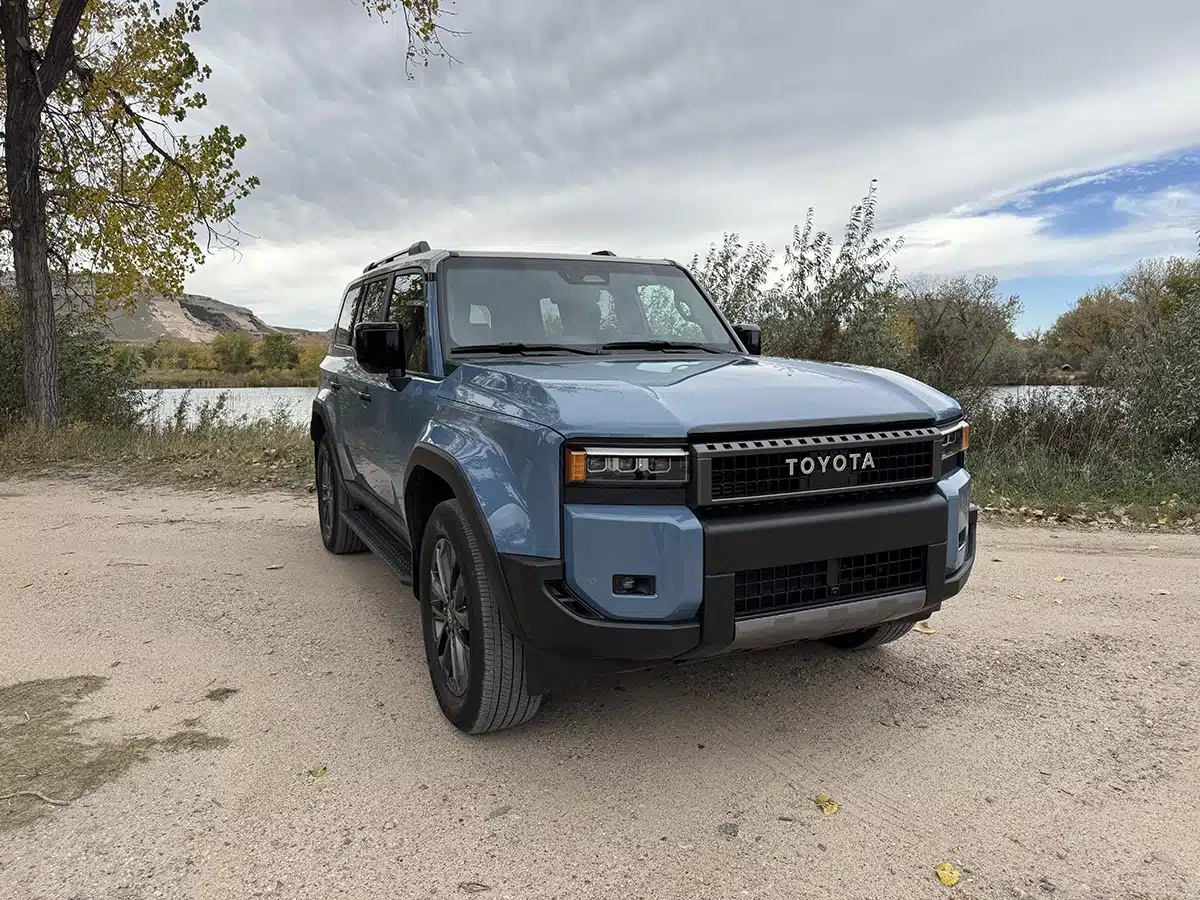
The 2025 Toyota Land Cruiser 250 is a modern take on the iconic SUV, but not everyone was thrilled when it came out. Is it really that bad?
Did they Really Screw it Up?
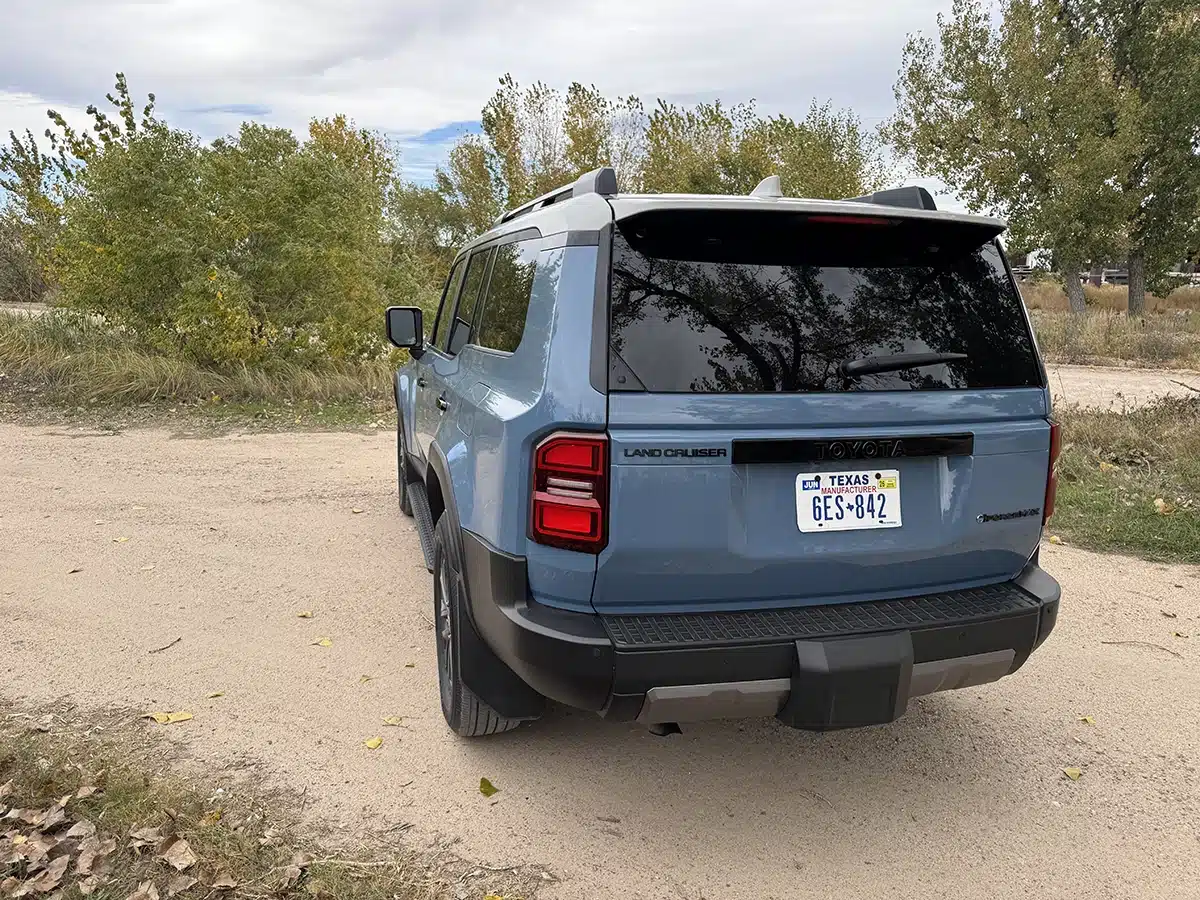
When Toyota announced the return of the Land Cruiser to the U.S. market, fans were thrilled—until they saw the specs.
Gone was the burly V8, replaced by a turbocharged four-cylinder hybrid. Gone was the massive 200 Series body-on-frame beast, replaced by a slightly smaller, lighter, and more fuel-efficient SUV built on Toyota’s TNGA-F platform.
Jason Cammisa of Hagerty called it a misstep, he thought the luxurious cousin Lexus GX 550 was much better value for the money with its V6 engine, no hybrid setup and better driving dynamics. I drove them both back to back at the time and I agreed.
However, spending a week with the 2025 Land Cruiser, thinking it over again and looking at the sales figures, its pretty clear Land Cruiser enthusiasts may have mixed feelings, but Toyota did not get it wrong.
Powertrain: Controversy Meets Capability
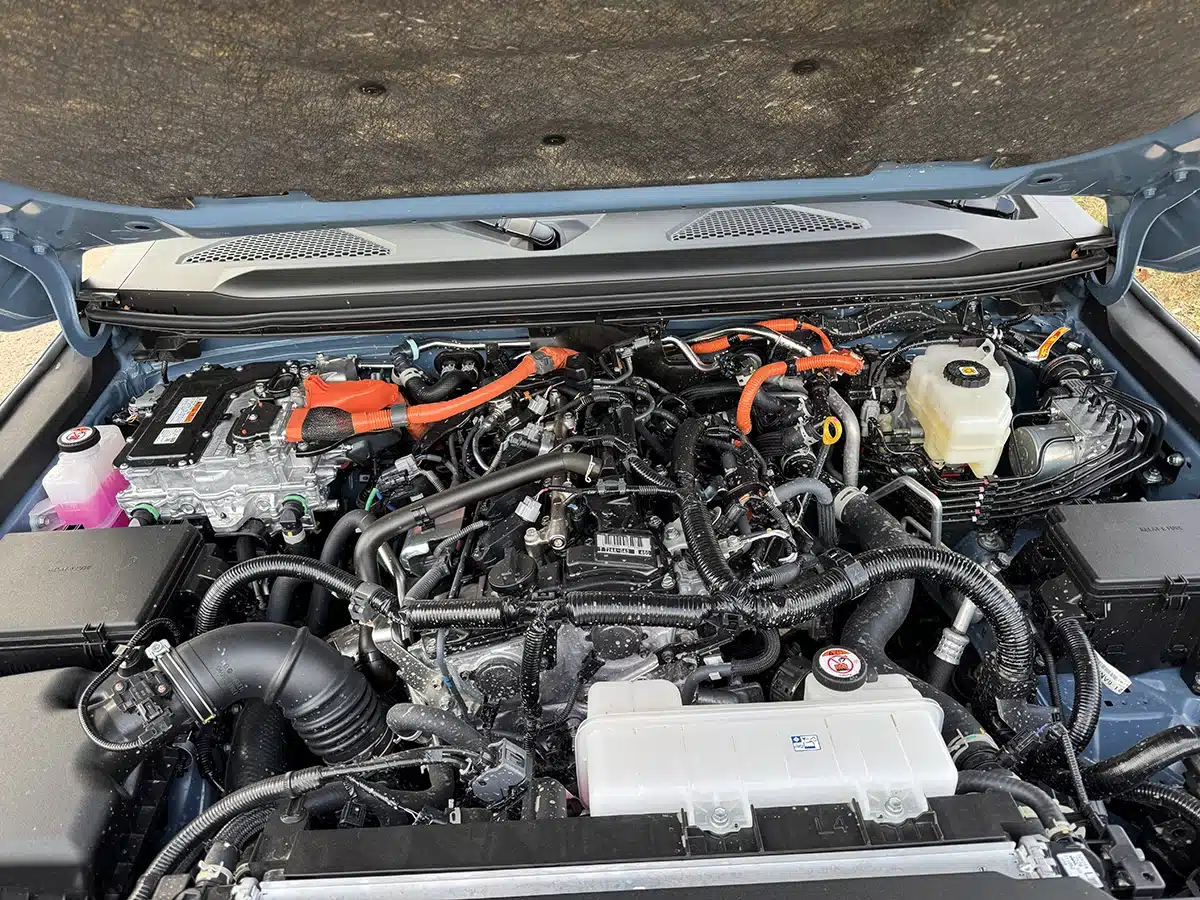
The biggest debate around the new Land Cruiser centers on what lies under the hood. Toyota replaced the old 5.7-liter V8 with a 2.4-liter turbocharged four-cylinder hybrid producing 326 horsepower and 465 pound-feet of torque, paired with an eight-speed automatic transmission. On paper, those numbers outdo the old V8, but some fans argue the combination of turbos and hybrid components undermines Toyota’s legendary reliability.
That skepticism isn’t entirely unfounded—many buyers associate the Land Cruiser name with bulletproof simplicity. Yet, Toyota’s hybrid systems have proven robust across millions of vehicles, and early testing suggests this one is no exception. The hybrid battery’s placement in the rear cargo area does raise the load floor slightly, a minor trade-off that might frustrate who see the Lexus GX 550 with a lower floor height.
The Land Cruiser can tow 6,000 pounds—enough for a small trailer or boat—but it falls short of the Lexus GX’s higher capacity of 9,096 pounds. I’ve towed a trailer with both of them and found the GX 550 to tow much better at 5,000 pounds.
My larger frustrations include the placement of the trailer light connectors near the exhaust, forcing you to shut off the engine while hooking up and the software programming inside the cabin differs between the Land Cruiser and the GX.
The Land Cruiser uses the smaller and harder to read driver screen between the gauges while the GX makes use of the larger infotainment screen. Why the difference Toyota?
Besides those gripes, the new 250 is miles ahead of the outgoing 200 series with its blend of power, torque, and efficiency (up to 23 mpg combined). The outgoing V8 had plenty of power, but this new hybrid powertrain will feel like a rocket ship in comparison.
Interior: Rugged Comfort Meets Modern Tech
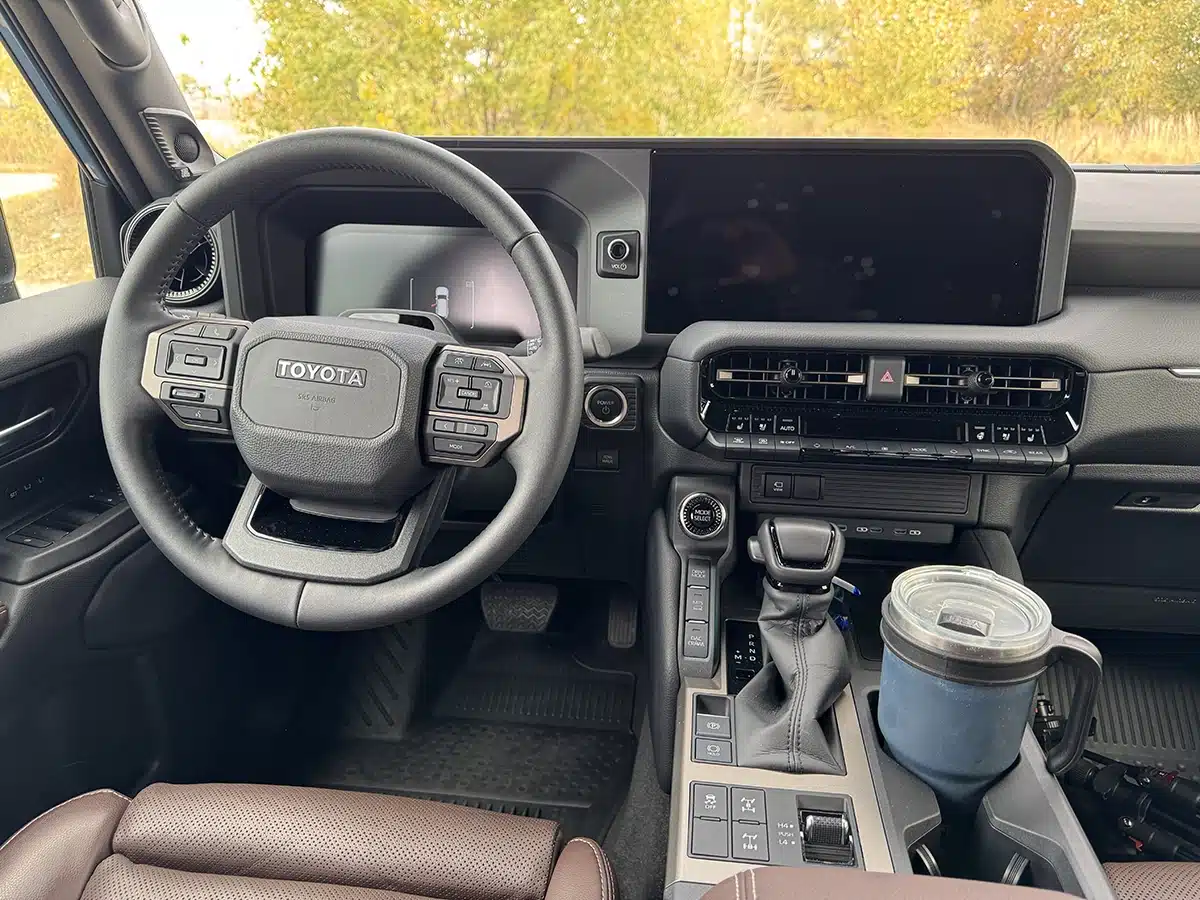
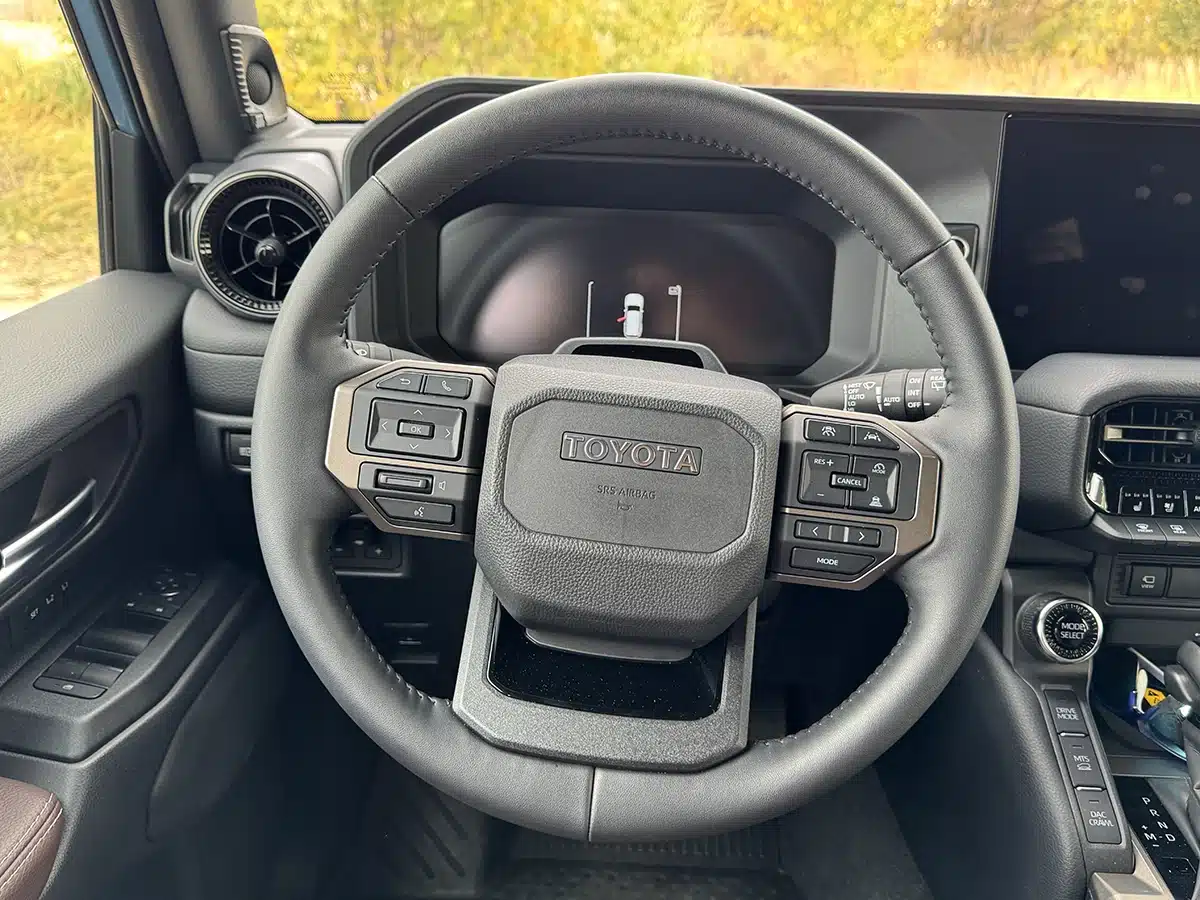
Step inside the Land Cruiser 250 and you’ll find a cabin that successfully bridges Toyota’s utilitarian past with its tech-savvy present. This isn’t a luxury SUV, but it’s far from spartan. The Land Cruiser trim with the Premium Package includes leather-trimmed power seats with memory settings, a JBL 14-speaker audio system, and a digital rearview mirror. A power moonroof, heads-up display, and wireless phone charging pad add convenience, while features like the “cool box” fridge are a nod to Toyota’s off-road culture.
The interior layout feels purposeful and robust, with large physical controls that can be operated easily while wearing gloves. The brown leather seating and two-tone design add warmth, while touches like ambient lighting and an illuminated entry remind you this is still a premium Toyota. The rear seats offer generous legroom, USB-C ports, and climate controls. Cargo space is adequate, though the raised floor caused by the hybrid battery cuts slightly into usable volume.
One surprising detail is that not all speakers bear JBL badging—an odd quirk for a branded audio system. Still, overall sound quality is strong, and the cabin feels tight and well-assembled. Some online critics have debated whether the doors “sound solid” when shut—a small but telling sign of how deeply Toyota enthusiasts scrutinize every detail.
Off-Road Systems: Built for Adventure
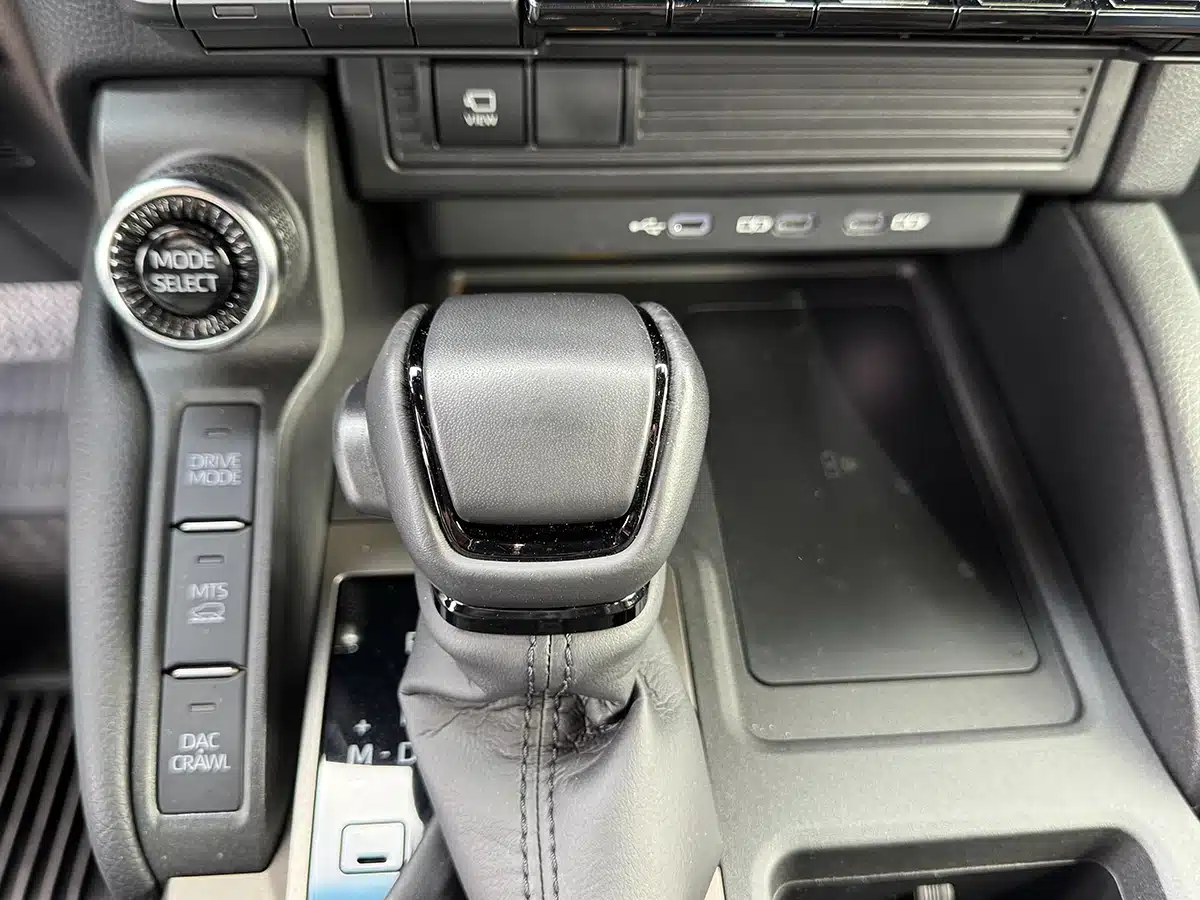
The Land Cruiser name has always meant off-road credibility, and Toyota wisely kept that reputation intact. Built on the same TNGA-F body-on-frame platform as the Tacoma, Tundra, 4Runner, and Lexus GX, the 250 Series packs serious hardware: full-time four-wheel drive, locking center and rear differentials, and advanced terrain management systems.
Crawl Control and Multi-Terrain Select are standout features, offering five adjustable speed settings for precise control when tackling rocks, mud, or snow. These systems essentially act as off-road cruise control—engaging the throttle and brakes automatically so the driver can focus on steering. Toyota has refined these systems to be quieter and smoother than ever; gone are the days of the clunky, jerky crawl functions found in older models.
The new Land Cruiser also includes Downhill Assist Control, allowing safe, controlled descents on steep trails. For those seeking adventure but lacking decades of off-road experience, these tools make the SUV remarkably approachable. Enthusiasts may scoff at “driving aids,” but for many owners, they open up terrain that might otherwise be intimidating. The inclusion of 2,400 watts of onboard power also turns the Land Cruiser into a mobile campsite, capable of running tools or appliances from its bed outlets.
Driving Experience: More Practical Than the Purists Admit
On the road, the Land Cruiser 250 feels noticeably lighter and more maneuverable than its 200 Series predecessor. The turbo-four hybrid provides plenty of torque off the line, and while it lacks the old V8’s throaty soundtrack, it delivers brisk acceleration with smooth hybrid transitions. The steering is precise, and the ride feels well-damped even on rough pavement.
It doesn’t have the effortless refinement of the Lexus GX, but it’s not trying to. Instead, it aims for a balance—more comfortable than a 4Runner, more affordable than a GX, and still tough enough for the backcountry. In day-to-day driving, the hybrid’s low-end torque shines, especially around town. The Land Cruiser is quieter than expected, both mechanically and in terms of wind noise, though the 20-inch wheels on the test model slightly firm up the ride.
When compared to the previous generation, the difference in drivability is striking. The 200 Series had presence, but it was massive—bulky in tight trails and parking lots alike. Toyota’s decision to scale things back was intentional. The 250 fits modern garages, burns less fuel, and reflects a global market that values efficiency without entirely sacrificing power.
Verdict: Reinventing the Legend for a New Era
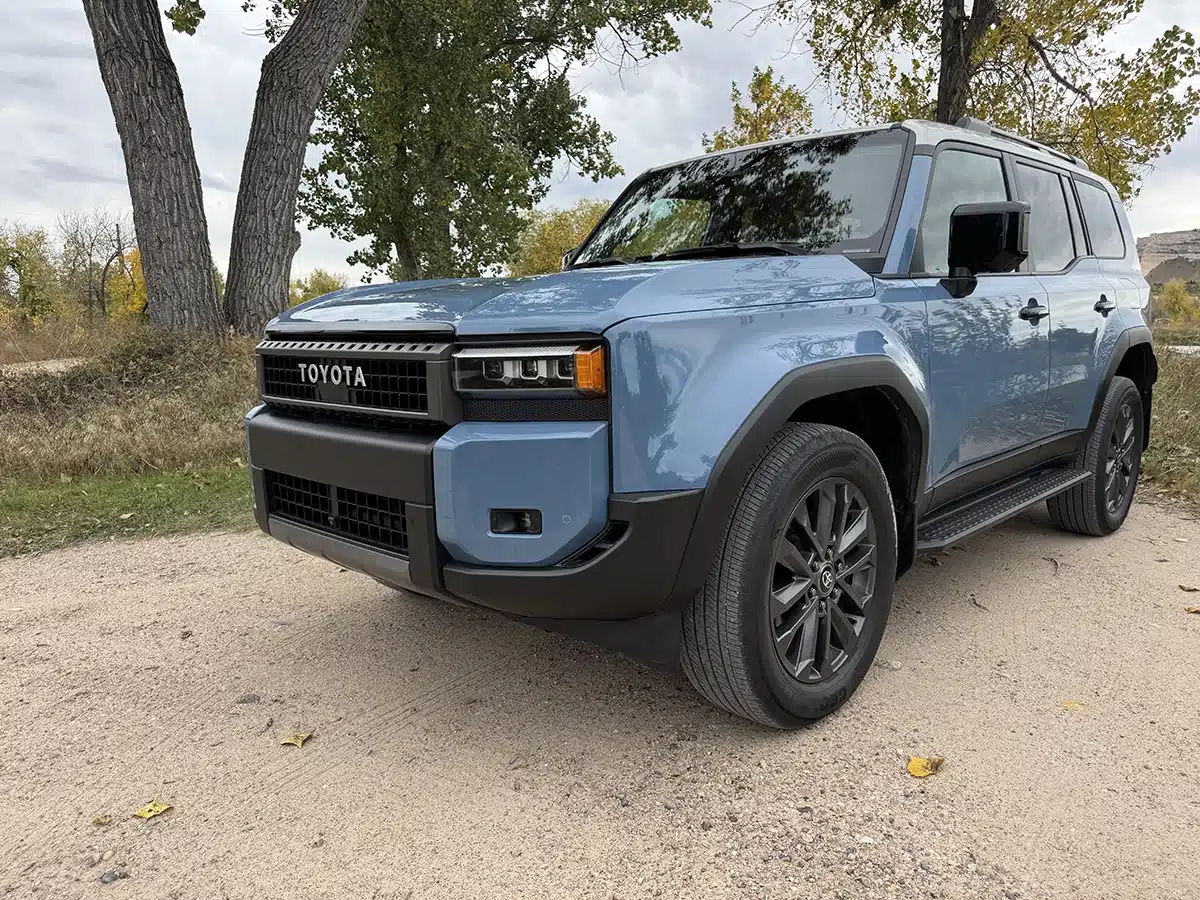
So, did Toyota get it wrong with the new Land Cruiser 250? It depends on what you expect from a Land Cruiser. If you wanted another heavy, V8-powered tank with old-school simplicity, this isn’t it. But if you see the Land Cruiser as a capable, durable, go-anywhere SUV that adapts to modern realities, Toyota has actually done something brilliant.
The 250 Series sold more units in its first year than the previous generation did in its last decade—a staggering turnaround. Much of that success comes down to price. Starting around $30,000 less than the 200 Series, it opens the Land Cruiser experience to a new generation of buyers who couldn’t justify an $85,000 SUV.
Yes, traditionalists will grumble. They always do. Toyota fans are famous for loving the last generation’s engine more than the new one. But the 250 Series feels like a smart evolution—smaller, lighter, more efficient, and still unmistakably a Land Cruiser. Its blocky styling nods to the FJ Cruiser and original 70 Series, while its hybrid heart acknowledges the future.
Toyota didn’t destroy the Land Cruiser legacy; it modernized it. For those who truly use their vehicles to explore, the new Land Cruiser remains what it’s always been—a reliable, go-anywhere companion. It just happens to sip fuel, fit in your garage, and charge your phone while doing it.
In short, the Land Cruiser 250 might not win over every purist, but it will win something far more important: a new generation of adventurers ready to write the next chapter in its storied history.