Many New Expensive Trucks Can’t Follow California Winter Tire Chain Law

|
October 28, 2025
|
9 comments
California winter tire chain law 1

Over the past few years, automakers have all released new off-road trucks with increasing large, knobby tires which you’d think would make them better for winter driving.

However, these trucks loaded with off-road equipment can’t meet a California tire chain law for winter driving even though the state thinks otherwise.

Tire Chains for Winter Driving
California winter tire chain law 2
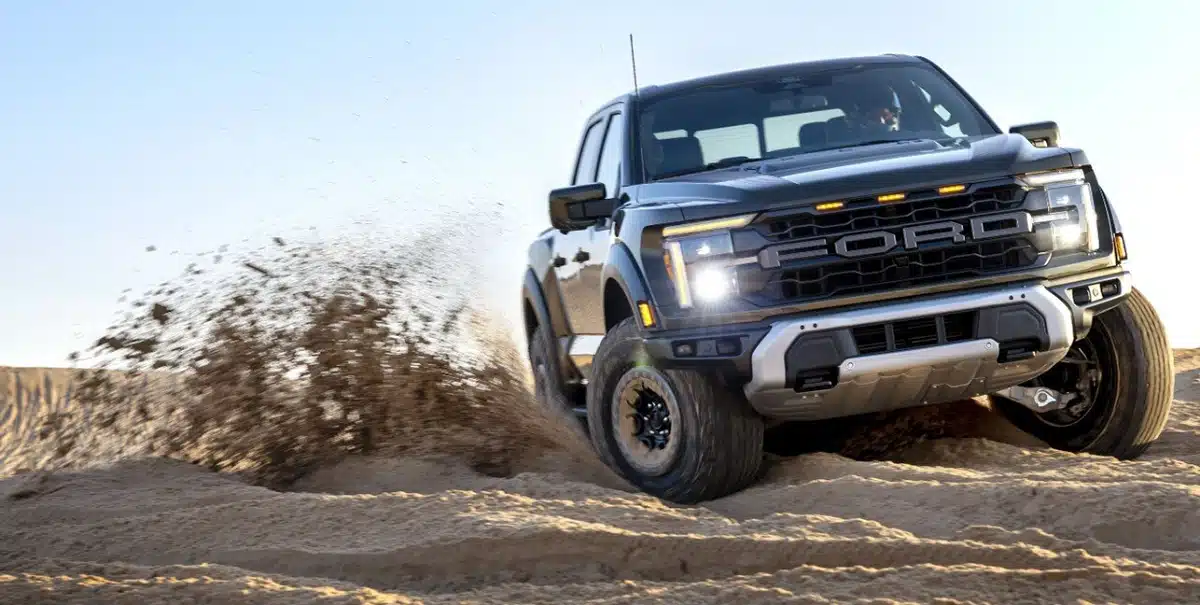
It can blast through the sand, but this Ford Raptor apparently can’t handle the snow according to the California DOT. (Photo courtesy Ford)

First, what are tire chains and why should you use them?

In the winter, there are certain times when the weather gets so bad, roads become almost impassable after being covered over with snow and ice. Even with a good set of tires, vehicles can slide off the roadway and crash.

Local department of transportation offices will mandate the use of tire chains, a type of tire traction device literally wrapped around tires, in an effort to keep the roadway open for commerce and emergency needs.

In some areas, there are pre-built tire chain-up areas made for this purpose like in higher mountain passes of northern California.

Many States Mandate Tire Chains
California winter tire chain law 3
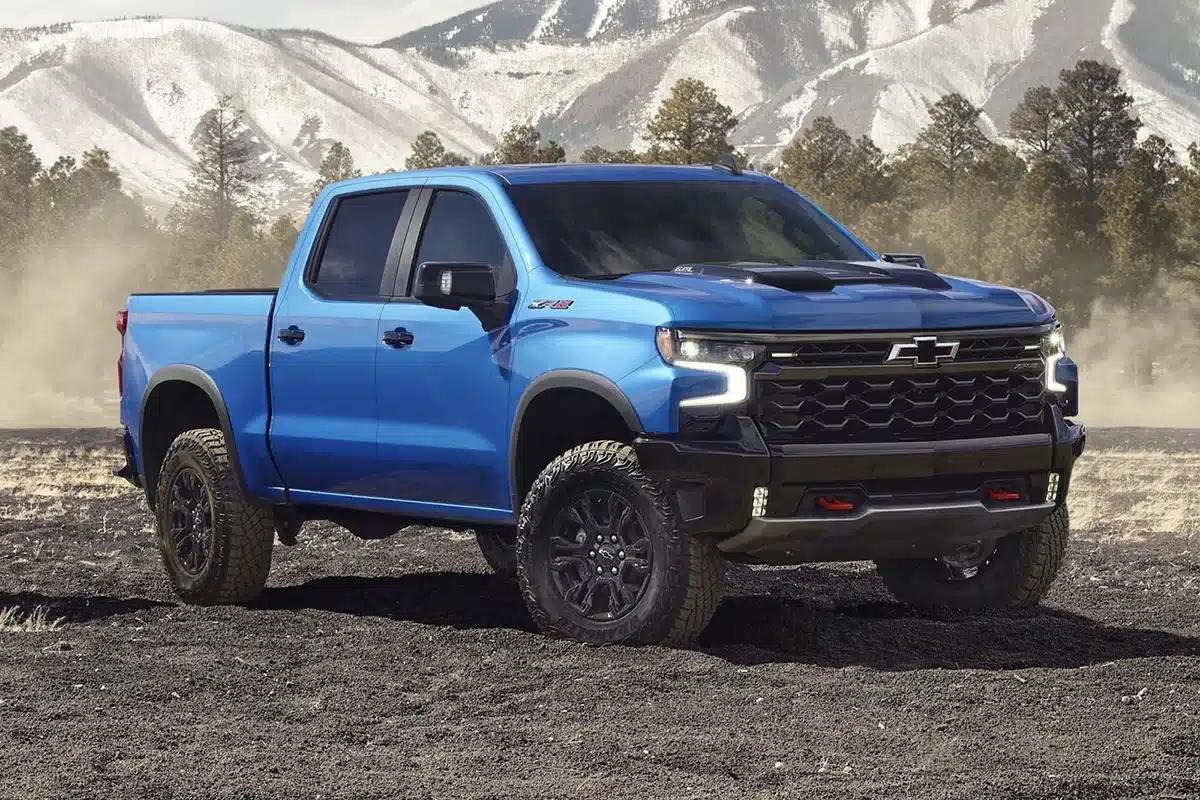
Ready to hit the snowy mountains? Nope, not the California ones in this Silverado ZR2! (Photo courtesy Chevrolet)

Several states have laws in place for the use of tire chains when the weather gets bad.

The tire chain laws are commonly found in mountains states like California or Colorado, but even Nebraska has tire chain laws for when conditions get that bad.

Typically these chain laws are meant for commercial vehicles and most consumer vehicles get a pass as long as they have either 4WD or AWD and a good set of tires.

That isn’t the case for California.

California DOT Law is For All Vehicles
California winter tire chain law 4
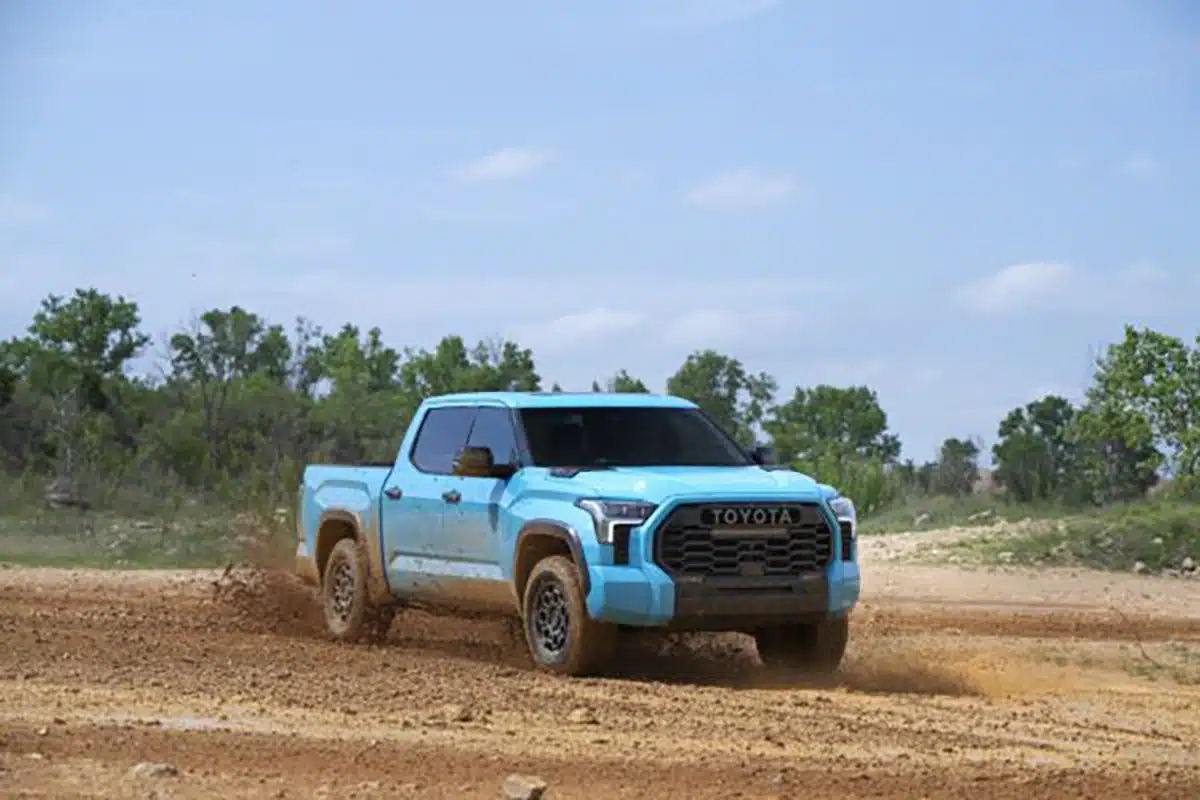
Snow chains for EVERYONE according to California! (Photo courtesy Toyota)

For California, they specify commercial vehicles have tire chains as well as consumer vehicles even if those vehicles have 4WD or AWD.

They also state you must carry chains even if you don’t need 4WD or AWD: “Even though weather conditions may not warrant the use of chains on 4-wheel-drive vehicles at a particular time, to enter a chain control area, you must have a set of chains (for one drive axle) for your vehicle in your possession. If conditions worsen or you have trouble controlling your vehicle, you must stop and install the chains.”

Tire chains aren’t a choice in those areas in California, you must have them. That’s the law.

New Off-Road Trucks Can’t Use Tire Chains?
California winter tire chain law 5
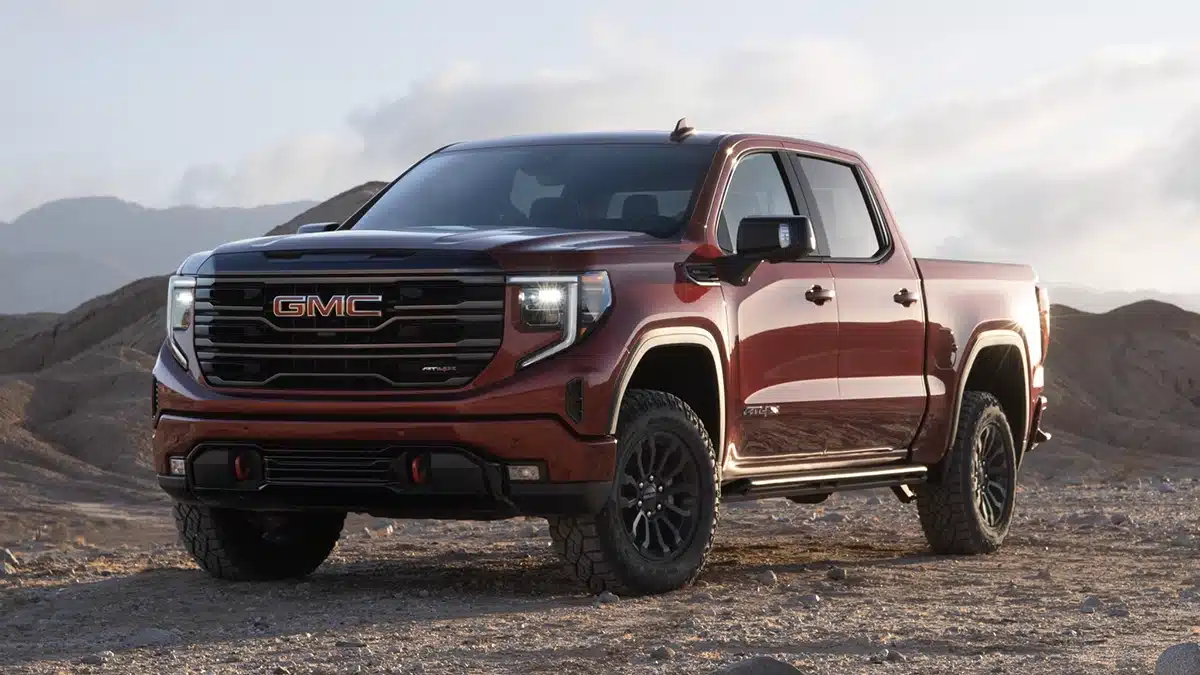
This truck can traverse all sorts of terrain just not high winter passes. (Photo courtesy GMC)

The problem with California’s law is many of the new off-road trucks coming out in the last few years from factory have larger tires that can’t use tire chains.

Looking at the owner’s manuals for Ford, GM, Ram and Toyota, for example, all of them state don’t use chains if tire sizes exceed a certain size.

GM spells out the problem with “If the vehicle has 275/50R22, 275/60R20, LT265/60R20, LT265/70R17, LT275/65R18, or LT275/70R18 size tires, do not use tire chains. There is not enough clearance. Tire chains used on a vehicle without the proper amount of clearance can cause damage to the brakes, suspension, or other vehicle parts. The area damaged by the tire chains could cause loss of control and a crash. Use another type of traction device only if its manufacturer recommends it for the vehicle’s tire size combination and road conditions. Follow that manufacturer’s instructions. To avoid vehicle damage, drive
slow and readjust or remove the traction device if it contacts the vehicle. Do not spin the wheels. If traction devices are used, install them on the rear tires.”

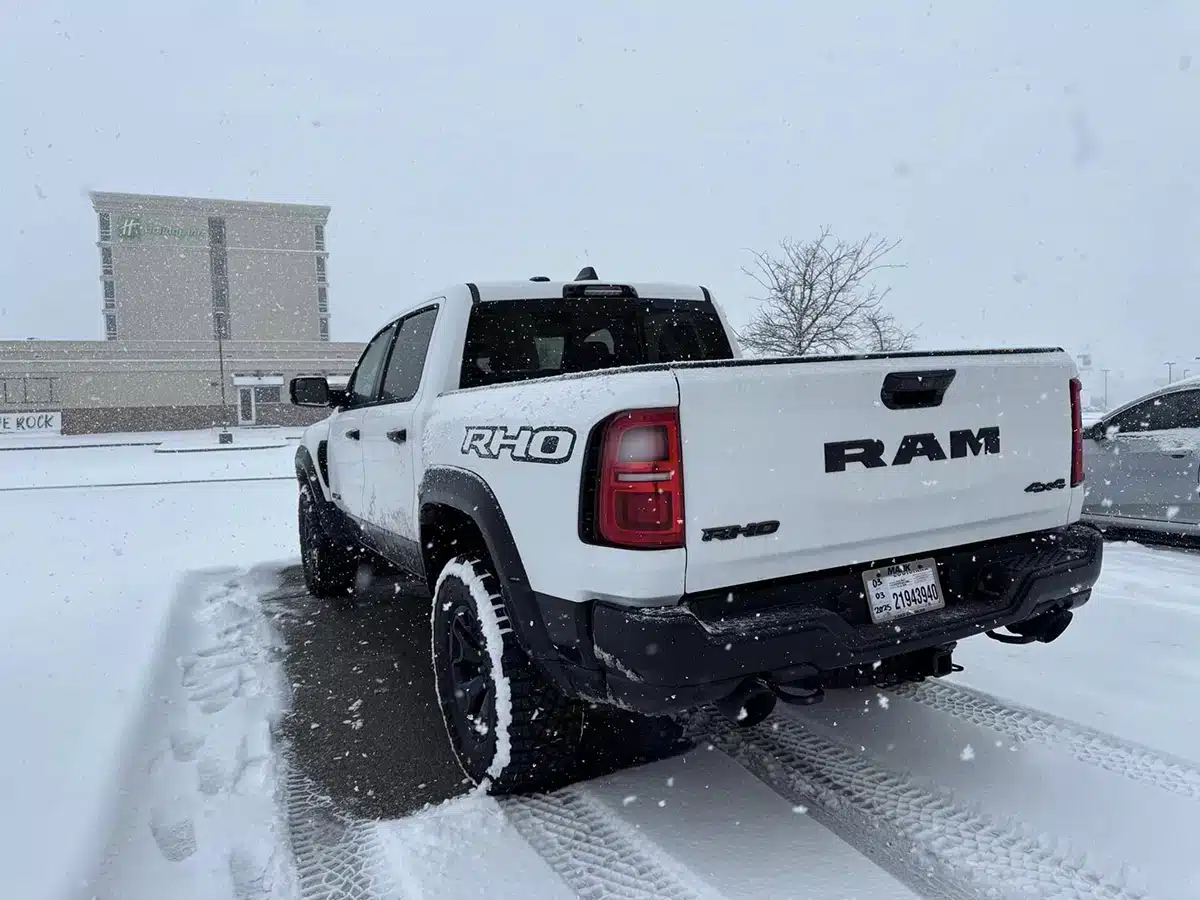
Ford, Ram and Toyota all state don’t use chains on tire sizes that belong on their off-road trucks. Ford includes the Tremor and Raptor. For Ram that is the Rebel, RHO and the TRX. Toyota is the TRD Pro.

California Says Ignore that Information?
California winter tire chain law 7
I drove my new truck through a snow storm in Oklahoma, but I guess I should have put chains on it and damaged it for safety. (Photo by Tim Esterdahl)

Incredibly, the California DOT has a section that addresses the information above on their website.

They state:

The manufacturer of my vehicle recommends that chains not be installed on it. Do I still have to put on chains?

Yes. Many vehicles which will not accommodate conventional link-type chains will accommodate cable chains or other devices such as ‘Spikes Spider.’ If your vehicle is not equipped with some type of tire traction device, it is neither safe nor lawful for you to enter a chain control area. If you choose not to install tire traction devices on your vehicle, you may not enter a chain control area.”

What are Spikes Spider?
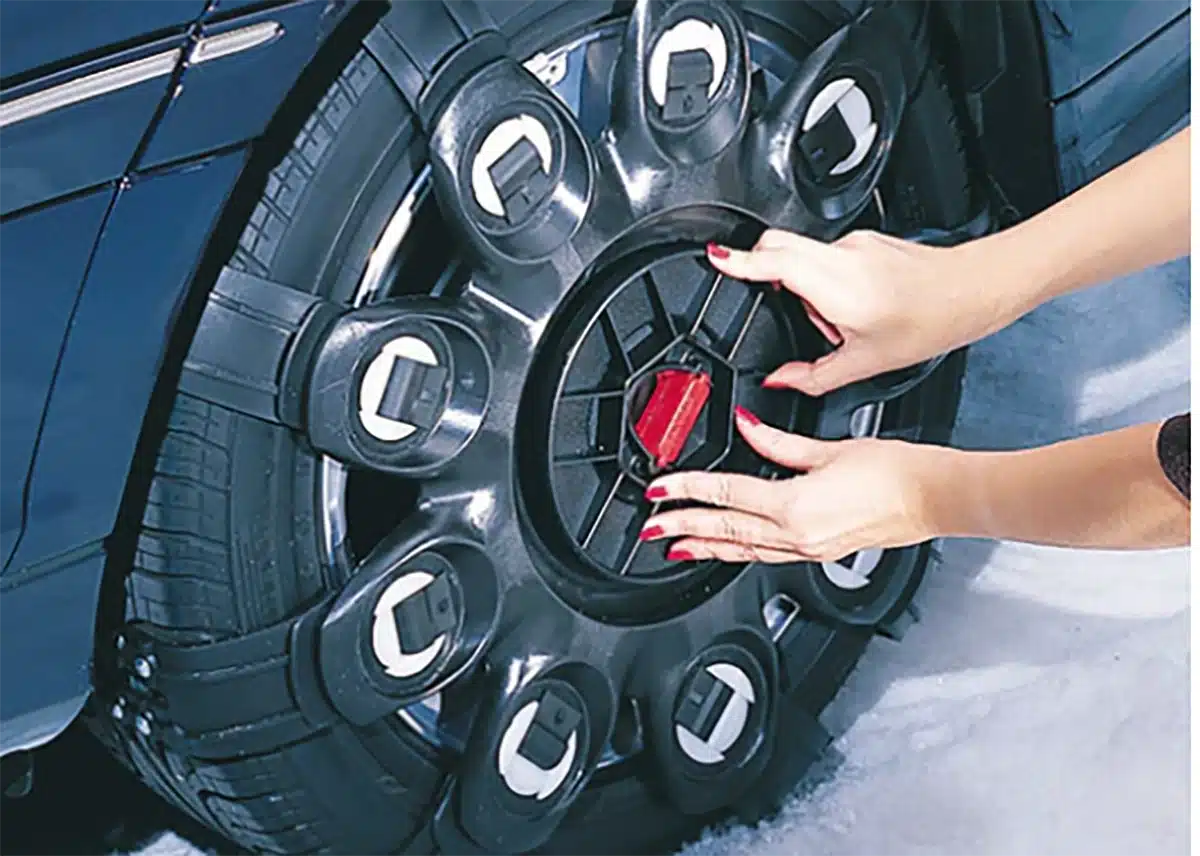
California winter tire chain law 8
Spikes Spyders are a snap-on tire chain for most tires. (Screenshot by Tim Esterdahl)

A Spikes Spider is a Swiss-made device that snaps on to your wheel and spreads chains around your tire.

This looks to be a much simpler and quicker way to install chains on a vehicle.

Interestingly though, I typed in a few of the sizes for various off-road trucks.

Starting with GM, I found a kit for all the tires mentioned above except 265/70R17 for either $720 with an adapter kit or $700 without for 2 wheels.

Ford owners can find a similar kit for the Tremor meanwhile the Ford Raptor comes with 315/70R17 and nothing is available from Spikes Spyder to fit.

This is the same for Ram owners who can find the same kit for the Rebel, but nothing for the RHO or TRX.

The Toyota Tundra TRD Pro uses 285/65R18 and Spikes Spyder doesn’t make anything for that size.

What Are Truck Owners Supposed to Do?
California winter tire chain law 9
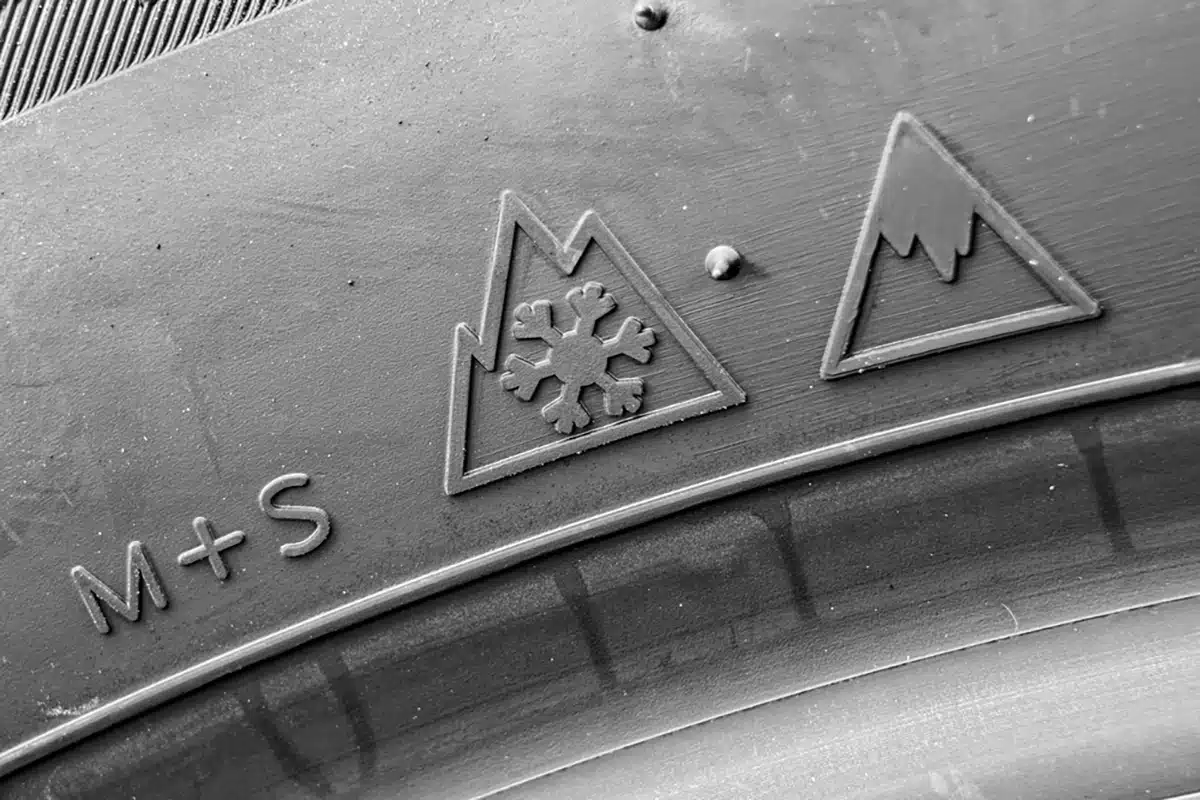
Even snow tires aren’t good enough for California DOT. (Screenshot by Tim Esterdahl)

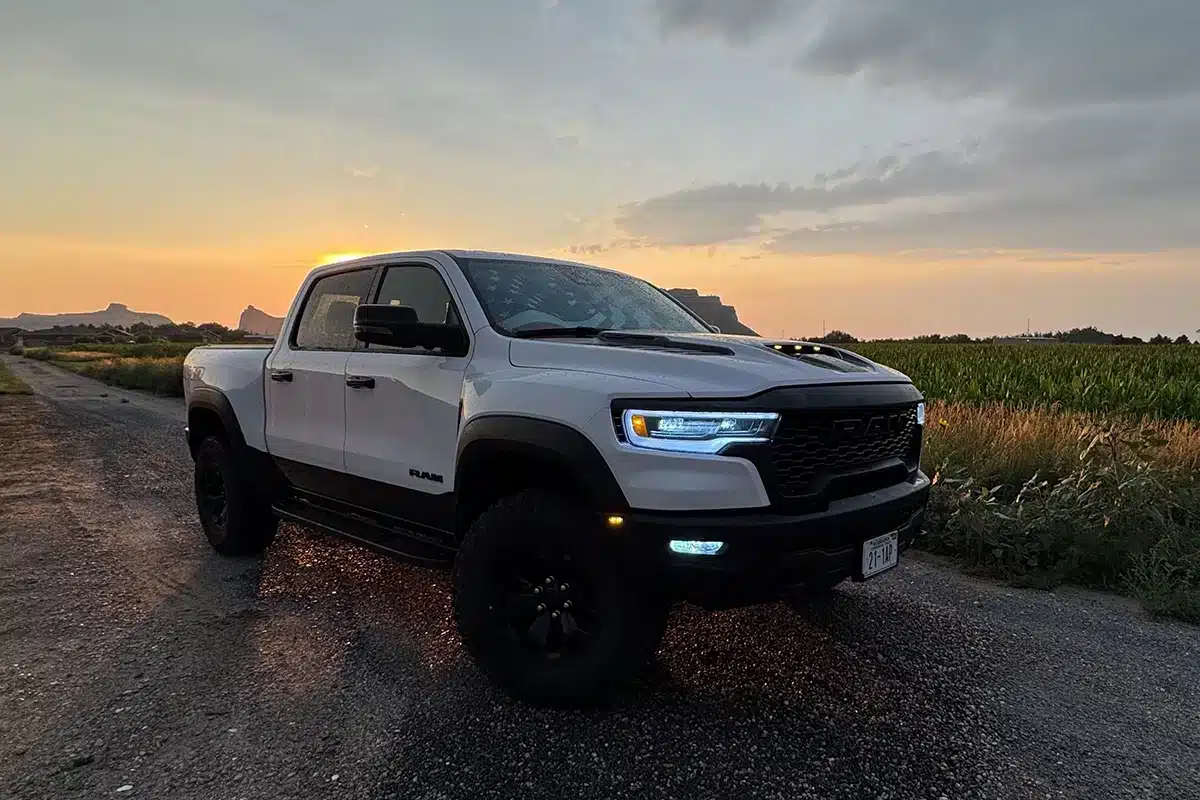
As someone who owns a 2025 Ram 1500 RHO right now as a long-term review vehicle, I had plans on doing some winter road trips and that might include heading out to the California beaches. What then am I supposed to do or somebody who lives locally with one of these highly capable off-road trucks? Apparently, stay away?

Or do as the locals say to do and just carry chains without any real plans to use them. They say cops will just let you pass and the law only really applies on the worst days anyway the “R3” days when snowfall is really coming down.

Oh and if you do plan on having a set of chains that do work you can find a set on a website like Tirechain.com for $300 each. You will damage your truck in the process or you don’t drive your truck on those snowy days.

Choices, choices…

Leave the first comment

Loading new replies...

Avatar of testerdahl
testerdahl

Administrator

2,716 messages 4,596 likes

Over the past few years, automakers have all released new off-road trucks with increasing large, knobby tires which you’d think would make them better for winter driving. However, these trucks loaded with off-road equipment can’t legally meet a California tire chain law for winter driving even though the state thinks otherwise. Tire Chains for Winter Driving First, what are tire chains and why should you use them? In the winter, there are certain times when the weather gets so bad, roads become almost impassable after being covered over with snow and ice. Even with a good set of tires, vehicles […] (read full article...)

Reply 2 likes

click to expand...
Avatar of TheDo114
TheDo114

Well-known member

761 messages 1,203 likes

That’s a weird rule. Usually if you have dedicated and true snow tires you do not need chains. Not just 3PSMF tires, actual snow tires. At least, that’s the case in Canada, but what do we know about snow and ice…

Do they have a lot of areas where this is required or are we talking about 2-3 side roads?

Reply 2 likes

Avatar of testerdahl
testerdahl

Administrator

2,716 messages 4,596 likes

That’s a weird rule. Usually if you have dedicated and true snow tires you do not need chains. Not just 3PSMF tires, actual snow tires. At least, that’s the case in Canada, but what do we know about snow and ice…

Do they have a lot of areas where this is required or are we talking about 2-3 side roads?

Many of the major highway passes in Northern California. The famous ones like Donner pass.

Reply 2 likes

Avatar of TheDo114
TheDo114

Well-known member

761 messages 1,203 likes

Many of the major highway passes in Northern California. The famous ones like Donner pass.

Makes it even worse.

Reply 3 likes

H
Harpo

New member

1 messages 5 likes

I have lived in Tahoe for the past 30 years, I commute to the top of Donner Pass (those Damn Donners.....) every day, and was an active member of two of our local SAR teams, so I know a little about driving in CA snow. I bought chains before my first Tahoe winter and they have sat in the trunk/bed of my vehicle ever since, unused. When I got a new car, I would just transfer the chains from my old car, regardless of whether they fit my new tires. I always had good snow tires and AWD/4WD. Caltrans has asked me several times if I have chains with me and I say yes and they wave me through. I have never driven in R3 chain conditions (chains mandatory on all vehicles regardless of tire type or drive type), although I have heard about R3 conditions in certain areas during the worst storms. In general, Caltrans close the roads before they impose R3. The only exception I remember was during an unexpectedly bad storm when a bunch of tourons were trapped in Yosemite NP and Caltrans had to get them out of there because the Valley was running out of food. I think CA has particularly stringent chain regulations because the beaches are so close to the mountains and we can get so many tourons in the highlands who have never driven in or even seen snow before. YMMV.

Reply 5 likes

click to expand...
Avatar of testerdahl
testerdahl

Administrator

2,716 messages 4,596 likes

I have lived in Tahoe for the past 30 years, I commute to the top of Donner Pass (those Damn Donners.....) every day, and was an active member of two of our local SAR teams, so I know a little about driving in CA snow. I bought chains before my first Tahoe winter and they have sat in the trunk/bed of my vehicle ever since, unused. When I got a new car, I would just transfer the chains from my old car, regardless of whether they fit my new tires. I always had good snow tires and AWD/4WD. Caltrans has asked me several times if I have chains with me and I say yes and they wave me through. I have never driven in R3 chain conditions (chains mandatory on all vehicles regardless of tire type or drive type), although I have heard about R3 conditions in certain areas during the worst storms. In general, Caltrans close the roads before they impose R3. The only exception I remember was during an unexpectedly bad storm when a bunch of tourons were trapped in Yosemite NP and Caltrans had to get them out of there because the Valley was running out of food. I think CA has particularly stringent chain regulations because the beaches are so close to the mountains and we can get so many tourons in the highlands who have never driven in or even seen snow before. YMMV.

"tourons." LOL.

Reply 3 likes

click to expand...
D
Dusdaddy

Well-known member

1,354 messages 2,020 likes

Yeah, I always carried chains when I lived in Cali. Honestly, the only time I took them out of the nag was the test fit. Included them with the truck when I sold it. You really do not want to be out there any time when you actually need them anyway. I remember trucks in Oregon just had two chained up tires in their bed all winter, "just in case". I didn't get it, but I guess they felt changing tires on the side of the road was easier than installing chains. Now, I still carry chains for my Ram but I've only used them off-road.

Reply 1 like

Avatar of Fightnfire
Fightnfire

Moderator

1,253 messages 2,149 likes

Washington has the same laws, they don't care about tire type. If chains are required, you must use them. Also, you must carry them when traversing the mountain passes from 11/1 to 4/1.

Been driving over the passes for 25 years, hundreds of times, never needed them.

They have a few different warnings:
Traction tires advised - As it states
Traction tires required - Traction tires and 4x4 or AWD are ok
Chains advised - Traction tires and 4x4 or AWD are ok - Commercial must chain
Chains required - For this one, everyone must chain

Some of these may be off, I didn't look it up, just from memory.

Reply 2 likes

Avatar of TheDo114
TheDo114

Well-known member

761 messages 1,203 likes

Washington has the same laws, they don't care about tire type. If chains are required, you must use them. Also, you must carry them when traversing the mountain passes from 11/1 to 4/1.

Been driving over the passes for 25 years, hundreds of times, never needed them.

They have a few different warnings:
Traction tires advised - As it states
Traction tires required - Traction tires and 4x4 or AWD are ok
Chains advised - Traction tires and 4x4 or AWD are ok - Commercial must chain
Chains required - For this one, everyone must chain

Some of these may be off, I didn't look it up, just from memory.

Glad to see you back man. I was wondering where you’ve been.

Reply 2 likes

click to expand...
Avatar of Fightnfire
Fightnfire

Moderator

1,253 messages 2,149 likes

Glad to see you back man. I was wondering where you’ve been.

Life has been hectic. 4 high schoolers, three boys on the football team one girl on the swim team. And I started playing golf again at the end of summer... Lots of tournaments here and there but been a long time since I played individually.

Reply 3 likes

Signup for our weekly newsletter

Sign Up for Our Weekly Newsletter

Subscribe to our newsletters to get the latest in car news and have editor curated stories sent directly to your inbox.