
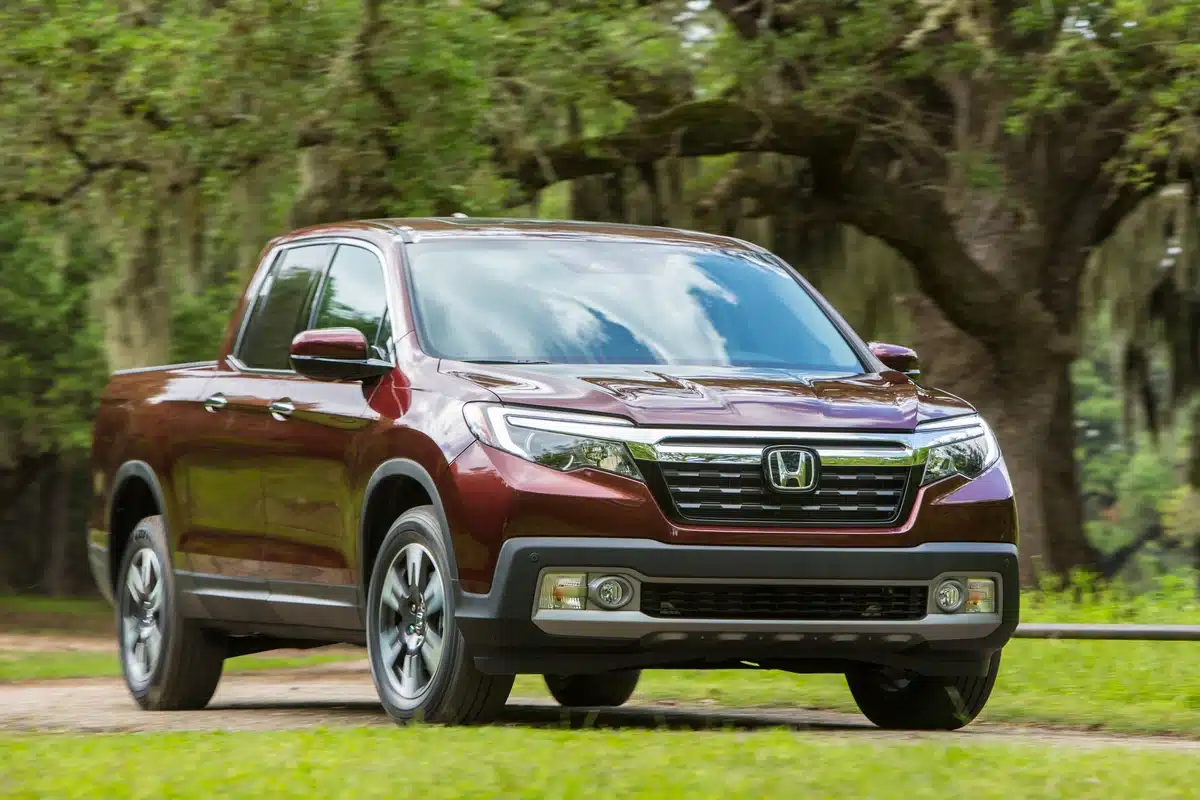
A second Federal investigation has been launched probing Honda Ridgeline engine failures among 1.4 million vehicles built by the automaker.
Honda Ridgeline Engine Failures
According to an AutoNews.com story, the Honda Ridgeline engine failures are part of the larger probe affecting 2018-2020 model year Acura TLX, 2016-2020 Acura MDX, 2016-2020 Honda Pilot, 2018-2020 Honda Odyssey, and 2017 and 2019 Honda Ridgeline vehicles.
The 3.5-liter V6 engine’s connecting rods are in question after the National Highway Safety Administration (NHTSA) received 414 reports related to Honda and Acura vehicles including Honda Ridgelines.
Previously, the agency had issued a probe in 2024 after reports of serious engine issues following a Honda recall of 249,000 vehicles in November of 2023.
Honda then issued a recall to address what it said was a “possible manufacturing defect in the engine crankshaft that could cause the connecting rod bearing to prematurely wear and seize, leading to engine failure.”
The office of defects, part of the NHTSA, has now opened another investigation as it plans to more thoroughly investigation the scope and severity of the potentional issue with the engine issue after the closure of the previous probe.
NHTSA said in the letter, the high volume of engine failure reports in vehicles not covered by the previous investigation poses a potential safety risk.
2017 and 2019 Honda Ridgeline Recall
Interestingly, the Honda Ridgeline was recalled for the 2017 and the 2019 model year and not the 2018 model year for the connecting rod issue. The other vehicles listed seem to have all been recalled for the models years consecutively.
According to the NHTSA.gov recall report, Honda stated:
“Description of the Cause : During production of the crankshaft, due to improper settings of equipment used to manufacture the engine crankshaft, the crank pin was improperly ground, resulting in crank pins with a crown or convex shape that are out of specification.
If the connecting rod bearing seizes, the engine can be damaged and run improperly, stall, stop while driving, and/or not start, increasing the risk of a fire, crash or injury.”
The issue has been going on for years now according to the Chronology Report:
Chronology :
February 2020
Honda received the first market complaint for the issue.
July 20, 2020
Honda began to investigate the issue
November 2020 – February 2022
Honda continued to analyze and investigate the issue.
April 2022
Honda began to conduct additional detail analysis to focus on different bearing specifications.
February 2023
Honda began to investigate market vehicles that had not experienced the issue for detail comparison analysis.
September 2023
Honda investigated the affected population of vehicles.
November 2, 2023
Honda determined that a defect related to motor vehicle safety existed and decided to conduct a safety recall.
As of November 3, 2023, Honda has 1,450 warranty claims, and no report
Our take
The number of affected vehicles seems to be much lower than the 1.4 million as stated by the probe, however, it is a bit of a crap shoot with the affected vehicles traced by the manufacturing report as “non sequential.”
This means the recalled population includes all possible vehicles affected by this manufacturing defect that they know of, but they weren’t able to track it down completely.
The fact NHTSA is conducting yet another probe is good for consumers and bad for Honda who really just wants to put this issue in their rearview mirror.






5 replies
Loading new replies...
Administrator
New member
Administrator
New member
New member
New member
Join the full discussion at the Forum Pickuptrucktalk →