
Dear (Insert: Ford, Hyundai, Jeep, Kia, Mazda, Ram, etc., or anyone else installing wireless phone chargers):
Please stop. Your wireless phone chargers don’t work, and the expense of adding them to your vehicles when they don’t work is not appreciated. Especially in this time when everything costs extra. If you need to cut costs and features to keep up with tariffs, this is a great place to start.
Of course, I should issue a caveat. This letter applies to every automaker except General Motors, which seems to get this one feature correct. We’ll ignore the Apple CarPlay elephant in the room for now.
I’m beginning to feel like a broken record in my reviews and TikTok videos when I talk about the things I don’t like on a vehicle. Wireless phone charging is usually first.
In fact, I recently had the experience of my phone de-charging by using a wireless charger. I didn’t realize that was a thing. But my phone was at 15%, and I figured I could get a little juice at best by putting my phone in the wireless charger or, at worst, maintain the charge. When I took my phone out of the charger 30 minutes later, it felt like a hot potato, and my phone charge was at 13%. Whiskey Tango Foxtrot, people! That’s the opposite of working.
And I hate to think what this is doing to my phone’s battery health.
Making wireless phone chargers better
While I’m not a scientist or designer, I’ve driven hundreds of vehicles (yes, hundreds) from every automaker with wireless phone chargers, and I have thoughts. If you persist in including this feature, which you are absolutely charging consumers more for, please consider the following:
Add a cool pad or vent. I understand that inductive charging is hot. So, consider venting the AC over the pad or add a cool pad underneath the charger to help cool both the charger and the phone while charging occurs. This is one thing GM does quite well.
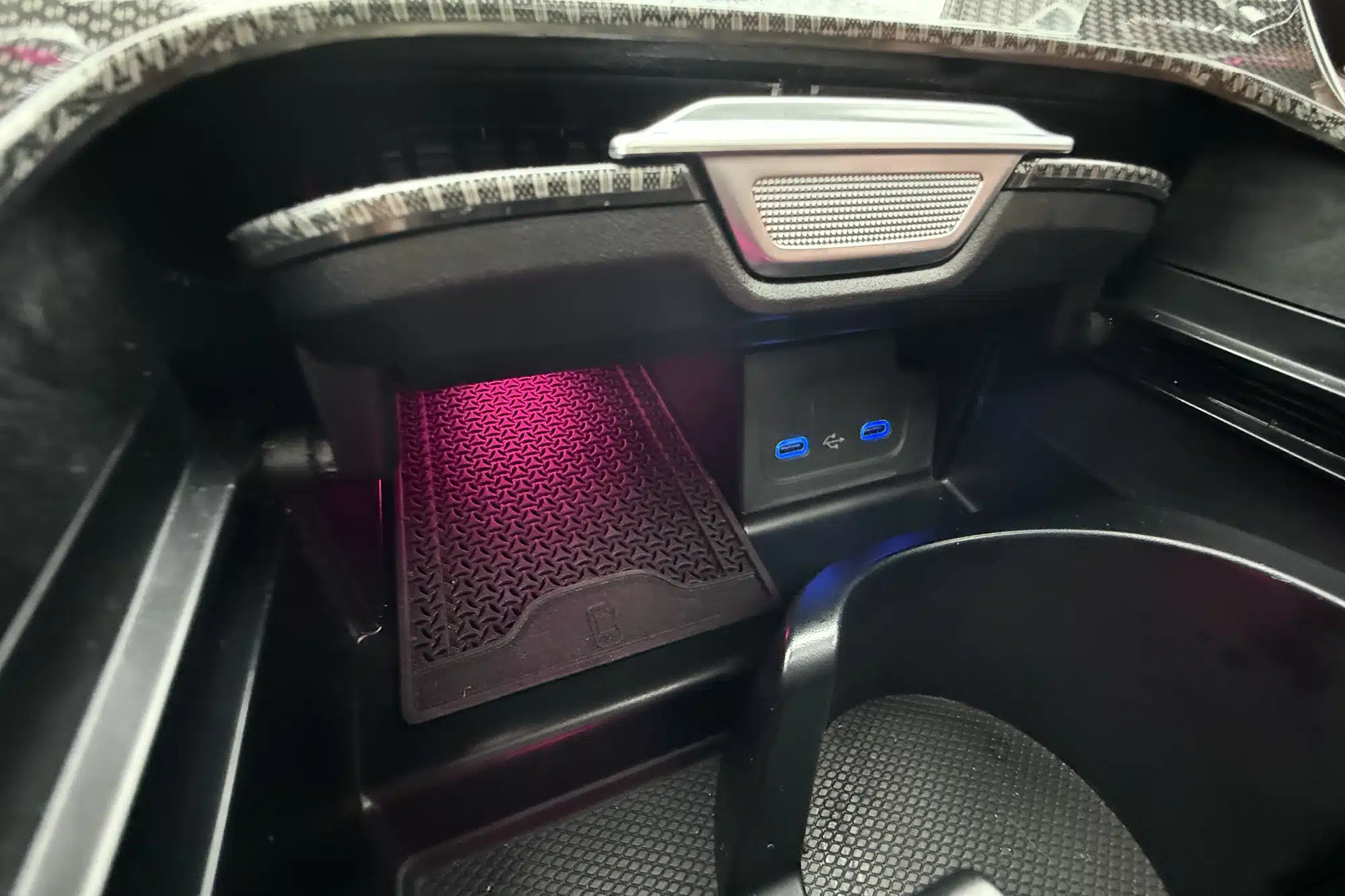
Don’t put the wireless charging pad in a closed space. I live in a city. I appreciate the ability to hide things in the car, so casual passersby don’t see my stuff when the car is parked. But hiding a wireless charging pad in a closed space does two things. One, it adds to the heat, and two, it makes me forget my phone in the car.
Keep wireless phone chargers out of the sun. With the onslaught of Bluetooth connectivity and wireless Apple CarPlay and Android Auto, the need to touch your phone diminishes. So, putting the pad right out in the open within easy reach isn’t necessary. And, often, when it’s within easy reach, like right in front of the armrest or next to the cupholders, that also places the charger in full sun during the day, which, you guessed it, adds heat.
Hard plastic is a no-no. When I get into a car and see the wireless charger is a swath of hard plastic, I immediately understand it will be completely useless. This is because inductive charging needs a specific contact point. If you put your phone on a slick, hard-plastic surface, what happens if you hit a speed bump or make a turn? Your phone moves. Thus, it stops charging.
Clips or grips for the win. Even if automakers use a softer plastic, there’s still a chance your phone will move with a hard turn or bump, and you won’t realize your phone stopped charging until you get a low battery warning that pops up on the screen. So, consider adding a clip or grip to hold the phone in the appropriate location to hit the contact point. One of my favorite wireless chargers is a slot that your phone drops into with a plastic bubble that holds it in place.
Have an on/off button. Many times, wireless chargers are located near USB ports. This makes sense because the charging pad is an excellent place to set your phone. However, if you wire in your phone to charge, you don’t really want to set the phone on an active charge pad which could potentially still heat up your phone because the pad is often hot without charging. So, the ability to turn off the charger and just use the location to rest your phone without the extra heat would be nice.
Our take on wireless phone chargers
I understand that wireless phone charging is a hard tech to implement well. Which is why I ask automakers to stop putting wireless phone chargers in vehicles (and passing the cost onto consumers) until they can get it right. Sure, it’s an ooooooh-aaaaah feature everyone wants to say they have, but if it doesn’t work, and you piss off customers who paid extra to have the feature, is it worth it?
Consumers: Paying for a wireless phone charger in most vehicles isn’t worth it right now. Even if automakers say it’s “included” in the price, you’re paying for it somewhere.