
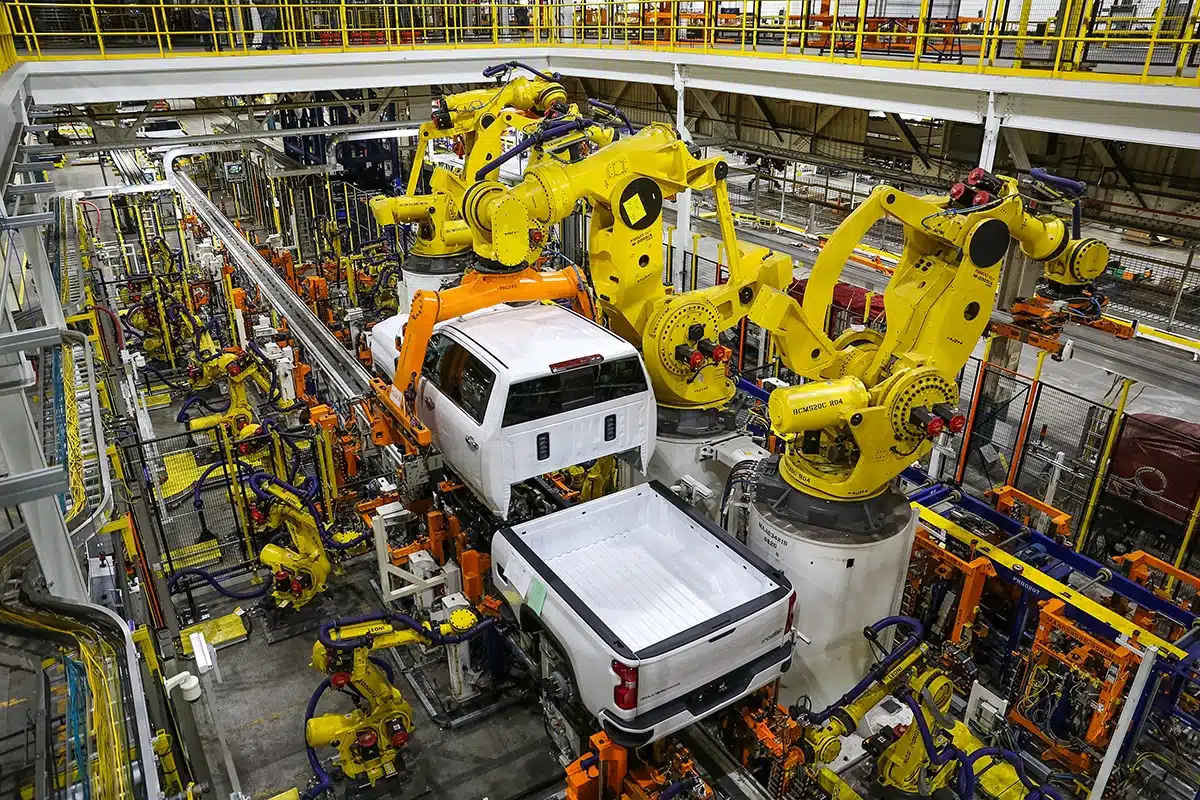
A legal dispute between two automotive suppliers—Michigan-based Nexteer Automotive and South Korea-based Primax—now threatens to disrupt the production of General Motors’ full-size pickup trucks.
Here’s why GM full-size truck plants may stop
Nexteer, which supplies steering columns for GM vehicles, has filed a lawsuit against Primax, its tie rod supplier, alleging breach of contract over demands for a $6 million lump-sum payment and annual price increases totaling $3.5 million.
Primax has halted shipments of the critical tie rods until its financial demands are met, a move that could bring GM’s truck assembly lines to a standstill. “Once GM runs out of those assemblies, it will have to shut down its operations manufacturing those vehicles,” states the lawsuit, filed by Jason Killips of Brooks Wilkins Sharkey & Turco. The suit further warns that such a shutdown would result in “immeasurable monetary losses and enormous irreparable harm to Nexteer’s customer relationship, industry-wide reputation, and customer goodwill.”
At the heart of the lawsuit is a 2024 contract that Nexteer claims included “firm fixed prices” not subject to change—regardless of “increased raw material costs, or changes in volumes or program length.” Primax, however, argues that it was “fraudulently induced” into signing an agreement that lacks a mechanism for renegotiating prices.
Attorney Mitch Zajac, speaking to Crain’s Detroit Business, pointed to the broader supply chain tensions driving such conflicts: “The parties to a contract, and thus the contractual language, can never perfectly match the facts and circumstances of events as they unfold. Determining the responsibility is the heart of the disputes because cost increases from raw materials and unforeseen government action cause disruption to the otherwise controlled chaos of the automotive supply chain.”
Although the lawsuit, filed April 10, doesn’t directly reference government policy, industry observers suspect the Trump administration’s renewed tariffs on steel, aluminum, and automotive components may be fueling the underlying cost pressures.








6 replies
Loading new replies...
Administrator
Moderator
Well-known member
Administrator
Administrator
Administrator
Well-known member
Join the full discussion at the Forum Pickuptrucktalk →