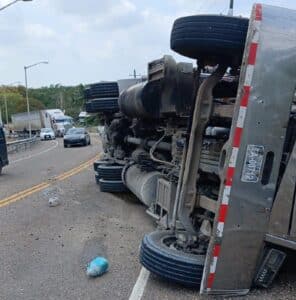
Consumer Affairs, a private consumer research agency, recently analyzed traffic data from sources that included the National Highway Traffic Safety Administration (NHTSA). Their goal was to parse data from 2018 to 2022 in order to determine which roads in the state of California were the most deadly and what factors contributed to reported fatalities. One of the most interesting pieces of data was the fact that deadly crashes have not decreased on the most dangerous highways, even though the population in the Golden State has suffered a decline. In fact, most of the highways that have topped the lists for numbers of fatalities continue to be the ones that still have the most fatalities.
These fatalities are often due to factors such as speeding, driving under the influence, failure to stop for construction, unsafe passing, twisty mountain roads with blind curves, and distracted driving. The following are some of the deadliest highways in California in terms of the number of fatalities.
Interstate 15 in San Bernardino County
The stretch of I-15 in San Bernardino County is the deadliest stretch of highway in California in terms of number of fatalities. This is due to a combination of factors. I-15 connects the greater Los Angeles area to Las Vegas. Also, this section of highway has twisty and steep sections as it goes through the San Gabriel Mountains. Speeding is far and away the greatest factor in the I-15 fatalities, followed by drunken driving.
Interstate 10 in Riverside County
Many of the fatalities on I-10 in Riverside County involved speeding. The area around Highway 10 through Riverside County, like I-15 through San Bernardino, has experienced incredible growth in the past five decades. These two freeways are the major thoroughfares in the Inland Empire area. This section of I-10 is unsafe because drivers try to pass unsafely, especially when there is congestion on the road. These highways have not been expanded by the federal government to meet the current traffic demands.
Interstate 5 in San Diego County
Interstate 5 is a backbone freeway for the entire state. It takes one from the southern border with Mexico, through the Central Valley and Sacramento, and up to the Oregon border. Sadly, you get a mix of commuter traffic, OTR semis taking loads of cargo throughout the state as well as tourists traveling long distances. This ends up being a dangerous cocktail. Speeding was the largest contributing factor to fatalities on I-5 through San Diego County.
Interstate 5 in Orange County
As is true with I-5 in San Diego County, the same is true of I-5 going through Orange County. You have a major metropolitan area with a huge multi-lane interstate highway full of commuter traffic, semi-trucks running OTR loads throughout the West Coast, and tourism. As with San Diego County, the major contributing factor to fatalities on I-5 in Orange County was speeding. Scary crashes can occur when people begin trying to dart through metropolitan traffic on huge interstate freeways.
US-101 in Santa Barbara County
Gorgeous US-101 curves through many coastal cities throughout California, providing one of the most scenic highways in the state. Unfortunately, US-101 has many blind curves and windy sections. Because it is a favorite highway for tourists and vacationers, people who have only infrequently driven it can end up in a fatal crash. Speeding and alcohol have contributed to fatalities on US-101. Highway 101 continues its dangerous path through Los Angeles County, which reported 65 serious truck accidents on the route in 2023.
A California Conclusion
The methodology of the Consumer Affairs study only looks at the highways in California with the most fatalities. Thus, the top highways on the list are not California rural mountain highways. The rural mountain highways may see fewer fatalities, but they can be no less deadly. Windy mountain roads that can become icy and covered in snow present another type of danger entirely. Sadly, tourists who may indeed have four- or all-wheel drive vehicles do not realize that posted speed limits are lower when the California Highway Patrol sets requirements for chains or AWD/4WD with snow tires during snow events. Driving too fast on icy, windy, and steep mountain roads can turn any California mountain adventure into a deadly nightmare
The answer to keeping ourselves safe on our diverse California roads is to always follow posted speed limits, look out for signs that warn of large turns, pass safely, give 100 percent of your attention to the road, and never drive under the influence. Also, slow down below-posted speed limits when roads are wet, icy, or snowy. Let’s all get home safely every time we drive on our California highway system.