
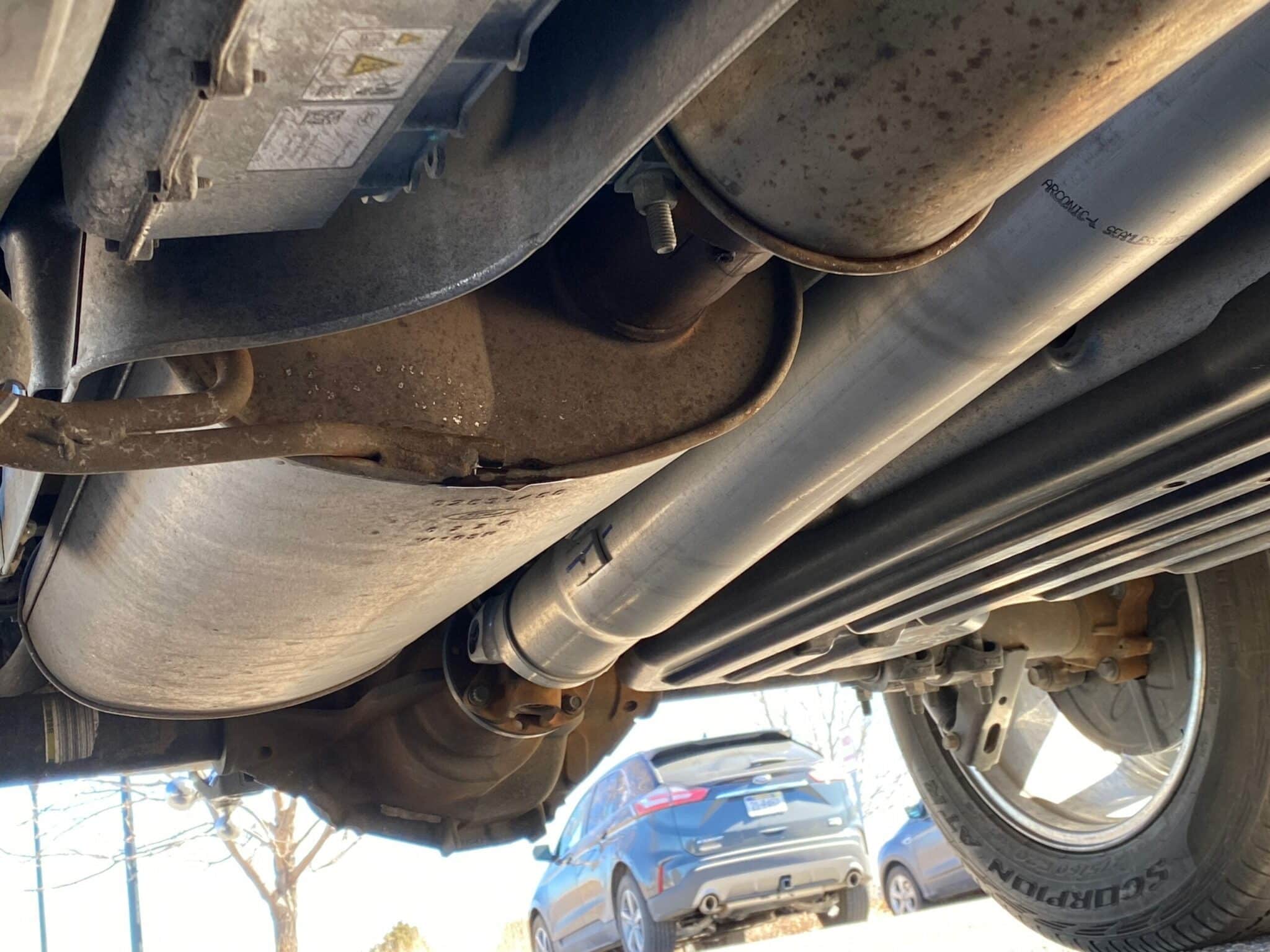
Recently, there was a bit of a hullabaloo about brand new 2021 Ford F-150s having underbody rust. A forum dedicated to the 14th-generation pickup truck kicked it off with a simple question: Rust on rear end of 2021 F-150 — any others?
Come to find out, there were a lot of others — including our publisher’s own truck. So, we jumped into the fray talking about rust issues on this brand-new truck.
Understandably, after we posted our story and video about the F-150 rust issues, we got a lot of comments, questions, criticisms and accusations of idiocy. So, we thought it was worth digging into this issue a little deeper and asking: Is rust on your underbody normal, or is it a problem?
Regrettably we couldn’t get any additional comments from Ford, and frankly, a lot of industry folks we reached out to declined to talk to us on the record.
However, through several conversations with engineers and industry experts, we were able to come up with a little more clarity. And, for the most part, Ford’s comment that this is a cosmetic issue and poses no impact on part performance or life is true. Ish.
So, let’s dig into some of the questions we’ve been fielding.
ALSO OF INTEREST: 2022 Tundra rust report: What will we find in this undercarriage view?
Is rust on the underbody of a new vehicle normal?
The answer we’ve come up with is: Kind of. Once upon a time, most automakers painted the underbody, so it looked shiny and new at the purchase point – and probably for a few years beyond. Similar to Thanos in “Avengers: Infinity War,” however, rust is inevitable. Once that paint chips, the rust will creep in. It just may not happen immediately.
Due to cost concerns, most automakers have stopped painting undercarriages because it saves money, and it’s not really that big of a deal. I mean, who other than our publisher (and now me — insert face palm) regularly crawls around under their vehicles? So, why pretty-up something most people never see? Especially when it mostly won’t cause a problem.
Well, as Eric Mayne, media relations manager for vehicle safety/quality/regulatory compliance at Stellantis, points out: It’s a customer satisfaction issue.
The automakers we’ve discovered so far who still coat or paint the underbody? Toyota Motor Sales and Stellantis (formerly, Fiat Chrysler Automobiles).
Mayne confirmed the automaker uses a process called eCoating (aka electro coating) for the underbody parts, which basically coats everything from the frame to the drive shaft in a resin polymer solution.
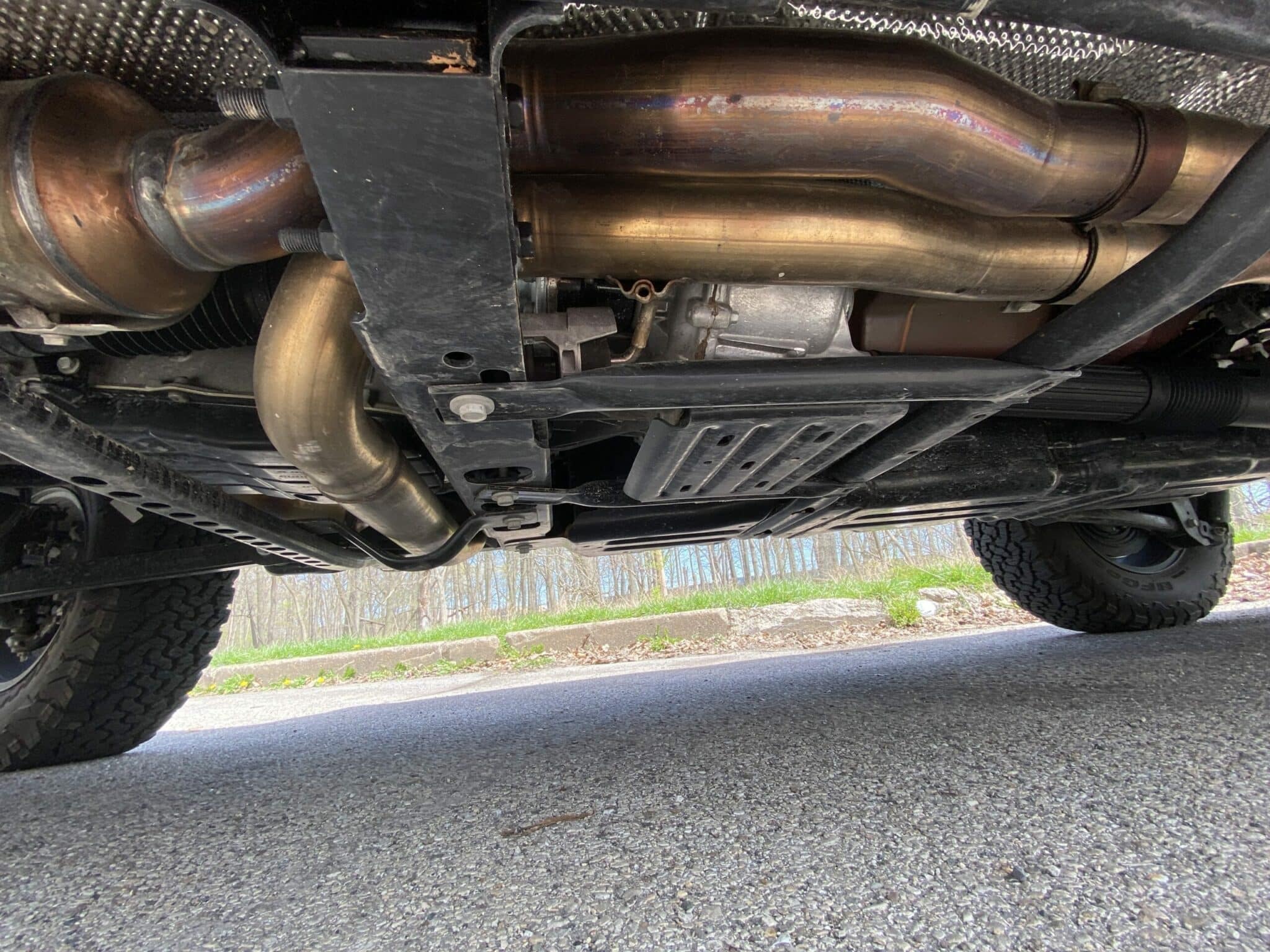
Is this rust concern? Why or why not?
Not really. Ish. We put the “ish” in there again because when you’re talking about something like U-joints, the rust actually serves as a protective coating.
Where you should be concerned is when something hollow, like a hanger for the muffler or the pop converter, is rusting. In something like that, the rust could eat all the way through creating a hole. When something like that happens, that’s when your muffler might come loose and drag on the ground while driving. Does that affect the performance of the part? Well, that depends on your definition of performance.
At the end of the day, our sources called this more of a customer dissatisfier than a true problem.
What elements might contribute to this rusting?
There are a lot of contributing factors to the formation of rust – like if you live in a place where roads are salted in the winter or if your climate is humid. Yes, yes, that’s over time – so what about these new trucks with rust? Again, no one would comment on the record, but one theory we heard was this could have been a supplier issue, and that during the Covid-19 shutdowns, the parts were stored improperly.
So, if you have parts that don’t receive a protective coating and then are exposed to harsh climates, a lot of mud or corrosive materials, the result is rust.
Is there anything that can be done to prevent rusting?
If an automaker isn’t painting or coating the parts on the under-side of a vehicle, it might be worth taking matters into your own hands. There are companies out there like Ziebart that will provide professional underbody protection.
In fact, in a recent video, we featured a company called New Hampshire Oil Undercoating (NHOU), which coats the underbody of vehicles with oil to protect against rusting.
If you’re a DIY-er and think you can manage to take care of the coating by yourself, you can use something like 3M Dynatron Dyna-Pro paintable rubberized undercoating or even Rust-Oleum. NHOU even offers a take-home DIY kit. But here’s the thing, your underbody has to be pristine before starting, and you have to make sure you don’t miss anything – or defeats the purpose and lets in moisture and debris anyway. If you don’t have a lift, you can use a mechanics creeper to apply these DIY home kit coatings.
But the biggest thing you can do to prevent rusting is to keep the underbody clean – especially after driving on salted roads or taking your vehicle off-road in a muddy location.
So, you know that undercarriage wash? Not a scam.
What should you do (or not do!) if you see this rust?
After we posted our story, it prompted a lot of owners to crawl under their own vehicles (F-150s and otherwise) and express dismay over the amount of rust under their vehicle. Which then lead to proclamations of getting rid of said rust by any means necessary. We heard mentions of sandpaper, high-pressure washing and several other methods to dispose of rust, and we want to say: STOP!
If you see rust and are concerned, seek professional advice first. As we mentioned above, some rust serves as a protective coating and removing it could actually damage your vehicle.
But if you’re truly concerned, Joey Dupont, NHOU shop manager, says his shop’s oil undercoating can help stop the rusting process once it’s begun. While it won’t kill the rust, the coating will cut off the oxygen needed for rust to continue.
The bottom line on underbody rust
While nobody wants to see rust on a brand-new vehicle with just 500 miles on it, rust on a muffler is very different from rust on the frame. Yes, it looks bad. No, it probably shouldn’t be happening. But it’s probably not the end of the world. You should have it checked. And you should also consider adding a protective coating after having it professionally cleaned.
Yes, we were ultimately dissatisfied with Ford’s only on-record comment to us: “While some F-150 underbody steel components may show signs of surface rust, this will have no impact on part performance or life.”
But unless you’re seeing rust on the frame, you should probably just leave it alone.







17 comments
Baret Walker
I co-own Blast Tech, a sandblasting business in the Denver Metro area, specializing in automotive paint and rust removal. We routinely lift vehicles and remove rust from the undercarriage including on the the pan, frame, drive shaft, axles, and suspension. You would be surprised at how many cars in Colorado grew up in the East Coast or in the Rust Belt. They look great on the exterior, but are an absolute mess underneath. Sandblasting away the rust and debris shows the underlying condition and reveals what structural work may need to be done to the frame and other undercarriage parts before coating them.
Ernest Herzberg
We bought a 2017 Ford F150 from Sheehy Ford in Ashville Virginia with forty thousand miles and paid forty thousand dollars cash, the truck now has fifty-six thousand and I am very concerned about the amount of rust on all of the parts of the undercarriage
David Holzman
I live in the Boston area–rust city. I disagree with the notion that rust is only ish bad, although it probably depends on exactly where you are, how old the car is and how long you want to keep it. My first car, an 8 year old ’62 Falcon, had so much rust on the floor that you could see the road underneath the car. My parents’ ’57 Plymouth required a new floor when it was 4-5 years old. And while cars don’t rust nearly as quickly as they used to, if you’re keeping the car for its lifetime, you probably want to keep the rust from starting.
2003 Porsche 911 owner Tom Thalmann, of Rhode Island, gets his undercarriage cleaned up every couple of years. the car probably has over 700,000 miles on it by now. https://www.hagerty.com/media/car-profiles/how-do-you-get-a-porsche-turbo-to-647000-miles-its-all-about-seat-time/
I got the undercarriage of my now 15 year old Civic checked for the first time last year. I’d decided that the Civic–now with 154k on the clock–was a keeper if I could keep it clear of “car cancer.” There was almost none, and so Gray Patti (my mechanics) sprayed the undercarriage with oil. Before that, I’d gotten undercarriage washes in winter. There are a couple of tougher procedures for undercarriage protection that I’ve thought of having done, and may ultimately have done as more permanent protection than an autumnal spraying of oil.
Ben Skala
My experience with Ziebart was “what a waste of money.” Besides the unprofessional application of the rustproofing (massive overspray) The coating soon fell off in large strips. Look to a better company.
Dan
i’m looking at a 2019 gmc sierra in Michigan, nice truck, but rust that concerns me. Tried to post a pic but guess can’t do that. Dealer says it’s surface rust……looks a lot worse than that. I’d consider buying it if i could stop the rust from doing any further damage. Suggestions?
Donny D
Two words. Fluid film. Spray it each fall. The new black is fantastic and looks amazing. Never wash it off unless you replace a part or have some reason that I cant think of right now to do so. Otherwise just spray the next layer over whatever is left next fall Road grime and all. Wash heavy salt off obviously when you can like on the body, but stay away from pressure washers.
Simple. Effective.
Jarrett Dillingham
I appreciate articles like this to make people aware of issues or concerns to give a path as to what to do about the issues or concerns!Thank you for your article!
Edward
If one of the bolts in the middle of the vehicle looks completely rusted, should I be concerned? It’s a used Highlander with 90K miles. There’s some surface rust on different parts of the undercarriage.
Tim Esterdahl
I wouldn’t be too concerned unless the bolt really starts to degrade. For example, if you can chip away some of the bolt with your finger, then yeah, have it replaced. If it is still solid, then don’t worry too much about it.
David Hayden
My new 2021 Dodge Durango has rust with 219 miles on it. Do you think Dodge would replace any of the parts? I see the rust on all wheel drive front and rear arms and drive shaft etc.
John
You should not write anything on cars. You are totally clueless. I bet you have no engineering or science or mechanical background.
Jill Ciminillo
That’s like me telling you not to leave a comment on a story because you don’t have a journalism degree.
Anonymous
Well said
ian murray
Beauty !
Liam Mullone
This bozo just hates that a woman is talking about cars. How dare you! Please carry on, if only to annoy such people.
Donny D
Why do you assume she’s a woman? Jill? She looks like a woman? How dare you! Don’t you know men can get pregnant? Don’t you know woman can identify now as men? Don’t you know you should ask for pronouns first?
Welcome to clown word.
Stan
It’s a good article, Jill. Thanks!