
Recently, I woke up to 34 notifications from Facebook related to a conversation/debate amongst automotive journalists about an article criticizing the modern pickup truck size. This isn’t an uncommon thing, and the argument has been repeated a few times during the past year. Here’s what’s going on.
The debated article appearing in Bloomberg further pushes along arguments started by Dan Neil at the Wall Street Journal (subscription required). In Neil’s article, and now this Bloomberg article, the premise is simple: The growth of pickup truck size is dangerous, damages the environment, makes a political statement, displays arrogance and, finally, is complete overkill for transportation needs.
Yeah, you could say they aren’t big fans of pickup trucks.
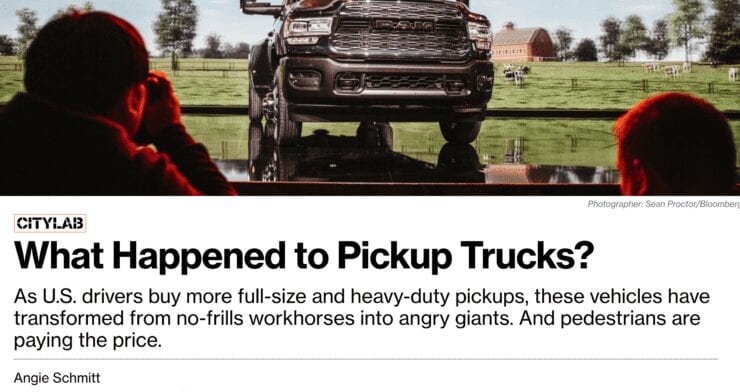
The Bloomberg piece actually has several inaccuracies — including a flawed statement the IRS is pushing businesses to buy a 3/4-ton truck over a 1/2-ton as well as the proclamation the growth of pickup trucks has lead to more pedestrian accidents — even though trucks have done a lot to improve safety in terms of pedestrian detection and crash testing.
With regard to the latter point, yes, it is true road fatalities did increase last year, but I’ll argue it wasn’t the pickup truck’s size at fault. Rather, as stated in the Washington Post, less traffic equaled people driving at higher speeds, causing more deaths according to transportation and law enforcement officials.
Then, there is the excellent piece by fellow journalist Mike Satterfield of the Gentleman Racer who read a government report showing the further inaccuracy of more accidents caused by big trucks and SUVs.
“According to the Governors Highway Safety Association SUVs and Trucks are twice as likely to kill a pedestrian if they are involved in an accident, but passenger cars are involved in a higher percentage of pedestrian fatalities than SUVs and pickup trucks combined,” Satterfield wrote. “2019 data showed that 2,264 fatalities involved a passenger car, while 1,070 involved SUVs and 889 involved pickup trucks.”
Maybe passenger cars have gotten too big?
Why have pickup trucks grown so large?
One of the more fascinating parts of this debate deals with the fact these journalists never seem to seek the reason why pickup truck size has grown. Rather, it is a knee-jerk reaction followed with: OMG they are so LARGE!
Frankly, it’s rather odd to freak out now over their size when trucks have been growing since the 1950s.
If you truly want to see how trucks have grown in size, just go to a car show. You can visually see their height increase from the 1950s, ’60s, ’70s, ’80s, ’90s and early 2000s.
The really interesting part is this: Trucks haven’t grown that much, although crew cab pickups have become more popular since they were first introduced in the 1960s. Yep, 1960s, around 60 years ago.
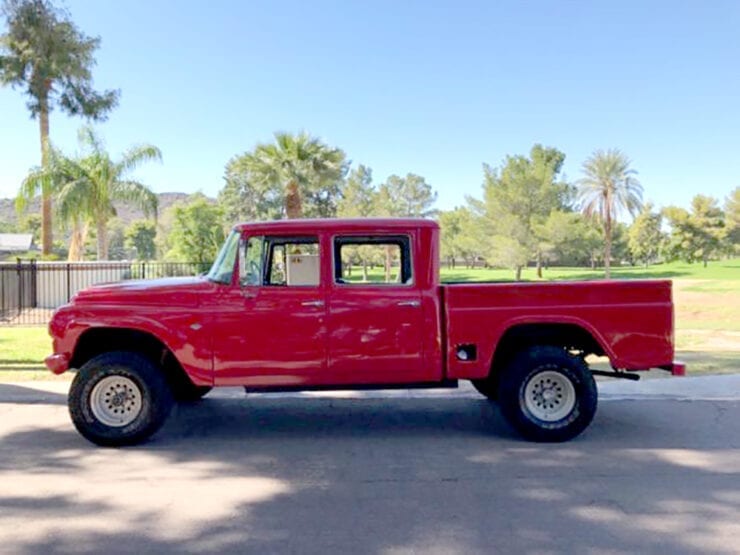
As you can see with the Travellette pictured above, trucks haven’t always been the regular cab varieties with low beds like the 1960s and 1970s era Chevy C10 pickups.
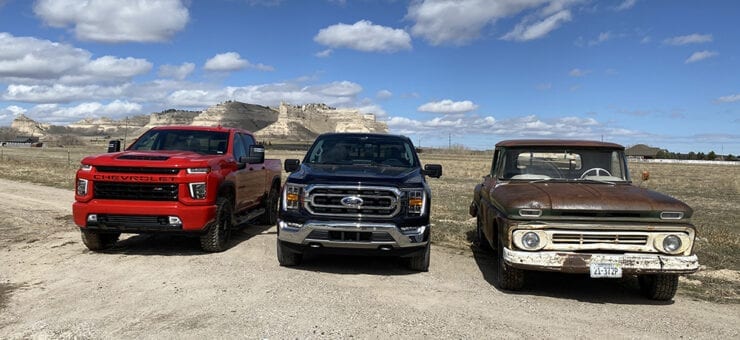
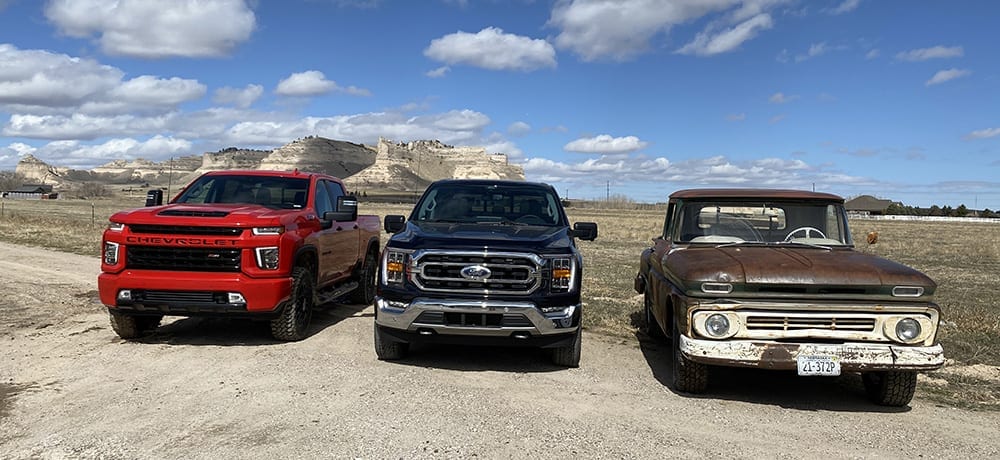
Many critics of modern full-size trucks point to these mid-’60s Chevy trucks as the perfect comparison example on how trucks have grown and how they are now unsafe. The thinking is you can see so much better out of these 1960s trucks, and their smaller size means they are safer for pedestrians. Plus, this is really all the truck you truly need.
If only any of those assumptions were true.
I’ll address safety in a minute, but let’s get back to why trucks have grown. I really want to take some of these journalists into the country with one of these older trucks, like my 1962 C10, and show they why trucks have grown. The reasons are pretty practical.
First, the buying market for trucks has grown — literally and figuratively. People either have forgotten or were born after these 1960s trucks went out of fashion, so let’s do a quick recap. These trucks quickly felt cramped, were unsafe for the driver and passengers and had zero cab room for more than two average men. Trust me; try driving one around with two guys, two coffee cups, work gloves, coats, tools and a bed filled with lumber. It can be done, but, um, let’s just say it’ll be cozy.
Now, with more people of various physical dimensions buying trucks, they’ve had to grow to keep up with consumer demand. This largely meant headroom and width.
A quick comparison tells us a 1990s Chevy Silverado 1500 was 76.8 inches wide and a 2020 Chevy Silverado 1500 is 81.2 inches wide according to Chevrolet. So, about 5 inches wider. Not a heck of a lot.
Length? An extended cab from 1990 Chevy Silverado 1500 with a 6-foot, 5-inch bed has a length of 212.6 inches. Today, an extended cab pickup with a 5-foot, 6-inch bed has an overall length 231.8 inches. This means, they have cut a foot off the bed, roughly, and added 20 inches or so for interior leg room. This means a modern truck is about a foot and a half longer. Again, not that much considering the overall length of a truck, however, it does mean it is that much longer and won’t easily fit in a garage anymore.
The real beef is about height, and this seems aimed squarely at heavy-duty trucks.
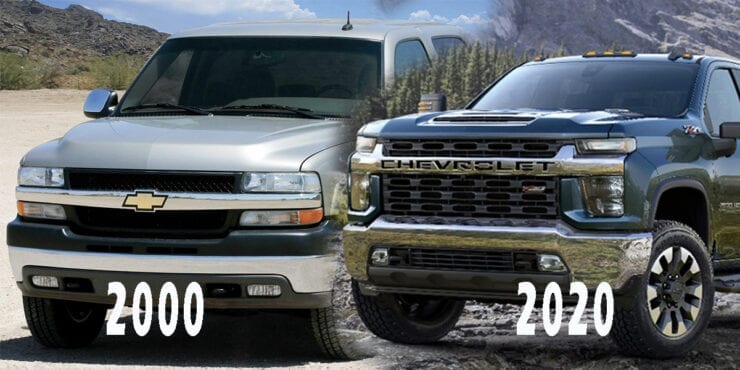
Again, looking at the specs this time from Wikipedia and the Chevrolet media site, the numbers aren’t that different. A 2000 Chevy Silverado 3/4-ton has a height of 77.4 inches while a 2020 Chevy Silverado 3/4-ton is 79.82 inches — a whole 2 inches different.
Visually, it looks like more, right? Sure it does.
The reality, though, is the trucks haven’t gotten much larger — it is how they are now designed with bigger grilles and larger standard tires.
Also, off-road editions with factory lifts are now extremely popular.
Another thing not mentioned is bed height. Bed sides are really the one area where things have gotten out of control and most truck guys will not argue this point.
Fact is, beds are really hard to access these days since they have grown so tall. However, this comes with a push back in that the taller height means the ability to carry more items in the bed.
For example, let’s say a load of mulch. With a 2020 Silverado 3/4-ton, I could make one trip to the landscape company to load up versus the 1970s truck which would take multiple trips for the same load.
Mulch is just one example. You could replace that with luggage, bicycles for the kids and other items people carry. The taller sides means these items are stored better and more safely than before, when things would dangle outside the bed.
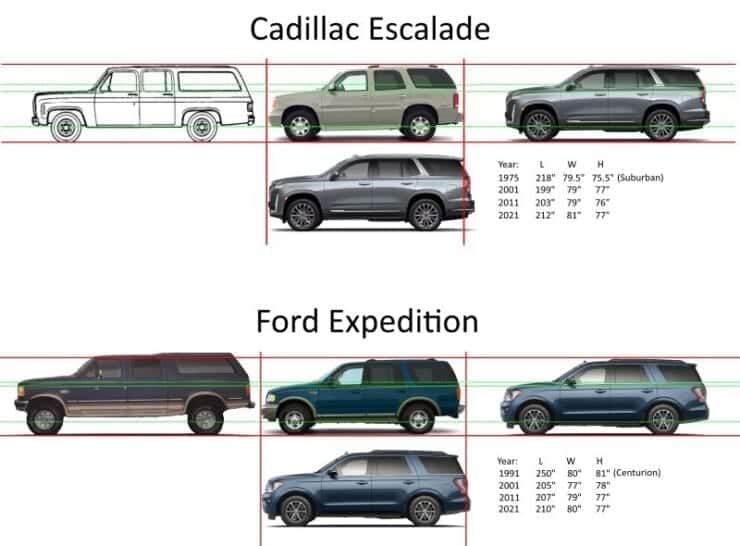
What has changed? Style really. Customers have been lifting their trucks for years, putting on bigger tires and swapping out the grilles to mirror their personal tastes. Automakers and dealers took notice. Now, you can walk into any dealer showroom across the country and find lifted trucks complete with bigger tires ready to purchase and roll into your loan.
These lifted trucks with bigger wheels and more pronounced styling are getting the attention of the critics. However, are they not as safe?
The facts about pickup truck safety
Let’s get to the facts about the safety rather than making wild accusations that their growth makes them unsafe.
The argument from the growth standpoint is their size creates massive blind spots and makes visibility harder from the cabin. From an outsider’s perspective this is true, yet it isn’t really that truthful.
Inside the cabin, the new trucks are filled with all sorts of safety equipment making them, arguably, safer to drive than before (crash testing is another item).
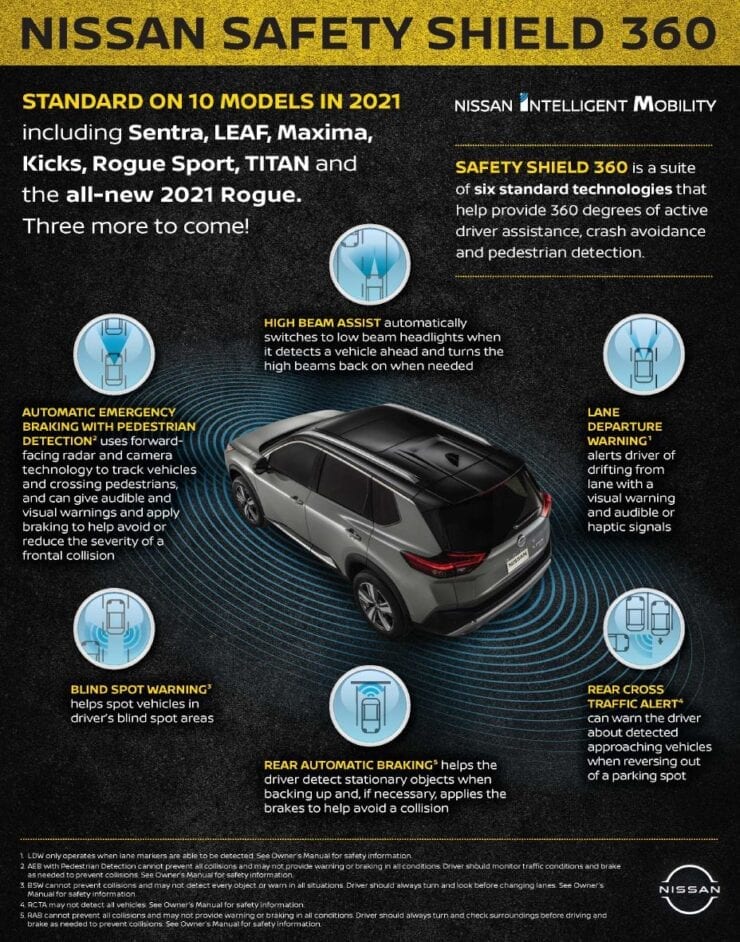
Behind the wheel, the driver has a host of cameras, sensors, blind spot alerts, rear cross-traffic alerts and pedestrian crash detection. Many of these systems now come standard in full-size trucks, and moving forward we will see even more safety equipment added to trucks.
The whole argument you can’t see as well is also largely overstated. Automakers have done a lot in recent years to shape the hood and grille to increase visibility out the front, plus they have moved mirrors out of the way to improve visibility out the size. Basically, those complaints were warranted at one time, and automakers have responded accordingly.
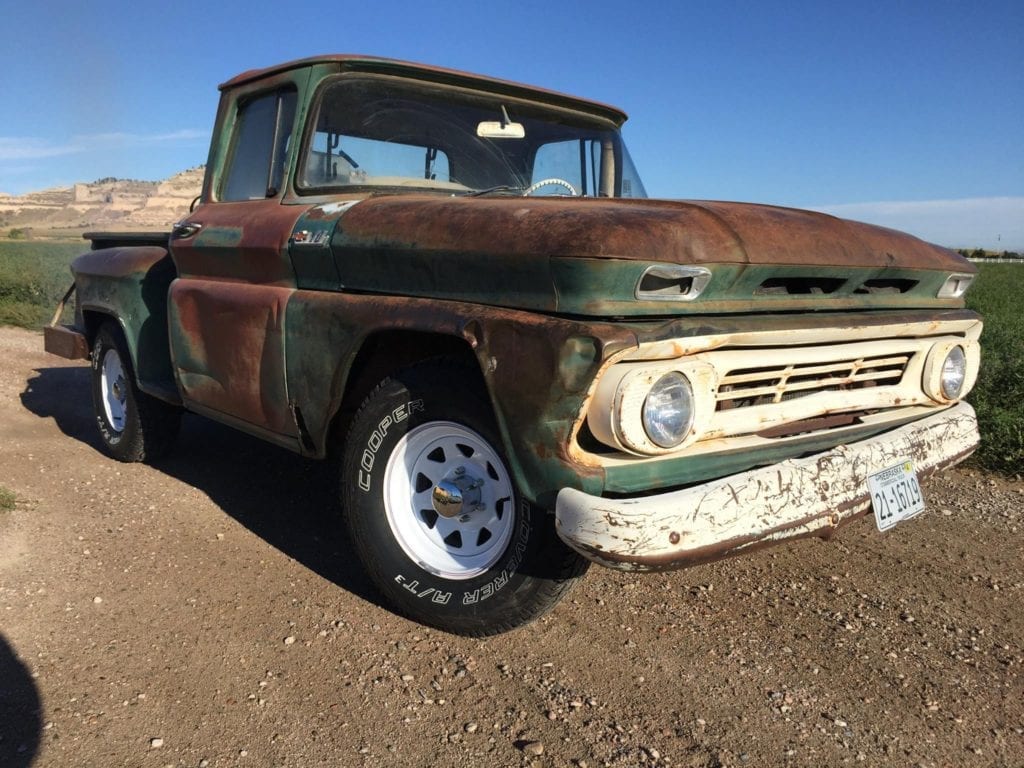
Now, back to the trucks I own. I personally own a 1962 Chevy C10 and I bought a 2021 Ford F-150 for this outlet for a year to test out. While some will always argue this point, I can tell you I have better visibility in my 2021 F-150 than I do in my 1962 C10. The A-pillar is smaller in the 2021, the driver’s side window is larger, and I sit taller in the cabin, which allows me to see better. Go sit in any classic truck, and you’ll find the same thing.
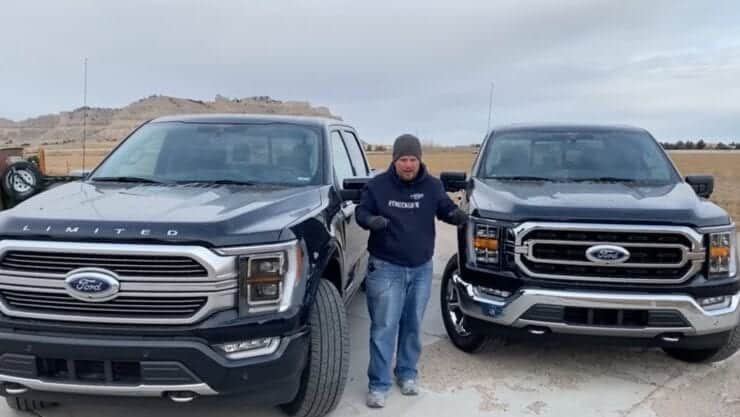
So, the idea the larger pickup truck size makes it less safe is complete bunk. That is just people making assumptions and using their bias against trucks to proclaim this to be true when it is not.
Oh, and critics will point out trucks are really hard to park and how you see people making several maneuvers to get it just right. This isn’t necessarily due to them being harder to drive — although they do require a different set of driving skills — this is due to the parking cameras allowing you to be OCD about how well you parked between the lines.
The bottom line on pickup truck size
The rest of the arguments from critics usually devolve into discussing the political nature of trucks (those darn rednecks flying flags), environmental impact (trucks pollute less and get better fuel economy than ever) as well as how “scary” they look (ok, buttercup, calm down).
When you step back and look at it throughout the years, automakers are really catering to their customer and offering a wide range of different styles, sizes and capabilities. Yes, you can still buy a regular cab (if you can find one), and no, not everyone needs a Trail Boss off-road pickup to drive in the city. Yet, why do we criticize consumers for the choices they make?
For me, I had a choice between a truck and an a minivan for my family. It wasn’t a hard choice — the truck gives me so much more utility for my dollar. It was a no brainer.
What do you think? Are the critics right?
Related posts:
Full-size pickup truck safety: These 2021 rankings may surprise you
IIHS study shows women are up to 73% more likely to be injured in crashes






10 comments
Tyrell Anderson
The issue is not with overall height it has to do with the hood heights, sensors are nice but they should not be a necessity to be able to drive a vehicle safely, I can see the ground 12 feet in front of the hood in my 1997 c3500 and 15 feet in my 1991 4×4 F250, I drove a 2016 GMC 1 ton for a while and it was 30+ feet to see the ground at factory height, and a brand new ford super duty is probably at least 25 (I only measured the GMC), the hood should not be over 5 feet off the ground, and I’ve seen factory lifted rams that are over 6 feet, terrible design, I shouldn’t feel like I’m driving a tank down the road.
Ricky Kise
Excellent article! There is entirely too much NANNY STATE crap, in this, what was, a free country. If, with all the stupid yellow blinker lights and peed bumps appearing all over the place, pedestrians can figure out how to properly cross the road (that means eyes open, not using the force) then let them be road kill. I’m not giving up my F-150 because some bleeding heart politician wants me to. When Trump returns, hopefully a lot of this crap will go away. All you truck owners damn well better vote for him or we will loose our trucks and a whole lot more.
Dude-Man
I don’t think that large trucks need to be done away with, I mean – if you need to pull a large camper or something there simply is no better way than to have a vehicle that can do it well. And by that I mean, not just have the ability to pull it while almost barely being able to go up a hill – I mean pull it and keep up with traffic.
On the same hand though – all of these trucks are WAY too big for the the average guy. I love trucks and I want one, but for god’s sake man I can barely use one conveniently anymore. When i was growing up may dad had a 1970 Chevy C10 (regular cab, rear wheel drive). And even though I was just a boy (12-15 years old) if he asked me to grab a shovel or a hammer out of the back of the truck I could walk up to rear wheel and reach over the fender into the bed and grab it. Nowadays you need a ladder to even see into the bed!! It’s just ridiculous.
And if you are a handman – or just a DIY guy who doesn’t need his truck for work, GOOD LUCK finding a cheap truck. There are no mini trucks sold, there is no such thing as a bench seat, regular cab RWD truck. Every truck on every lot i have been two for the last 10 years is filled with trucks with full leather captains chairs and touch screen monitors…..like give me a break……
In 1999 you could buy a Ford F250 brand new for $15,000. Now – the same make / model is $74,000…..like …..WTH? We are being ROBBED by the big truck makers. The workers who build these trucks have seen only cost of living wage increases over that time span, while the CEOs have been giving themselves nearly 20% raises every year……that means they are making more money from us and it isn’t being shared across the companies – its going straight into the pockets of the executives. Absolutely shameless.
I can’t afford a brand new truck. and i guess if i have to buy used, i might as well by a 1970, because fixing one up and maintaining it is far cheaper….
pb
I guess this is a ‘defense of modern pickup size’ but jeez, can you compare the heights of the two trucks and point out the “2 inch” difference in height and not mention how high the front of the truck is and what the impact of that? Like it’s clearly a visibility issue for the driver if they can’t see a few feet directly and ‘regular sized’ cards get blasted by the headlights. The picture comparison is hilarious.
Really dishonest or just poorly written but I guess that’s the norm.
Tom
There is simply NO excuse for shoulder high hoods. If your driving experience has been cars, the first time you climb up into a 1/2 ton pickup, you should be terrified to drive it because of the poor front visibility. If you get into my daily driver Datsun Lil Hustler 1/2 ton pickup, you’ll have more visibility than in your car. Monstrous Trucks are ok, but NOT selling low trucks is NOT.
MegaMan
You admit that large trucks and SUVs are twice as likely to kill a pedestrian when they crash into them, yet you dismiss that fact by staying that sedans end up killing more pedestrians than trucks and SUVs. You don’t appear to have done any analysis why this might be the case. Maybe people tend to speed more in sedans than SUVs? If that’s the case, we need to address that problem, but it does nothing to mitigate the risk that SUVs pose to pedestrians. It’s just a distraction from the issue.
You noted that grills are much larger on newer models, but you fail to understand that the modified shape to allow these large grills is much more dangerous, causing people to be pulled under the vehicle, rather than thrown over, and causing more extensive damage to vital organs in impact, rather than the legs.
You should focus less on confirming your own beliefs, and more on trying to understand the issues.
LT
First off, a great informative and unbiased article. I’ve driven everything in-between from a 1978 Toyota Hi-Lux to a now 2020 GMC Sierra 1500. Have they gotten “larger in appearance”, yes. Do I feel more conscious of driving a bigger vehicle (other garage occupant is a Tesla Model-S), yes. Do i have all of the Driver Safety Features enabled, totally. Do i periodically haul stuff around, yes.
I think the lines are blurred and most consumers can discern between 1500s, 2500s, 3500s, F150, F250 & F350 and “truck” get lumped into a single catagory … and therein lies the misconception.
Sean
There’s a lot in here that’s either conjecture or not comparing apples-to-apples. When you compare modern pickup trucks to other modern cars and SUVs, they are less efficient and more dangerous. Modern truck sales growth has come from people who don’t use them as commercial vehicles: per Edmunds only ~35% of pickup owners use the bed more than once per year. These are people who could drive a sedan or SUV and meet all their needs, with lower emissions and better safety.
A new pickup truck is less safe for everyone outside the pickup truck than basically every other segment of new light vehicle, which is the correct comparison instead of comparing a brand new pickup truck with new safety features against a 20 year old sedan. Basically every new vehicle comes equipped with various ADAS features to make them safer – the difference is that other vehicles don’t have long, high hoods that make it so you have a massive front blindspot and which make impacts more deadly for the person on the other side of the vehicle by hitting the chest and head. If you’re walking across the street, a driver of a new pickup truck is both less likely to see you and more likely to kill you.
Other areas in here are either pure speculation or wrong: if rearview cameras are making people parking perfectionists, why don’t luxury German cars do this? Am I to believe that a $40k BMW driver is less diligent than a $60k Silverado driver? And for the question on the IRS, there are significant tax writeoffs for vehicles with GVWR >6,000 LB.
Greg Marlett
I wish they would make a truck bigger than a new Tacoma, but smaller than any full size one the market. I feel like the Gen 1 Tundras were the perfect size.
Brandon
The pickup truck critics don’t seem to mind trucks as much when they need to rely of their friends with trucks to help them move so….