

Choosing between LTL and FTL isn’t always straightforward because the decision often hinges on density, shipment volume, transit urgency, and handling risk. The NMFTA explains in its Classification FAQ: What is a Freight Class? that LTL pricing and handling are shaped by density, stowability, handling, and liability, all factors that influence when consolidated freight makes sense versus when dedicated truckload control becomes the smarter option.
Understanding how freight shipping services are structured helps clarify the difference.
What Actually Drives LTL
With LTL shipping, you get to move your freight alongside other shippers in a single trailer. You pay only for the portion of space your freight occupies. It might sound simple and cost-cutting, but there are things that you need to consider. The National Motor Freight Traffic Association states that LTL pricing is formed by several factors. 4 factors, to be precise – density, stowability, handling, and liability.
Density means weight relative to size. Lower-density freight might be more expensive because it requires more cubic space to fit. Stowability is about whether freight stacks easily or leads to some gaps in the shipment. Handling shows how tricky it is to secure or move the freight, while liability accounts for damage risks and the value of the freight.
That’s why two shipments with similar weights can differ significantly in price under LTL. Hence, consolidated freight makes more sense sometimes, and sometimes it doesn’t.
LTL is perfect for shipments that are moderate in size. It’s also well-suited for those freight that aren’t time-sensitive. Durable shipments work best here. Businesses can move their freight around without waiting for the trailer to fill. LTL offers greater flexibility, and it matters a lot for those businesses that expand into new regions or are looking to manage variable demand.
Still, LTL involves several crucial touchpoints. Freight moves through terminals for sorting and reloading, and each transfer comes with time variability. It’s a trade-off that not all businesses can afford to tolerate.
When FTL Becomes the Better Choice
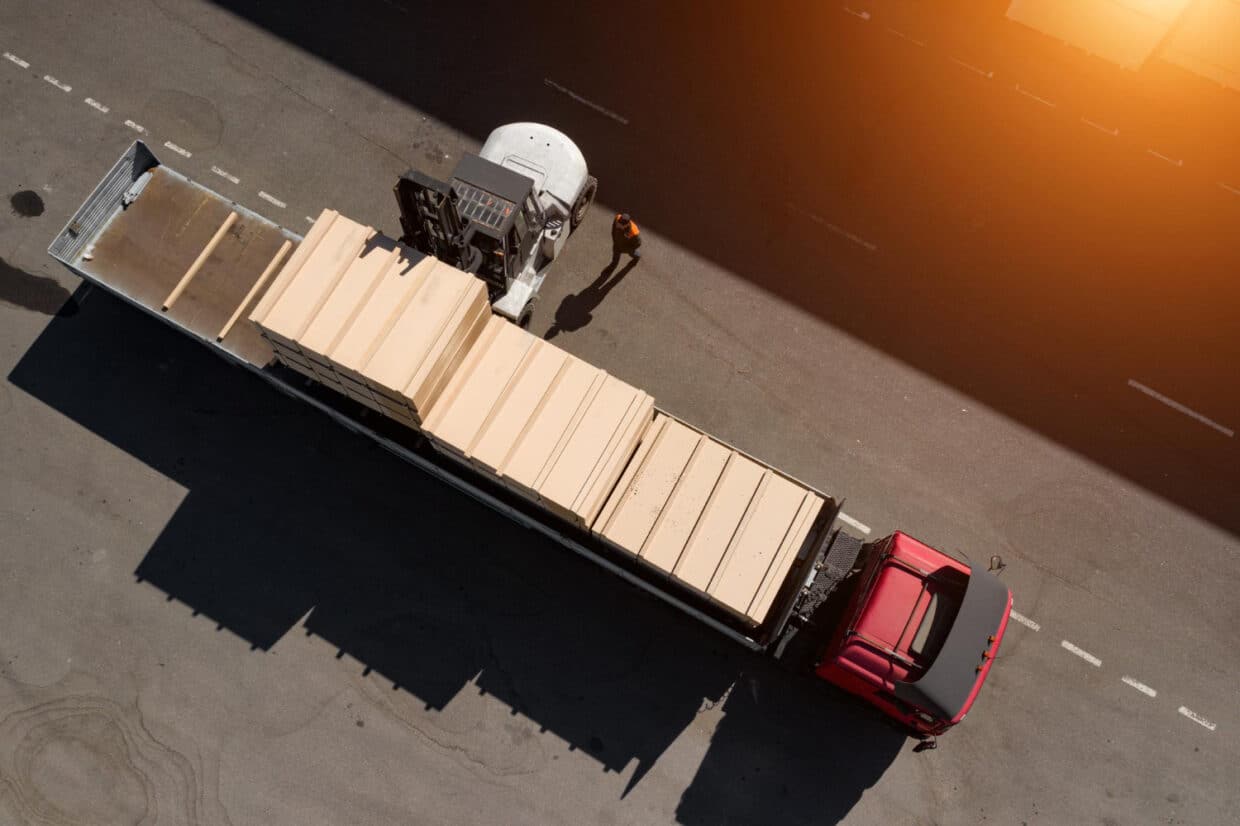
FTL is all about a single shipment. An entire trailer dedicated to moving your freight. No shared cargo, no intermediate consolidations. The truck moves to its destination with little to no interruption. It’s a great option when shipments approach trailer capacity or when predictability is critical. If the cargo is dense enough to fill most of the trailer, LTL rates might not be the best choice. A dedicated truckload will lower per-unit cost and reduce complexity.
Urgency also plays a major role, as FTL usually offers faster transit times with no terminal stops.
Risk handling is also important, as high-value or fragile freight will only benefit from fewer touchpoints. Even if a shipment doesn’t fully occupy the trailer, the reduction in transfers still justifies a truckload. It’s not just a financial decision – it’s an operational one.
Making the Smarter Call
LTL and FTL are not competing options. They are tools. The smarter choice depends on how freight behaves, how often it moves, and how much variability the operation can absorb.
Companies that treat freight shipping services strategically analyze shipment data, standardize packaging, and monitor lane performance over time. They look at risk and predictability, not just line-item cost.
The goal isn’t to choose one model permanently. It’s to align the shipping structure with business priorities and adjust as those priorities evolve.