
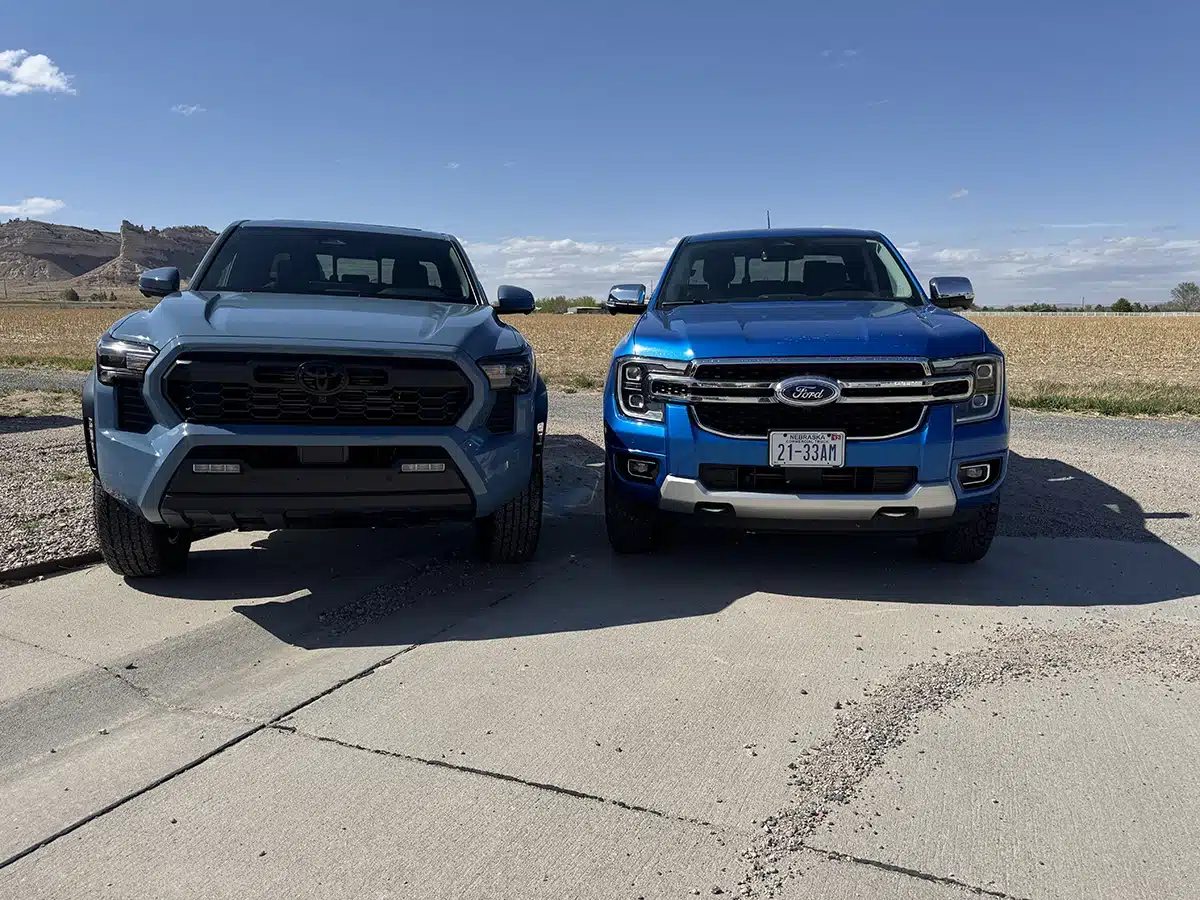
If you are shopping midsize trucks, the choice between the 2026 Toyota Tacoma vs Ford Ranger comes down to how you actually use a truck day-to-day because these two take very different approaches to performance, comfort and long-term ownership.
Toyota sent us the Tacoma TRD Off-Road to review while we used our 2024 Ford Ranger Lariat as a comparison truck.
Powertrain Performance
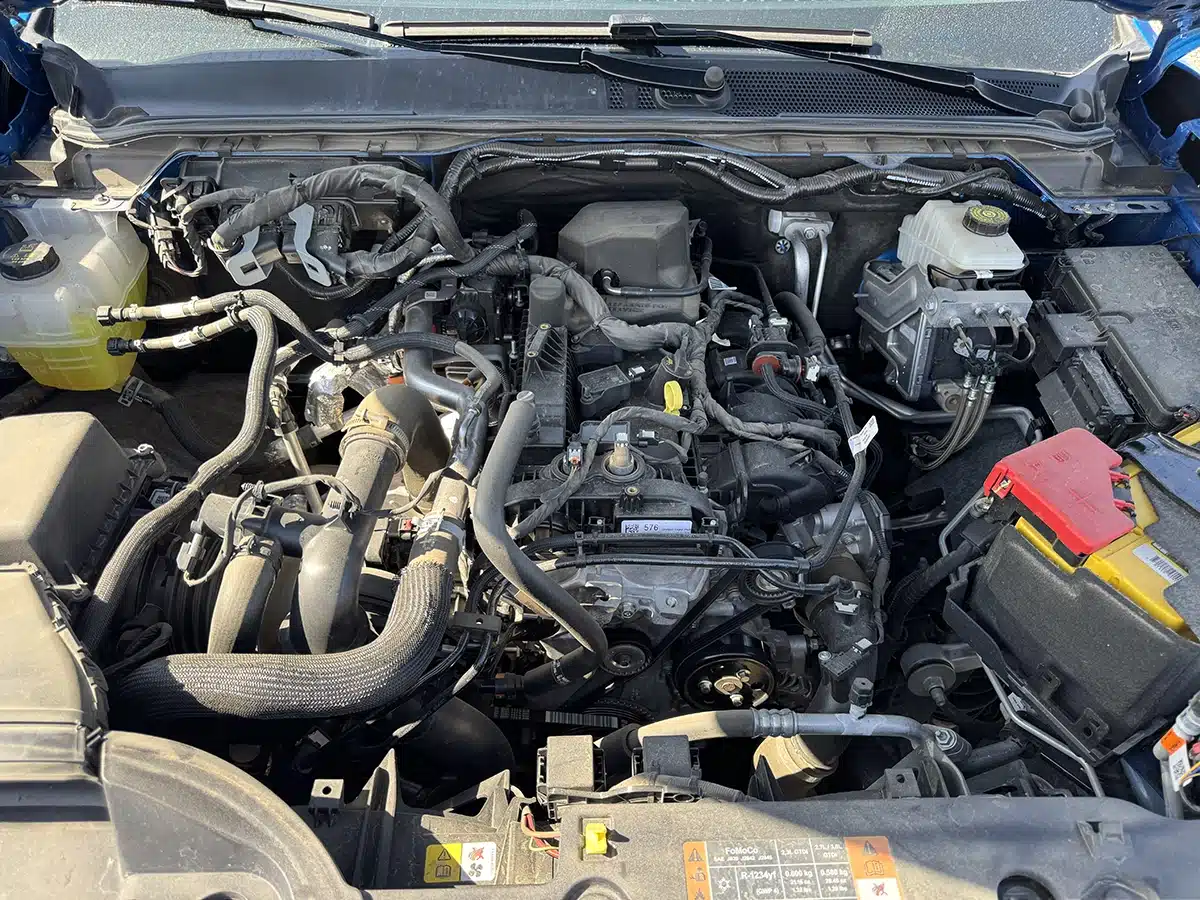
On paper, the base powertrains look similar, but real-world results tell a different story. The Tacoma’s 2.4L turbocharged i-FORCE four-cylinder delivers 278 horsepower and 317 lb-ft of torque, with peak torque arriving early at 1,700 rpm. The Ranger’s 2.3L EcoBoost produces 270 horsepower and 310 lb-ft, but torque comes in later around 3,000 rpm.
Real-World Acceleration
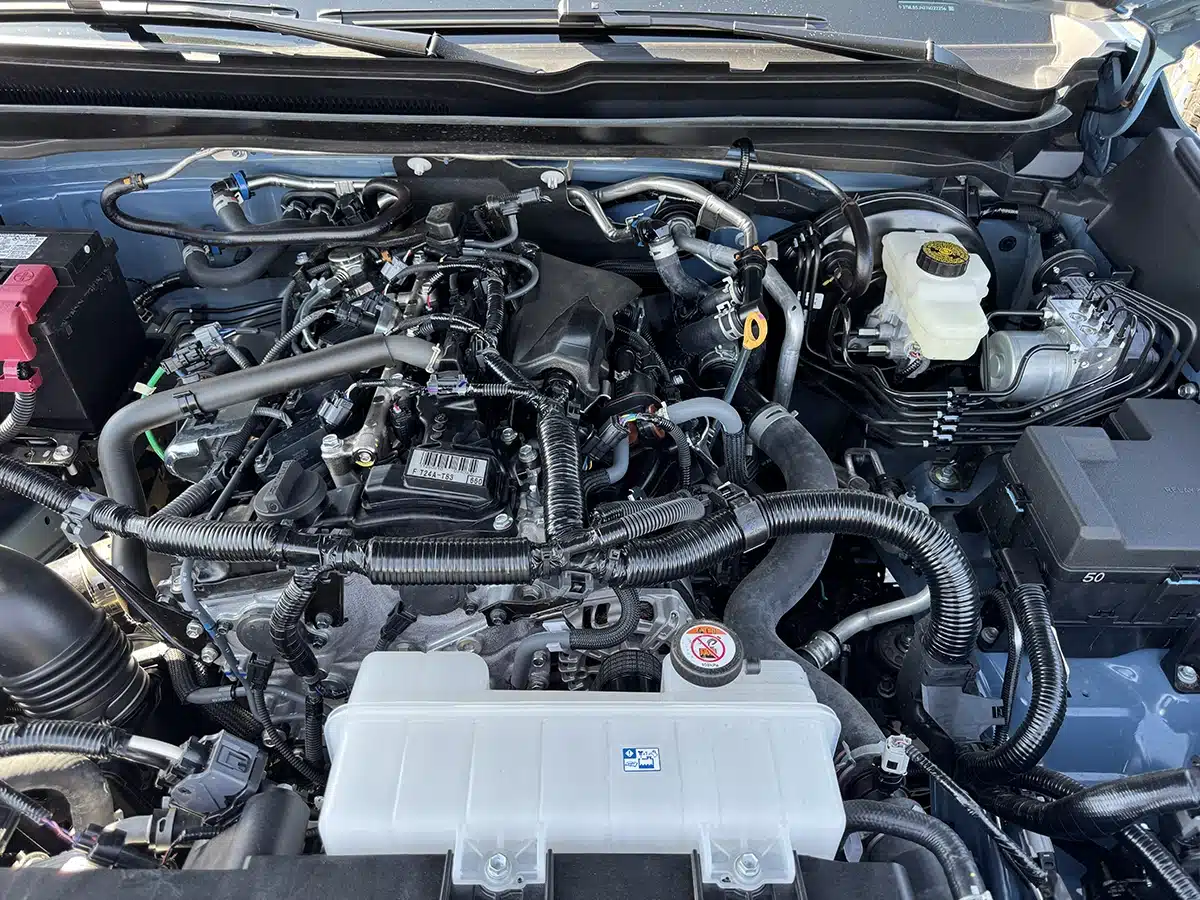
Despite the Tacoma’s earlier torque curve, the Ranger is quicker in independent testing as verified by multiple outlets, running 0–60 mph in roughly 6.2 to 6.9 seconds compared to the Tacoma’s 7.0 to 7.7 seconds. That difference likely comes down to transmission tuning and how power is applied through the Ranger’s 10-speed automatic versus the Tacoma’s 8-speed. In real driving, the Ranger simply feels quicker and more responsive.
Here’s how the rest of the engine lineup shakes out:
| Engine | Horsepower | Torque (lb-ft) |
|---|---|---|
| Ford Ranger 2.3L EcoBoost I-4 (standard) | 270 hp | 310 lb-ft |
| Ford Ranger 2.7L EcoBoost V6 (available) | 315 hp | 400 lb-ft |
| Ford Ranger 3.0L EcoBoost V6 (Raptor) | 405 hp | 430 lb-ft |
| Toyota Tacoma 2.4L Turbo I-4 (base i-FORCE SR) | 228 hp | 243 lb-ft |
| Toyota Tacoma 2.4L Turbo I-4 (i-FORCE) | 278 hp | 317 lb-ft |
| Toyota Tacoma 2.4L Hybrid (i-FORCE MAX) | 326 hp | 465 lb-ft |
Pricing and Resale Value
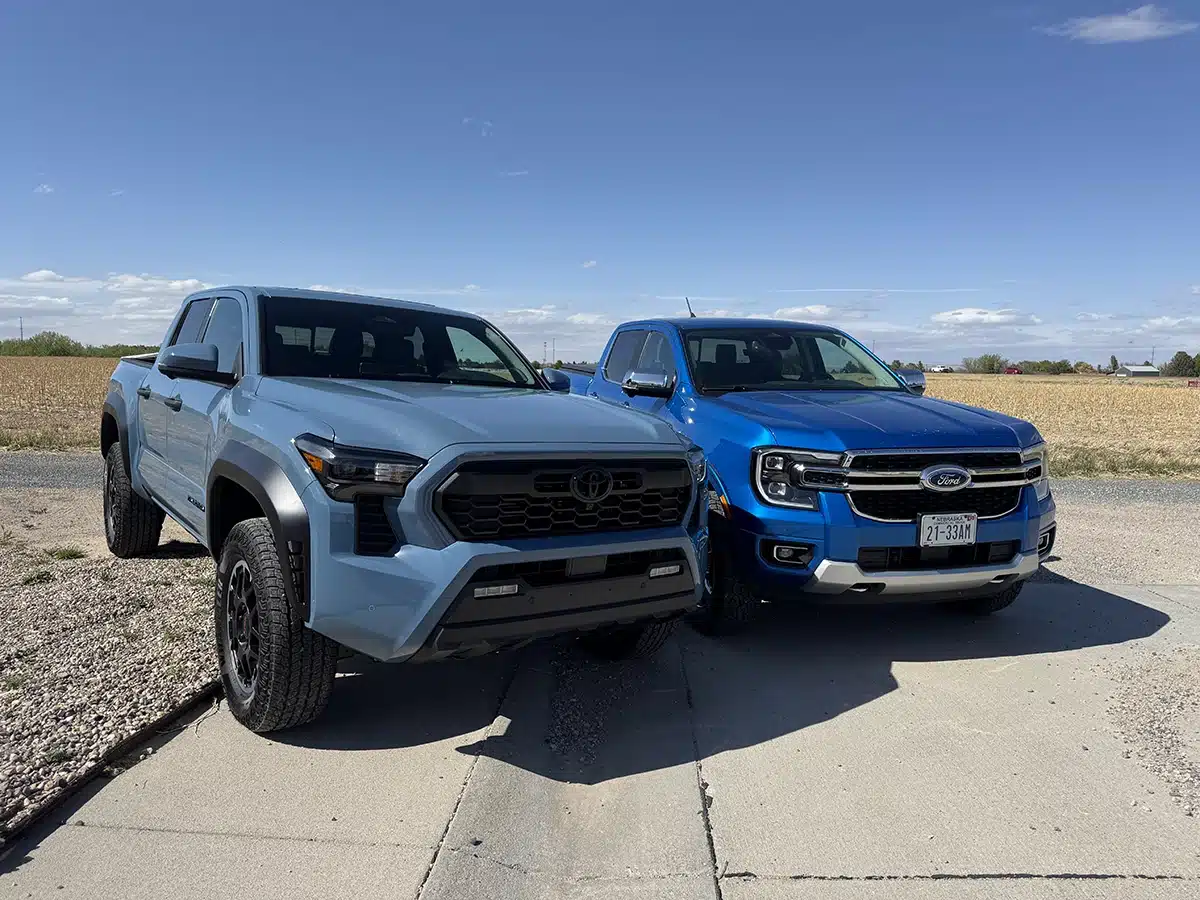
The pricing gap between these trucks is narrower than expected. Our 2024 Ford Ranger Lariat retailed for $51,000 (more likely $55,000 in today’s market), while a Tacoma TRD Off-Road comes in at around $55,000. They are basically the same price, although in my real-life shopping experience, I have found more Ford price discounts than Toyota.
Where the difference shows up is value over time. The Tacoma consistently delivers stronger resale value and dominates sales volume often outselling the Ranger by a wide margin. The Ranger counters with more features for the money, especially in interior tech and convenience, making it feel like a better upfront deal.
The TRD Off-Road package does come with more off-road tech like the Multi-Terrain Select, Crawl Control and a locking rear differential.
Bed Utility and Exterior Features
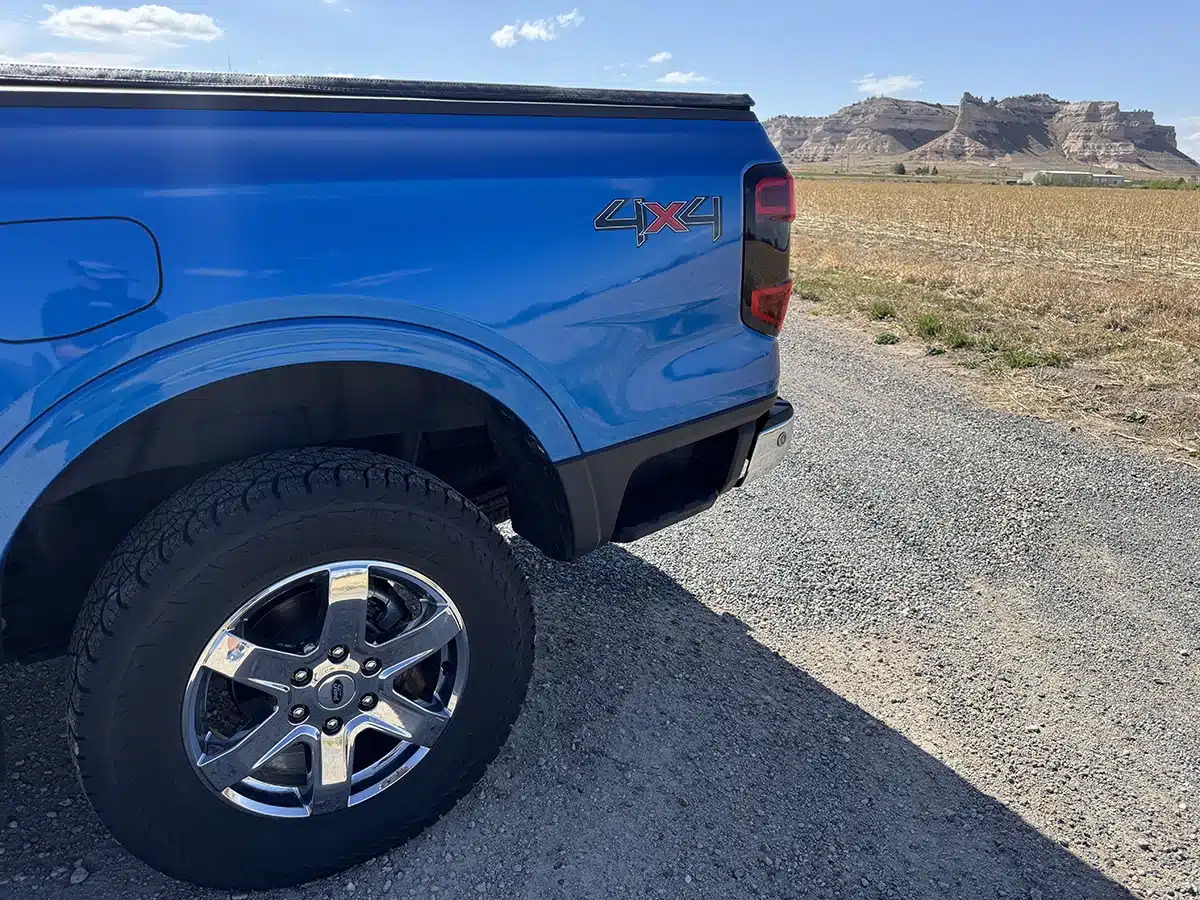
The Ranger leans into everyday usability. Features like the integrated bed step and aluminum bed construction make it easier to load and unload cargo. Small touches like clamp points for securing lumber and the built-in bed step add real-world practicality.
The Tacoma takes a different route with its composite bed, which resists dents and corrosion. It also adds a power tailgate with key fob or side-bed button operation, a feature that proves more useful than expected when your hands are full. However, the Tacoma’s towing setup requires a longer hitch pin due to its design, which can be an inconvenience if you don’t have one handy which I’m now 0-2 with Tacoma trucks I’ve reviewed.
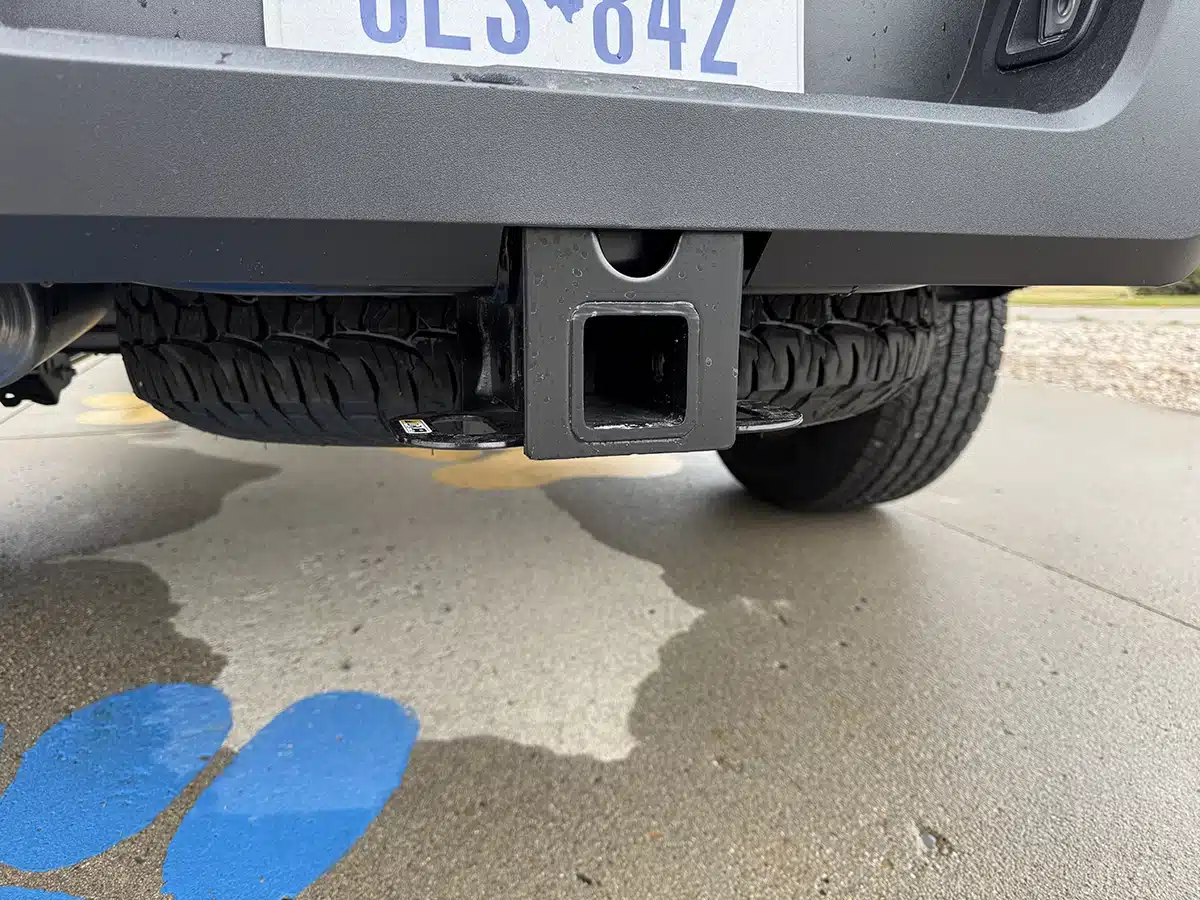
Towing capacity favors the Ranger, topping out around 7,500 pounds versus roughly 6,500 pounds for the Tacoma. Plus, the Ranger has 300 pounds more payload than the Tacoma we tested. Considering one is a Lariat with leather and the other is an off-road Tacoma with skid plates and the off-road equipment, the extra gear should be a wash between the two for adding weight to the curb weight of both trucks.
Interior Comfort and Rear Seat Space
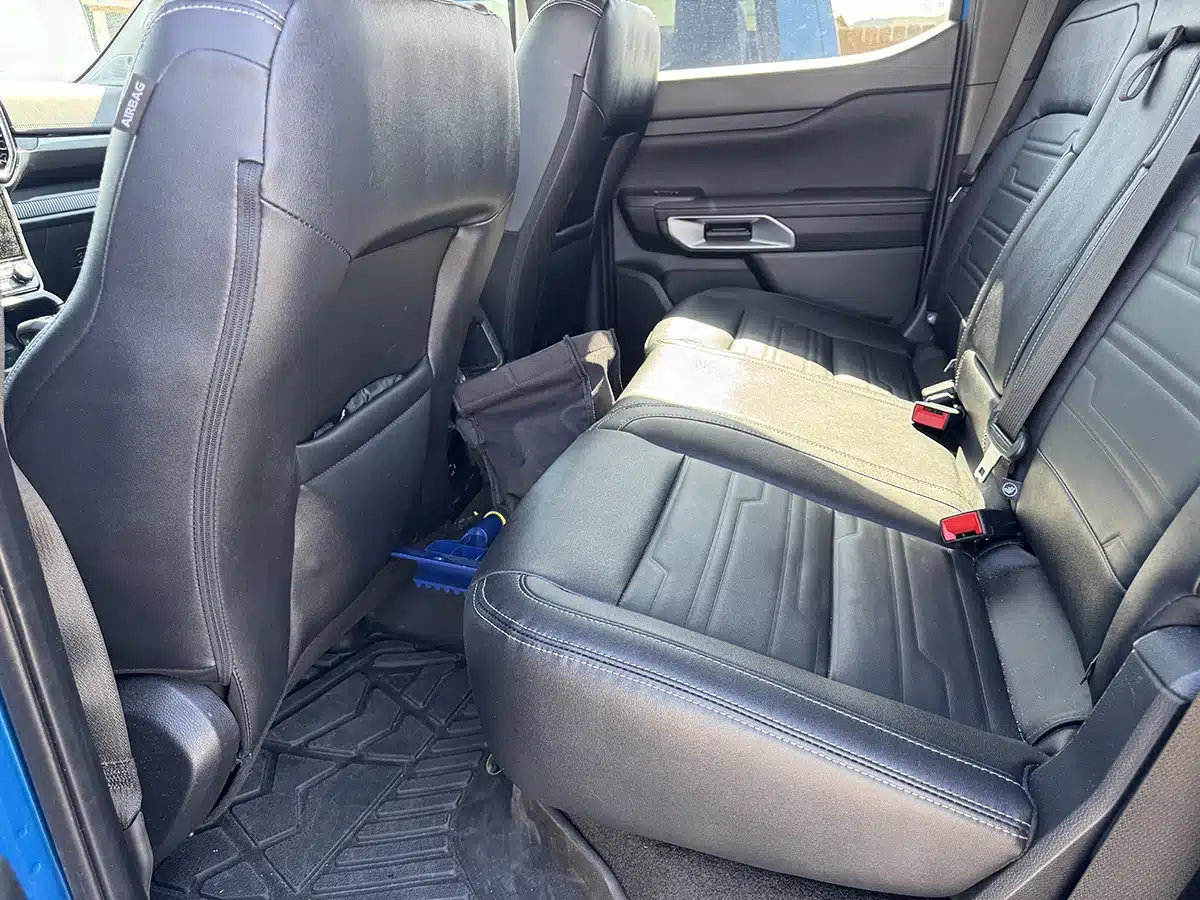
Interior space is one of the biggest differentiators. Both trucks struggle with rear seat room, a common compromise in midsize pickups designed to fit typical U.S. garages.
The Ranger stands out with better packaging. Thoughtful design elements, like seat indents behind the driver and passenger seats and headliner indents, create noticeably more usable space for rear passengers. It is simply easier to sit behind yourself in the Ranger than in the Tacoma.
Up front, both trucks offer modern tech with large screens, wireless charging, and digital displays. The Ranger emphasizes convenience features like zone lighting (a handy feature for camping or loading items at night letting you turn on different zones of lighting around the truck), while the Tacoma leans into aforementioned off-road capability items.
Daily Driving vs Long-Term Ownership
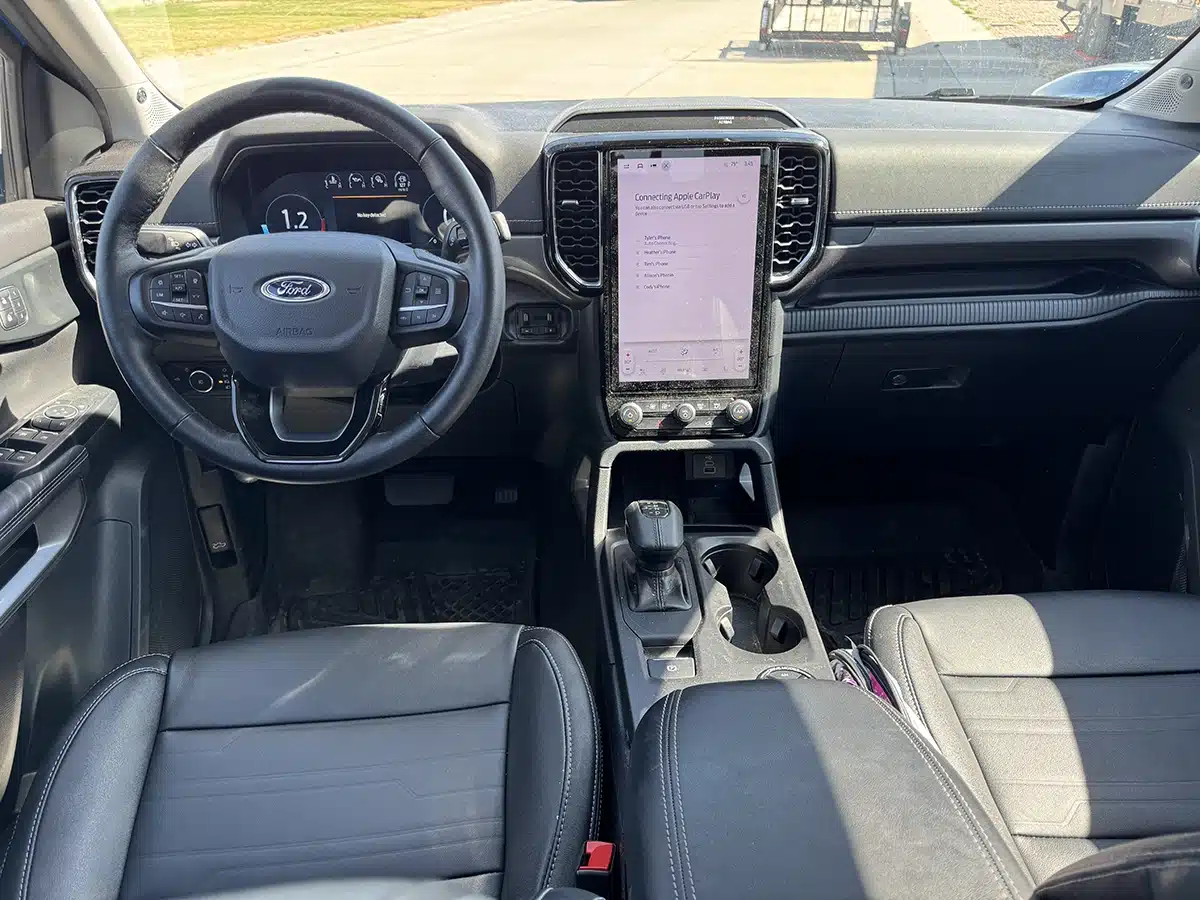
This is where the decision becomes clear. The Ranger is the better daily driver, it rides smoother, feels more refined and is more comfortable on long trips. It is the truck you want for commuting, family use and highway miles.
The Tacoma, however, is built with longevity in mind. It has a more rugged, truck-like feel, uses materials that tend to wear better over time aka harder plastic in key spots, and has a strong reputation for reliability and resale value.
There is a tradeoff. The Ranger may offer a better driving experience today, but it comes with more recalls and potential technology issues. The Tacoma costs more upfront but tends to hold value and deliver fewer headaches long term.
2026 Toyota Tacoma vs Ford Ranger Final Takeaway
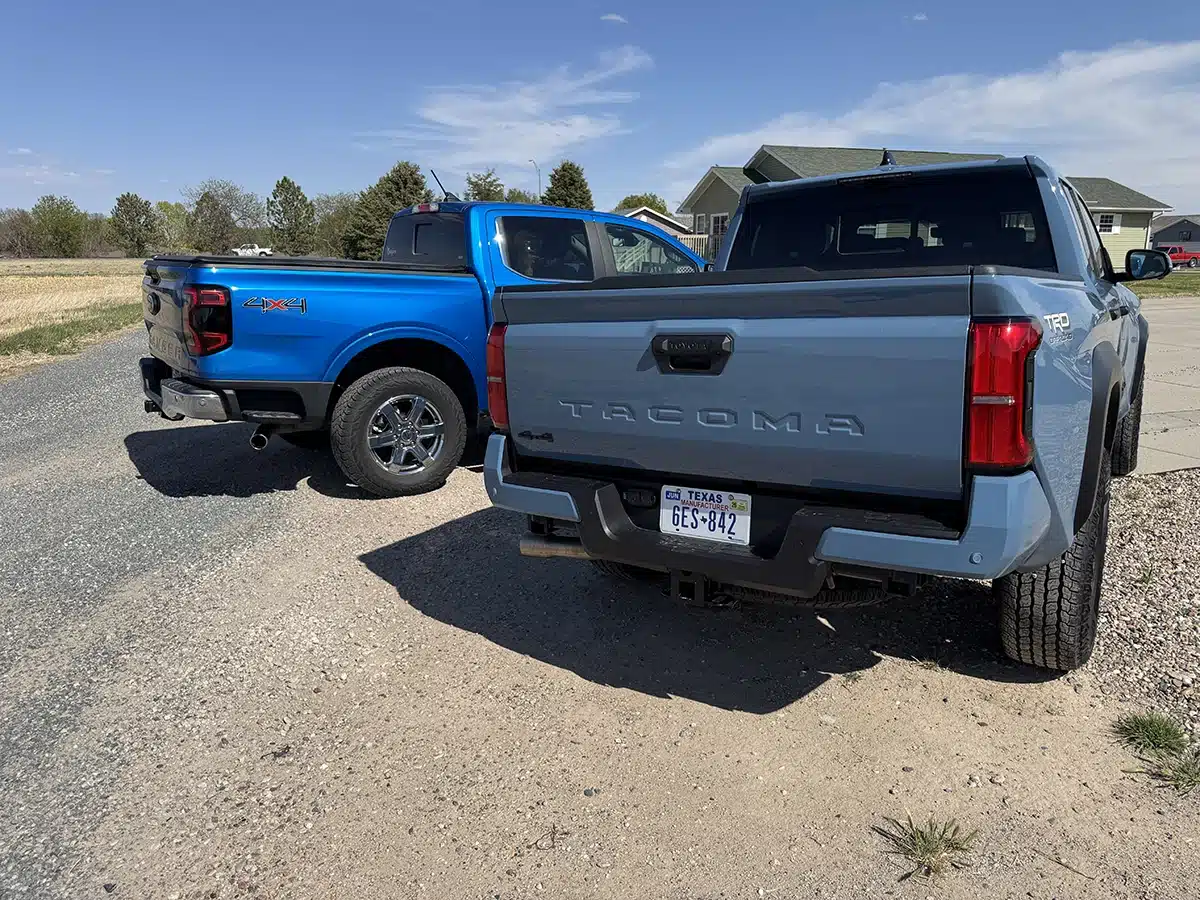
These trucks target different buyers. The Ranger is for those who want comfort, more payload and towing performance and more technology features in a midsize package. The Tacoma is for buyers prioritizing durability, resale value and off-road capability.
Neither is objectively better, the right choice depends on whether you value daily comfort or long-term ownership confidence.







No replies yet
Loading new replies...
Administrator
Join the full discussion at the Forum Pickuptrucktalk →