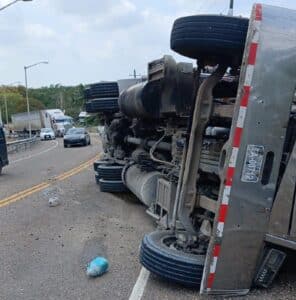
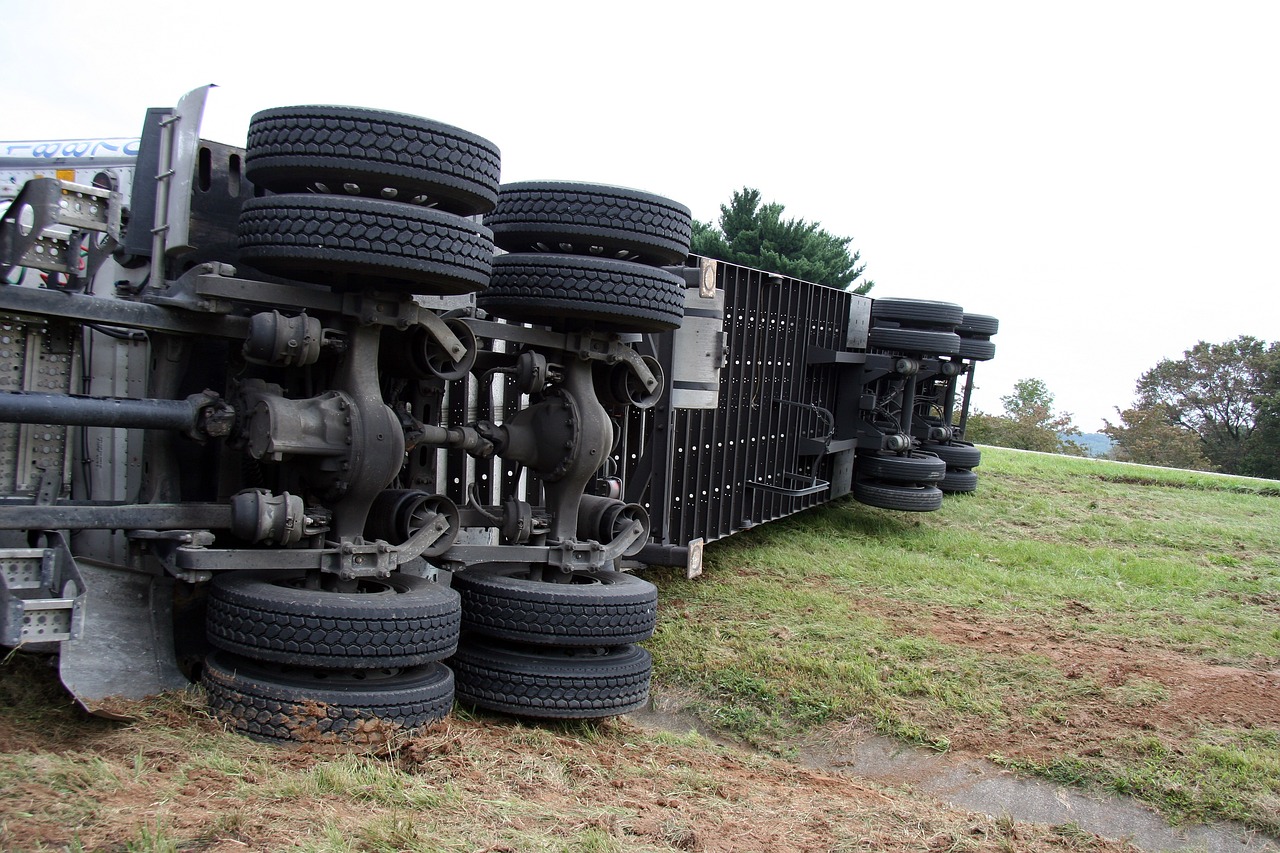
A collision involving a commercial truck is a fundamentally different legal event than a standard car accident. When one vehicle is a commercial truck operated by a professional driver working for a trucking company, the legal landscape expands dramatically — in terms of who may be liable, what evidence is available, and how aggressively the opposing side will defend the claim.
Trucking companies are sophisticated entities with significant financial interests in limiting exposure, and they begin protecting those interests immediately. Retaining an experienced Santa Maria truck accident attorney as early as possible gives injured victims the advocacy they need to counter that response and pursue full compensation.
The Trucking Company’s Response Begins Before Yours
The trucking company’s response does not wait for the victim to decide whether to pursue a claim. Within hours, companies typically dispatch accident response teams — investigators, attorneys, and insurance representatives — to the scene or hospital. These teams gather evidence, document the scene, interview witnesses, and begin building a defense narrative before the victim has considered legal representation.
This response is a deliberate strategy to shape the evidentiary record. Evidence supporting the victim’s claim can be analyzed and reframed before independent preservation is possible. Witnesses are interviewed while the company’s preferred account is fresh. Without a legal hold demand, operational records may begin routine deletion cycles. Understanding that this process is already underway is the strongest argument for retaining representation without delay.
Multiple Parties May Share Liability
A defining feature of truck accident litigation is the potential involvement of multiple liable parties. The driver is the most obvious defendant, but the trucking company may be independently liable for negligent hiring, training, supervision, or systemic safety regulation violations. Cargo loading companies, maintenance contractors, truck manufacturers, and shippers who imposed unrealistic delivery schedules may each carry responsibility.
Identifying all liable parties has direct consequences for total compensation. Each carries their own insurance, and in catastrophic injury cases, the combined coverage of multiple defendants may be the only way to fully compensate the victim. An attorney conducting a thorough investigation from the outset ensures every source of responsibility and recovery is pursued.
Federal Regulations Create a Higher Standard of Care
Commercial trucking is heavily regulated, and the Federal Motor Carrier Safety Regulations establish specific requirements for hours of service, rest periods, vehicle inspection, cargo securement, driver qualification, and drug and alcohol testing — all designed to reduce accidents caused by fatigue, mechanical failure, and other preventable factors.
When a company or driver violates these regulations and a crash results, that violation is evidence of negligence significantly strengthening the victim’s case. Establishing violations requires obtaining compliance records, driver logs, inspection reports, and testing documentation — records that federal law requires companies to maintain. An attorney who understands this framework can identify the specific violations most likely present and obtain the records before they are lost or destroyed.
Electronic Data From the Truck Is Critical Evidence
Modern trucks are equipped with electronic systems generating data about vehicle operation before, during, and after a crash. Electronic logging devices record hours and duty status. Event data recorders capture speed, braking, and throttle position in the seconds preceding impact. GPS systems track route, speed, and location. Forward-facing cameras record roadway conditions and driver actions.
This evidence can be decisive in establishing how the accident occurred and whether fatigue, distraction, or maintenance failures contributed. However, electronic data is subject to overwriting — event data recorders store limited windows, and without a legal hold demand, records may be purged routinely. A spoliation letter requiring evidence preservation is one of the first critical steps an attorney takes, and it must happen quickly to be effective.
The Trucking Company’s Insurance Coverage Is Substantially Higher
Federal law requires commercial trucking companies to carry substantially higher minimum insurance coverage than private vehicle owners, reflecting the greater potential for catastrophic injury. Minimums vary by cargo type and vehicle weight but are uniformly higher than passenger vehicle requirements — sometimes by an order of magnitude. In serious injury cases, this higher coverage is directly relevant to the victim’s ability to recover full compensation.
However, higher limits do not automatically mean higher settlements. Trucking insurers are among the most aggressive defenders of commercial accident claims, deploying significant legal and investigative resources. Substantial coverage incentivizes the insurer to invest heavily in limiting payouts rather than negotiating fairly. Victims represented by attorneys without specific trucking litigation experience face a structural disadvantage against this level of opposition.
Driver Fatigue and Hours of Service Violations Are Common Factors
Driver fatigue is one of the leading contributing factors in serious truck accidents. Despite federal hours of service regulations, violations — through falsified logs, dispatcher pressure to meet delivery deadlines, or deliberate circumvention of electronic logging — remain common and are frequently central to truck accident litigation.
Establishing violations requires analyzing electronic logging records, comparing them against GPS data and fuel receipts that reveal discrepancies, and examining dispatch records for evidence of unrealistic schedules. Expert fatigue analysis may also be appropriate when physical evidence suggests impaired reaction times. Building this aspect of the case requires both records and expertise to interpret them — most effectively assembled by an attorney specializing in truck accident litigation.
Why Truck Accident Cases Require Specialized Representation
The combination of federal regulatory complexity, multiple defendants, critical electronic evidence, aggressive insurer opposition, and high damages values makes truck accident litigation among the most demanding in personal injury law. Effective attorneys bring specialized knowledge encompassing federal motor carrier regulations, commercial vehicle technology, accident reconstruction methodology, and the specific defense tactics trucking insurers deploy.
Injured victims in Santa Maria and throughout California deserve representation fully equal to their case’s complexity and stakes. The decisions made in the first days — about evidence preservation, liability investigation, and strategy — set the trajectory for everything that follows. When the trucking company gets involved, the rules change, and having an attorney who knows those rules from the outset is the most important advantage an injured victim can secure.