

The Trump EPA announced today they are removing the DEF sensor for diesel engines in yet another move to provide financial relief for farmers and truckers.
Specifically, the EPA is stating the removal of the urea quality sensor (UQS). This sensor has been a constant irritant for diesel engine owners leading to reduced performance on various occasions. Instead, the EPA supports a more reliable NOx sensor to achieve the same results.
What is a DEF UQS sensor?
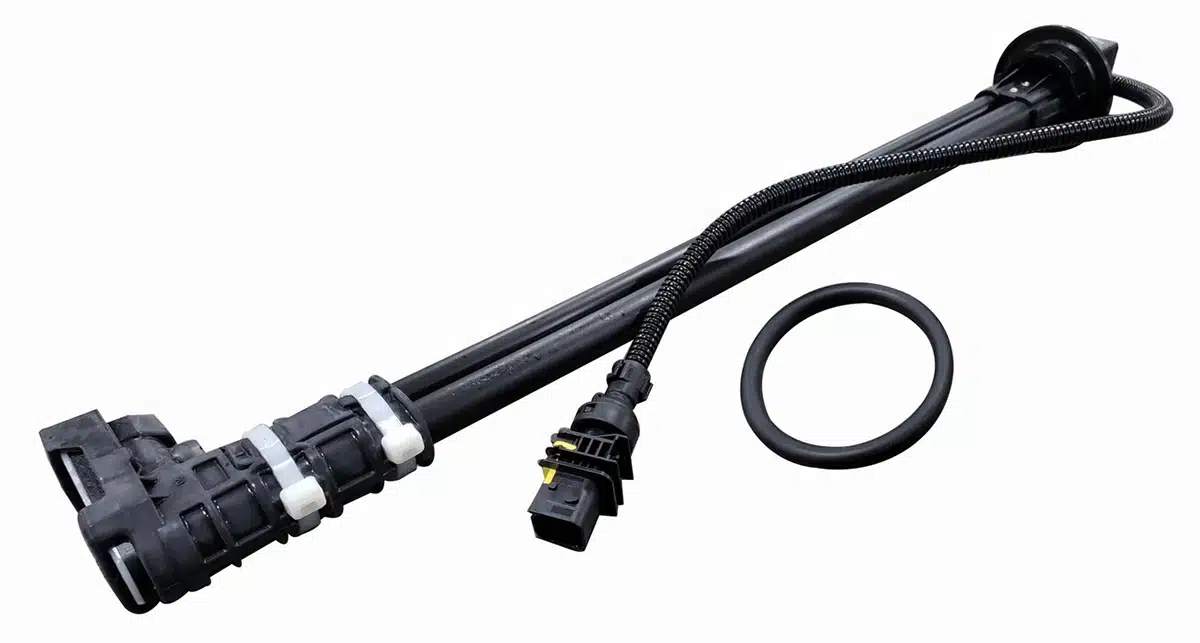
Back in 2013 for on-highway diesels, 2014 for nonroad applications, the EPA laid out guidance on how automakers could meet its adjustable parameter rules for SCR systems. The agency basically said manufacturers could start using urea quality sensors (UQS) in new trucks by the 2016 model year (and 2017 for off-road equipment) to verify Diesel Exhaust Fluid quality.
At the same time, the EPA made it clear this wasn’t the only path. Automakers had already been using NOx sensors successfully to meet the same requirements in earlier model years, and continuing down that road was still an option.
Fast forward to today, and the industry has largely gone one direction. Nearly every manufacturer ditched NOx-based monitoring in favor of UQS. Why? A UQS can directly measure DEF concentration and quickly determine if the fluid has been diluted or contaminated, something NOx sensors can only infer after the fact through emissions performance.
Here’s where things get interesting. The Engine Manufacturers Association says UQS units are now among the highest failure-rate components in modern SCR systems. That lines up with what a lot of owners are seeing, fault messages, countdowns and trucks going into derate even when the DEF tank is full.
EMA’s position is pretty straightforward: relying more on alternate methods, like NOx sensors, could make these systems more robust and cut down on unnecessary warnings and inducements that frustrate owners.
Manufacturers Reported Warranty Claims Show These Failures

This action by the EPA is a result of the collection of warranty repairs it requested from manufacturers in February, 2026.
“The EPA’s preliminary assessment of warranty data submitted to the Agency in response to information requests that the Agency sent to diesel engine manufacturers further suggests that UQS failures are a significant source of warranty claims and DEF-related inducement,” the agency stated in a letter to manufacturers.
It also said this move wouldn’t require a large overhaul for manufacturers and could be a software solution that the EPA would allow under the Clean Air Act.
Historically, making changes or tampering with the emissions equipment of gas or diesel engines is a Federal crime.
Adjustable Parameters for Diesel Engines?
Under federal rules (40 CFR Part 1039), the EPA gets to decide what counts as an “adjustable parameter” when it comes to emissions. In simple terms, if something on the engine can be changed, and that change could impact emissions, it’s fair game.
The EPA looks at a few key things:
- Can the parameter physically be adjusted?
- Would changing it affect emissions?
- Is it likely someone will actually mess with it in the real world?
If the answer is yes, it gets flagged. Now, manufacturers can argue a parameter shouldn’t count, usually if it’s hard to access or if changing it would wreck engine performance anyway. But if the EPA decides it is adjustable, then they set the acceptable range and evaluate how well the OEM has locked it down with physical stops, seals or software limits.
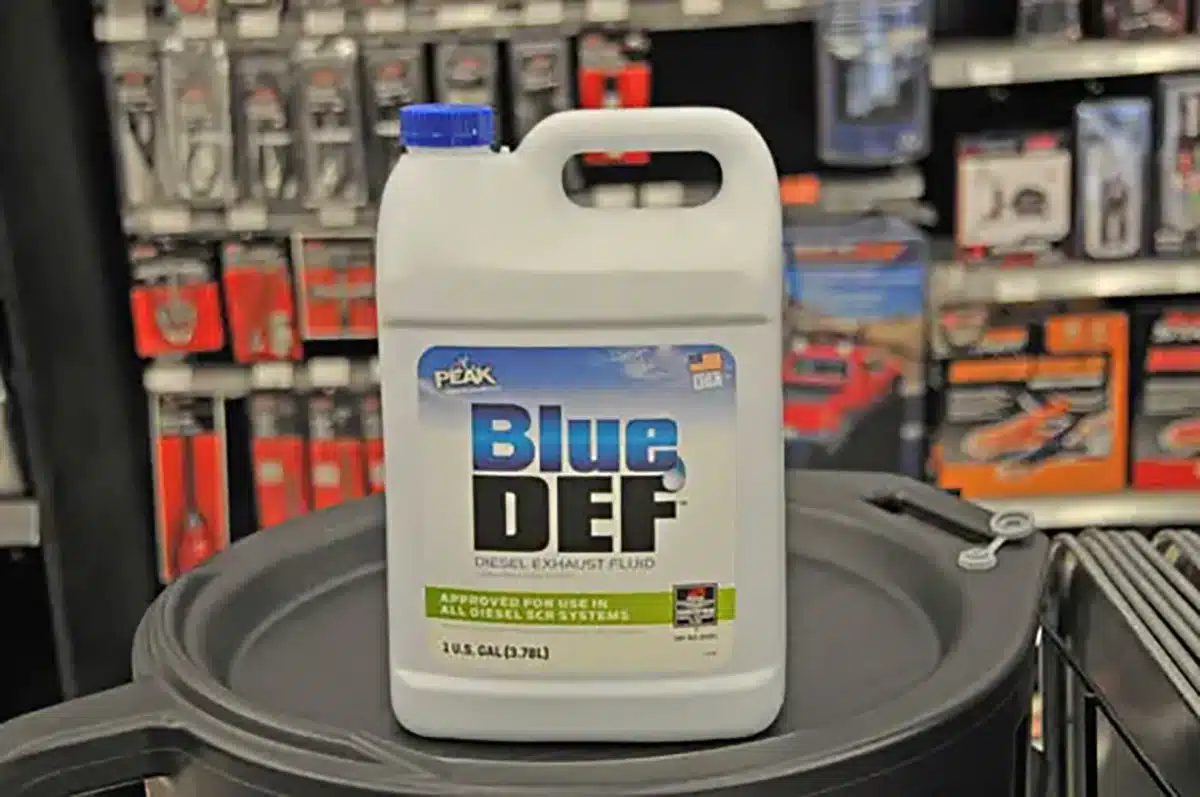
This matters a lot for modern diesels running SCR systems. These engines rely on injecting DEF into the exhaust stream to control NOx emissions. That DEF has to meet a very specific spec, typically the industry standard ISO 22241, which calls for a 32.5% urea mix. The entire system is calibrated around that concentration.
Here’s the catch and this is where things go sideways.
Unlike most engine parameters, DEF quality is something the owner directly controls. You’re filling that tank yourself. That means there’s a real possibility someone puts in the wrong fluid whether it’s watered-down DEF, contaminated fluid or something else entirely like the fluid is bad.
And when that happens, NOx emissions can spike pretty quickly.
Because of that, the EPA has already made the call: DEF quality is an adjustable parameter. Not because there’s a knob you can turn under the hood, but because in the real world, operators can and do change it just by what they pour into the tank.
That’s really the foundation behind why modern diesel trucks are so aggressive about monitoring DEF quality and why you’re seeing all the warnings, faults, and derates tied to it.
How the EPA Will Measure DEF Quality Now
When a diesel engine is going through certification or even when a manufacturer rolls out a software update or field fix the EPA takes a hard look at how well the system prevents DEF tampering.
If the engine starts failing emissions before it detects the bad DEF, say emissions go out of spec at 26% urea, but the system doesn’t catch it until 16%, that’s a problem. The EPA will push the manufacturer to tighten up detection so the system catches bad fluid sooner.
In other words, the earlier the system detects diluted DEF, the easier it is for the manufacturer to stay compliant.
There is a little wiggle room. The EPA will allow a very small “gray zone” where emissions might not meet standards before detection kicks in, but only if it’s so narrow that it’s basically impossible for an owner to intentionally hit that exact concentration.
For example, if the system detects issues at 21%, but emissions fall out of spec at 26%, that gap might be acceptable, because it’s unlikely someone can precisely mix DEF to land in that window.
But if that gap gets too large? The EPA won’t buy it. At that point, it becomes something an owner could realistically target, intentionally or not, and the system isn’t considered robust enough.
Here’s How NOx-based Monitoring Systems Will Work
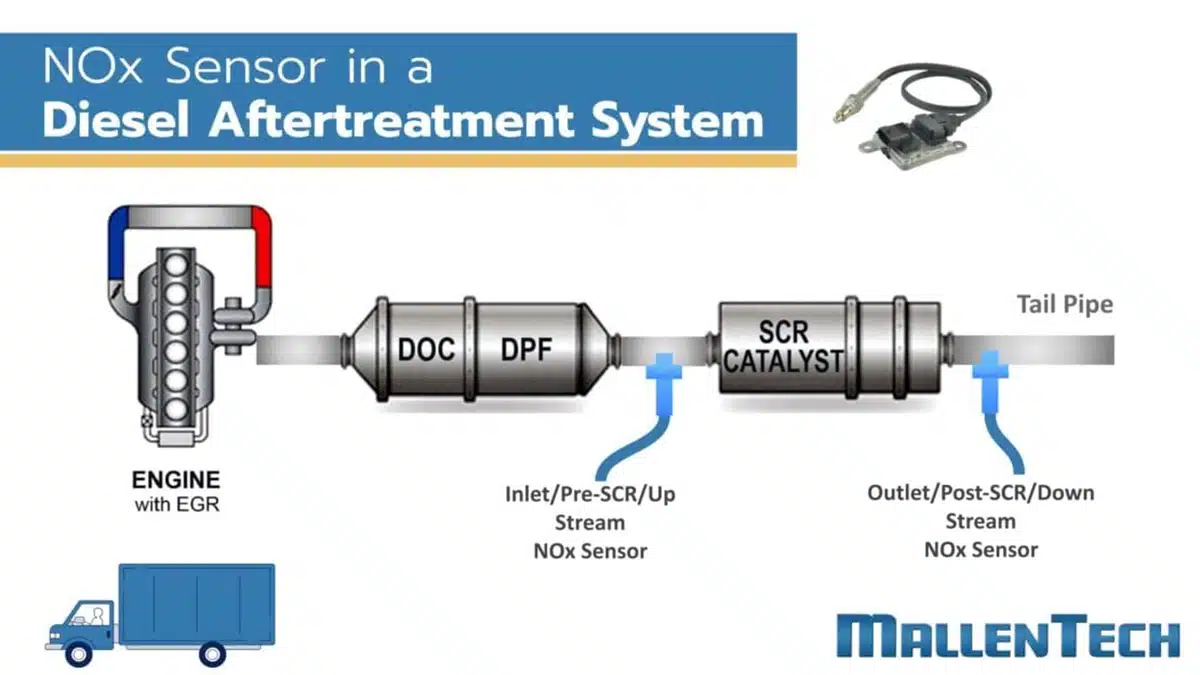
Instead of measuring the fluid directly, these systems look at what’s happening in the exhaust. They track NOx levels before and after the SCR catalyst and calculate how well the system is reducing emissions. If that efficiency drops off more than expected, the truck assumes something’s wrong usually bad or diluted DEF.
It works, but not perfectly.
NOx sensors can catch a lot of DEF issues, but not every scenario. The EPA has still approved these setups as long as any “missed” cases are small enough that it’s unlikely an owner would ever hit that exact situation.
The Savings For Farmers and Truckers

How does any of this save money for farmers and truckers?
It comes down to not having downtime or another thing to repair for a diesel engine.
When the DEF UQS sensor isn’t working properly, the diesel engine will derate resulting in less power and forced slower speeds. This additional downtime or reduced performance costs operators time and money.
“Small-business truckers have dealt with faulty diesel exhaust fluid systems for years, facing unexpected shutdowns and costly repairs that needlessly take trucks off the road. These are serious operational and safety concerns. We appreciate EPA Administrator Zeldin for listening to the concerns of America’s truckers and issuing commonsense guidance that keeps our supply chain moving,” stated the Owner-Operator Independent Drivers Association, the nation’s largest trade association representing small business truckers, in a statement.
The EPA Administrator Zeldin said this move was in direct response to people’s requests for help.
“Failing DEF systems are not an east coast or west coast or heartland issue; it is a nationwide disaster. I have heard from truck drivers, farmers, and many others complaining about DEF and pleading for a fix in all 50 states I visited during my first year as EPA Administrator,” said EPA Administrator Zeldin. “Americans are justified in being fed up with failing DEF system issues. EPA understands this is a massive issue and has been doing everything in our statutory power to address this. Today, we take another step in furthering our work by removing DEF sensors. Farmers and truckers should not be losing billions of dollars because of repair costs or days lost on the job.”
Removing this sensor doesn’t mean the diesel emissions regulations are going away, instead it is simply a different way to measure those emissions and make sure the EPA is meeting its air quality goals.
The EPA was very direct in this regard with this statement:
“Today’s announcement does not weaken or remove emissions standards. Instead, it ensures that those standards are met in a way that actually works in the real world. EPA remains committed to protecting human health and the environment while ensuring that the Americans who feed, clothe, and power our economy are not burdened by unnecessary system failures.”








No replies yet
Loading new replies...
Administrator
Join the full discussion at the Forum Pickuptrucktalk →