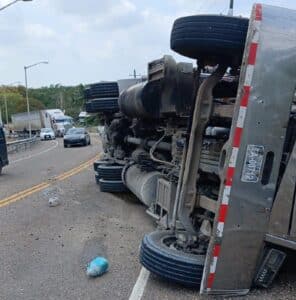

When a serious truck crash happens in Temecula, the evidence often extends beyond eyewitness accounts and vehicle damage. Commercial trucks typically carry electronic systems that record driving data, and many are equipped with interior or exterior cameras. If you are involved in a truck accident claim, understanding how this digital evidence works can shape how liability is evaluated under California law.
What Black Box Data Reveals After a Truck Crash
In a collision investigation, a Temecula truck accident attorney would look closely at electronic control module data, often referred to as black box information, because it can capture speed, braking, throttle position, and seat belt status in the seconds before impact. Most modern commercial trucks contain event data recorders that preserve limited pre-crash information triggered by sudden deceleration or airbag deployment. This data can confirm or contradict statements about whether a driver was speeding, braking, or accelerating.
Under federal regulations issued by the Federal Motor Carrier Safety Administration, commercial carriers must also maintain certain records, including hours of service logs. Electronic logging devices record driving time and rest periods, which can help determine whether fatigue played a role. When combined with crash data, these records provide a deeper understanding of the causes of a truck accident and a timeline of the driver’s activity before the collision. Beyond mechanical data, visual recordings often play an equally significant role.
How Camera Footage Influences Liability
Many trucking companies now install dash cameras or inward-facing cameras in their vehicles. External cameras may show traffic signals, lane position, or the actions of nearby drivers, while inward-facing systems can capture driver conduct such as distraction or drowsiness. In a disputed claim, footage can clarify who entered an intersection first or whether a lane change was executed safely. Time stamps embedded in the recording can also help align the video with dispatch logs, GPS data, and event recorder information.
Camera evidence is not automatically decisive, since visibility, angle, and resolution can affect interpretation. Courts evaluate authenticity and chain of custody before admitting digital footage as evidence. If footage is altered, incomplete, or missing, that absence may raise questions during litigation.
Preservation Duties and Spoliation Risks
After a crash, trucking companies have a legal duty to preserve relevant evidence once litigation is reasonably anticipated. This duty can arise before a lawsuit is formally filed if the company knows a serious injury claim is likely. Destroying or failing to preserve black box data or video footage may lead to court sanctions under California evidence rules. Courts may also consider whether the company followed its own document retention policies when evaluating preservation efforts.
Event data recorders may overwrite information after a set period or after the vehicle is returned to service. Because of that, preservation requests are often sent early in the claims process to prevent data loss. If spoliation occurs, a court may instruct a jury that it can draw negative inferences from missing evidence.
Accessing and Interpreting Digital Evidence
Retrieving black box data usually requires specialized hardware and software, and in many cases, the vehicle owner must consent, or a court order must be obtained. California courts may compel production of electronic records if they are relevant to the claims and proportional to the needs of the case. Privacy considerations can arise, particularly with inward-facing camera footage, though commercial drivers generally have reduced privacy expectations while operating company vehicles. Disputes also arise over who can inspect the hardware first and whether the extraction process could change or overwrite stored information.
Interpreting the data also requires context. A recorded speed reading, for example, must be matched with posted limits, road conditions, and braking patterns to determine whether the conduct fell below reasonable care. Digital evidence supports the broader negligence analysis rather than replacing it.
Digital Evidence and the Bigger Liability Picture
Black box data and camera footage can provide objective insight into what happened in the seconds before a crash, but they are part of a larger evidentiary record. Witness testimony, accident reconstruction, maintenance logs, and regulatory compliance all play a role in determining fault. California’s comparative fault system may still assign percentages of responsibility even when electronic data is available.
When you understand how these technologies function and how courts treat digital records, you are better positioned to evaluate the strength of a truck accident claim. In Temecula and throughout California, electronic evidence has become a central feature of modern trucking litigation.