
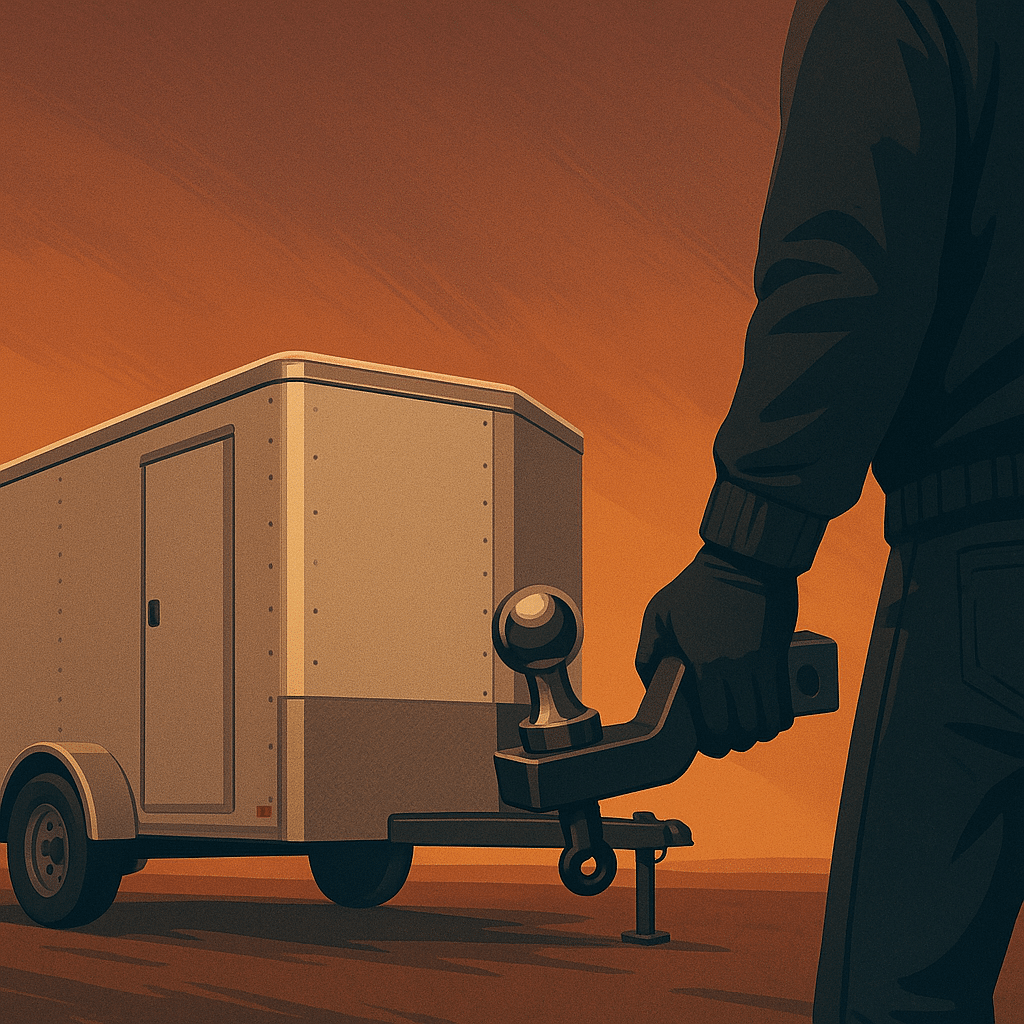
In 2025 the theft of trailer hitches is emerging from the shadows of bigger vehicle-crimes and securing a spot on the radar of homeowners, small-business owners and insurers alike. What once was dismissed as a minor nuisance has transformed into a full-blown trend: trailers and their hitches are being stolen not only for the equipment they carry but for the quick value of the hitch assembly itself.
What “Trailer Hitch Theft” Really Means
Trailer hitch theft often comes down to quick opportunity and easy targets. A thief with a tow-ready vehicle backs up to an unsecured trailer, hooks it up, and drives off with both the trailer and whatever’s inside, unless there’s a heavy-duty hitch lock in place, like those from AMPLock. Unlike modern cars that have immobilizers or alarms, most trailers have no electronic security. That means the barrier to entry is low and the payoff can be high, which is why 2025 saw trailer and cargo thefts accelerate in many parts of the United States.
In practice, “hitch theft” often includes two related situations:
- A trailer is coupled to your vehicle and gets stolen during a stop or overnight.
- A trailer is unattached in a driveway, yard, jobsite, storage lot, or campground and is simply towed away.
In both cases, thieves look for the path of least resistance. If your trailer has visible locks and layered security, most will move on to a softer target. This basic dynamic underpins every prevention step below.
The Numbers Behind The 2025 Trailer Theft Spike
The data we’ve compiled in mid-2025 paints a consistent picture. Cargo theft, which includes stolen trailers and the goods they carry, hit record highs in 2024 and kept climbing into 2025. One widely cited indicator showed cargo theft up 27% year over year in 2024, with another double-digit increase projected through the end of 2025.
In the second quarter of 2025 alone, reports logged a 33% rise versus Q2 2024, and June 2025 specifically saw a 21.9% surge over the prior June.
Holidays were especially risky. During the July 4th week of 2025, average reported thefts were roughly 3x what they had been a decade earlier.
These figures matter for trailer owners because they are about opportunity. Long weekends, closed facilities, busy travel periods, and lots packed with unattended equipment provide exactly the conditions that thieves exploit. Seeing the problem clearly is the first step to addressing it.
Recognize The Summer Season Effect On Trailer Theft
Seasonality is a major factor. Property crime rises during warmer months for many reasons, including more outdoor activity, more travel, and more equipment left in accessible places. Multiple data points tie theft risk to late spring through early fall. Some regions report that close to 40% of yearly vehicle thefts occur from May through August.
For owners, this seasonal picture suggests a simple rule. If you tow or store a trailer between May and August, you should assume an elevated baseline of risk and harden your setup accordingly. The steps below show how to do exactly that.
See How Trailer Thieves Operate And What Stops Them
Thieves favor speed and silence. The most common tactics include:
- Back-up and go: A tow vehicle couples to an unsecured coupler in minutes.
- Defeat simple chains and padlocks: Bolt cutters will beat low-grade hardware.
- Roll-away: If a trailer is on casters or its wheels are free, moving it takes little effort.
Each tactic has a corresponding countermeasure:
- Block coupling with a hardened coupler or hitch lock.
- Use quality, pick-resistant, cut-resistant locks designed for trailer duty.
- Immobilize a wheel with a boot, or chock and lock in ways that resist rolling.
How To Stop Trailer Thieves?
Choose And Fit A Real Hitch Lock
Pick a visible, hardened hitch or coupler lock that is made for your coupler size and style. Good locks do two things at once. They physically block an unauthorized vehicle from coupling to your trailer, and they advertise that you have taken precautions. Visibility matters because many thieves are opportunists.
If the job suddenly looks noisy or time-consuming, they often leave.
What to look for:
- Correct fit for your exact coupler type and size.
- Hardened materials and stout construction that resist prying and cutting.
- A key system that is difficult to pick and not trivial to duplicate.
- Weather resistance to keep the lock functional through seasons.
Add A Coupler Lock And A Wheel Boot
Do not stop at one device. A lock on the coupler tongue, plus a wheel boot on at least one wheel, multiplies the effort required to move your trailer. Thieves often carry bolt cutters for chains, so rely on purpose-built trailer locks rather than light hardware store chains. A wheel boot is especially useful when a trailer is stored off-vehicle. It prevents rolling and makes towing extremely difficult without causing a racket or drawing attention.
Hard-to-Reach Parking And Position-Based Deterrence
Where you park is a security decision. Park in lit, monitored areas when traveling. At home or the shop, park behind gates, inside fenced yards, or in sight of cameras. If feasible, position the coupler inward behind a barrier or a solid object, and place heavy obstacles around the tongue so a vehicle cannot back straight in to couple. Even small changes in positioning can add precious minutes and noise to any theft attempt.
Lock The Doors And Secure The Contents
If your trailer has doors or compartments, use high-quality padlocks and hasps designed to resist prying. Secure valuable items inside with secondary locks or cables. Thieves prefer trailers that pay twice, meaning they can sell the trailer and the tools or recreational gear inside it. If your interior is locked down, the perceived payoff falls while the risk rises.
2025 Is A Wake-Up Call
The rise of trailer hitch theft in 2025 is not anecdote or hype. It is reflected in year-over-year theft increases, summer surges, and local police alerts that point to the same theme. Thieves target unattended trailers because they are easy to move and often carry valuable gear. Owners who respond with visible, layered security shift the calculus. A properly fitted hitch lock, a wheel boot, smart parking, and simple documentation can turn your trailer from an easy win into a risky, time-consuming job for a would-be thief. That is how you reduce exposure during the months when risk is highest.
If you are heading into the busy season, act now. Choose a hardened hitch lock that fits your coupler, add a wheel boot, set a parking routine, and keep your records in one place. Your goal is not to create an impenetrable fortress. Your goal is to make your trailer the hardest possible target in the lot.
Frequently Asked Questions
Do thieves really avoid well-secured trailers?
Yes. Most are opportunists who want low risk and quick exits. Visible locks and wheel immobilizers are as effective deterrents. When there are multiple trailers in a lot, the best-secured one is least likely to be chosen.
Is a hitch lock alone enough?
A hitch lock is a strong start, but layering matters. A coupler block plus a wheel boot defeats the two fastest theft methods, while parking tactics and lighting raise the bar further. The more time and noise required, the lower the chance a thief persists.
What about insurance considerations?
Insurers track seasonal theft patterns and often see elevated summer claims. Some carriers and local authorities offer prevention tips that echo the steps above. Keeping documentation, photos, and receipts speeds claims handling and can aid investigations.
Are trackers worth it?
Trackers help with recovery and sometimes deter theft when decals or signs announce their presence. They are not a replacement for physical locks but a complement to them. Conceal the device well and test it periodically.
What is the single most important habit?
Lock the coupler every time, even for short stops, and park in places that are hard to access quickly. Small, consistent actions add up.








