
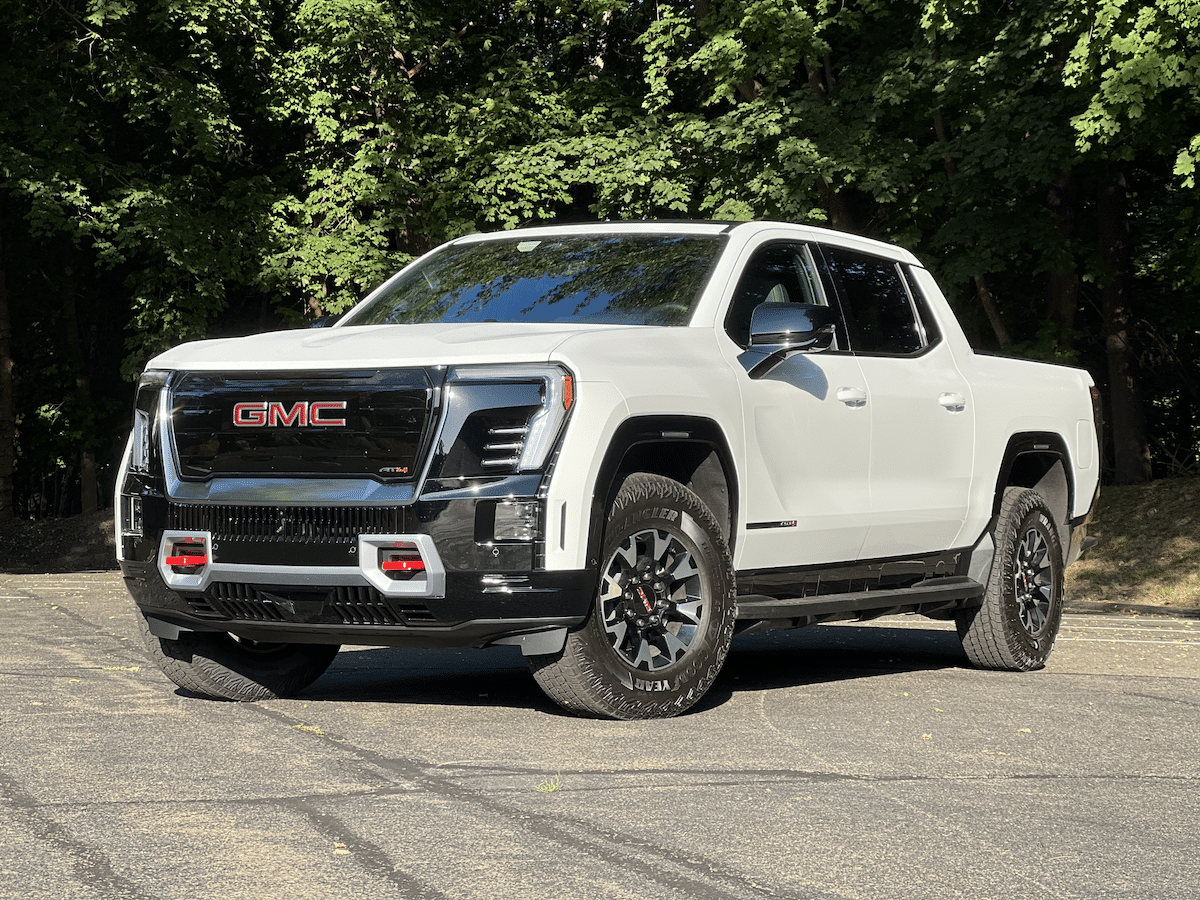
While it’s easy to say “there are no bad new vehicles today,” the reality is that some are better than others. Conversely, some are worse. Much worse. The 2025 GMC Sierra EV AT4 is unfortunately one of those vehicles, with our week-long test revealing a laundry list of criticisms and comparatively little that left us smitten.
For those interested in exploring GMC’s full lineup and comparing models in person, visiting a GMC Dealership League City provides the chance to see the latest vehicles, ask questions, and take a test drive.
Expectations vs reality
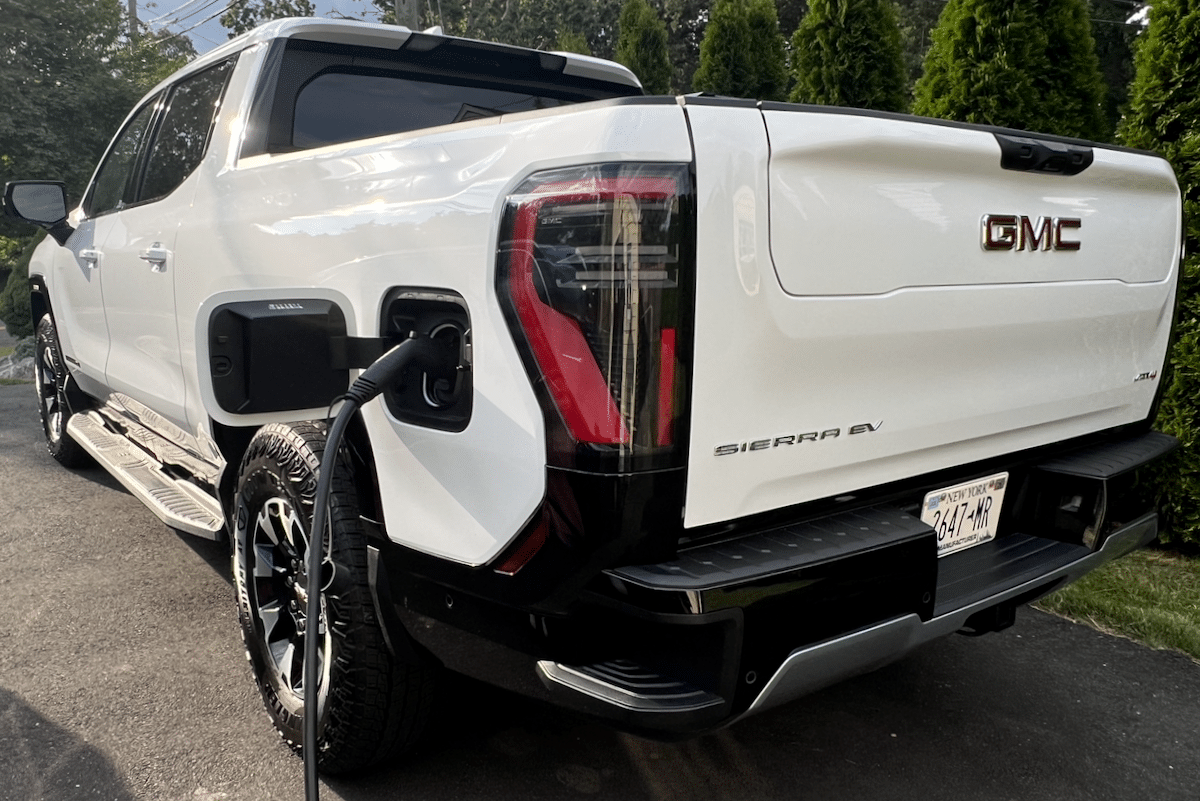
On paper the GMC more than has the goods. The massive 205 kWh battery provides a maximum range of 478 miles (in as-tested Max Range guise) and the 2-motor e4WD system makes 725 horsepower and 775 lb-ft of torque. It has 35” (okay, 34.8”) Goodyear Wrangler Territory AT tires plus an additional 2” of lift for the AT4 trim. There’s Crab Walk mode, Terrain mode for off-road use, and GM’s amazing SuperCruise hands-free driving tech. And yet, the truck’s mouth writes checks that the vehicle as a whole simply can’t cash.
As mentioned, we found many flaws with the GMC Sierra EV AT4. The easiest way to explain these demerits is in the order in which we noticed them, so let’s have at it:
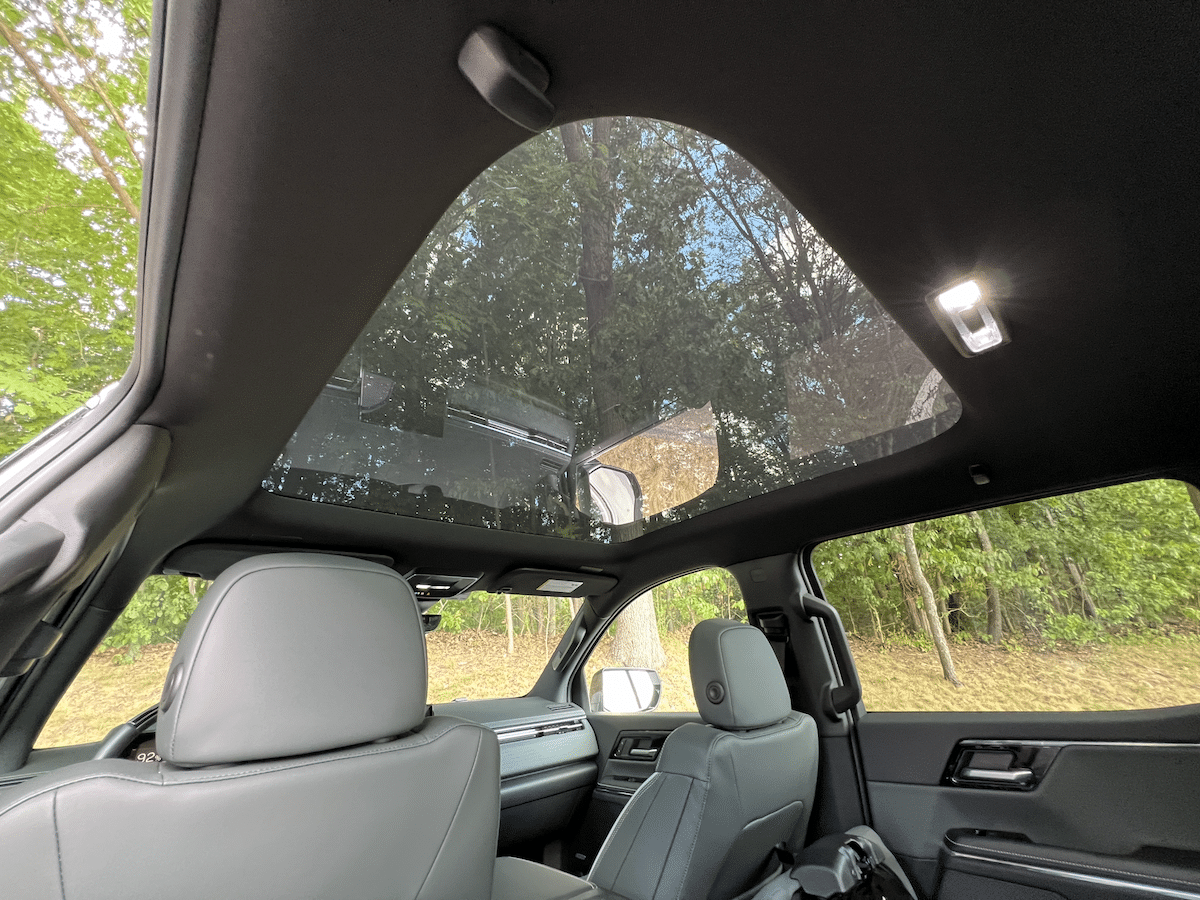
- The panoramic fixed glass roof is permanently transparent and doesn’t offer the ability to tint or frost with the push of a button as is the case in some luxury car applications. This means you always get the impact of heat in some capacity and lose the choice of how much light enters the cabin. Long story short, if you want the cabin dark so your child can nap while on the road, you’re at the mercy of the sky and time of day.
- The doors sound hollow when closed which is surprising given the truck’s heft (and price).
- The Bose stereo is severely underwhelming, sounding tinny and flat. This is accentuated by the truck’s quiet electric drivetrain.
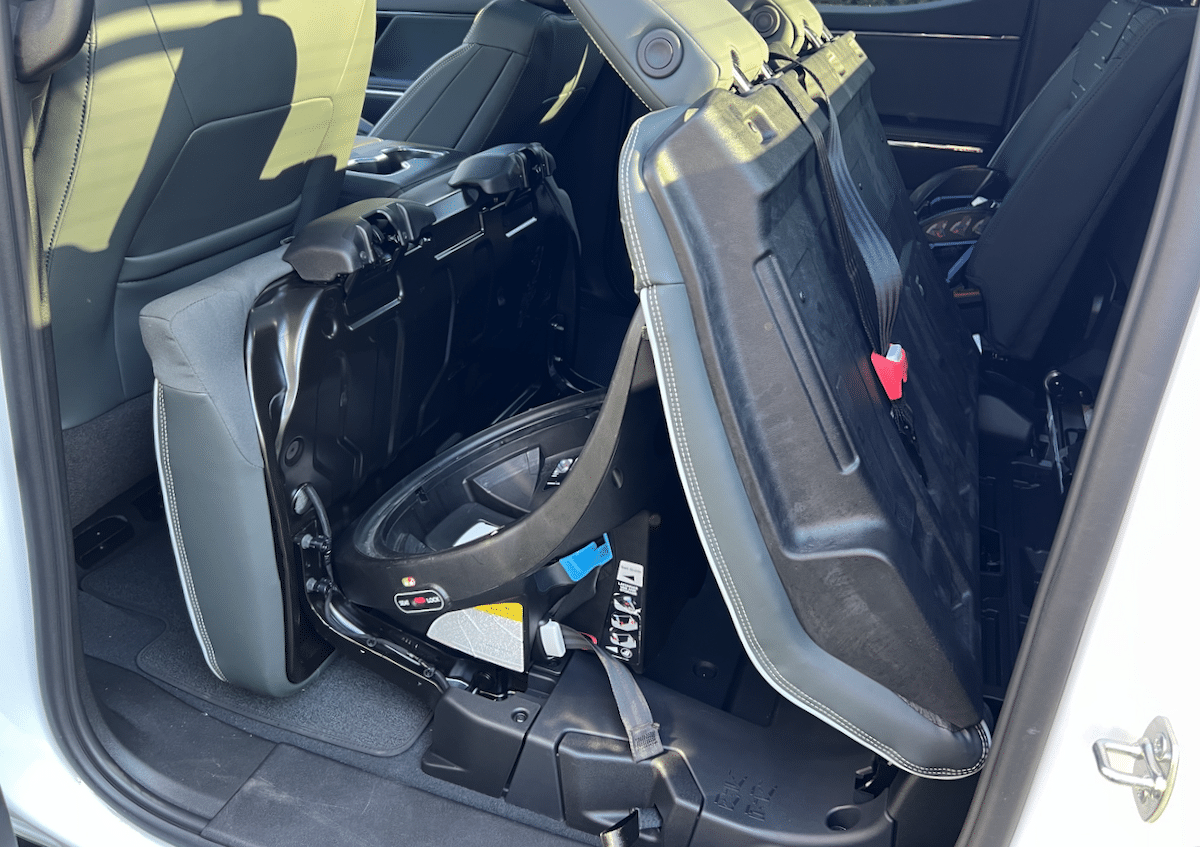
- The anchor point for securing a car seat is the worst setup for such that I have ever experienced by a sizable margin (four-seat coupes included). Doing so requires folding the lower portion of the seat forward, then folding or leaning the backrest so you have access to the tether’s anchor mounting point located on the seatback, balancing the car seat base on top of the lower portion while you thread the hook through the headrest and attach the tether, putting it all back together, then tightening the tether down. Admittedly, this might be a “journalist problem” (i.e., moving car seats weekly versus the normal consumer “setting it and forgetting it”), but using the Sierra EV’s brilliant MultiPro Midgate requires folding the rear seats, which in turn means removing any car seats (and anything/everything else in the way) to use the Midgate. You see where this is going: Utilizing the truck’s built-in features means interacting with this infuriating process.
- The truck’s weight and size are huge detriments, figuratively and literally. Motor Trend weighed their comparable test truck and it ticked in at 8,844 pounds. Consequently, the road manners lack poise and there are a lot of secondary (and even tertiary) motions from the body when hitting bumps while cornering and when coming to a stop. It’s very unpolished feeling, and the idealized “one motion up and down” for a suspension is well out of reach. Similarly, and even despite rear steer, the truck drives as big as it is, and at 233” long with a 145.7” wheelbase (the 2025 Mazda Miata is only 154” long nose-to-tail, for reference), it’s a burden to park. The size and weight also mean that despite the quoted 4.5 second 0-60 MPH time and 12.8 second ¼ mile, it just doesn’t feel fast. Also a result of the mass: Braking from speed on a surface that isn’t perfectly flat or smooth can be slightly unnerving, even when the truck is unladen.
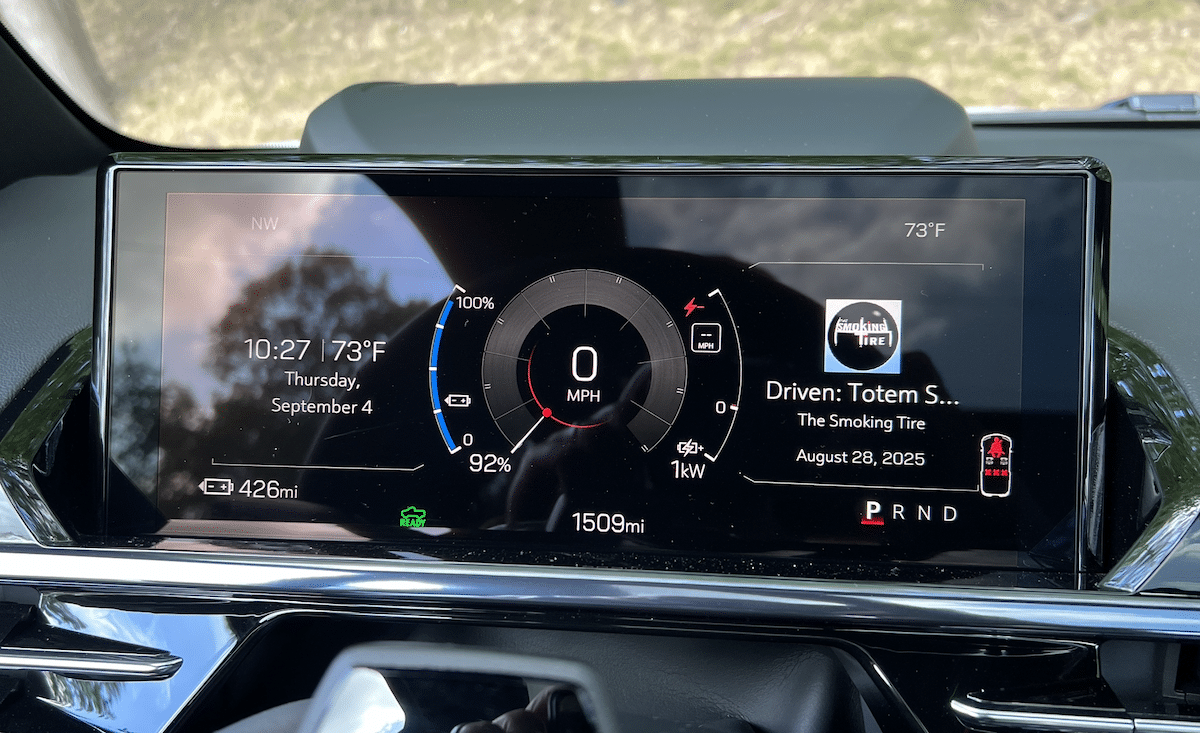
- Though the weight is largely from that enormous battery, the truck is relatively inefficient. It will do 1.5-2.5 kWh per mile, whereas a competitor like the Rivian R1T can manage 2.2-2.5 kWh per mile. It might not seem like much, but add up the cost of charging over a year and it will.
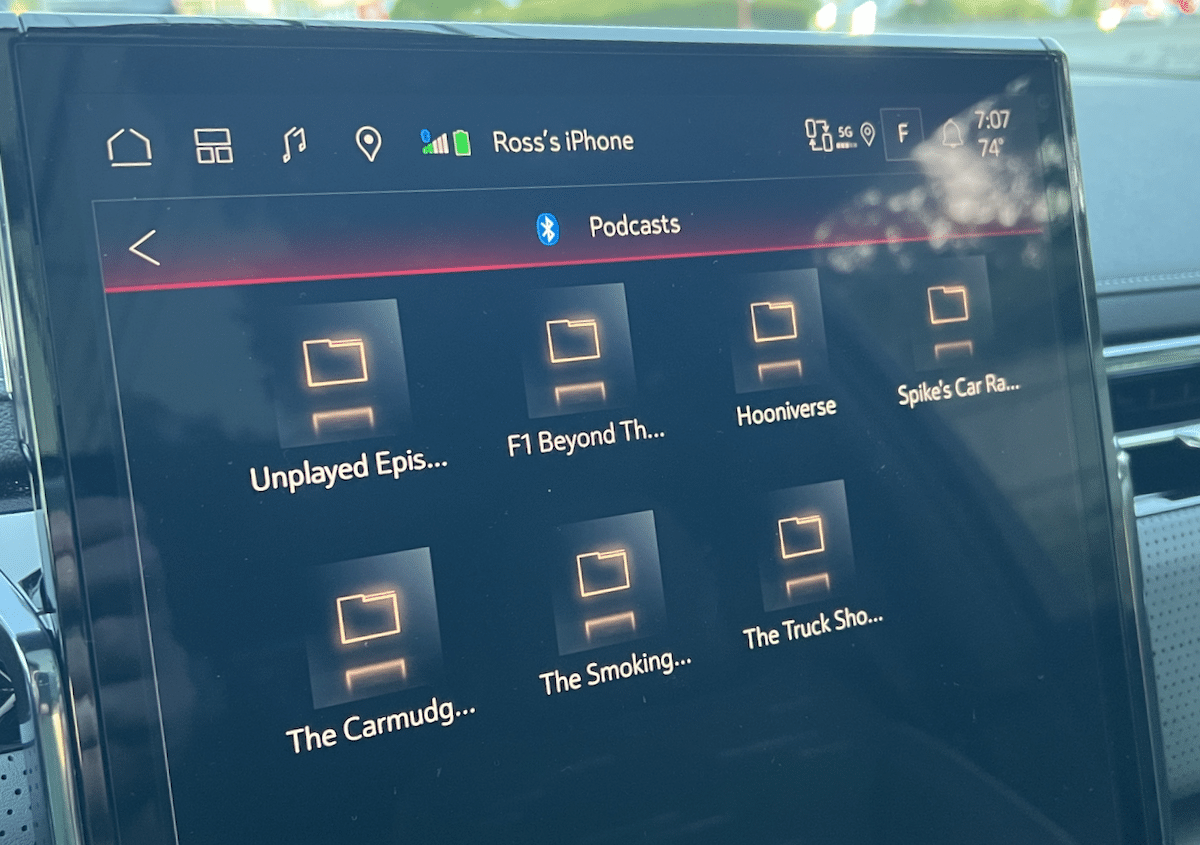
- Like other new GM vehicles, the truck doesn’t have CarPlay/Android Auto. This is a step backwards in every way, mainly ease-of-use. The interface is comically minimalistic; For example, picking between Podcasts or Music streamed from your phone is done via folders that couldn’t have less design to them if they had tried. And should you want to toggle between channels on SiriusXM, prepare to divert your eyes from the road since the channel selector moves from its original spot after you tap it once. As a whole, it just makes you wonder why GM decided to do this in the first place.
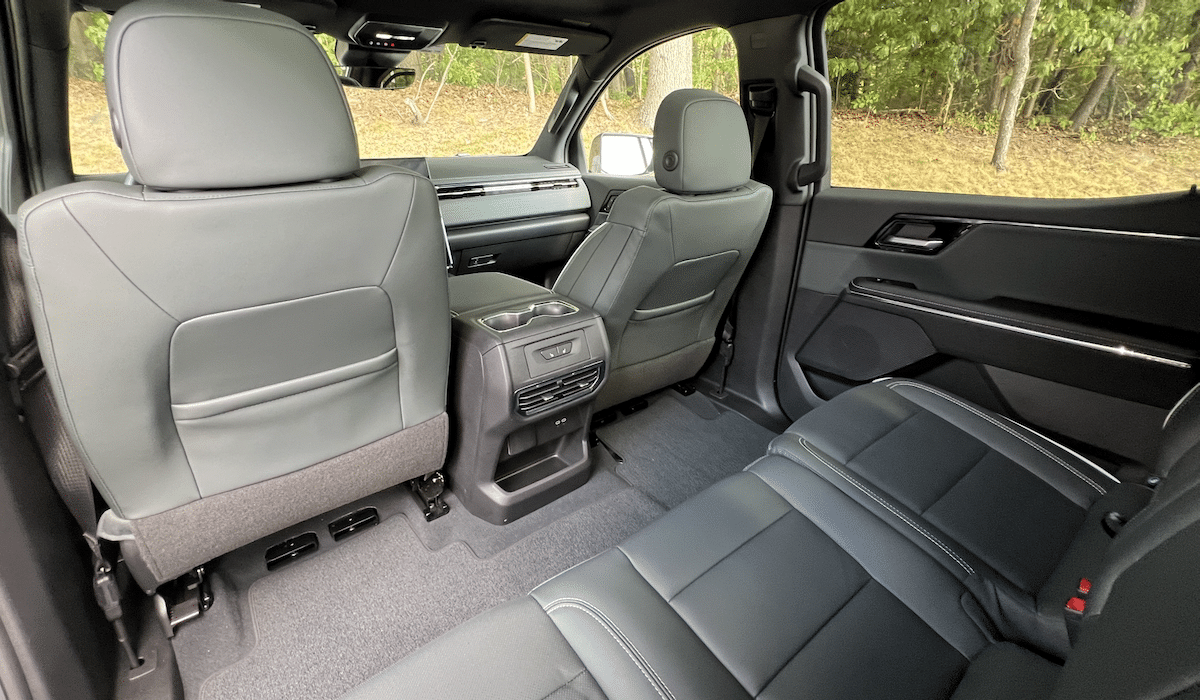
- The interior is an anonymous sea of gray and black, with many materials even in the frequent touch-point zones being hard, cheap plastic.
- There isn’t anywhere near as much storage space up front as there should be given the size of the vehicle, especially considering there isn’t a driveshaft running down the middle of the cabin.
- The passenger side mirror is utterly terrible. It’s really the worst passenger side mirror on any pickup today, and is barely a step above not having a mirror at all.
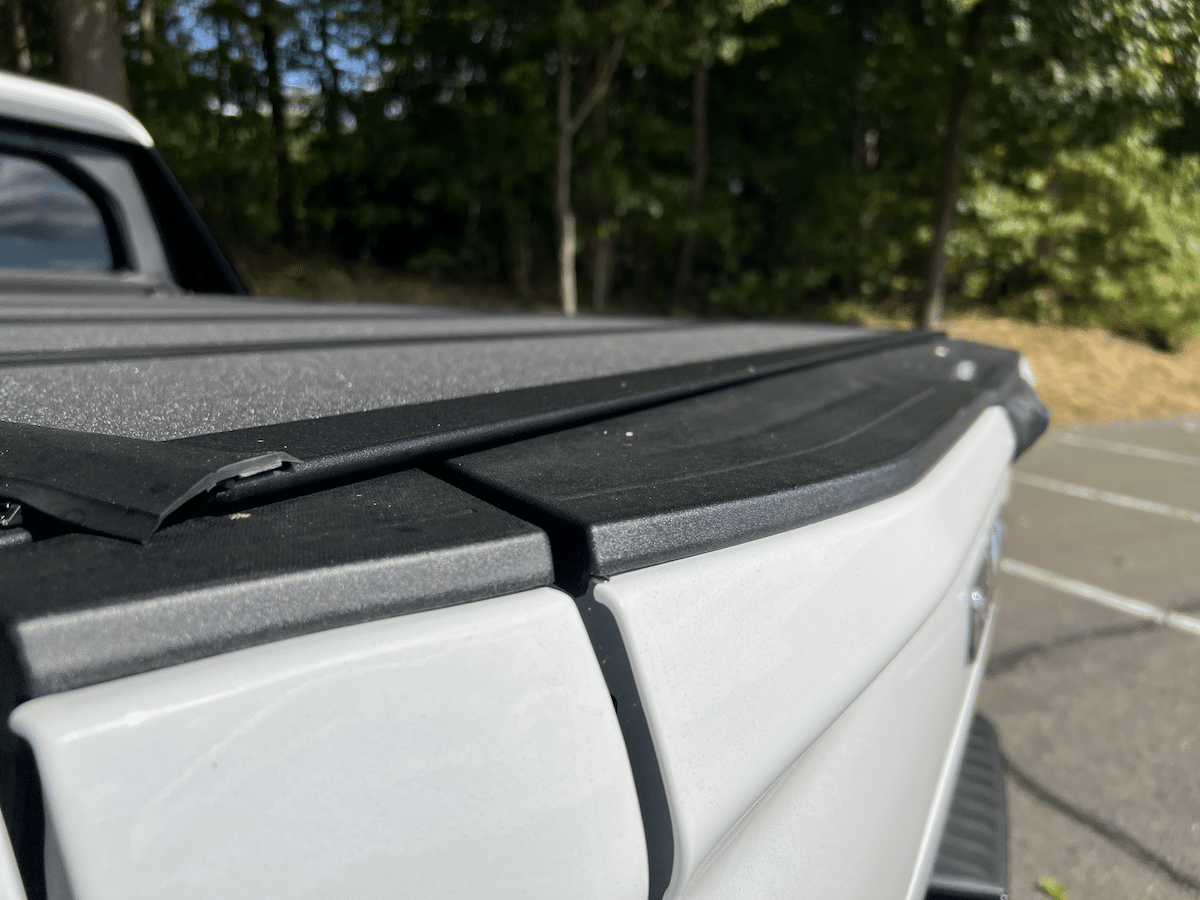
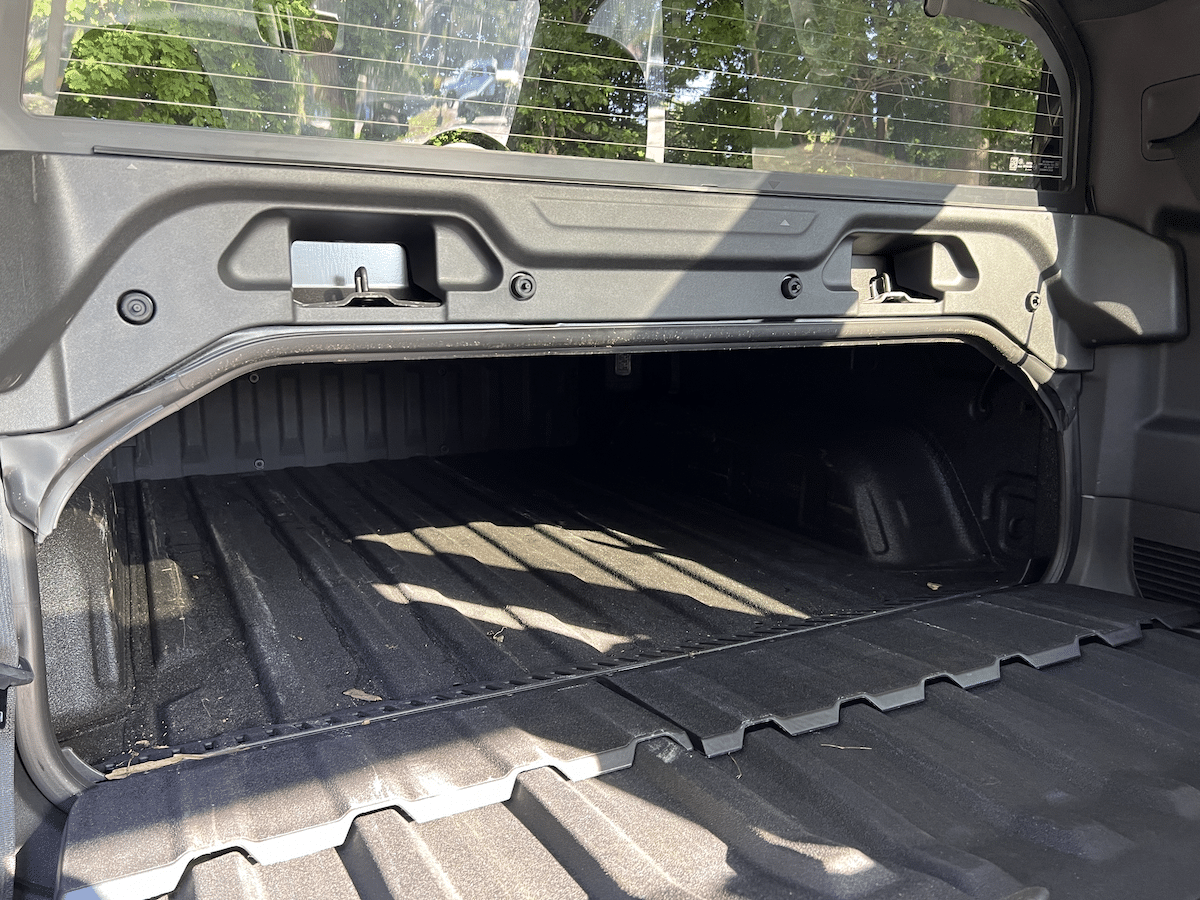
- The $2,250 OEM accessory tonneau cover doesn’t play nicely with the MultiPro tailgate, such that the “inner gate” (GM’s name for it, not ours) can’t be opened unless the entire tailgate itself is unlatched and dropped a bit. It defeats some of the purpose of the drop-down inner gate.
- There is an audible high-pitched screech from the electric drivetrain heard clearly with the Midgate down in the 0-20 MPH range.
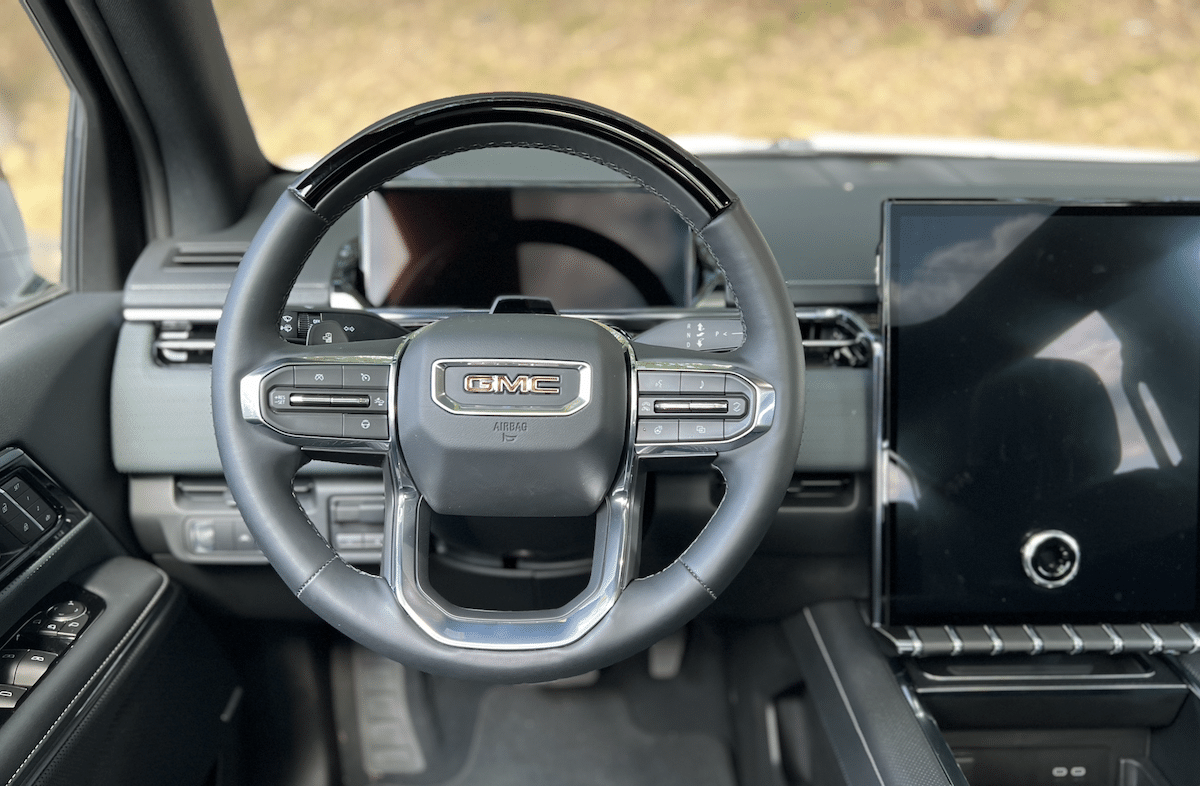
- There’s no ignition or on/off switch, which presents its own gambit of problems. Let’s say you have the key in your pocket and exit the vehicle; that means the truck thinks you’re done driving and it’s time for it– and all of its convenience and comfort systems– to shut off. So if the defogger or HVAC were intended to be left running when you exit the vehicle, everything shuts off once the door is closed. Allegedly there’s a workaround for this (pushing the brake pedal a certain number of times prior to exiting the vehicle), but we couldn’t find it, and this shouldn’t be needed in the first place.
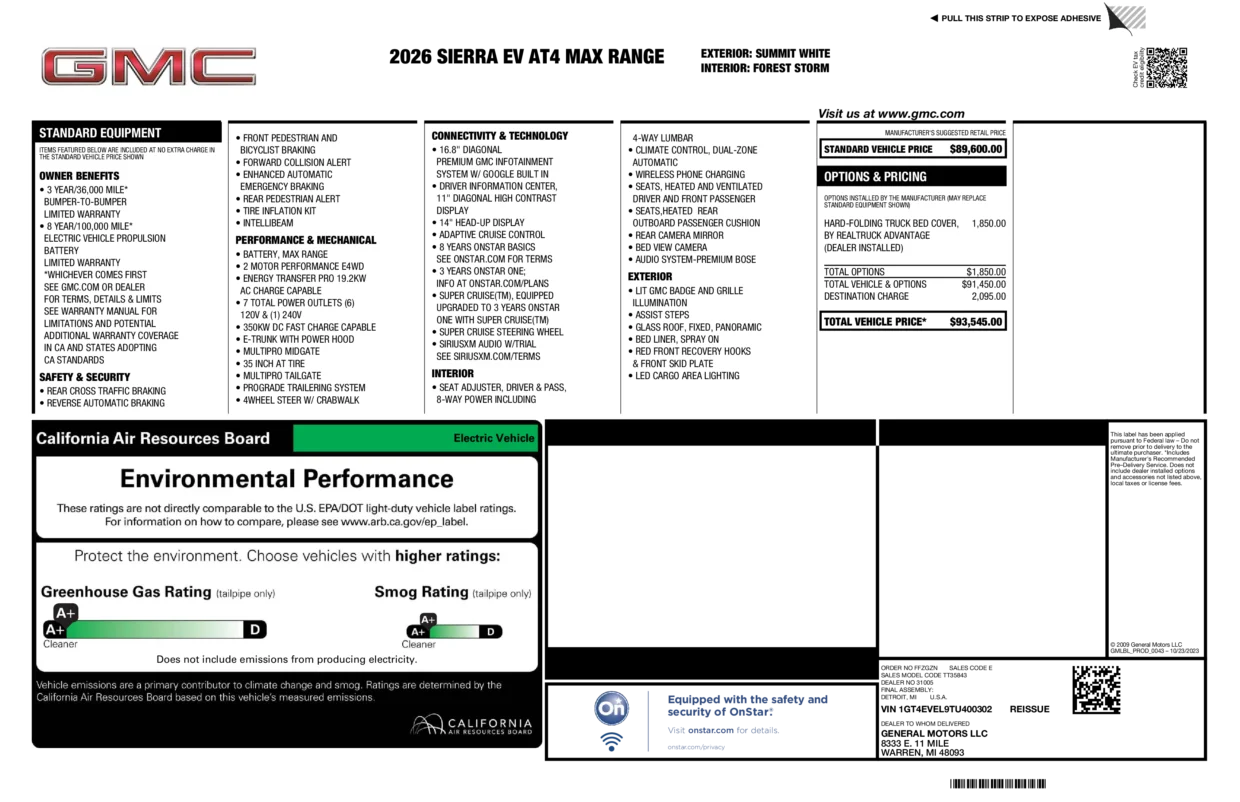
- The MSRP of our test truck came to $93,545 and the Sierra EV can be optioned to over $100k. That’s a ton of money for a truck that doesn’t feel even slightly special, even in today’s extremely expensive truck market.
Is there anything to like about it?
The truck isn’t all bad though. It does have a few redeeming qualities:
- Range is a strong point and among the best in the business for any electric vehicle. Our time with the truck leads us to believe the quoted range is in fact feasible if not slightly overexaggerated (as are most EV ranges), which itself is a feat for an EV.
- Towing capacity is 12,300 pounds and the payload capacity is 1,950 pounds. Both are strong numbers. And we recently found out it is much cheaper to tow with electric over gas trucks.
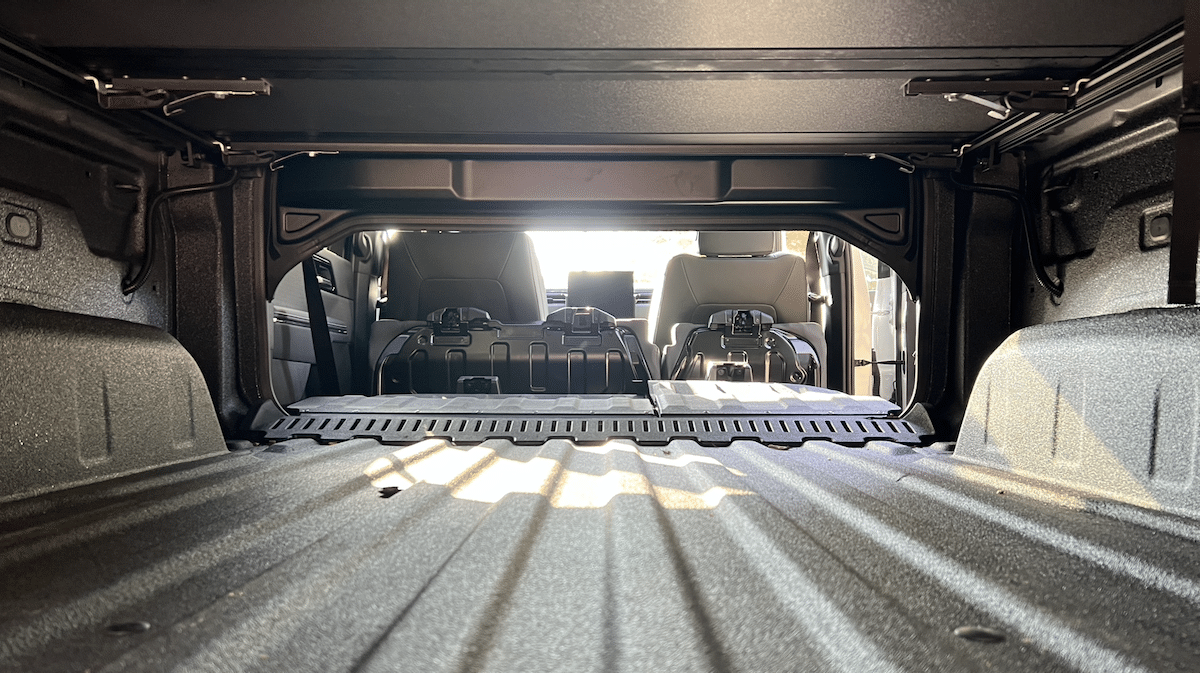
- The MultiPro Midgate returns to the truck party after a hiatus lasting since it died with the Chevy Avalanche in 2013. It’s an ingenious design, even if this new iteration is clunkier and more complicated to use.
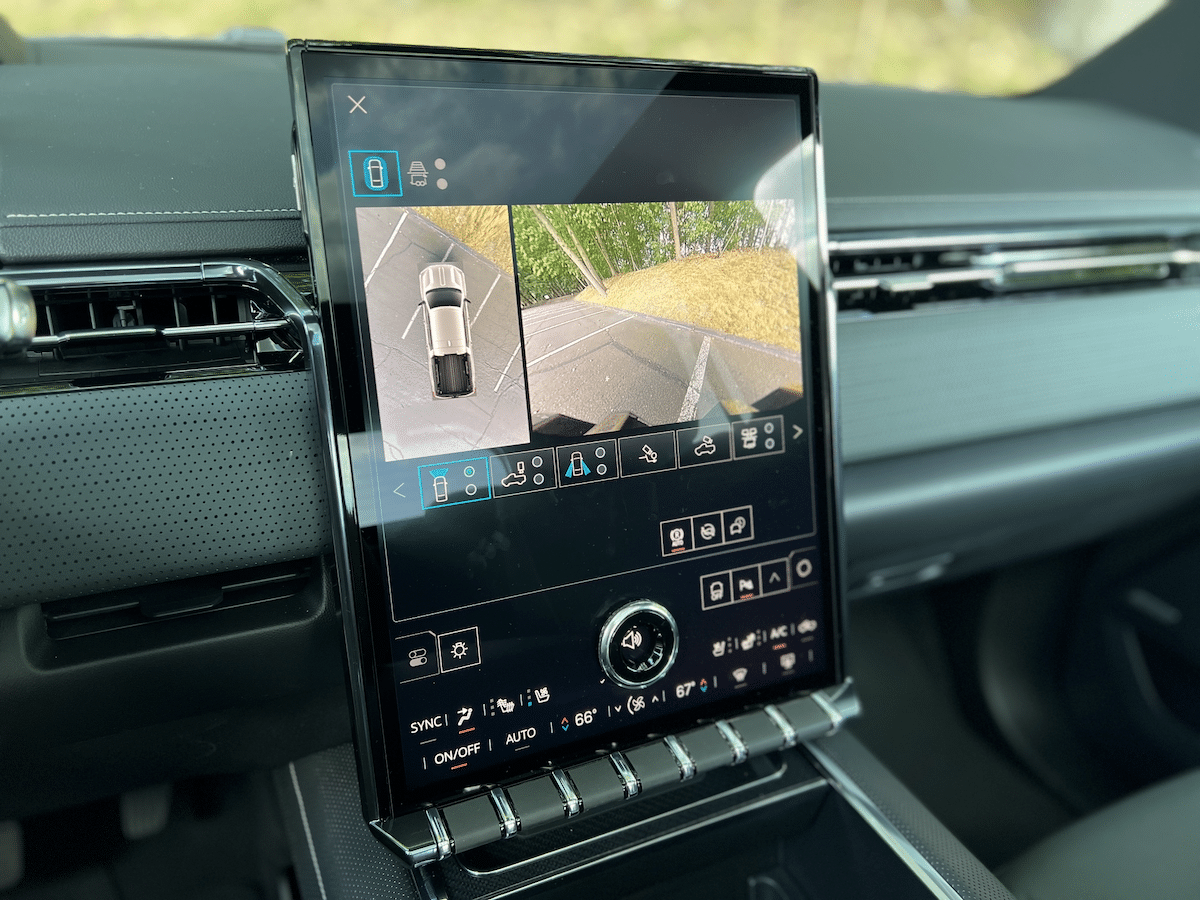
- The 16.8” infotainment screen has good resolution and responds quickly to inputs.
- It’s extremely spacious in both the front and rear of the cabin. Rear legroom is limousine-like.
- The on-board cameras provide great views of every angle of the truck, which are especially useful when parking, trailering, and hauling.
This isn’t the electric pickup you’re looking for
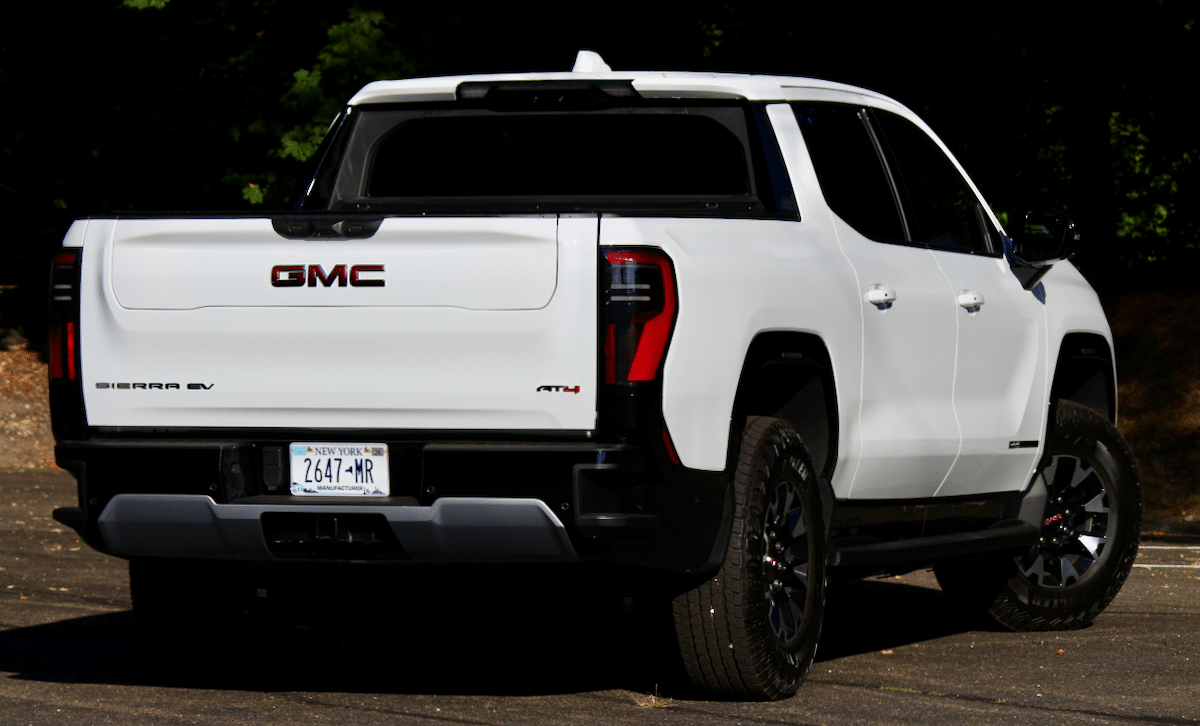
Tally up the pros and cons from our observations and the scale very clearly tips heavily one way. However, bear in mind that these are all inconveniences rather than hazardous faults; none of the listed items make the Sierra EV AT4 a “bad” vehicle. It’s still safe, comfortable, technologically advanced, plenty capable, and carries an excellent all-electric range. Yet in a landscape of so many standout vehicles, the Sierra EV AT4’s issues — or at least those with this particular truck we sampled over the course of a week of testing — can’t be overlooked.
Zooming out, it appears as if GM and GMC focused all of their effort on the truck’s electric range, which is admittedly impressive, and then let everything else fall to the wayside. Is it possible we just had a bad truck or one that rubbed us the wrong way? Of course; it’s impossible to eliminate every variable when doing independent auto testing. But unless proven otherwise, the 2025 GMC Sierra EV AT4 demonstrates that vehicles don’t always deliver on their promises, and it makes this truck feel less than the sum of its parts.








No replies yet
Loading new replies...
Administrator
Join the full discussion at the Forum Pickuptrucktalk →