
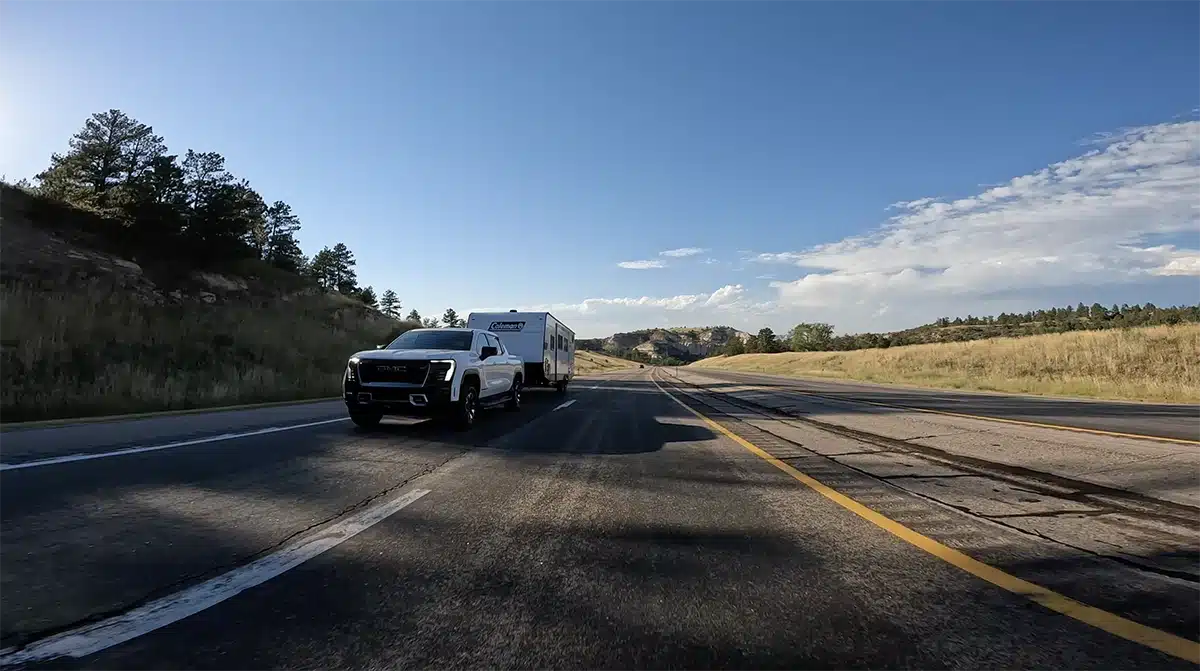
Many people hate on electric trucks for towing, but is it really that bad? I towed the 2026 GMC Sierra EV AT4 with a 30′ camper was shocked.
The Sierra EV AT4 was part of my regular rotation of review vehicles and I connected it to our new 2024 Coleman 30′ double-axle camper with one slide out. It has a dry weight of around 5,300 pounds empty and 7,000 pounds loaded. I charged the Sierra EV up at home on my 220 volt outlet to 100%, normally you keep it charged at 80% as the truck tells you to do so for optimal battery health, for the most range possible out of the maximum range battery pack on this truck.
Our test model is the $93,000 2026 GMC Sierra EV AT4 Max Range with up to 725 horsepower, 478 miles of electric range (not towing), DC Fast Charging, 800 volt, up to 350 kW. Standard ProGrade trailering system (available on Extended Range) and Standard MultiPro Midgate (available MultiPro Midgate on Extended Range).
Hookup and Specs for the 2026 GMC Sierra EV AT4 Towing
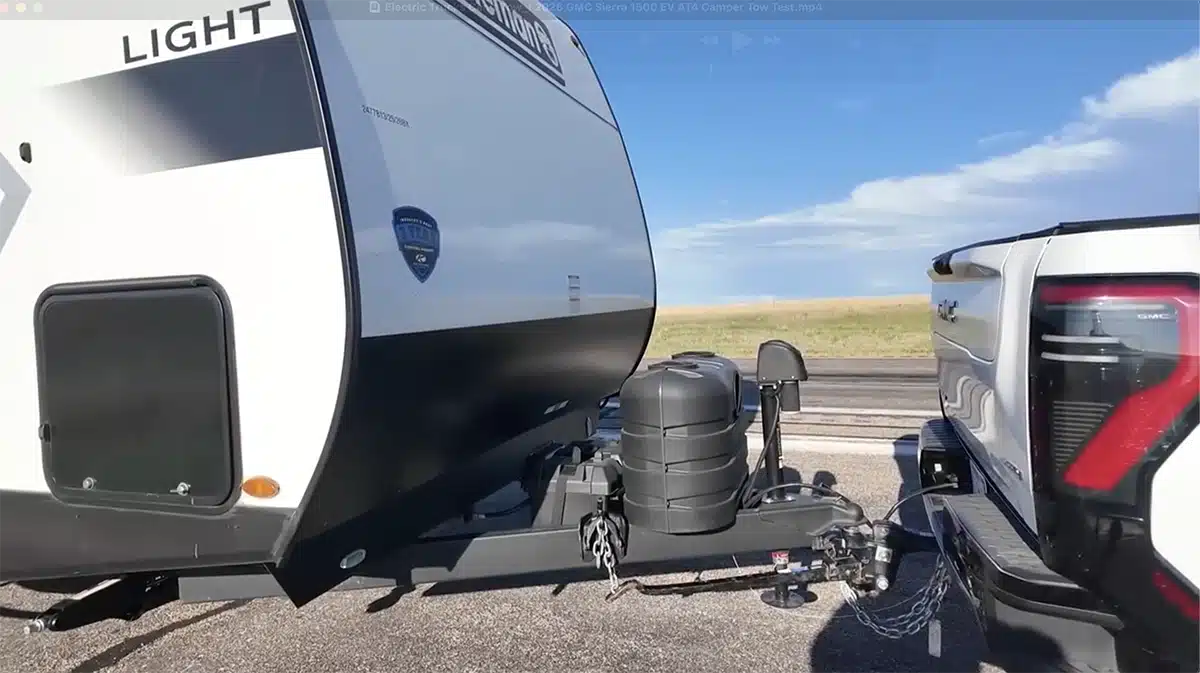
Getting the camper hitched to the Sierra EV was straightforward. The large 16.8 inch diagonal infotainment screen might be a target for critics who think trucks have gotten too fancy, however, it is really nice when trying to use the numerous camera systems available on newer trucks. Selecting the hitch view eliminates the need for another person’s help and lining up the truck’s ball to the camper tongue is incredibly easy. A real marriage saver technology.
With a weight-distributing hitch in place, there was virtually no squat at the rear and the truck and camper are level, a big deal for towing safely.
The Sierra EV is well suited for this job with a maximum towing capacity is rated at 10,000 pounds. It also has 1,500 pounds of payload per a VIN-specific door jamb sticker. This means all passengers, gear and the tongue hitch weight must be below 1,500 pounds. If I can’t determine the tongue hitch weight on the manufacturer’s sticker provided on the camper, I use the 10% rule of the weight of the camper either empty or loaded weight. The camper was empty as far as water and the gray/black tanks, so the tongue weight would be 530 lbs (10% of 5,300 lbs). This leaves 970 pounds for the rest of the passengers and gear which should be plenty for a family of four.
On the Road: Smooth and Effortless
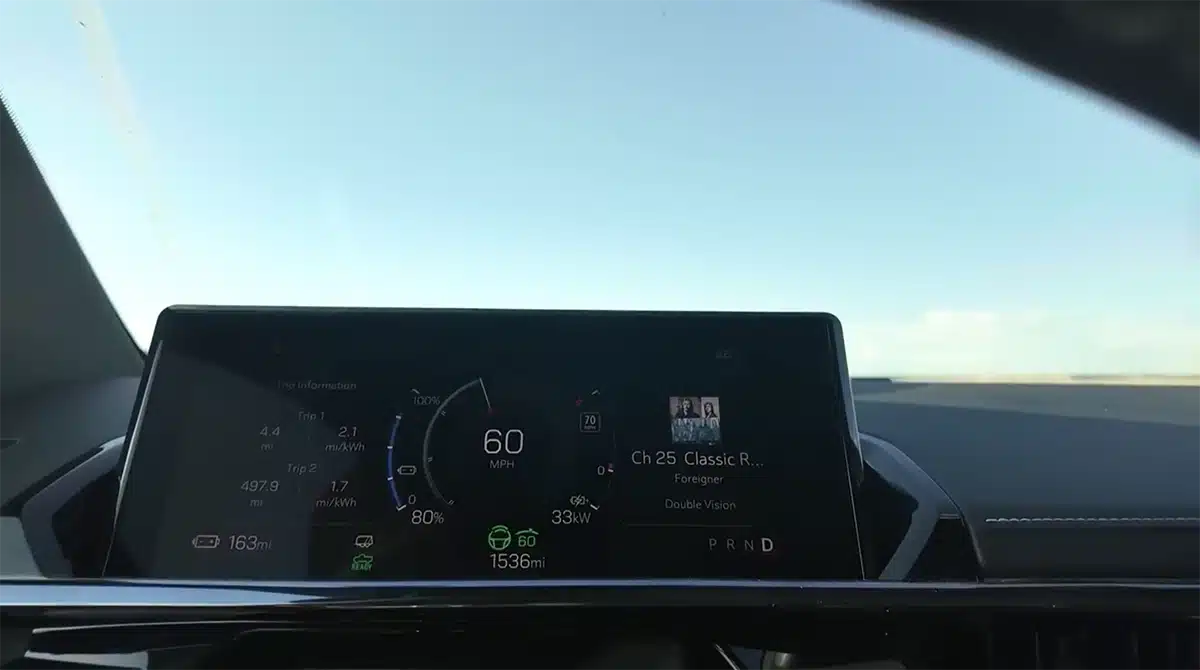
Towing with an EV feels very different from a gas or diesel truck. Acceleration is instant—no gears, no turbo lag, just torque on demand. From 30 to 60 mph, the Sierra pulled the camper effortlessly, smooth and quiet all the way. Driver fatigue is noticeably lower, especially paired with Super Cruise, which worked well even with the trailer in tow.
Climbing grades did draw heavy power, but regenerative braking downhill recaptured energy, acting much like a diesel exhaust brake—without the noise. On winding Nebraska highways, the Sierra felt stable, confident and easy to handle even at highway speeds.
The AT4 trim adds off-road rubber and rugged styling, while still packing the smooth ride you’d expect from an EV even with off-road tires.
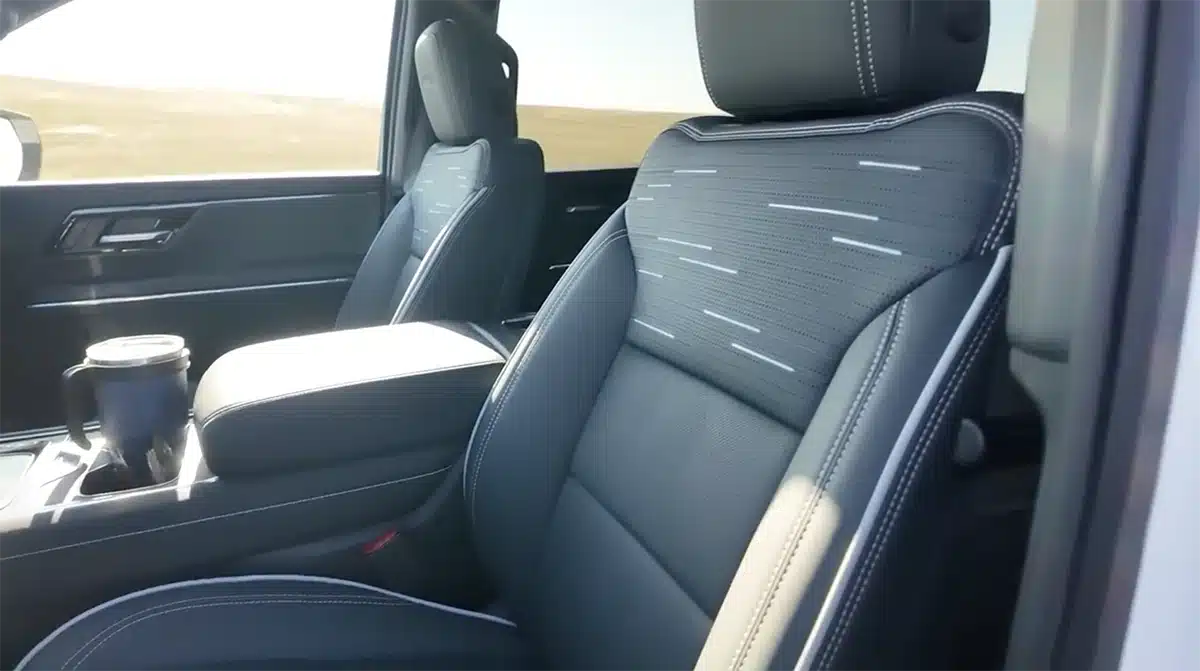
Inside, the vertical infotainment screen dominates the dash, complemented by a head-up display and improved seating comfort—finally, GM has nailed the seats. Rear passengers benefit from heated outboard seats, a flat load floor, and good cargo versatility. Up front, a large frunk provides additional storage.
Range Reality Check
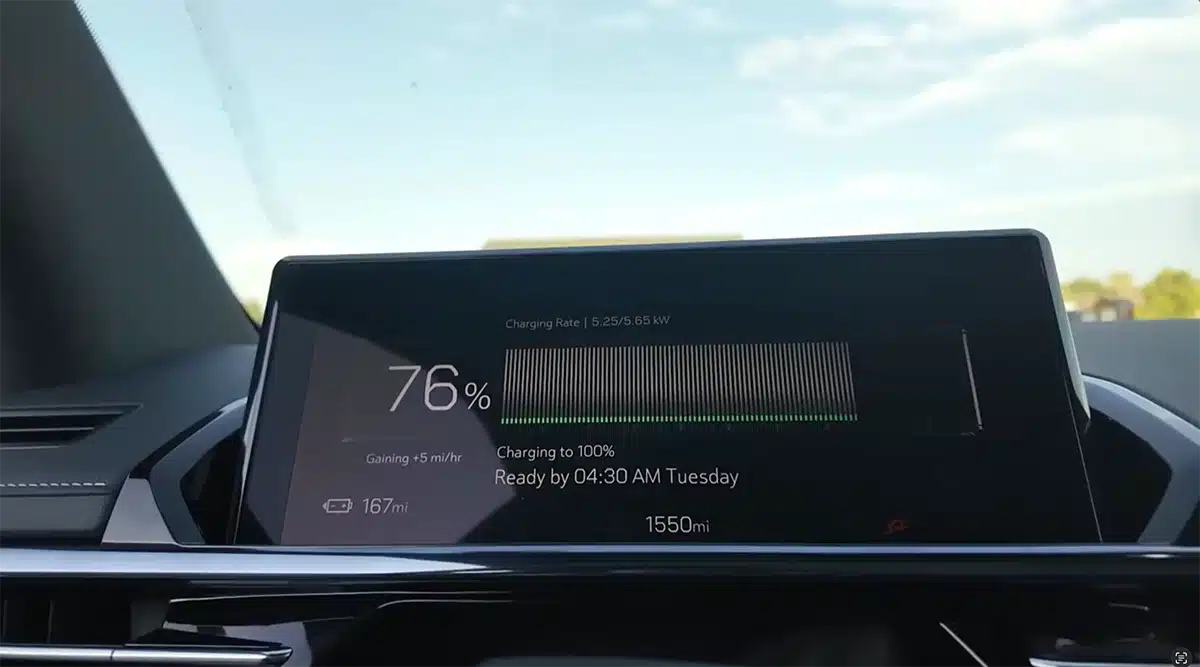
The trip covered about 50 miles, with the Sierra averaging around 1.5 miles per kWh. Starting with a full charge showing 250 miles of estimated range, I ended with 76% battery and 165 miles remaining. Translation: towing a 7,000-pound camper roughly cuts range in half.
That’s not unexpected—physics doesn’t change just because it’s electric. Still, the truck’s performance showed that a 100–120 mile tow to a campground is realistic on a single charge.
Once you arrive at the campground, you’ll have some options. You could charge at the campground since many have 220 volt hookups in the U.S. with 30 or 50 AMP service. This would mean you would have to juggle plugging in the camper or the truck sacrificing running items like the air conditioning in the camper.
The other option would be to find a public charging spot near the campground and spend time charging up the truck. This charging time varies on many factors, but plan for around 30 minutes. With some of these charging sites located near grocery stores, it could be a two birds, one stone kind of thing.
How Much Does it Cost Versus a Gas or Diesel Truck?
Ok, the electric truck can tow your camper, so what? What does this all cost? And how does this compare to a gas or diesel truck? Is it worth the money?
There are about a million different factors, so this is going to be very general.
Let’s assume you were two different ways – home vs public charging.
For the 50-mile tow drive, I would spend around $13 in electricity charging back up to 100 percent (keep in mind, I’d only charge to 100 for towing, 80% for daily driving) versus the same trip is $45 for our long-term 2025 Ram 1500 RHO with premium fuel, $40 for non-premium. Diesel would be around $35.
For the 100-mile tow drive, if I could charge up the truck at the campground, I’d have free electricity since campgrounds haven’t caught on to electric vehicle charging yet. So, I’d have the same pricing scenario above.
For the 100-mile tow drive with public charging, Electrify America, a well-known public charging company, commonly charges $0.48 per kWh. Our test model GMC Sierra 1500 EV had the maximum range battery of 205kWh. Let’s say we used half of that battery and needed to add 102.5 kWh energy back into the battery pack. This math works out to be 102.5 x $.48 = $49.20 to fill it back up. Keep in mind, this is perfect world stuff with the EV station running at full capacity, the kWh at that rate and not higher, the truck taking the charge the full time without disruption, etc…
GM’s inclusion of a Tesla charging adapter is also a big help for public charging availability and have similar prices as Electrify America.
Verdict: Getting Closer, But Not Quite There
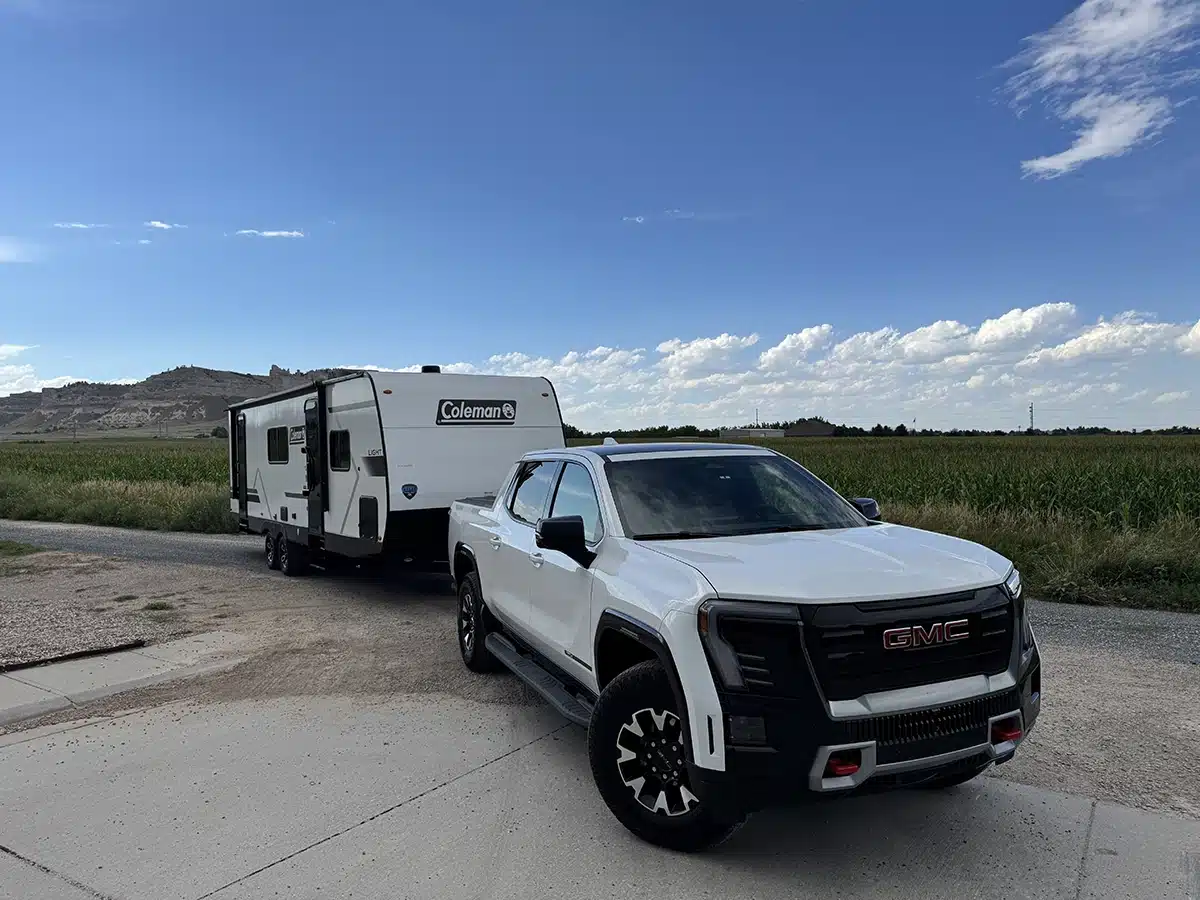
The 2025 GMC Sierra 1500 EV AT4 proves an EV pickup can tow—and tow well. Smooth power delivery, quiet operation and reduced driver fatigue thanks to GM’s Super Cruise and the driving experience make for a relaxing towing experience. Range is the biggest limiter, but for shorter trips to the lake or a weekend campground within 100 miles, the Sierra EV handles the job.
At around $93,000, it’s still priced well above traditional trucks and long-haul towing remains tricky without more charging infrastructure. But this test shows the future is getting closer. For those willing to adapt, the Sierra EV delivers capability, savings at home and a glimpse at the ease of electric truck towing.








31 replies
Loading new replies...
Administrator
Moderator
Well-known member
Well-known member
Administrator
Well-known member
Well-known member
Well-known member
Well-known member
Administrator
Well-known member
Join the full discussion at the Forum Pickuptrucktalk →