
Brakes are the main safety components of any vehicle. They ensure safe stopping and deceleration and allow basic maneuvers to avoid obstacles or adhere to changes in the road direction. For recreational and power sports vehicles like ATVs and side-by-sides, they also provide a modicum of performance and riding fun, allowing vehicles to build speeds, and brake hard and fast when needed.
Braking Basics
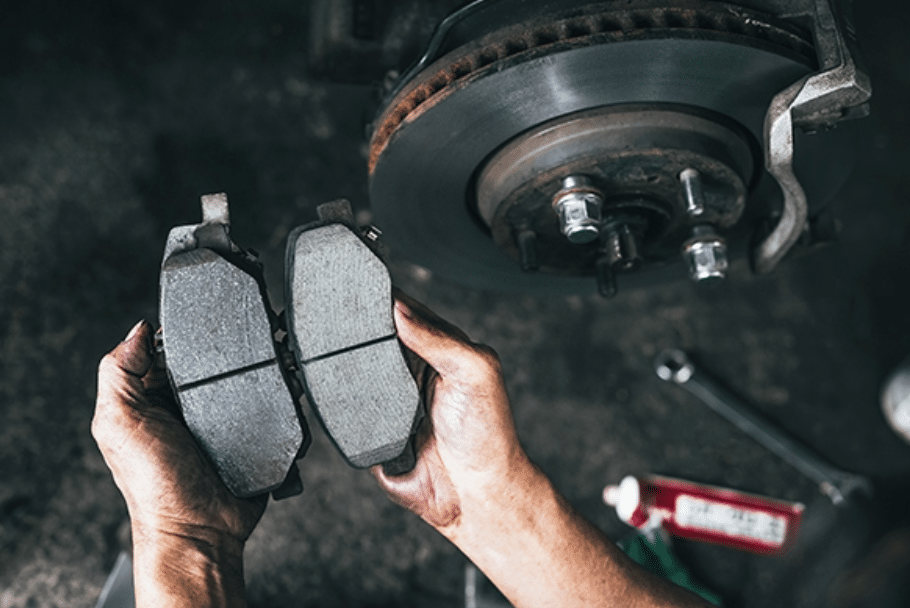
ATVs and side-by-sides have grown in size, power, and capability. Getting all that weight and speed to a safe stop requires some serious braking power. Current powersports models gravitate around decent disc brake setups, with bigger rotors, calipers, and pads working together to decelerate from high speeds or allow basic maneuvers like turning and avoiding roadside obstacles.
Aside from providing the friction to bring vehicles down to safer speeds, ATV brakes also deliver the needed control on uneven and unpredictable terrain. Paired with safety systems like ABS and traction control, the parts distribute brake force evenly between the front and rear wheels to prevent wheel lock or sliding on loose ground.
Drum brake systems have all but disappeared, meaning even smaller displacement and kid’s ATVs have disc brakes, at least on the front wheels that do most of the braking. Applying levers or pedals engages brake boosters and hydraulic fluid in master and slave cylinders, forcing pistons inside the calipers straddling the discs to actuate and push pads against the rotors. The resulting friction of pads and rotors is what slows down the quad. The generated heat, friction, and wear acting on pads in continued braking, means these are the parts that see more frequent replacements.
The good news for ATV and UTV owners is that quad bike brake pads can be upgraded to variants with more bite, better actuation, and shorter braking distances. Besides enhanced safety, they bring more performance, and with parts constantly exposed to water mud, and road debris (due to the open design of the bikes), better heat dissipation and durability when you’re harder on levers and pedals.
Signs of Failing Brake Pads
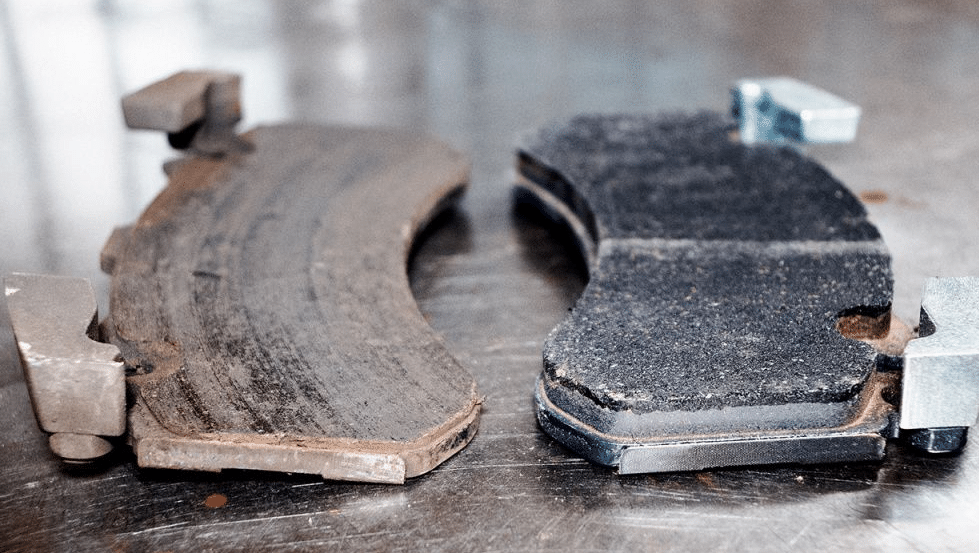
Before brake components become a safety trap, ensure to inspect them for visible wear. Worn pads are the most common cause of compromised braking performance, and this is evident in obvious signs:
- Noises when applying the brakes – screeching and grinding noises when on the brakes point to worn pads and/or warped discs. Pads worn down to backing plates put out the loudest noises, due to the increased friction of metal on metal. Noises can also be heard from encrusted debris or seized calliper pistons.
- Spongy or soft brake feel – misaligned and worn pads lead to reduced actuation and a spongy or soft feel in the levers or pedal.
- Vibrations – uneven wear in the discs, work friction material in the pads, and misaligned parts cause vibrations through the steering wheel and handlebars. This can potentially reduce steering control and safety.
- Vehicle veering left or right – glazed pads worn down to the resin, and those that have uneven wear produce disproportionate friction and brake force in each wheel, causing the quad to pull left or right.
- Longer braking distances – another sign of worn friction pad material.
Other indicators are punctured brake fluid lines with low-pressure levels; air in the brake system, burning smells due to overheating, and warning lights in the instrument cluster. While rotors, calipers, and master and slave cylinders are rated for at least 30,000 miles (or the lifetime of the quad) in most cases, pads won’t last anywhere near that number, often requiring changes at 1000 or 2000-mile intervals, depending on how and where you ride.
Choosing Pad Materials
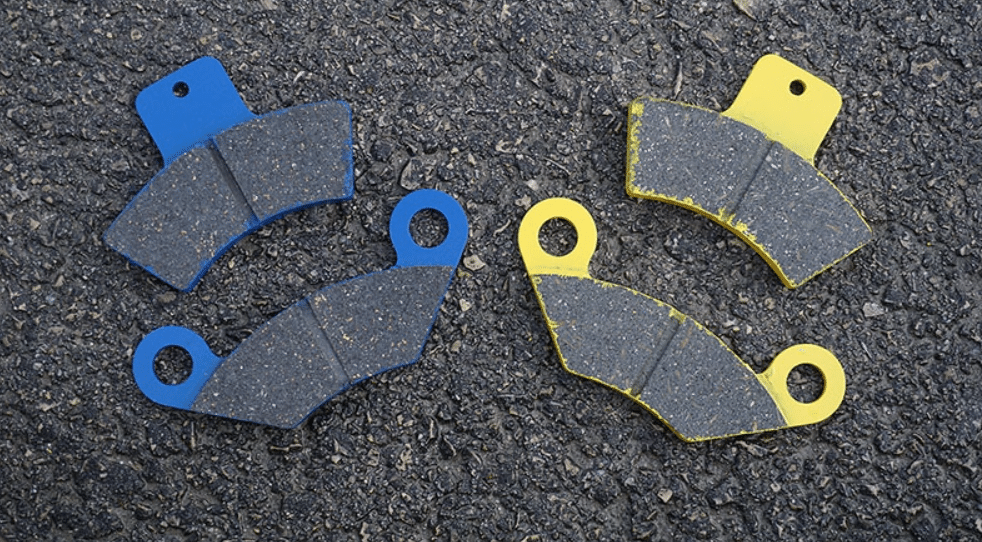
Brake pads are one of the cheapest replacement parts on any vehicle. For ATVs, you’ll be looking at three types, based on material composition.
Organic
These are what most quads have fitted straight from the factory. They’re a mix of metallic fibers, glass, rubber, and in premium variants, Kevlar. Organic pads provide decent stopping power, with good actuation and brake feel, regardless of weather or how hot they get. They’re quiet and easier on the discs (with reduced wear), though are known to throw up considerable amounts of corrosive brake pad dust as they wear out. Ideal uses are everyday riding and relaxed touring.
Sintered
These quad bike brake pads consist of a mixture of metallic particles, usually copper, nickel, and iron fibers that are bonded into a durable friction material using high heat and pressure. They have excellent high-temperature performance, outstanding durability, and the best stopping power, making them ideal for racing and extreme applications. The hard compounds also mean they’ll outlast organic and ceramic pads. Downsides include mediocre braking when not warmed up, advanced rotor wear, and audible noises when applying levers and pedals.
Ceramic
Newer variants consist of ceramic and metal fibers with high thermal stability and polymer resins acting as bonding agents and reducing the adhesion of pads and rotors. The pads have been developed for racing applications, due to their durability, high braking power regardless of temperatures, and reduced brake fade. Like organic types, ceramic pads won’t wear out discs and are exceptionally quiet. They’re ideally used in high-performance ATVs and heavier side-by-sides.
Maintenance Tips
Breaking in new pads means they’ll not only last longer, but also perform as needed. The process requires gradual, moderate stops for the first 50 to 100 miles, allowing the friction materials to effectively transfer friction and power to the rotors and build a transfer payer. Avoid hard braking, sudden stops, and overheating the pads. Also, keep the quad at a moderate pace to prevent the wheels from locking up.
For existing pads, observe regular inspections. Irregular wear on one or more pads means they’ll need to be replaced. Pads worn down to the backing plate lead to advanced rotor wear, so besides lower braking performance, you’ll also be scooping up serious cash for disc replacements. Replace pads in front and rear left and right pairs to ensure even brake power to both wheels and bleed the system from air buildup.