
There are a lot of controversial things in the truck world, such as which brand is better, towing with a half-ton or an HD and how to properly tow a load. However, none of these even comes close to the topic of a CDL for a new HD truck or RV.
The fact is new trucks, such as the 2021 Ram 3500, are claiming maximum towing numbers in the 35,000-pounds-plus range with BIG, BOLD NUMBERS on billboards and dealership signage. This is causing a lot of concern, and misinformation is rampant with anecdotal stories being turned into “that must be” the law.
Here’s the truth.
What is a CDL, and who administers it?
A commercial driver’s license (CDL) is a special license provided by the local state Department of Motor Vehicle’s office, which follows the law set down in the Federal Motor Vehicle Safety Standards. You can find this regulation, in all of its legal speak glory, on the Electronic Code of Federal Regulations website. You can also find a handy FAQ about the CDL license on the FMCA website as well.
In a nutshell, the standard applies a special license type to individuals conducting commercial business with their vehicle (a very important part) and breaks this license into three parts – Class A, Class B and Class C. These classes are separated by what the vehicle is, what it is capable of towing (aka gross vehicle weight rating of 26,001 pounds or more), what it could tow with it in terms of a 10,001-pound trailer (aka gross combined vehicle weight rating), how many people the vehicle is transporting or whether or not you’ll be transporting hazardous materials.
While this seems simple enough, it isn’t so simple since individual states can assign their own special rules to a CDL, and there are exceptions — like the farmer exception I’ll cover in a minute.
Be sure to contact your local DMV to determine if there are special licenses needed for your state as well as understand the information in this article.
Determining if you need a CDL
While the rules seem straightforward, the interpretation of them is murky at best. You’ll find all sorts of answers to CDL license question if you go down the Google rabbit hole long enough.
So, here’s the truth: It depends. That’s why it is murky.
The depends comes down to why you are towing, how much you are towing and what you are towing with.
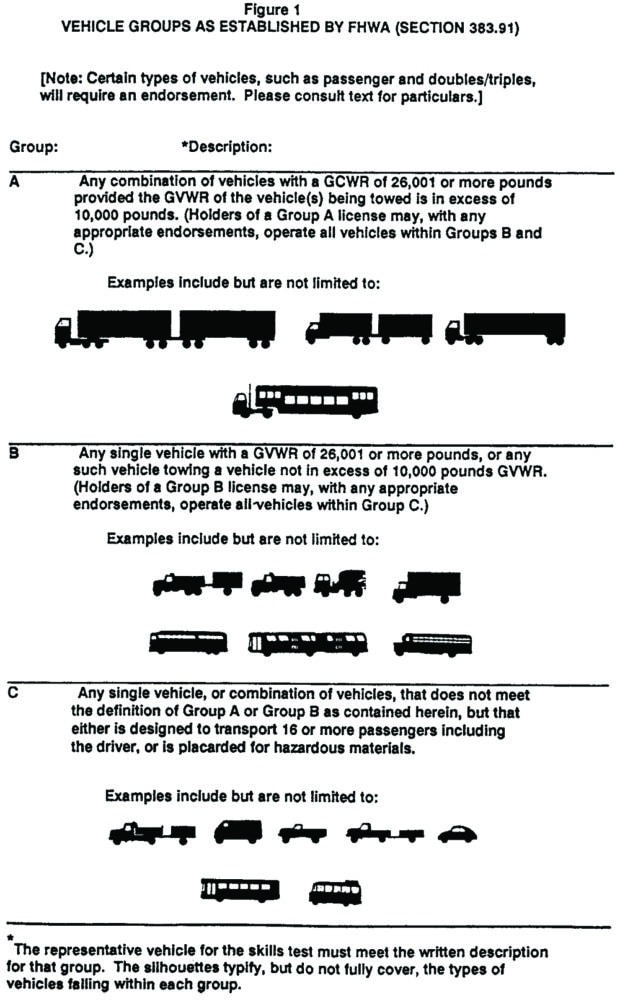
FMCSA put together this handy image to guide law enforcement as well to help people determine whether they need a CDL. Look it over before moving on.
Recreation or commercial towing?
The first place to start with answering the CDL question, is the type of towing you are doing. Let’s say you are towing an RV camper to a lake. Are you doing this to get paid? Then, no, no matter what weight, what state or what truck you are using, you don’t need a CDL.
Let’s go over that again and this is a key question: Are you towing for compensation, as part of a job, to get paid? If the answer is no, then stop reading, tell your friends they are wrong and move along.
The FMCSA specifically addresses this in its FAQ with question #3.

Simple enough.
What about weights and the 10,001-pound trailer?
Let’s say you are, in fact, towing for work OR your neighbor is going to give you a $100 to move his camper to the lake OR you are just curious about all the other language in the law.
Let’s start with the top image in the chart since this seems to provide the most confusion. The first statement is “any combination of vehicles with a GCWR of 26,001 or more pounds provided the GVWR of the vehicles being towed is in excess of 10,000 lbs.”
What does that really mean? First, let’s define the terms GCWR (gross combined weight rating) and GVWR (gross vehicle weight rating). The GCWR is basically adding up all the GVWR weights from whatever you are towing. This is different than curb weight (the scale weight of the vehicle) and instead this is the maximum weight the vehicle can handle.
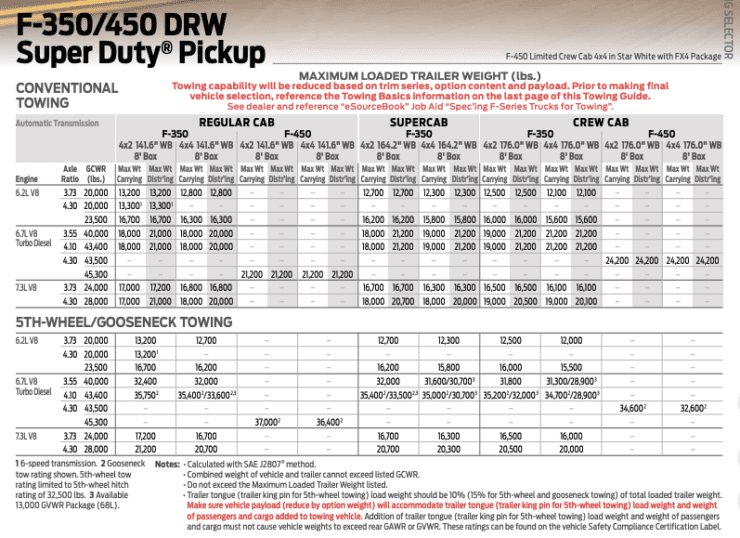
Let’s put this in practical terms looking at towing charts like the 2021 Ford RV & Trailer Towing Guide.
In the chart below, you can see the F-350 and F-450 dual-rear wheel trucks separated out by engine, axle ratio, GCWR and length. You can also see the confusion since the diesel trucks have a GCWR more 26,001 pounds while the gas engine trucks do not — except for the 7.3-liter V-8 with the 4.30 rear axle.
Again, we need to start with first: Are you towing commercially or recreationally? Second, we have to look at the trailer since that matters as well.
Let’s say I have a crew cab, 4×4 6.7-liter V-8 turbo diesel Ford F-350 with a 4.30 rear axle and my max GCWR is 43,500 pounds with a max trailer tow of 24,200 pounds. Now this truck would be driven by someone with a CDL if, again IF, the trailer or vehicle or whatever I’m towing has a GVWR exceeding 10,000 pounds.
In practical terms, let’s say I want to tow my race car to another state with my truck for a fun day on the track. First, since we already established it isn’t for work, we can move on to step 2, the weight. The truck’s GCWR is our first red flag indication we may need to consider a CDL and next would be the trailer GVWR. Pulling up an example on Pro-Line Trailer Sales website, I found a 8.5×16 enclosed trailer. This trailer has a max GVW aka GVWR of 7,000 pounds. This means, I would not need a CDL based on the weight issue.
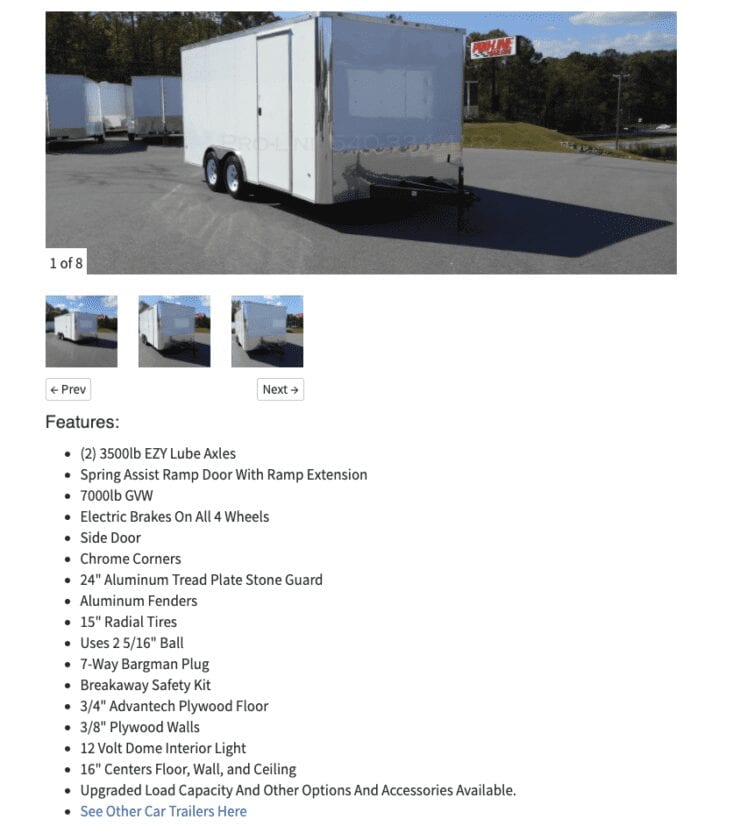
Pretty straightforward to understand you need both the truck’s GCWR and the trailer GVWR. Keep in mind, a trailer more than 10,001 pounds is a pretty sizable trailer, and those trailers are sold with the GVW in mind for transporting heavy equipment like on the Pro-Line Trailer website with the GVW listed in the title of the trailer.
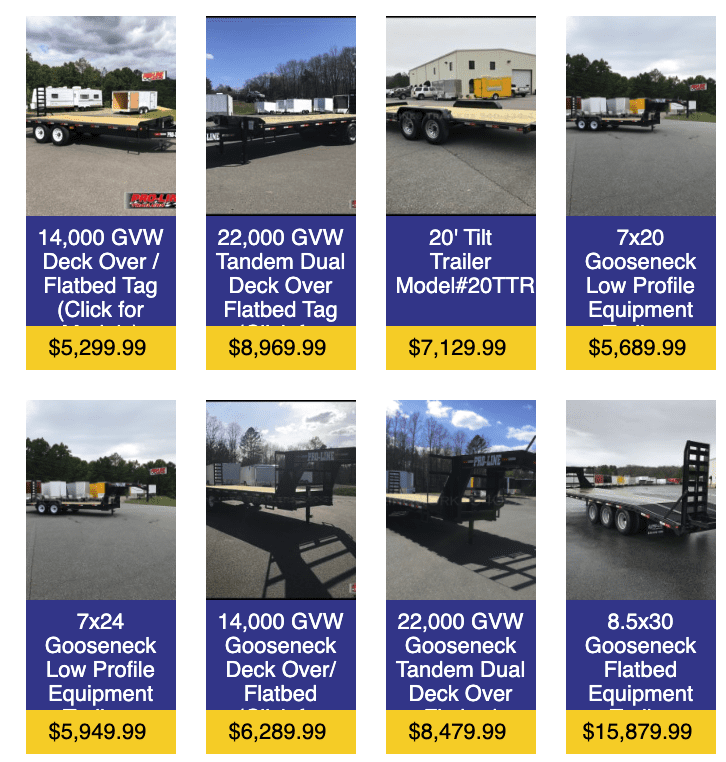
Finally, keep in mind, we are only talking about 1-ton trucks with diesel engines and not 1/2-ton or 3/4-ton trucks. That is key as well since many of those other trucks don’t have a high enough GCWR to even enter the CDL license discussion.
What about a large Class A or 5th-wheel RV?
Another common question that comes up with CDLs has to do with the large Class A RV buses similar in size to a semi-truck and large 5th-wheel RVs. These vehicles have grown in size dramatically over the years, and the trucks to tow them also have vastly higher tow ratings than they did just a decade ago. Do you need a CDL for those?
The simple answer is no CDL. Why? Remember the part about recreation vs. commercial? Yes, this is the key question.
However, the longer answer is: It depends on your weight as outdoorsy.com points out.
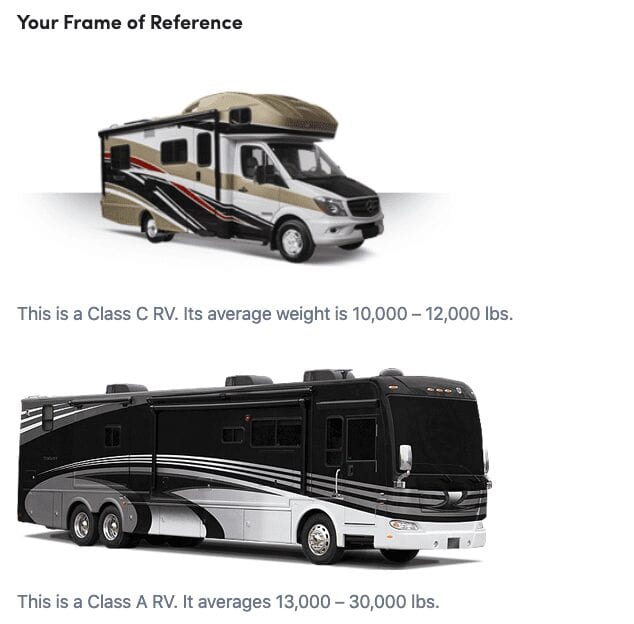
As the image points out, most Class A motorhomes (the really big ones) have a weight between 13,000-30,000 pounds. This means you would only need a Class B license if you were driving this commercially. So, Grandpa and Grammie can go buy a huge RV weighing close to 30k pounds — about the size of a semi — and drive it without a CDL.
Smaller Class C RVs weigh around 10,000-12,000 pounds, and you wouldn’t need a CDL if you were traveling recreationally — even if you had found a way to double this weight by pulling a 10,001-pound trailer as well. Think: Redneck towing.
Farmer exception?
One of the most common exceptions to the CDL law has to do with farmers. Basically, the Federal Government gave them a free pass to lower their burden on having a CDL license.
It essentially states if a farmer transports his goods less than 150 miles away from his farm, he doesn’t need a CDL. The idea behind this is pretty simple — to allow the farmers to bring in the crops to distribution centers without needing a CDL.
This is a nice perk for the farmer.
The bottom line
If you’re unsure whether you need a CDL for your HD truck or RV, it’s crucial to consult with knowledgeable sources. The requirements can vary based on factors like the type of vehicle, its weight, and the purpose of towing. For detailed guidance and to ensure you’re fully compliant with all regulations, visit CDL Expert for expert advice and resources.
Don’t get caught up in what someone said “that one time” or that you heard someone say a trailer or a truck that can tow 35,000 pounds MUST have a CDL. Remember the main question is recreation vs. commercial. Answering this question first can reduce a lot of the confusion right off the bat.
Related posts:
Need to tow heavy stuff? 2021 Ram HD rating increases to 37,100 lbs!
Ford F-150 GVWR ‘package’ explained; it’s not what you think
Don’t make this mistake? Chevy Colorado slide-in camper issue explained






20 comments
Earl Farquar
They normally go by the VIN tag’s weight statements when the truck & trailer GVWs are added together. I’ve tried to tell a friend, for almost 20 years, that the individual state can make their own rules, as long as they ARE NOT less restrictive than the Fed DOT rules.
jeffrey
“The first place to start with answering the CDL question, is the type of towing you are doing. Let’s say you are towing an RV camper to a lake. Are you doing this to get paid? Then, no, no matter what weight, what state or what truck you are using, you don’t need a CDL” is incorrect according to the NY DMV website. They clearly limit a non CDL licence at 26,000 Lbs. I have been pulled over in NY, the officer asked if I was private or commerce. I told him private, he then proceeded to check the the sticker on my truck and trailer to make sure I was under 26001 Lbs. So at least in NY 26000 is the limit.
Earl Farquar
IT’s a state reg, not Fed DOT. The state can do whatever they want as long as it’s not less restrictive than Fed Regs.
Michael M
What are the restrictions for hauling “A for hire RV transport business” weight limit? I am under the understanding that if you keep GCVW actual weight of BOTH vehicles combined under 26001lbs, you do not need a CDL. Is this true?
Earl Farquar
IF you’re getting paid to drive, you must have a CDL, regardless of weight. IF you’re driving a company ownd 1/2 ton truck with U.S. DOT numbers, you don’t need a CDL but you MUST keep a log & abide by the “hours of service” regs.
nick
This guide is is missing out on one big point… GCWR of your truck doesn’t matter at all. All that matters is you GVWR on the door VIN sticker + the trailer GVWR sticker. If both are over 26k and even though they don’t have anything loaded on them, you need a CDL if it’s commercial. Your truck GCWR as stated in the manual is useful to know how much you can pull, but nothing to do with CDL. The rule is 26k+ combined GVWR stickers.
The key point is commercial. It is the burden of the officer to prove it is, where you’re towing to earn money. If your truck has decals for your business and the trailer is registered under a business, well it’s not hard to connect the dots, otherwise it’s just you driving around towing your toy because you felt like it today. If you’re running a business and towing 10k+ to make money, you need a CDL by law. If you’re towing an camper or a dump trailer to fix your personal property, that’s not commercial.
This stuff is loosely regulated. All it comes down to is if you’re towing a big trailer, you’re more of a target for an inspection, but honestly it not regulated much…you could get away with towing illegally easily, but eventually you’ll get caught. Either way, if you’re doing stuff for a business that requires heavy towing, you might as well get a CDL.
Tim Esterdahl
“Either way, if you’re doing stuff for a business that requires heavy towing, you might as well get a CDL.”
This. Exactly this.
Carolyn
Hello,
If the trailer is owner by a not-for-profit 501C3 and the vehicle is being hauled by a volunteer who gets an annual stipend but not paid as a driver, is that considered commercial? I’m working on a project that would create a Robotics lab on wheels to promote STEM in rural communities in Mississippi. The weights question is also going to come up as we design but step one, as you mentioned, is about commercial vs non-commercial.
Thanks!
CTA
Tim Esterdahl
I’d say yes since it isn’t so clear. I mean, imagine explaining that nuisance to a police officer or your insurance company. It would be a lot of hassle IMO.
Jim Lewandowsky
What do you need in the states if your trailer is over 10000lbs, but your total weight is under 26000lbs? In Ontario Canada you need minimum AR the R is for restricted meaning the trailer can’t have air brakes.
Earl Farquar
It all depends on the state. Nevada, where I live, requires a Class J endorsement for any trailer over 10,000lbs, regardless of total weight. Kalifornia requires a non-commercial Class A endorsement. I have a non-commercial Class A endorsement that carried over from my CDL that I dropped when I moved to Nevada.
JOHN SILVERSMITH
here’s my question here I have a 2022 RAM ram 3500 limited. the GCVWR 37,090 if my trailer has a GWVR of 3000 LBS. doesn’t that make it a CDL vehicle? because gross combined vehicle weight rating is over 26001LBS
if the gross vehicle weight of F-350 was 14000 pounds and I was towing an empty aluminum car trailer with a GVW of 14000 LBS isn’t that in fact a CDL vehicle. because of the capacity of the combined vehicles. in fact I am under the impression that this would be a Class A restricted CDL..
I’m specifically trying to figure out with my 2022 RAM 3500 4 X4 limited in all above examples I am using this combination commercially.
With my RAM I can currently tow a 40 foot container tray that will mechanically slide the trailer from the all the way to the tongue and secure it. I also have a 16 pound container trailer that will carry a 20 foot container empty for transport. if we were going by weight I should be under CDL. but I know that’s not how it works. any help at all would be greatly appreciated. I am not looking for opinions. I want to make sure I don’t incur any tickets. Any reference material on the specifics I mentioned would be fantastic I would love to print it and have it with me
Earl Farquar
They normally go by the VIN tag’s weight statements wheb the truck & trailer GVWs are added together. I’ve tried to tell a friend, for almost 20 years, that the individual state can make their own rules, as long as they ARE NOT less restrictive than the Fed DOT rules.
Bill
Can you take the class a drivers test in any combination that meets class requirements
Anonymous
this is how it works it worked for me when I got my CDL. I have a Class A restricted. that means I can I can use my RAM 5500 and tow a trailer over 12 pounds. That is an a restricted peer.
you would need a pickup truck and the specific trailer. if you’re going to take the test you wanna do it in the smallest trailer that makes it an A CDL.. you could do it in a 40 foot trailer but it’s going to be jumping through hoops on your rd test. Make it convenient for you.
if you are looking for the ability to tow a fifth wheel,…
you will need a tractor and a fifth wheel trailer. you will have to do the the pre trip they select for you and you will have to know how to connect and disconnect the 5th wheel trailer. Make sure whatever vehicle you have is up to date with everything you need flares triangles fuses. no leaks things of that nature.
BD
Some things that have been left out of the conversation….the interaction between the driver & the LEO who is responsible for making the determination on…
Pvt vs Comm veh; Weight; License class req’t;
Safety Eq….etc. Traffic & VC Enforcement is typically based on either safety or revenue, which invokes a United Nations level discussion on the subject of Officer Discretion.
Just one simple area of note…. If you operate or own an RV, or a power unit equipped with air brakes….
GOD HELP YOU if you can’t explain, demonstrate, or otherwise know WTF is involved in operating a MV with air brakes regardless of your DL class.
zeej
Good article. Maybe can help me out here?
I drive a GMC Sierra 2500 Crew Cab Diesel that is company owned. This vehicle is only used as a truck driving to/from jobsites 99% of the time and is rarely hauling anything. If it is hauling its hauling a trailer with GVWR under 10K.
What i am wondering, is if, because this vehicle has a GVWR on its own of just over 10K lbs is it a requirement that i have a CDL? and if so, is it a requirement that I follow CDL log book and other over the road requirements any time i am driving the vehicle? ( i often us it as a personal truck)
Earl Farquar
IF your truck is lecensed to the company & has DOT numbers, you don’t need a CDL but you must still keep a log book & abide by the “hours of service” regulations
Brandon
A standard class C license often is not good enough for a large fifth wheel or travel trailer in many states. JD from Big Truck Big RV did some videos on this a few years ago. There in Texas, you need a noncommercial class A to tow a fifth wheel combination that exceeds 26k GCWR. California has a similar policy although you need the noncommercial lass A if your travel trailer exceeds 10k GWR or fifth wheel 15k GWR. There are many other states that have similar rules requiring endorsements or separate classes of licenses.
Most of the new 3/4 tons can enter the over 26k lbs class now. In particular the GM 3/4 tons could easily exceed the 26k GCWR. With a max truck GVWR of nearly 12,000, the trucks are limited to 14k GVWR trailers if wanting to stay under the 26,000 lbs
Tim Esterdahl
Correct. This is why I made sure to include “While this seems simple enough, it isn’t so simple since individual states can assign their own special rules to a CDL …”
State law can add an additional layer of confusion on top of Federal law.